3.6 Organic Analysis
No description yet. This curated deck is ready for daily study.
Card preview (24)
How do we test for Alkenes ?
• Bromine Water • Add solution and then shake • Colour change from orange to colourless
How do we test for a Haloalkane ?

How do we test for an Alcohol ?

How do we test for an Aldehyde ?

How do we test for a Carboxylic Acid ?

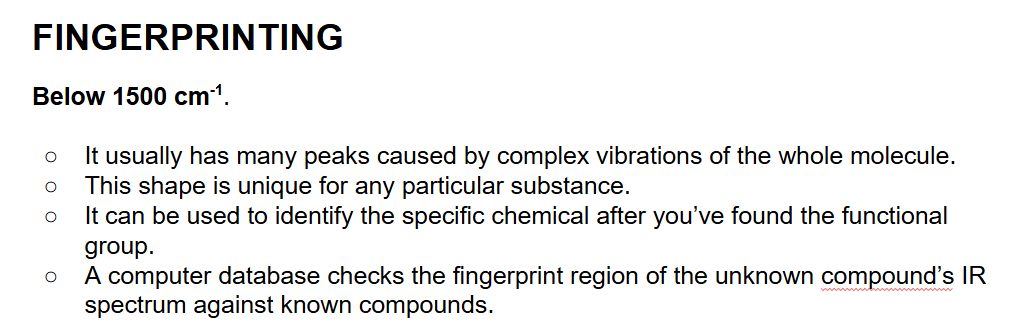
How does Infrared Spectrometry Work ?
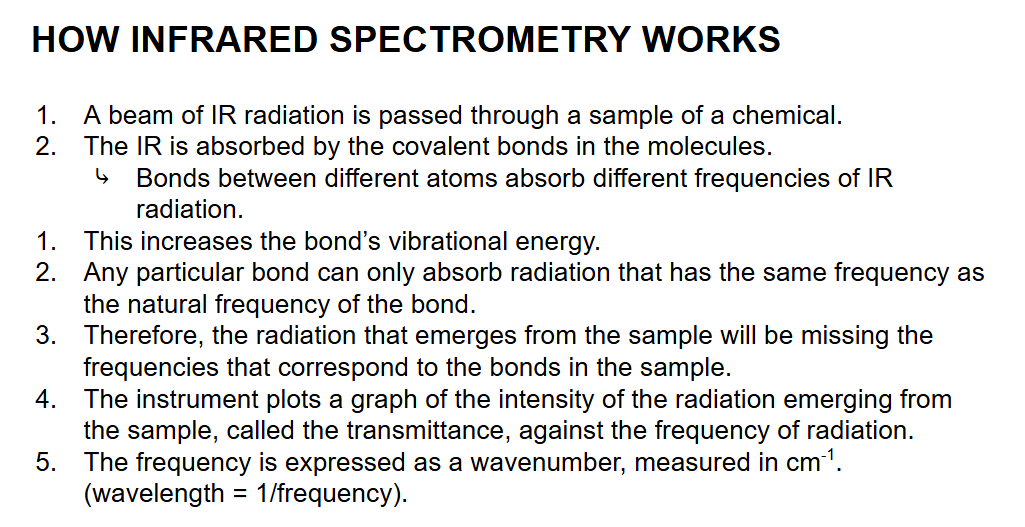
What is the IR Fingerprint region ?
How can the Fingerprint region be used to detect impurities ?
by comparing the spectrum to the pure compound spectrum. Extra peaks show impurities.
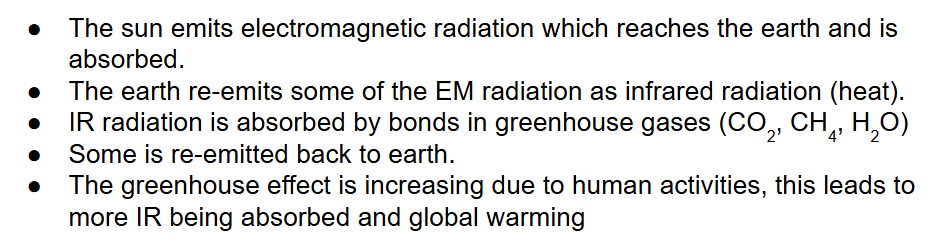
How does IR Absorption link with global warming ?
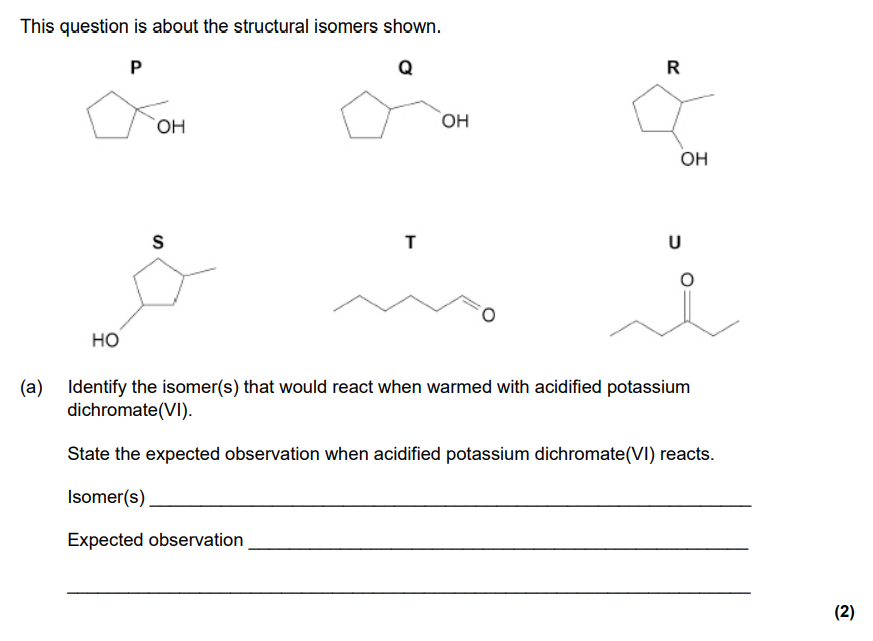
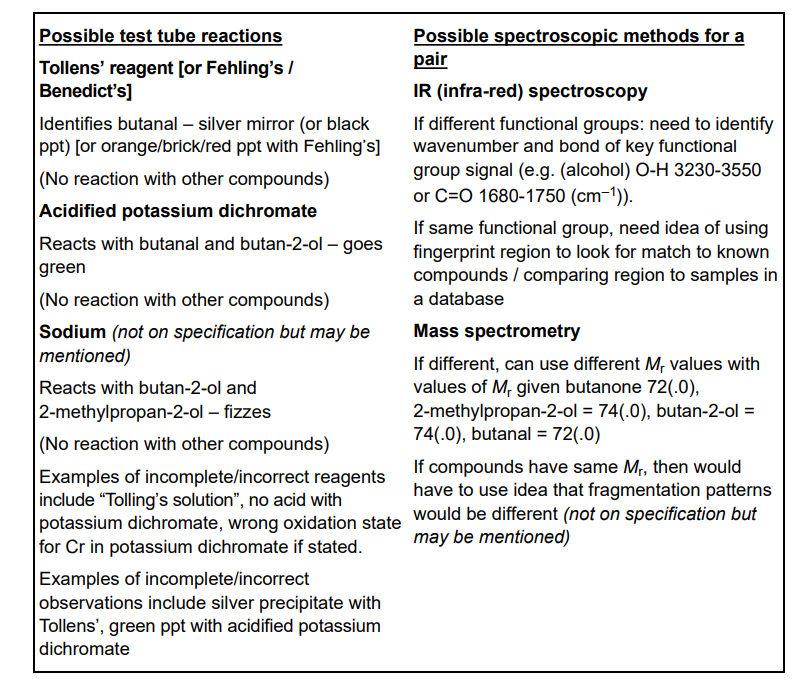
• Q, R, S, T • (Orange solution) turns green
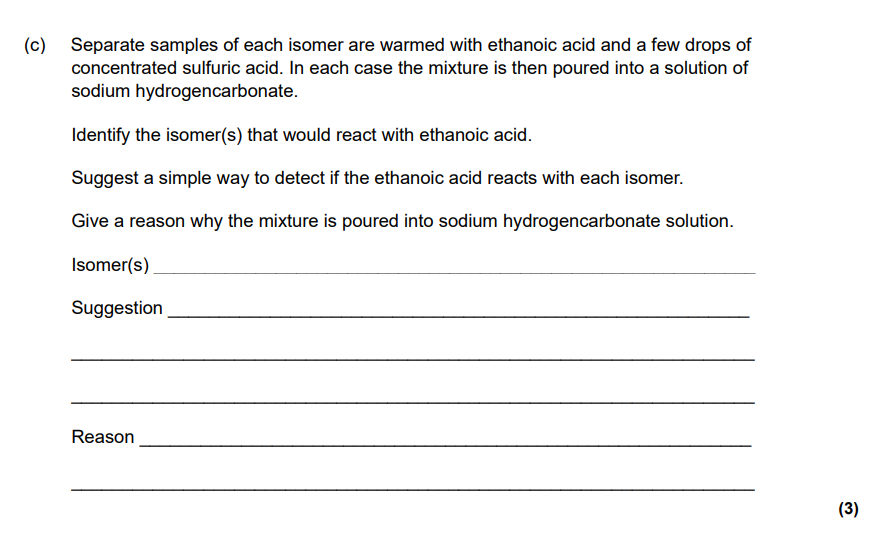
• P, Q, R, S • Sweet smelling (liquid) • To react with (remove excess) acid / neutralise
Describe fully how infrared spectra can be used to distinguish between isomers R, S and T. Use data from Table A in the Data Booklet in your answer (4)
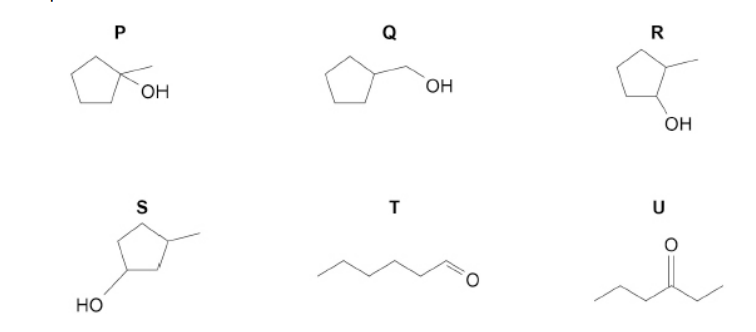
• R & S have an O-H alcohols peak at 3230-3550 cm−1 • T has C=O peak at 1680-1750 cm−1 • R & S (unique) fingerprint region or below 1500 cm−1 • Compare to a database / known spectra (and look for an exact match)
State why mass spectrometry using electrospray ionisation is not a suitable method to distinguish between the isomers (1)
All have the same Mr
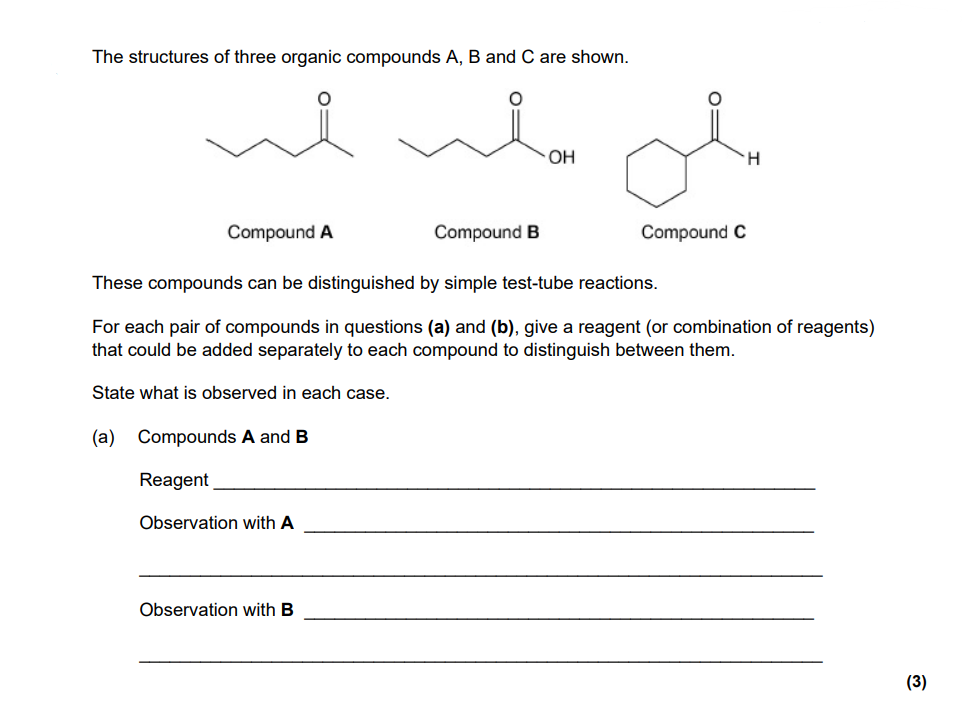
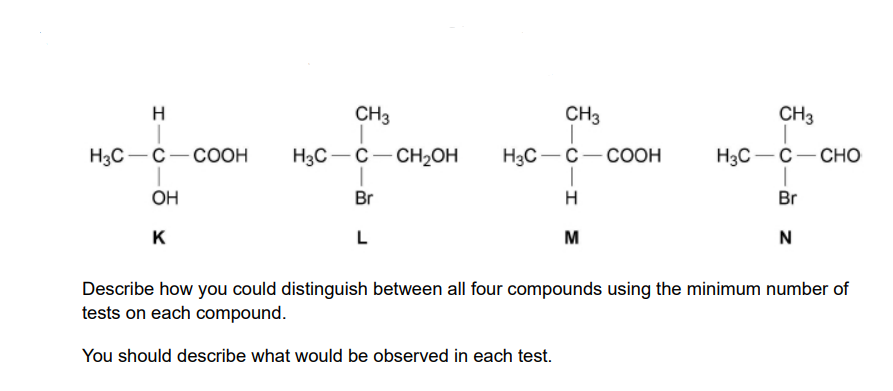
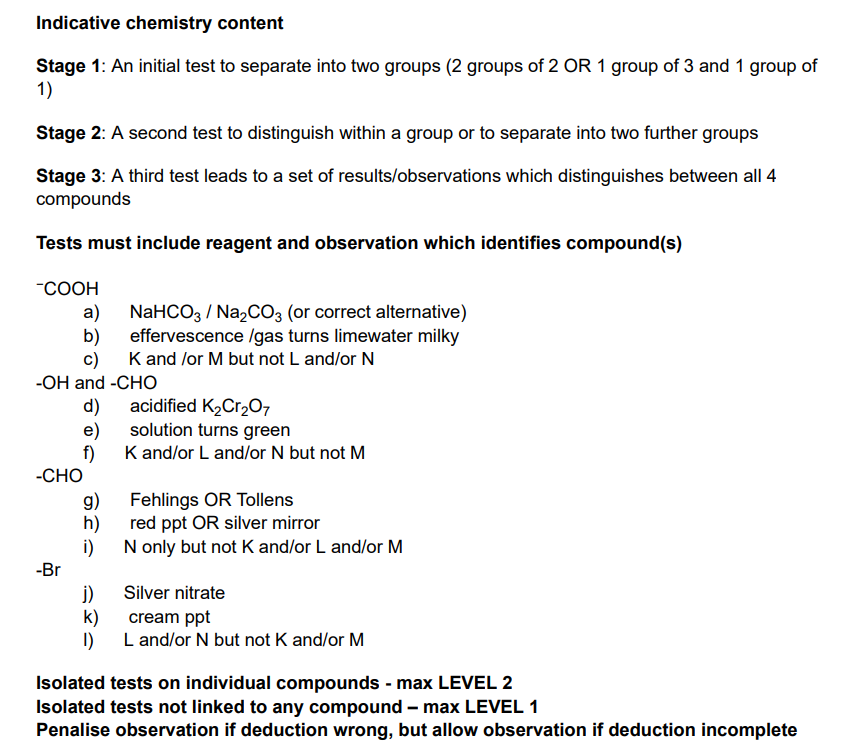
• Named carbonate / hydrogencarbonate / bicarbonate (or Mg / Na) • No (visible/observed) reaction/change/effect • effervescence / bubbles (of gas) / fizzing
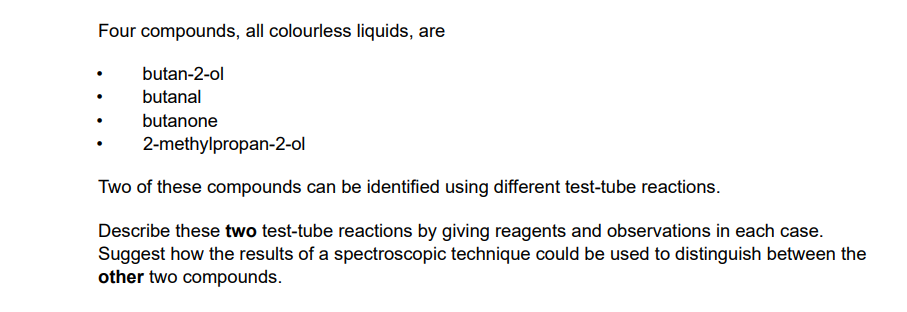
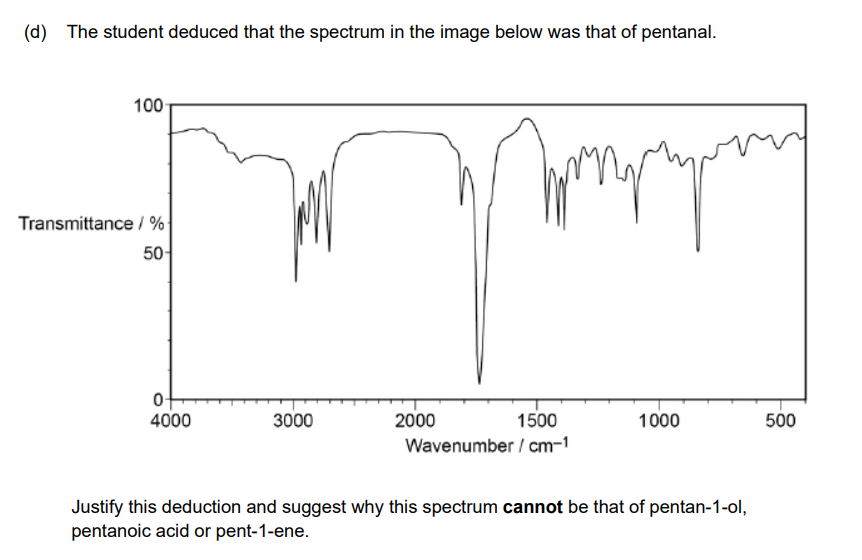
• Absorption at 1680–1750 cm−1 caused by C=O • No absorption at 1620−1680 cm−1 caused by C=C • No absorption at 3230–3550 cm−1 due to −OH (alcohol) • No absorption at 2500–3000 cm−1 due to −OH (acid)
Explain why determining the precise relative molecular mass of propanal and prop-2-en-1-ol by mass spectrometry could not be used to distinguish between samples of these two compounds (2)
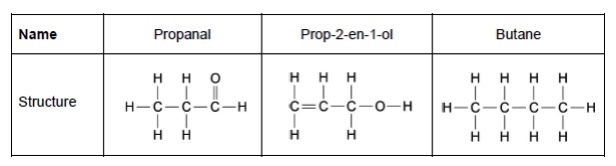
• have the same molecular formula • identical / exactly the same / same precise (relative) molecular
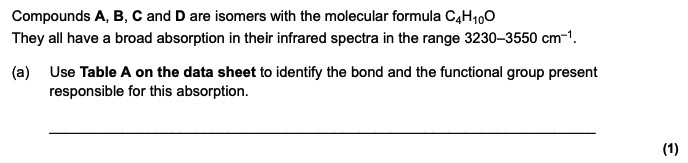
OH AND alcohol
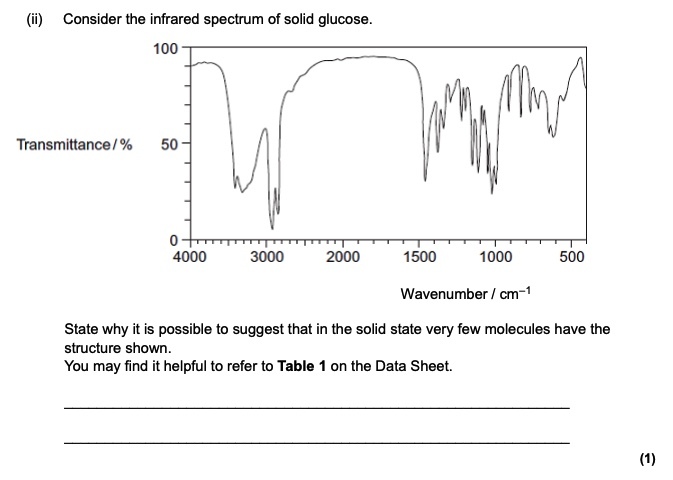
No peak / no absorption / no C=O in the range 1680 to 1750 (cm−1) (suggesting no evidence of C=O)
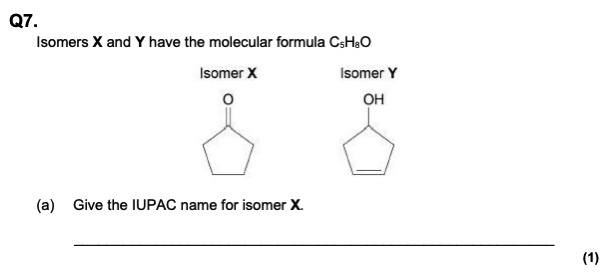
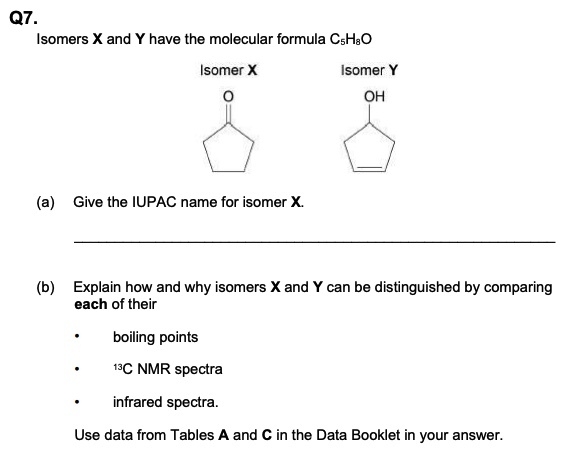
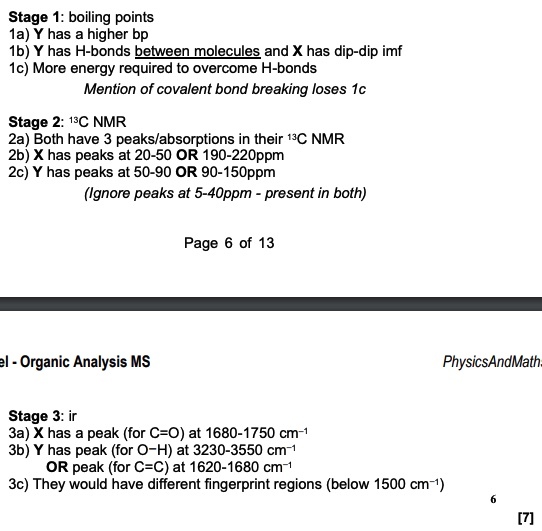
Cyclopentanone
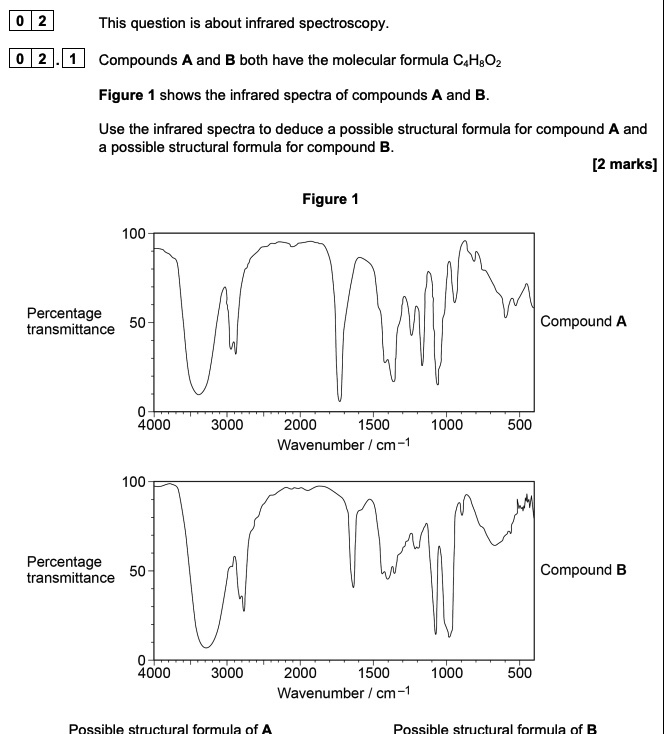
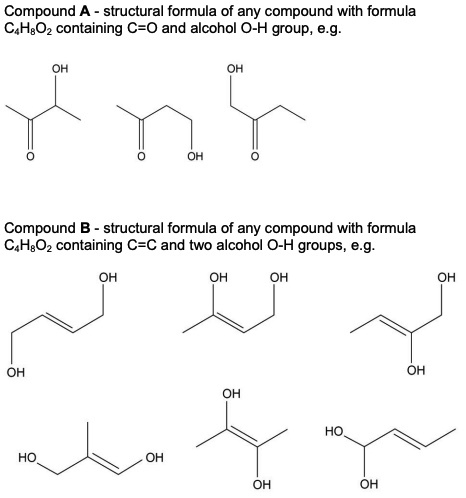
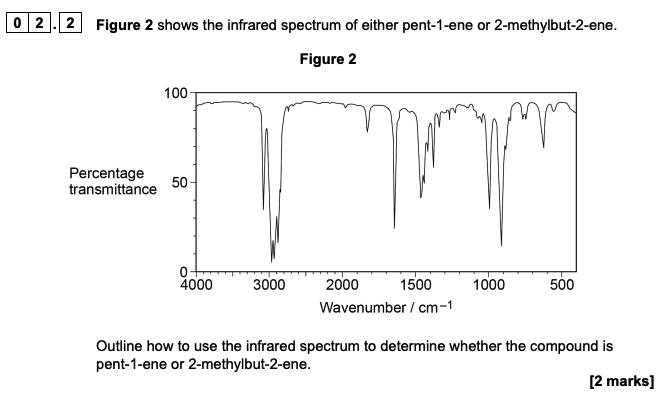
• use fingerprint region • look for (exact) match to known spectrum