Ch7- Periodicity
No description yet. This curated deck is ready for daily study.
Card preview (18)
For a Giant Ionic Lattice, describe the: * bonding * the way that atoms combine * the forces holding the particles together * MP/BP * Electrical Conductivity
* Bonding - Ionic Bonding (electrostatic attraction) * Way that atoms combine - atoms lose and gain e- * Forces holding particles together - strong ionic bonds between + and - ions * MP/BP - High ; strong ionic bonds between cations and anions which require large amount of energy to overcome * Electrical Conductivity - Doesn’t conduct electricity as solid, DOES conduct when molten/(aq) as ions are free to move
For a Giant Covalent Structure, describe the: * bonding * the way that atoms combine * the forces holding the particles together * MP/BP * Electrical Conductivity
• Bonding: Covalent • Way that atoms combine: atoms share e- • Forces holding the particles together: strong covalent bonds between atoms • MP/BP- high ; strong covalent bonds between atoms which require a lot of energy to overcome • Electrical Conductivity: does NOT conduct electricity. No ions/electrons which can move. EXCEPT Graphite.
For a Simple Molecule, describe the: * bonding * the way that atoms combine * the forces holding the particles together * MP/BP * Electrical Conductivity
• Bonding: covalent • Way that atoms combine: atoms share electrons • Forces holding the particles together: weak intermolecular forces between molecules • MP/BP: Low ; weak intermolecular forces between molecules easy to break • Electrical Conductivity: Does NOT conduct electricity. no free to move ions/electrons.
For a Giant Metallic Lattice, describe the: * bonding * the way that atoms combine * the forces holding the particles together * MP/BP * Electrical Conductivity
• Bonding: Metallic • Way that atoms combine: atoms lose e- • Forces holding the particles together: strong metallic bonds between ions and delocalised e- • MP/BP: High ; strong metallic bonds between ions + delocalised e- require large amount of energy to overcome • Electrical Conductivity: conducts electricity when solid as it contains delocalised e- which are free to move.
What Factors affect MP of Ionic Compounds?
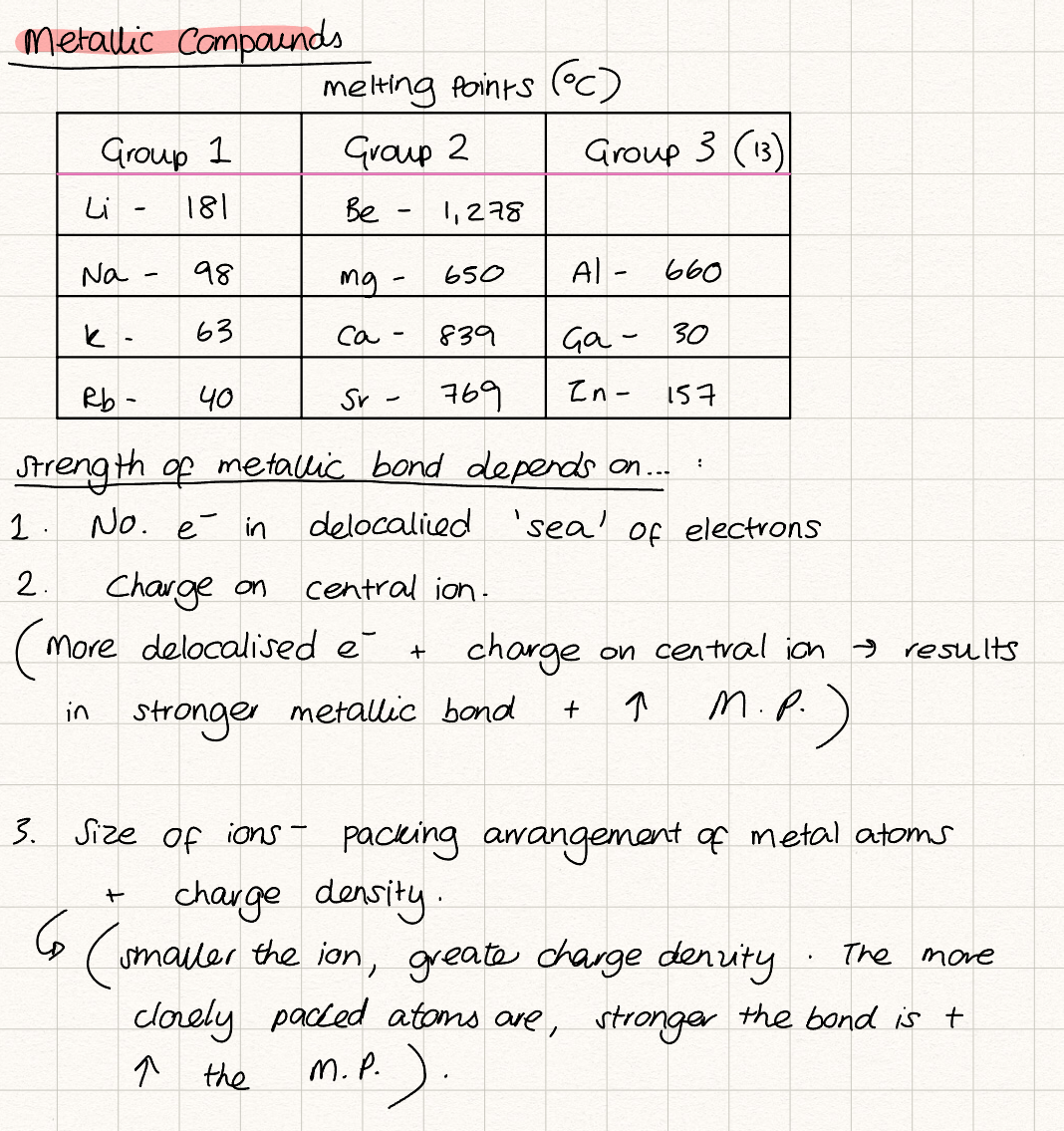
• Charge on ions: the greater the charge, the greater the electrostatic attraction • Size of ions: generally, smaller the ion, the greater the electrostatic attraction. 1. As radius of cations increases down Gr1/2, MP decreases 2. Smaller ions can pack closer therefore have greater charge density, greater electrostatic attraction, ionic bond stronger, MP increases.
What factors affect MP of Metallic Compounds?
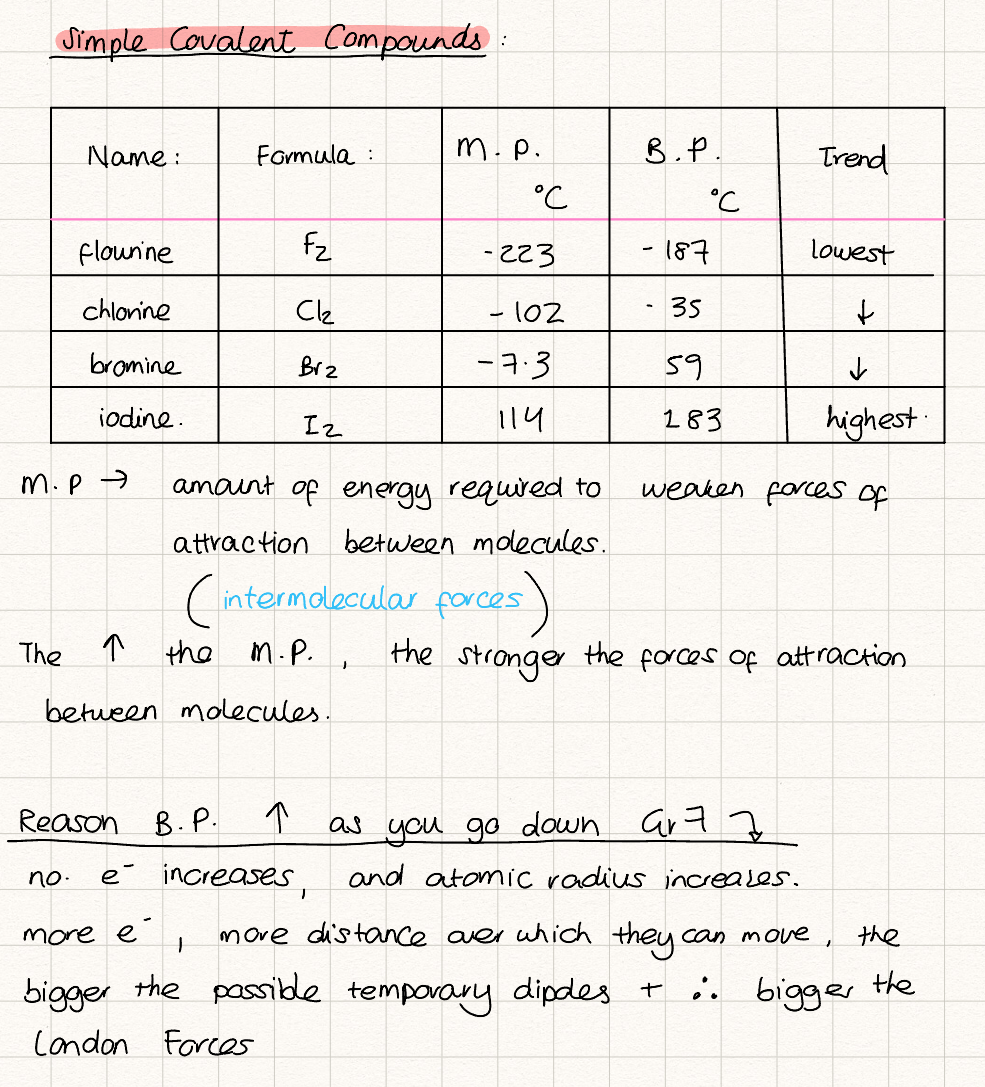
What factors affect MP of Simple Covalent
Define 1st Ionisation Energy:
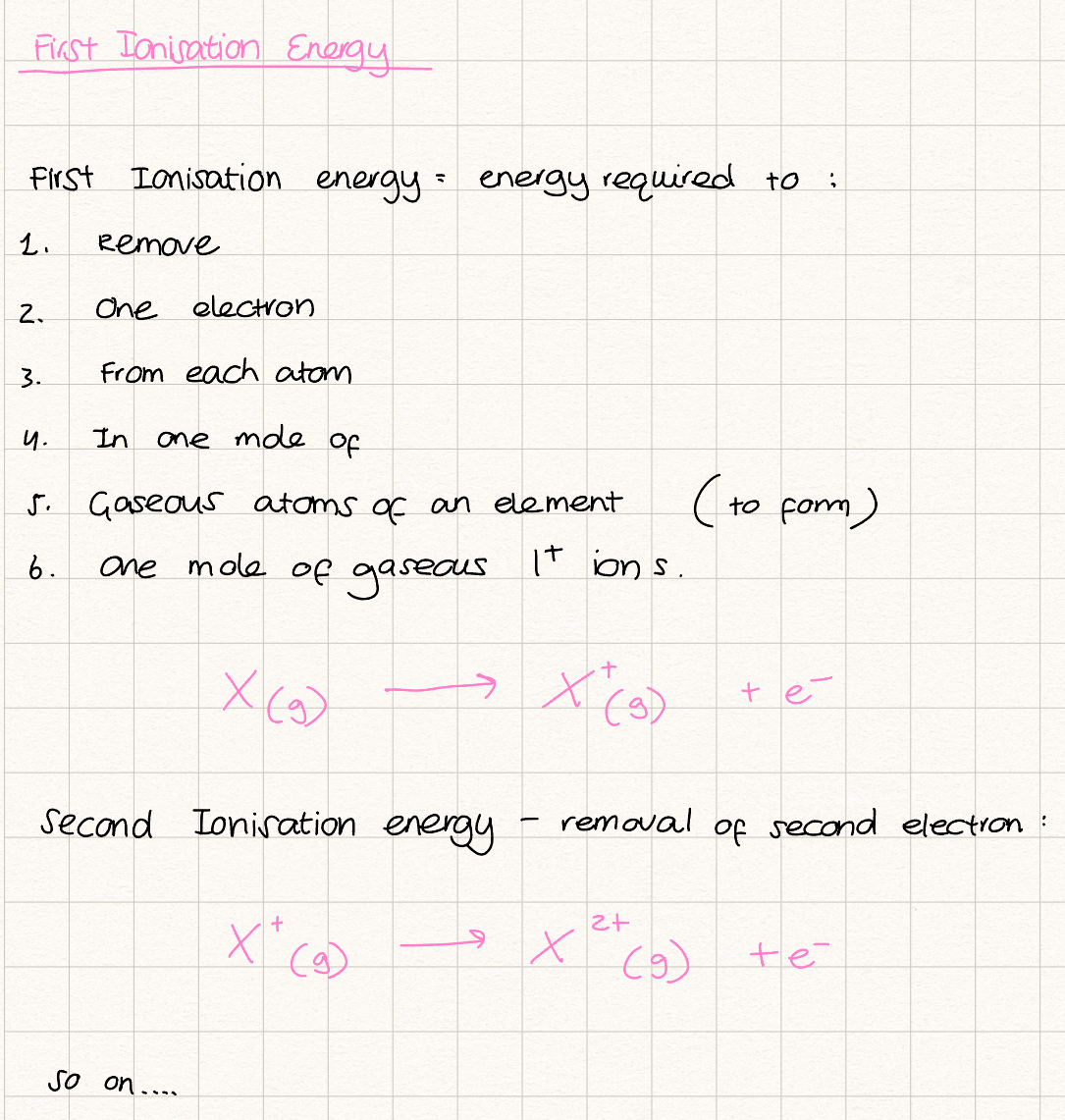
What does Ionisation energy measure?
I.E. measures how easily an atom loses e- to form positive ions.
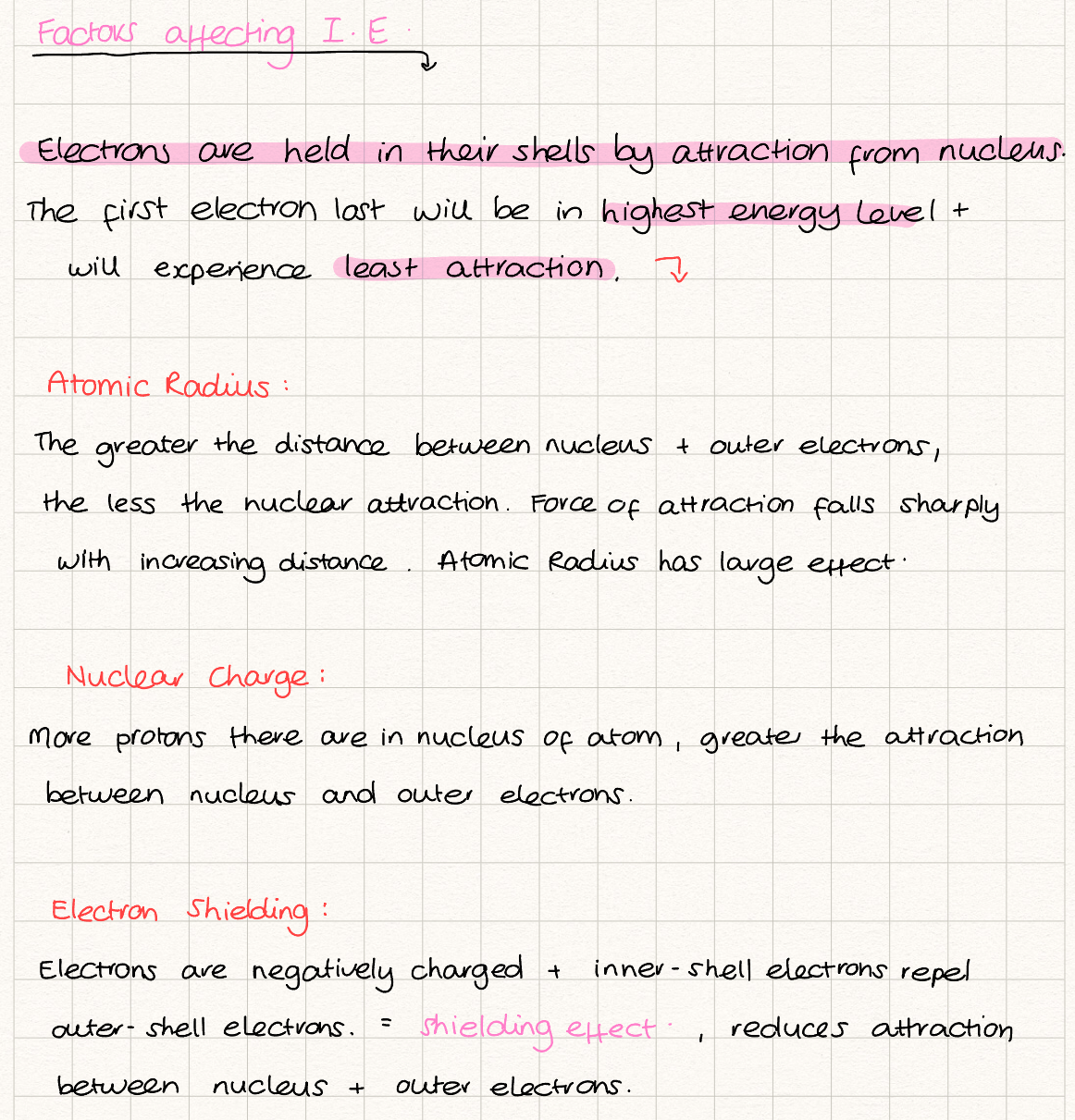
What factors affect Ionisation Energy
How do you identify the element using an ionisation energy graph?
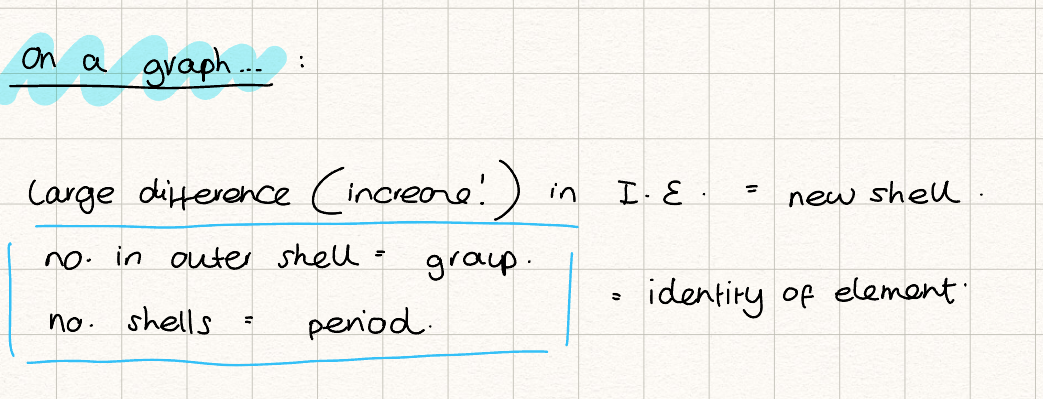
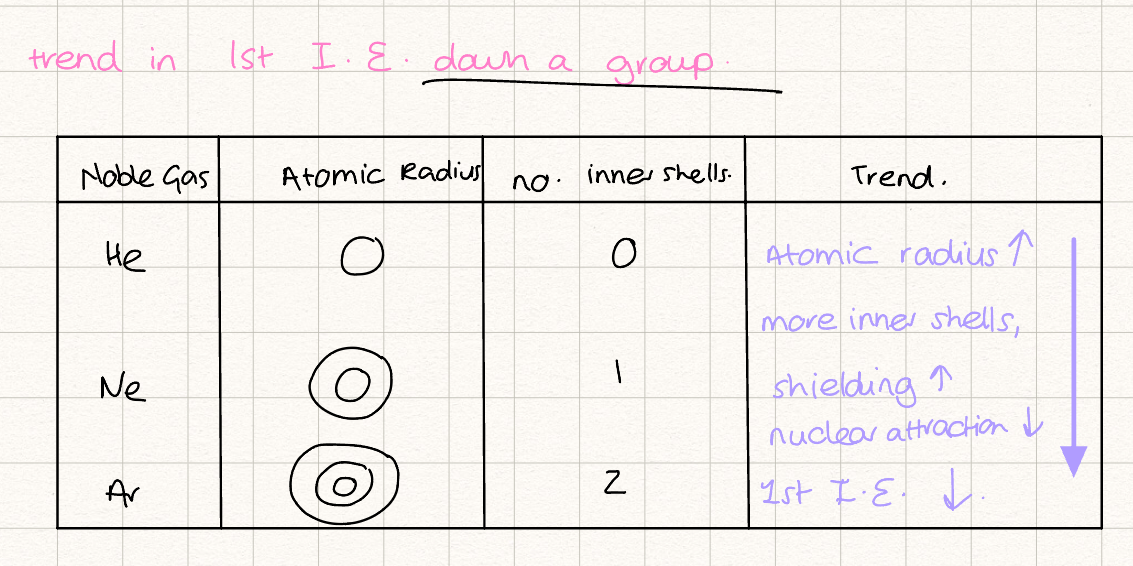
What is the trend in I.E. down a group?
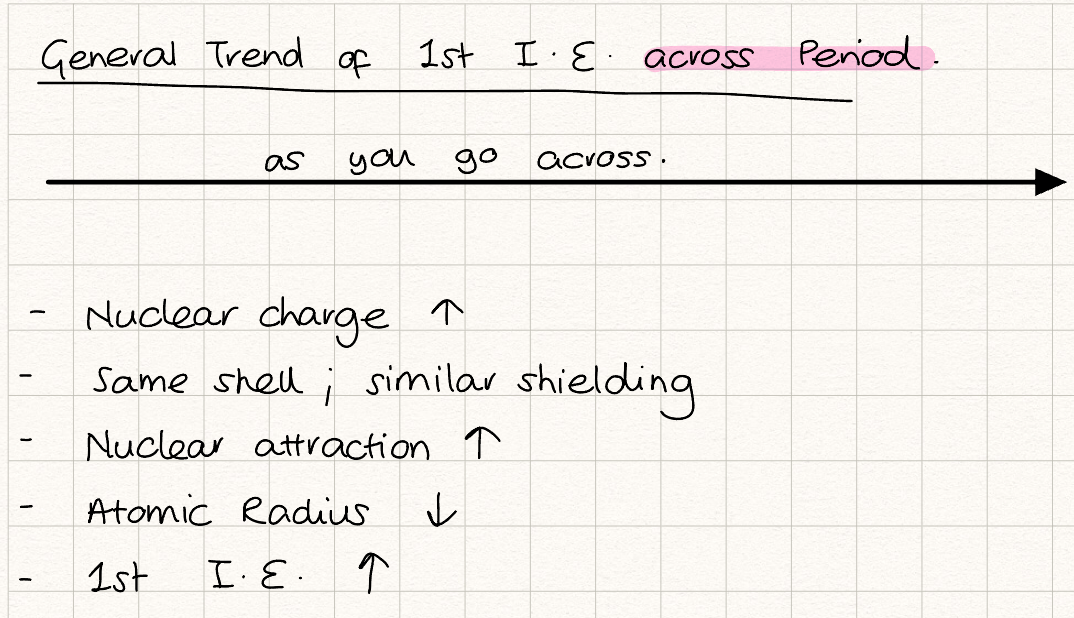
What is the trend in I.E. across a period?
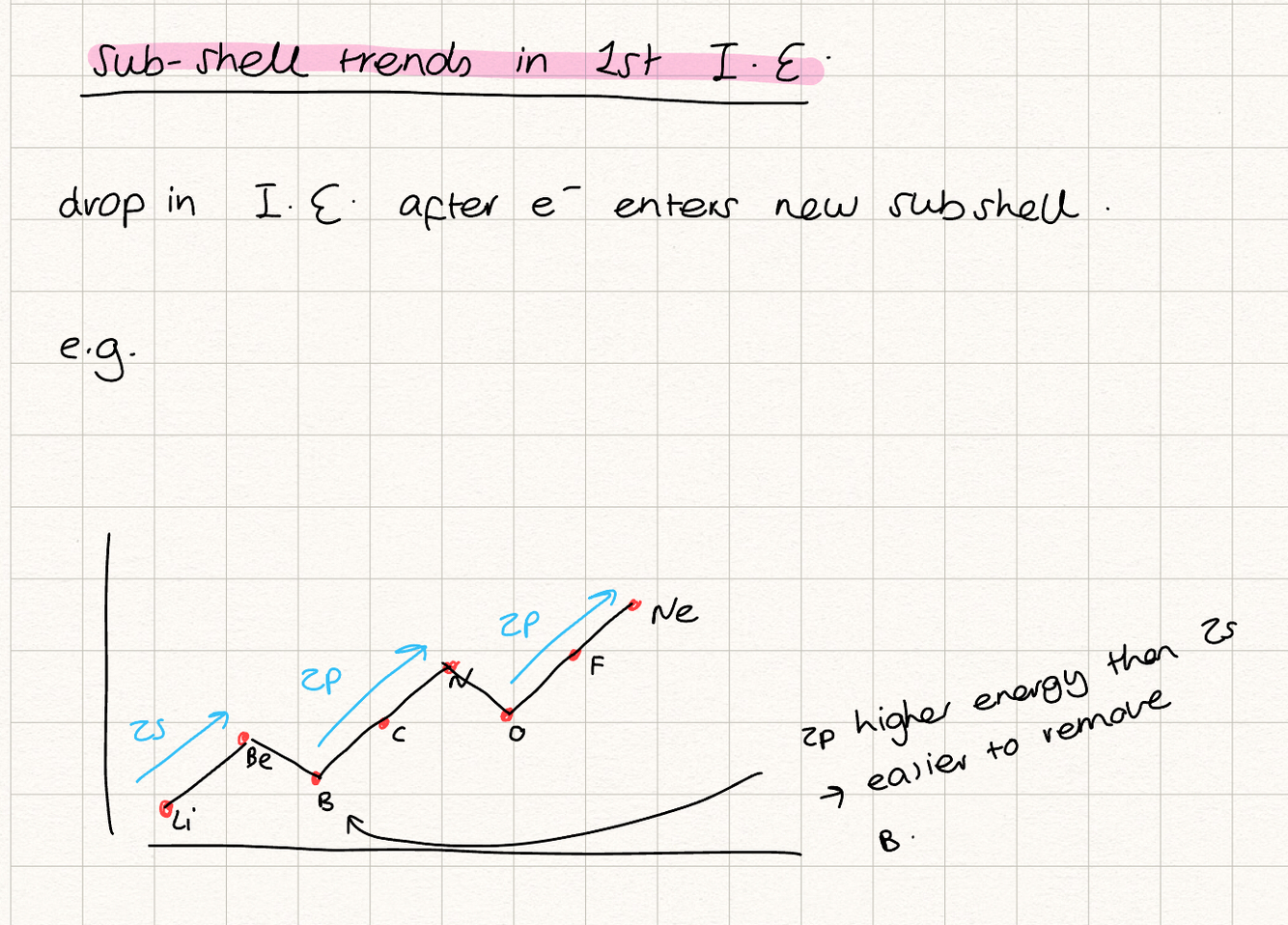
What is the sub-shell trend in 1st I.E.?
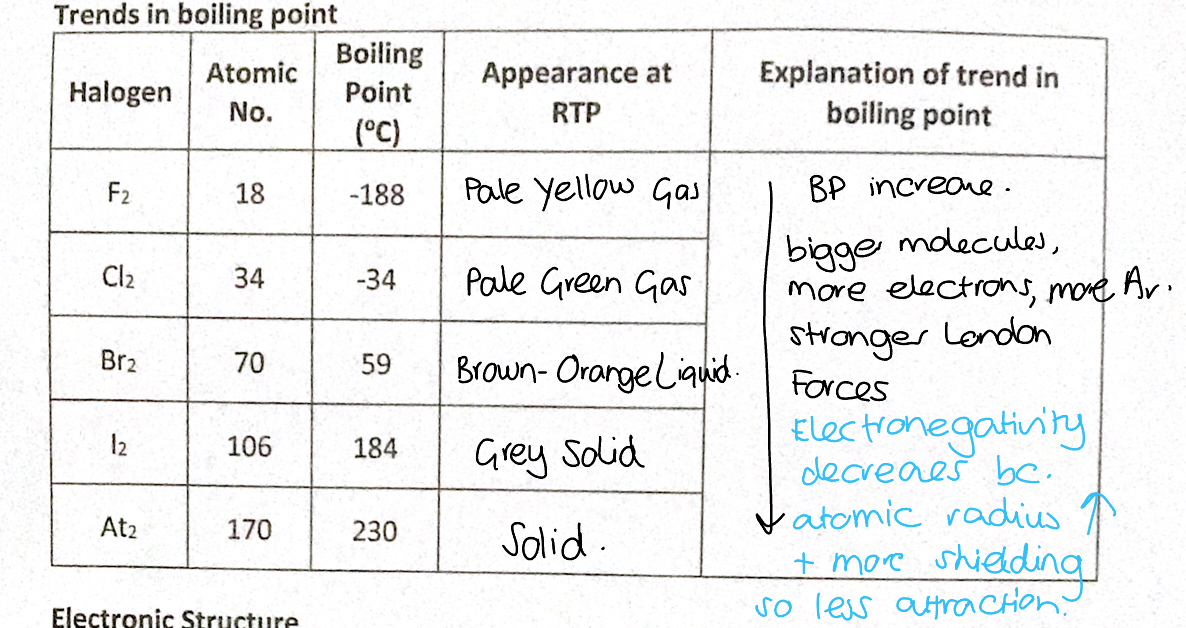
What is the trend in BP and electronegativity in Halogens?
As you go down Gr7, BP increases, as the molecules are bigger, and there are more electrons, more Ar, stronger London Forces. Electronegativity decreases as Atomic Radius increases and more shielding so less attraction.
What is the trend in reactivity in Halogens?
As you go down Gr7, the halogens get less reactive (larger atomic radius, therefore less nuclear attraction, so less likely to be readily accepting an electron)
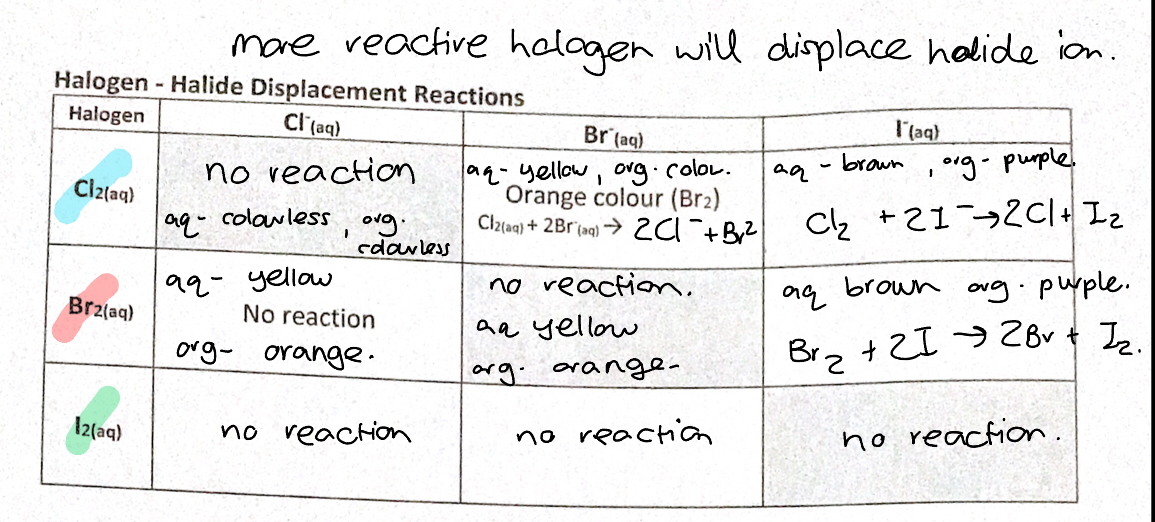
What are the different halide displacement reactions?
Watch Allery Chemistry vid on Gr7 and Halogens