1 - Principles of chemistry (f) Ionic bonding
No description yet. This curated deck is ready for daily study.
Card preview (9)
How are ions formed?
By losing or gaining ions
What are the charges of ions in groups 1,2,3,5,6, and 7
+ 2+ 3+ 3- 2- -
What are the charges of these ions: Silver Copper Iron (II) Iron (III) Lead Zinc
Ag⁺ Cu²⁺ Fe²⁺ Fe³⁺ Pb²⁺ Zn²⁺
What are the ions and charges of: Hydrogen Hydroxide Ammonium Carbonate Nitrate Sulfate
H⁺ OH⁻ NH₄⁺ CO₃²⁻ NO₃⁻ SO₄²⁻
How do you draw a dot and a cross diagram for Magnesium and Chlorine?
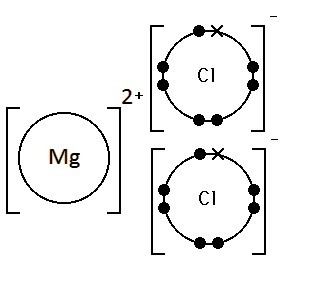
What is ionic bonding in terms of electrostatic attractions?
Ionic bonding: a strong electrostatic attraction between oppositely charged ions
Why do compounds with giant ionic lattices have high melting and boiling points?
Because there are strong electrostatic forces of attraction, which require lots of energy to overcome, they have high melting and boiling points.
When do ionic compounds conduct electricity?
When they are molten or liquid/in aqueous solution, but NOT when they are solid.
What two types of elements does ionic bonding occur between?
Metal and non-metal elements.