2.5. Enzymes
No description yet. This curated deck is ready for daily study.
Card preview (16)
enzyme
globular protein that increases rate of biochemical reaction by lowering activation E threshold
substrate
substance on which enzyme act
active site
region on surface of enzyme which binds to substrate molecule
relationship between substrate & active site
• substrate must fit into active site of enzyme before catalysis can occur • only properly shaped molecules can serve as substrates for given enzyme -> shape of substrate is specific to the enzyme
induced-fit model
• maintains that enzymes are rather flexible structures -> active site is reshaped by its interactions w/ the substrate until the time the substrate is completely bound to it • explains how enzymes may exhibit broad specificity
role of random collisions in binding of substrates with active site
• random collisions allow susbtrate to bind with enzyme active site • substances can only bind to active site if it’s really close to it -> random collision needs to be successful for substrate to end up in active site & for reaction to start
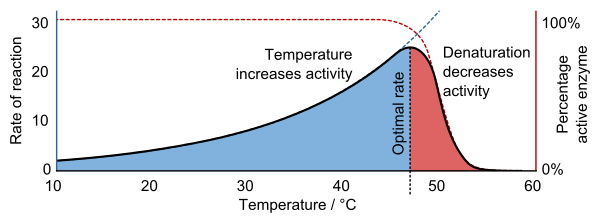
effect of temperature on enzyme activity rate
• reaction rate increases as temp increases to an optimal level then abruptly declines as temp increases further • most enzymes rapidly become denatured at higher temps
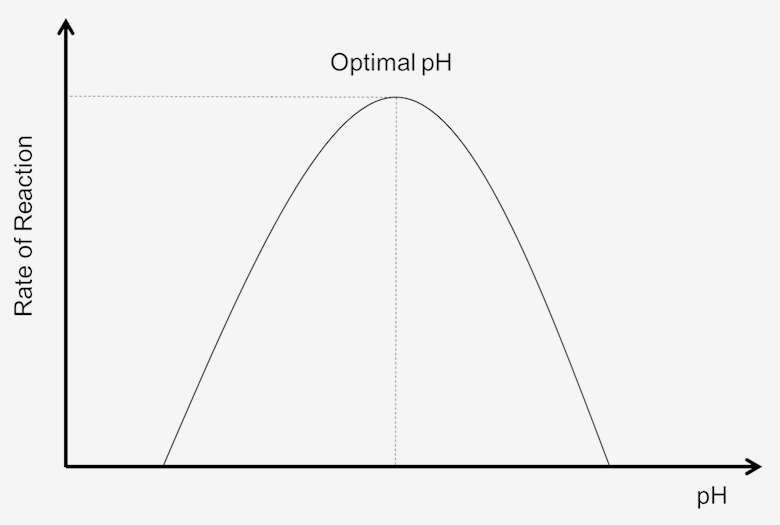
effect of pH on enzyme activity rate
• extremely high/low pH values -> complete loss of activity for most enzymes • factor in chemical stability of enzyme structure • enzyme activity increases around an optimum pH • when pH moves out of optimum range, enzyme activity decreases bc pH alters charges, thus affecting shape of enzyme and denaturing it
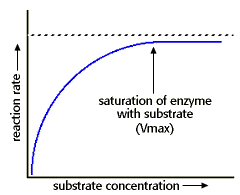
effect of substrate concentration on enzyme activity rate
• one single enzyme has maximum number of substrate molecules it can combine with per minute • at low conc of substrate: steep increase in reaction rate as substrate conc increases • bc active site is empty & waiting for substrate to bind most of the time • reaction rate is limited by conc of substrate that’s available • as substrate conc increases: enzyme becomes saturated w/ substrate • when active site is empty, more substrate is available to bind & undergo reaction • rate of reaction depends on activity of enzyme & adding more substrate won’t affect reaction rate to any significant effect
denaturation
• at high temp & extreme pH, bonds btwn amino acids in enzyme changes, changing shape • bc shape of active site is altered, enzyme no longer can bind its substrate & enzyme function is lost
enzyme use in industry
• food production • food processing & preservation • washing powder • leather industry • medical applications
immobilized enzyme
• enzyme attached to inert, insoluble material • widely used in industry for enzyme catalysed reactions bc it lets enzymes be held in place throughout reaction so that they can be easily separated from products & reused
source of the lactase enzyme used in food processing
obtain from yeast - yeast is cultured then lactase is extracted & purified
reaction catalysed by lactase
converts disaccharide sugar in milk, lactose, into two monosaccharides, galactose and glucose lactose —lactase—> glucose+galactose
4 reasons for using lactase in food processing
• to form lactose-free milk for ppl who are lactose intolerant • to make milk sweeter so that no additional sweetener is needed • to prevent crystallization of the milk when making ice cream • to reduce production time of cheese/yogurt
3 techniques for measuring enzyme activity
• enzyme reaction rate • amount of product • amount of substrate