Environmental Physiology
No description yet. This curated deck is ready for daily study.
Card preview (17)
Adaptation
• long term changes in animals in response to their environment that they are genetically based
Acclimation
• process or result of becoming accustomed to a new climate or to a new condition (short term)
Critical Temperature
• temperature below critical temperature which an animal must make physiological adjustments to maintain body temp • upper critical temperature: animal makes adjustments to cool body • burns energy to stay warm and cool
Effective Temperature
• total heating or cooling power of environment • effected by wind, humidity, and solar radiation
Evaporation
• loss of heat through vaporization of moisture from respiratory tract and skin
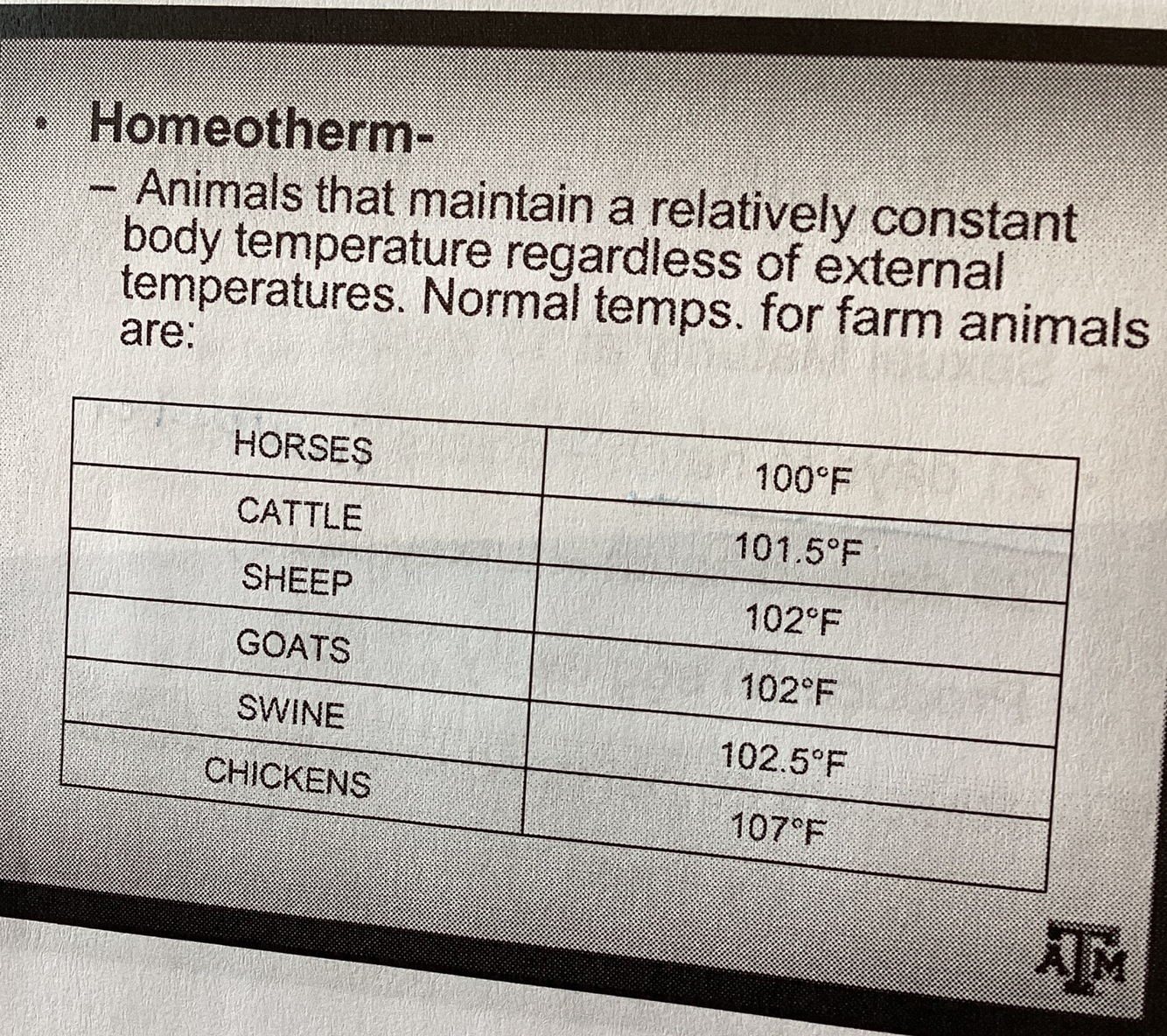
Homeotherm
• animals maintain relatively constant body temperature regardless of external temperatures
Radiation
• exchange of heat between two objects that are not touching (loss or gain of heat)
Thermoneutral Zone
• range of temperature where heat loss and heat production are about the same (comfort zone/no physiological response)
Which four factors affect critical temperature?
• Hair coat • Subcutaneous fat • Nutritional Level • Animal Wet or dry
What are the two hormonal responses to temperature stress?
• Thyroxine • Corticoids
What is thyroxine?
• hormone produced by thyroid gland, thyroxine secretion increases during cold stress and decreases during heat stress
What is corticoids?
• corticoids is a stress hormone produced by the adrenal gland, cortical secretions increase during cold sorters and decrease during heat stress
What are the two methods of reducing stress during hot periods?
• Shade (cheapest, simplest, should be 10-12 high,placed on hill, top should be white or shine/reflective) • Evaporative Cooling (one of the most effective ways to control heat stress, especially in swine and poultry, includes sprinklers/foggers/wallows)
Refrigeration
• prohibitive in terms of cost • pulling air through underground ducts in barn which cools air to mid 60’s
Zone Cooling
• blowing air on head has been effective in sows in farrowing houses (increase in milk production)
Ventilation
• producers raised in livestock in confined places ,USA be