Lecture 19 - Aromaticity part 2/2
No description yet. This curated deck is ready for daily study.
Card preview (24)
Give equation for the Friedel crafts acylation reaction of Benzene.
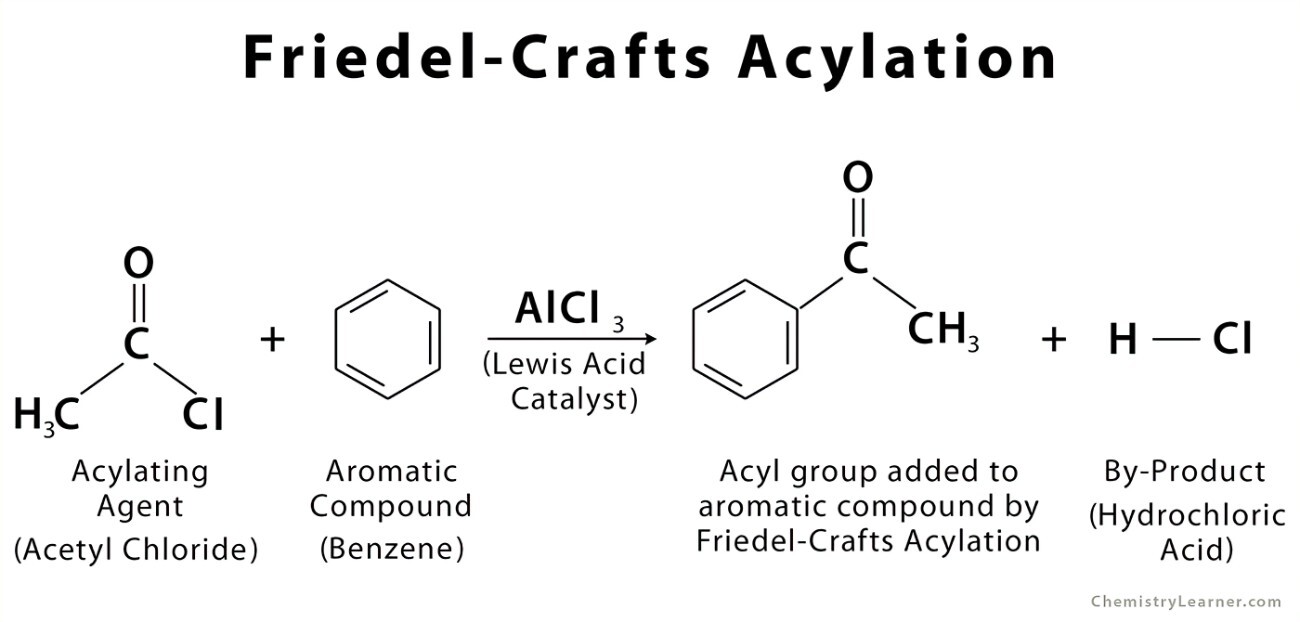
Give mechanism for Friedel crafts alkylation reaction.
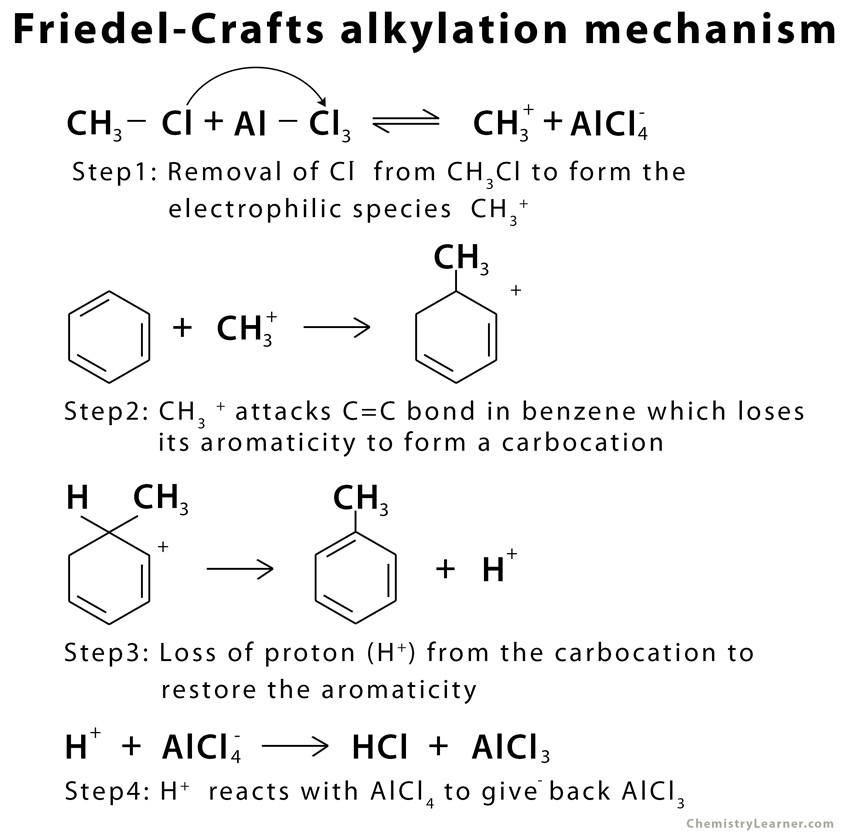
Give sulfonation mechanism of Benzene
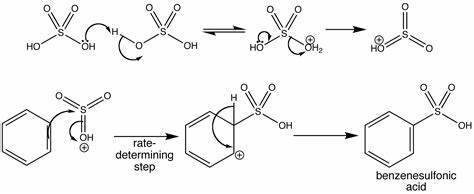
Give the nitration reaction of Benzene.
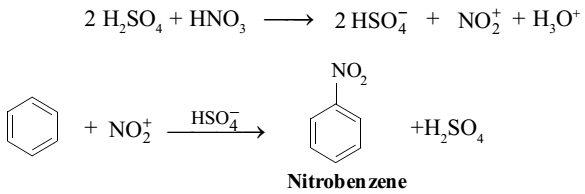
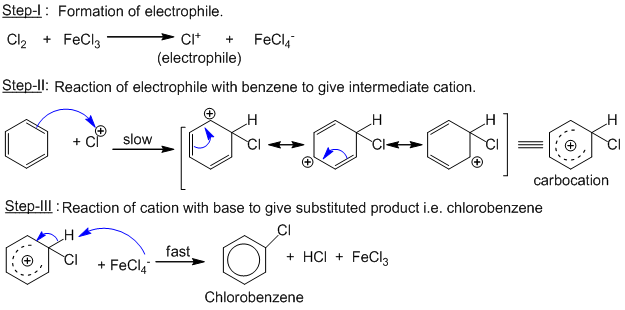
Give halogenation mechanism of benzene - show resonance forms
Benzene can undergo mono-substitution reactions to form three isomers- name them and explain where groups are located around ring.
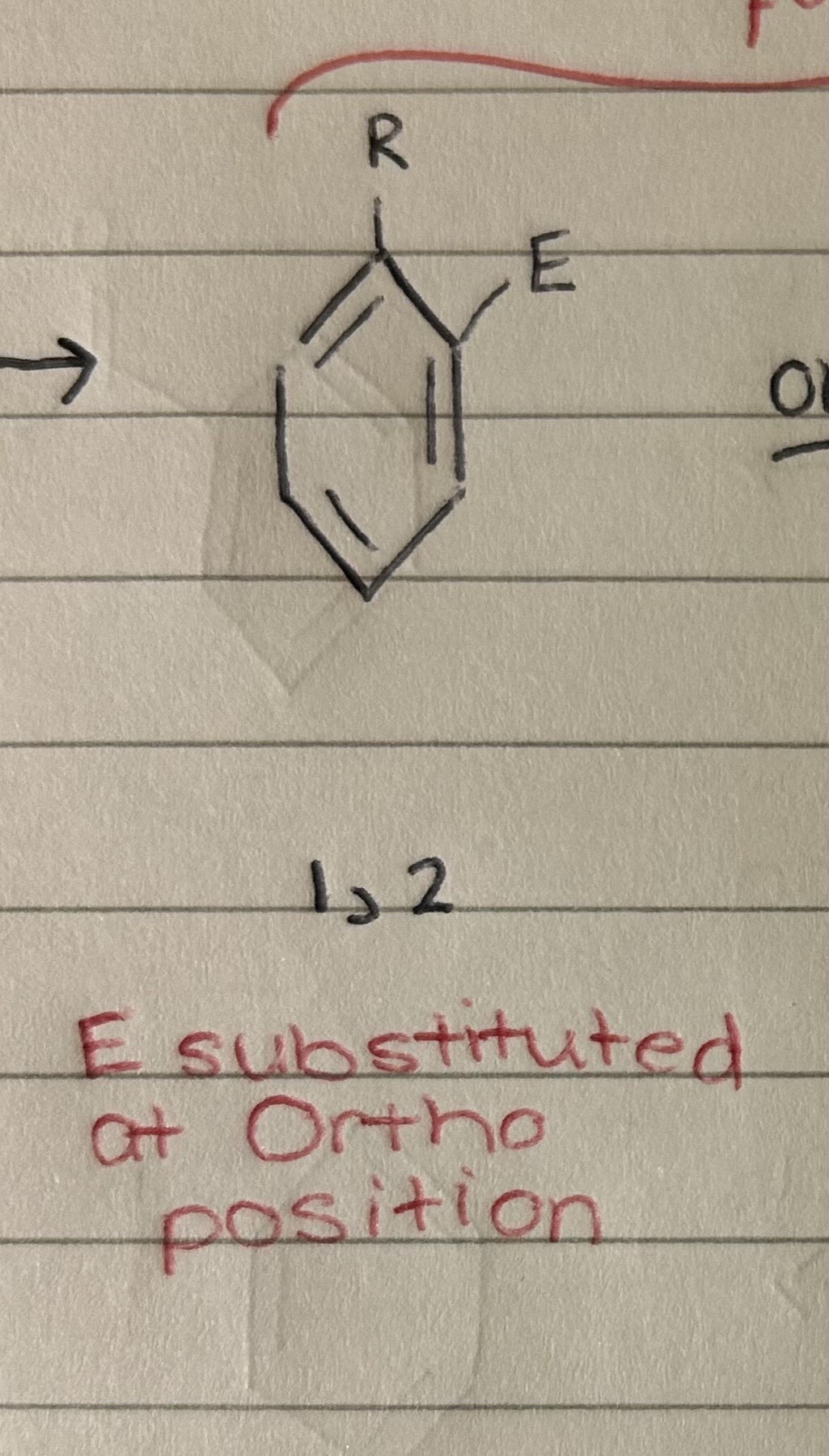
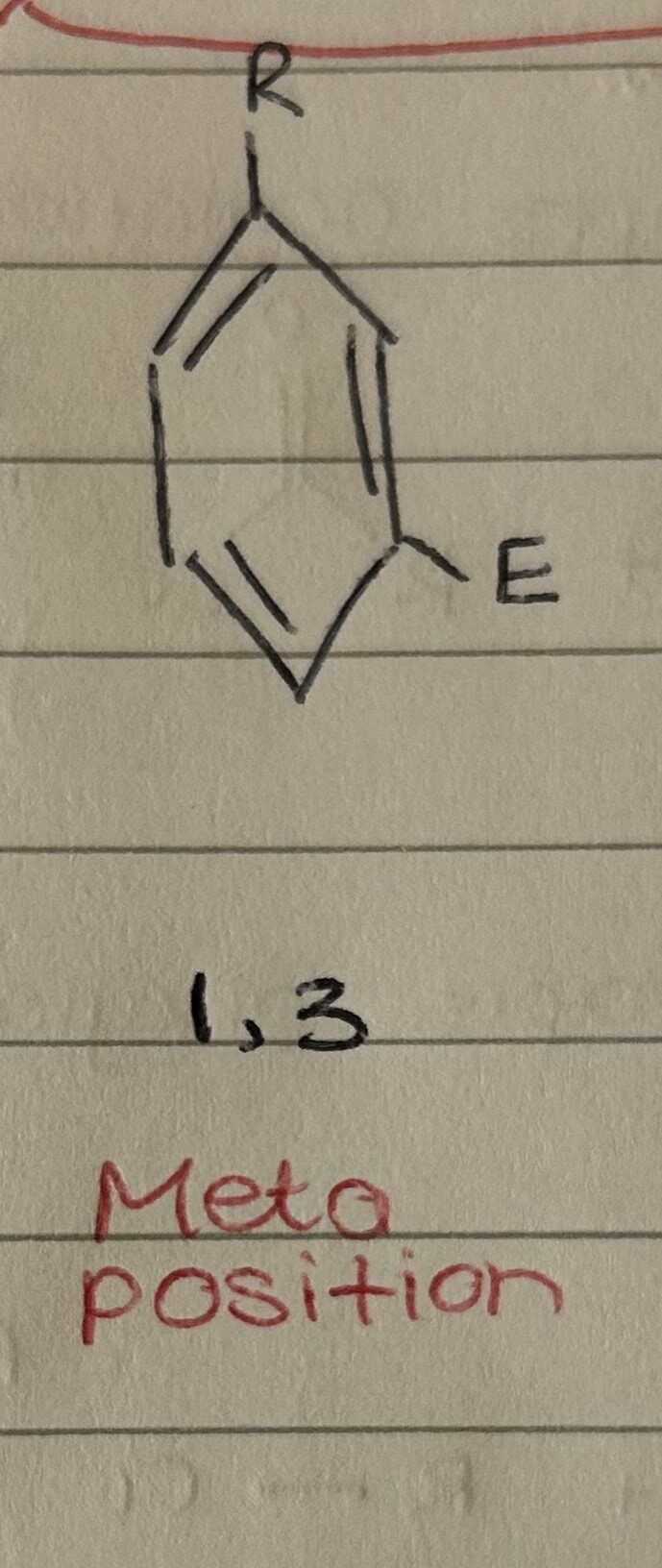
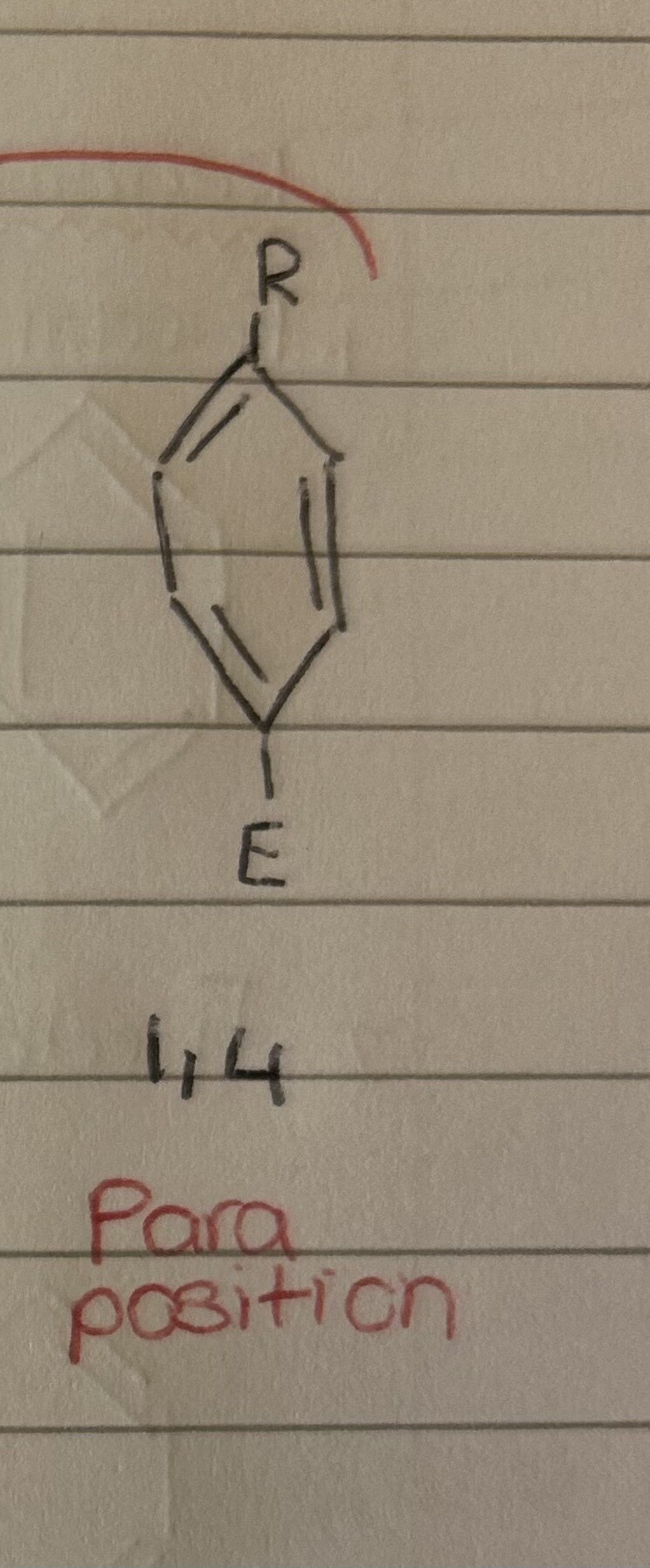
• ortho = 1,2 • meta = 1,3 • para = 1,4
Draw monosubstituted benzene at the ortho position
Draw monosubstituted benzene at the meta position
Draw monosubstituted benzene at the para position
What do directing groups allow us to predict?
Where the electrophile will be substituted in the benzene ring.
Give the general mechanism for ortho substitution of benzene and show the three resonance forms. Circle the most stable intermediate (if R group is electron donating) and explain why.
R group is bonded to the positively charged carbon- electron donating
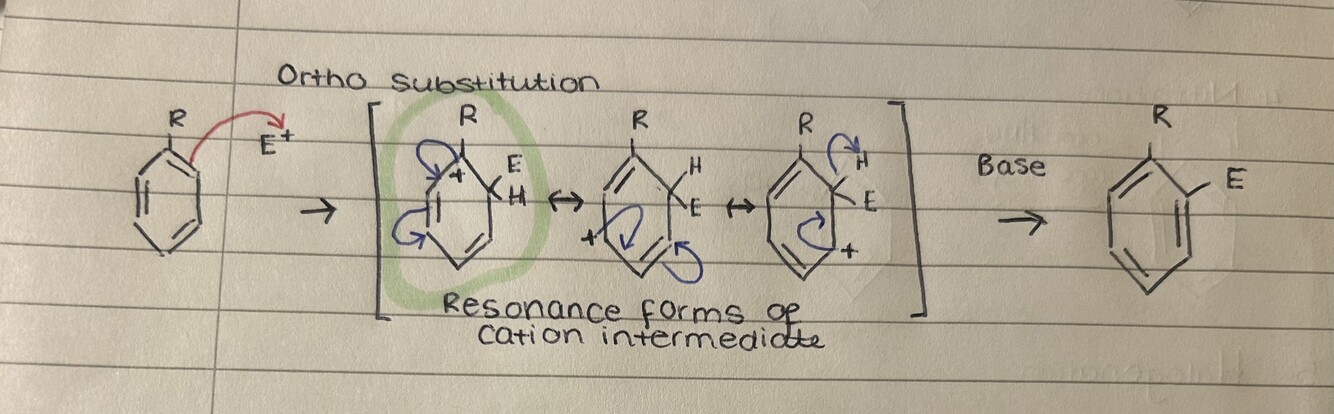
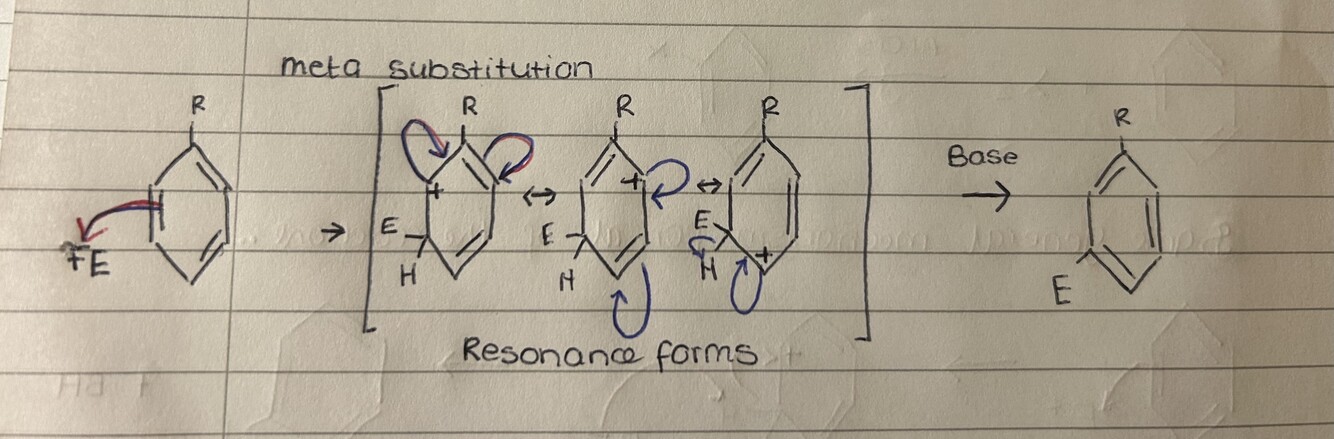
Give the general mechanism for meta substitution of benzene and show the three resonance forms.
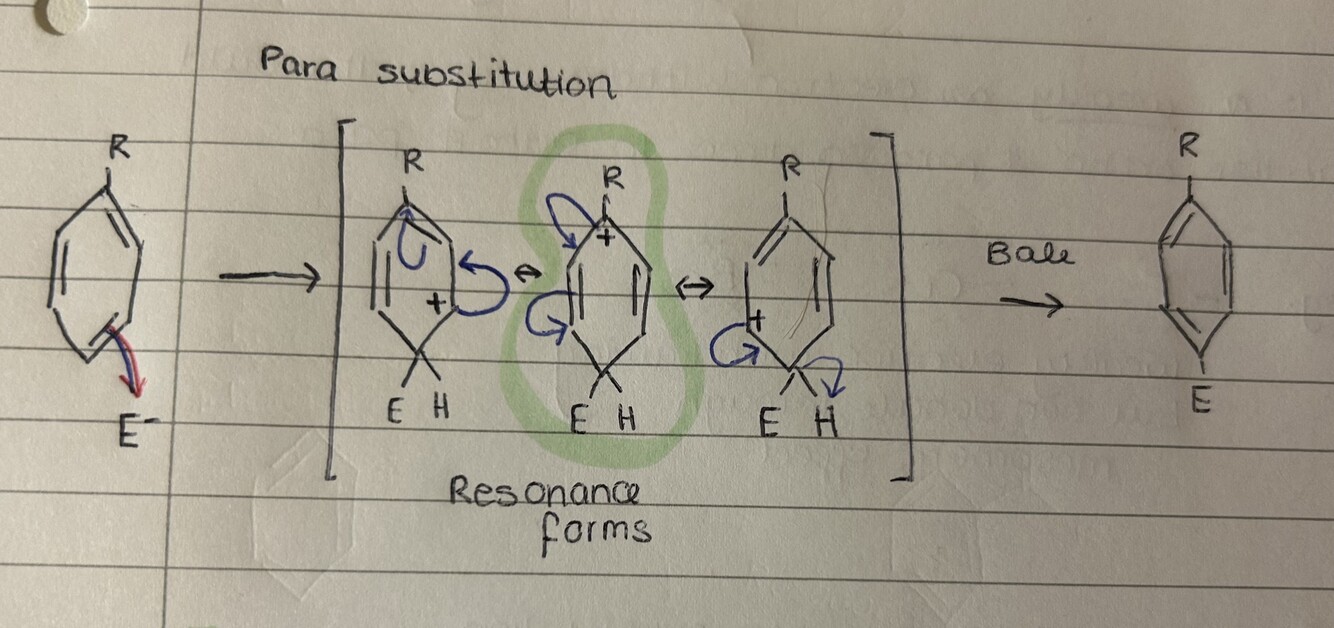
Give the general mechanism for para substitution of benzene and show the three resonance forms. Circle the most stable intermediate (if R group is electron donating) and explain why.
R group is bonded to the positively charged carbon- electron donating. This stabilises the positively charged intermediate.
If the R group is strongly electron donating (activating), where does it direct the electrophile to substitute?
• the most stable positions for the electrophile to substitute are the ortho and para positions - they have resonance forms where the carbocation is bonded to the R group • the electron donating R group stabilises the positive charge.
Give examples of strong electron donating R groups. How do they donate electron density?
NH2 NHR NR2 OH OR donate via the mesomeric effect
If the R group is weakly electron donating (activating), where does it direct the electrophile to substitute?
• the most stable positions for the electrophile to substitute are the ortho and para positions - they have resonance forms where the carbocation is bonded to the R group • the electron donating R group stabilises the positive charge.
Give examples of weakly electron donating groups. How do they donate electrons?
-Me -Et -Ph Donate electron density via the inductive effect
If R groups are strongly electron withdrawing (deactivating), where do they direct the electrophile to substitute and why?
The R group is strongly electron withdrawing so would not stabilise the carbocation. Therefore, directs to the meta position where the R group is never located next to the carbocation in any of the resonance forms.
Give examples of strongly electron withdrawing groups
aldehehyde, ketone, amide, NO2, CN
If R groups are weakly electron withdrawing (deactivating), where do they direct the electrophile to substitute and why?
If R is weakly electron withdrawing (deactivating), it would stabilise ortho and para so would direct electrophile to ortho and para positions
Give examples of weakly electron withdrawing groups. How do they donate electron density?
-F, -Cl, -Br they are weakly electron withdrawing but can donate through the mesomeric effect.
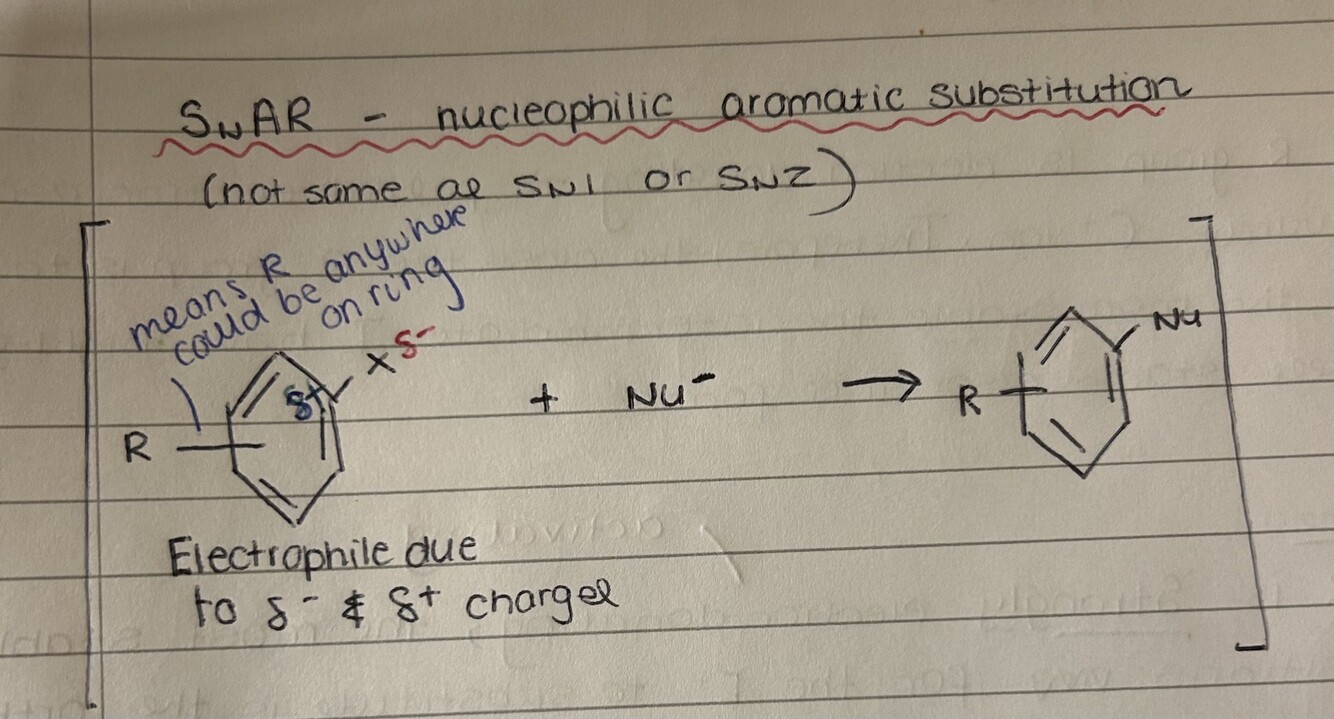
What does SnAR stand for?
nucleophilic aromatic substitution
Give the general equation for an SnR reaction
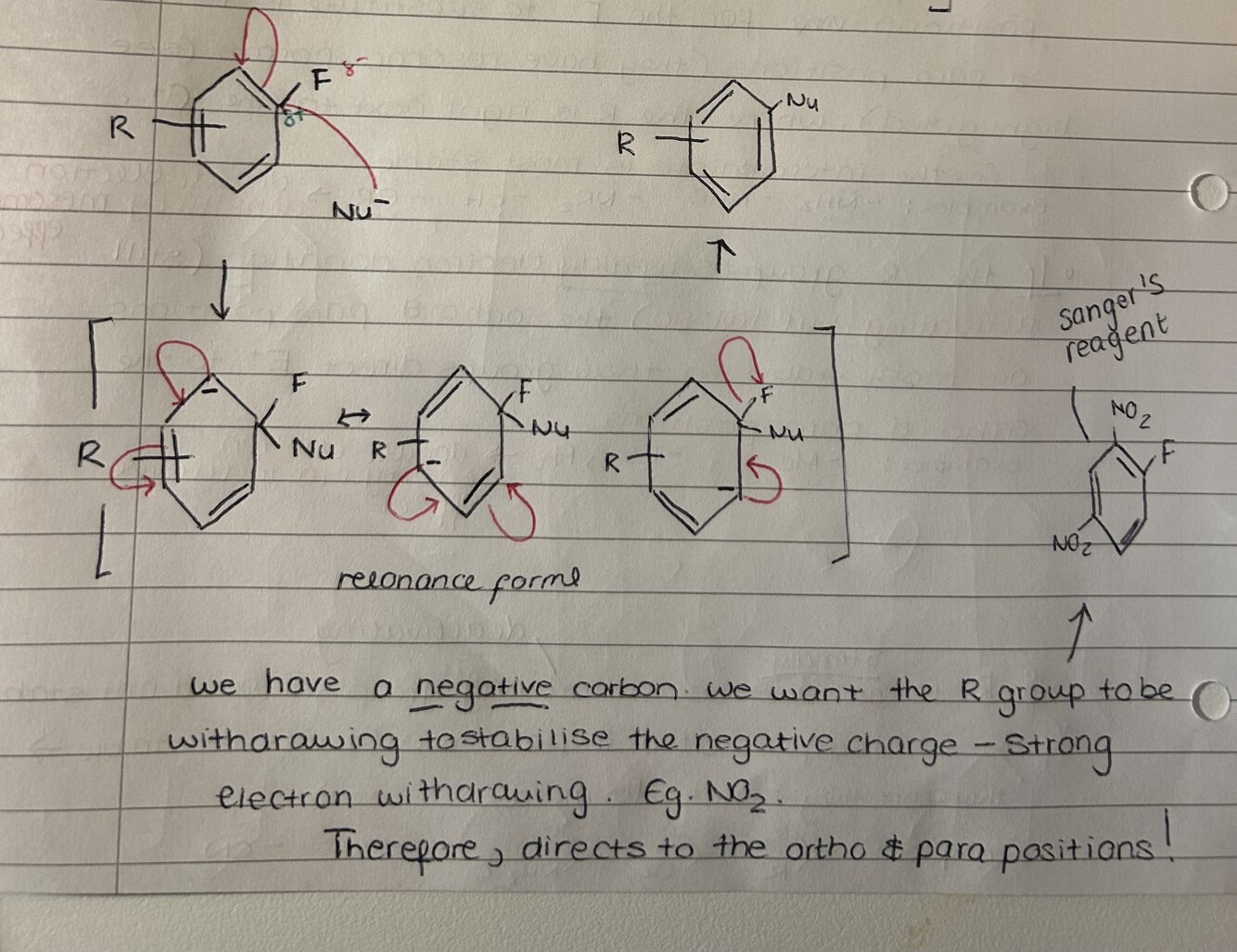
Draw the mechanism for production of Sanger’s reagent. Show how the position and type of R group is worked out.