Calculations
No description yet. This curated deck is ready for daily study.
Card preview (24)
Define relative mass
mass of a substance compared to carbon
Define mole
mass of a substance required to have 6 * 10²³ particles
Grab a notebook. Calculate the moles present in 50g of coppersulfate.
1 mol CuSO₄ ——– 160 0.313 mol ——- 50
Grab a notebook. Calculate the moles present in 23.9g of ammoniumsulfide.
1 mol NH₃SO₃ ——– 68 0.351 mol ——– 23.9
Grab a notebook. Calculate the mass of 2.8 moles of lithiumchloride.
1 mol LiCl ———- 42.5 2.8 mol ———- 119
Grab a notebook. Calculate the mass of 1.5 * 10⁻⁴ moles of titanium(IV)nitrate.
1 mol Ti(NO₃)₄ —— 296 1.5 * 10⁻⁴ —– 0.0444
Discrete covalents are molecules made of…
atoms
Grab a notebook. Calculate the number of fundemental particles in 12.2g of Argon.
1 mol Ar = 40g = 6 * 10²³ 0.305 mol = 12.2g = 1.83 * 10²³
Grab a notebook. Calculate the number of fundemental particles in 6.75 g of potassiumoxide.
1 mol K₂O = 94g = 6 * 10²³ 0.07 mol = 6.75g = 1.29 * 10²³
Grab a notebook. Calculate the number of fundemental particles in 9.9g of chlorinepentaiodide.
1 mol ClI = 162.5g = 6 * 10²³ 0.06 mol = 9.9g = 1.02 * 10²¹
Grab a notebook. Calculate the number of fundemental particles in 21.5g of irridium(III)sulfide.
1 mol Ir₂S₃ = 480g = 6 * 10²³ 0.045 mol = 21.5g =
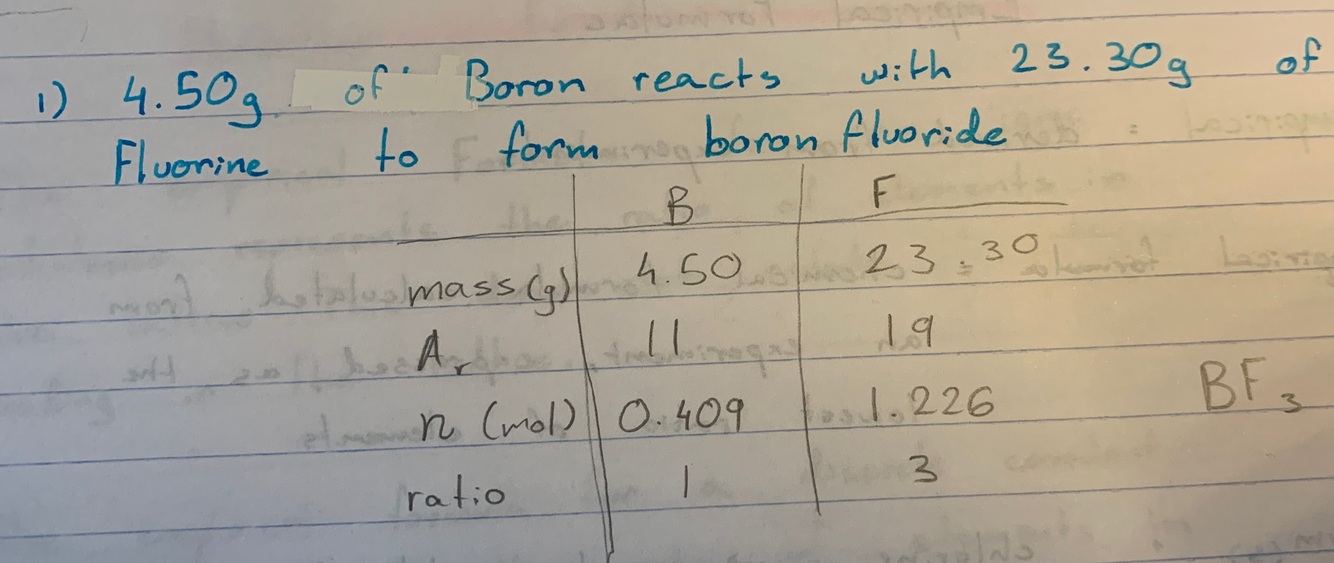
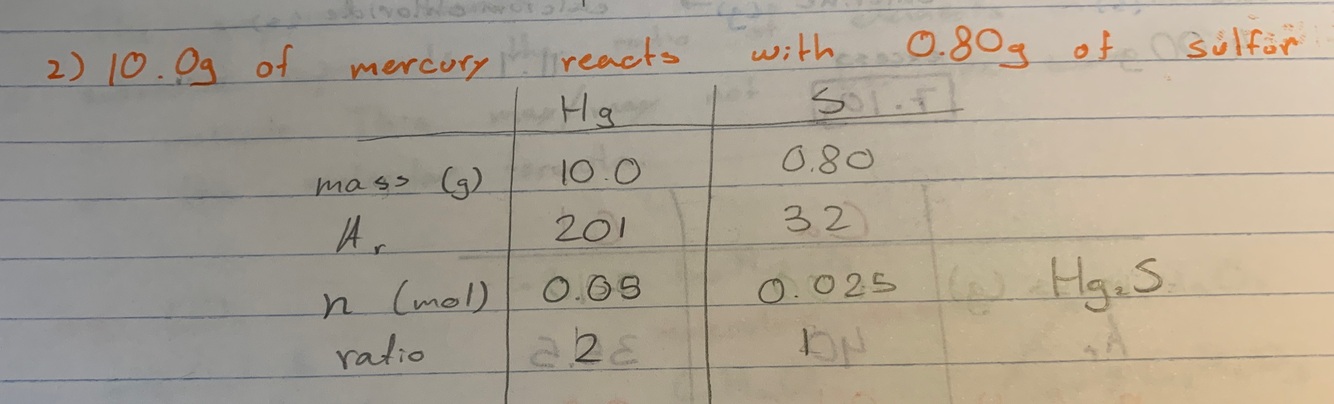
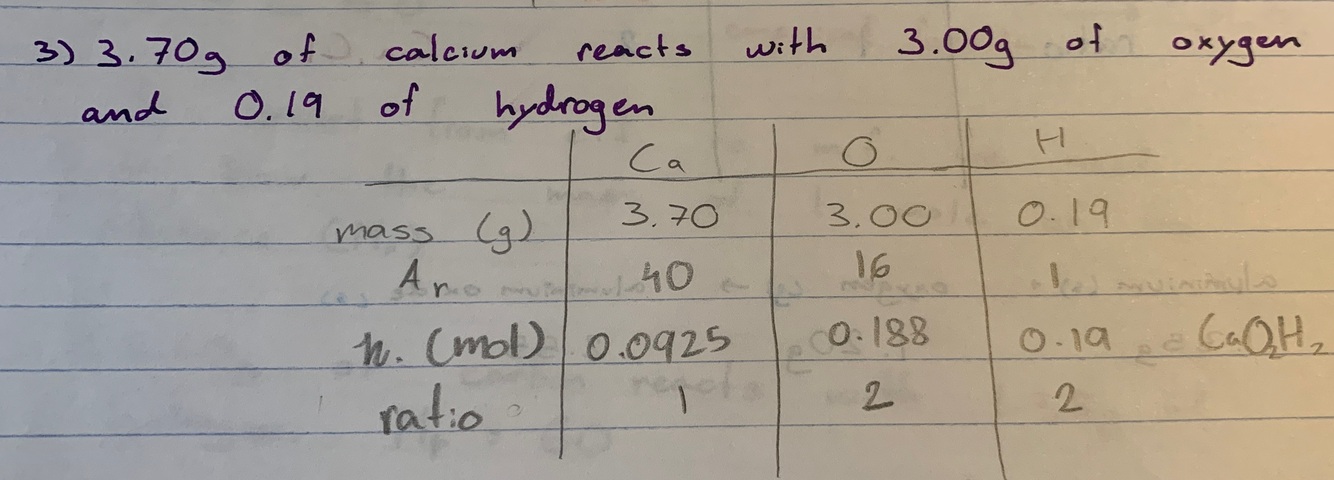
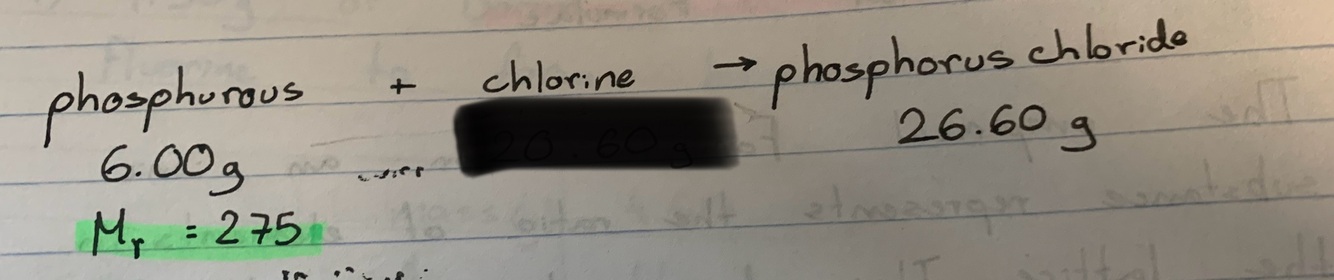
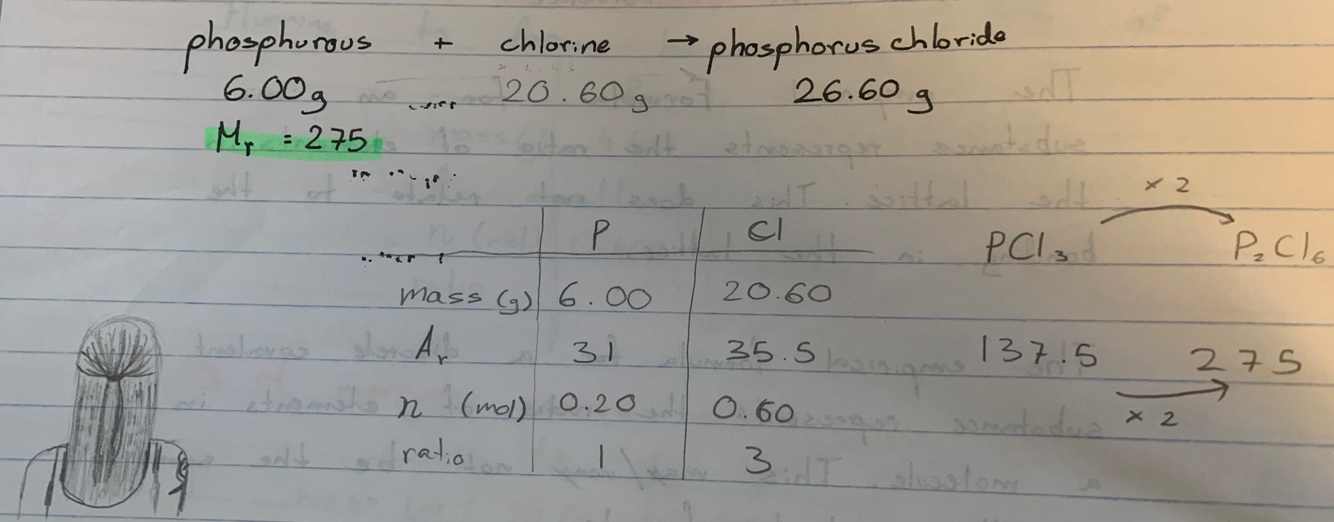
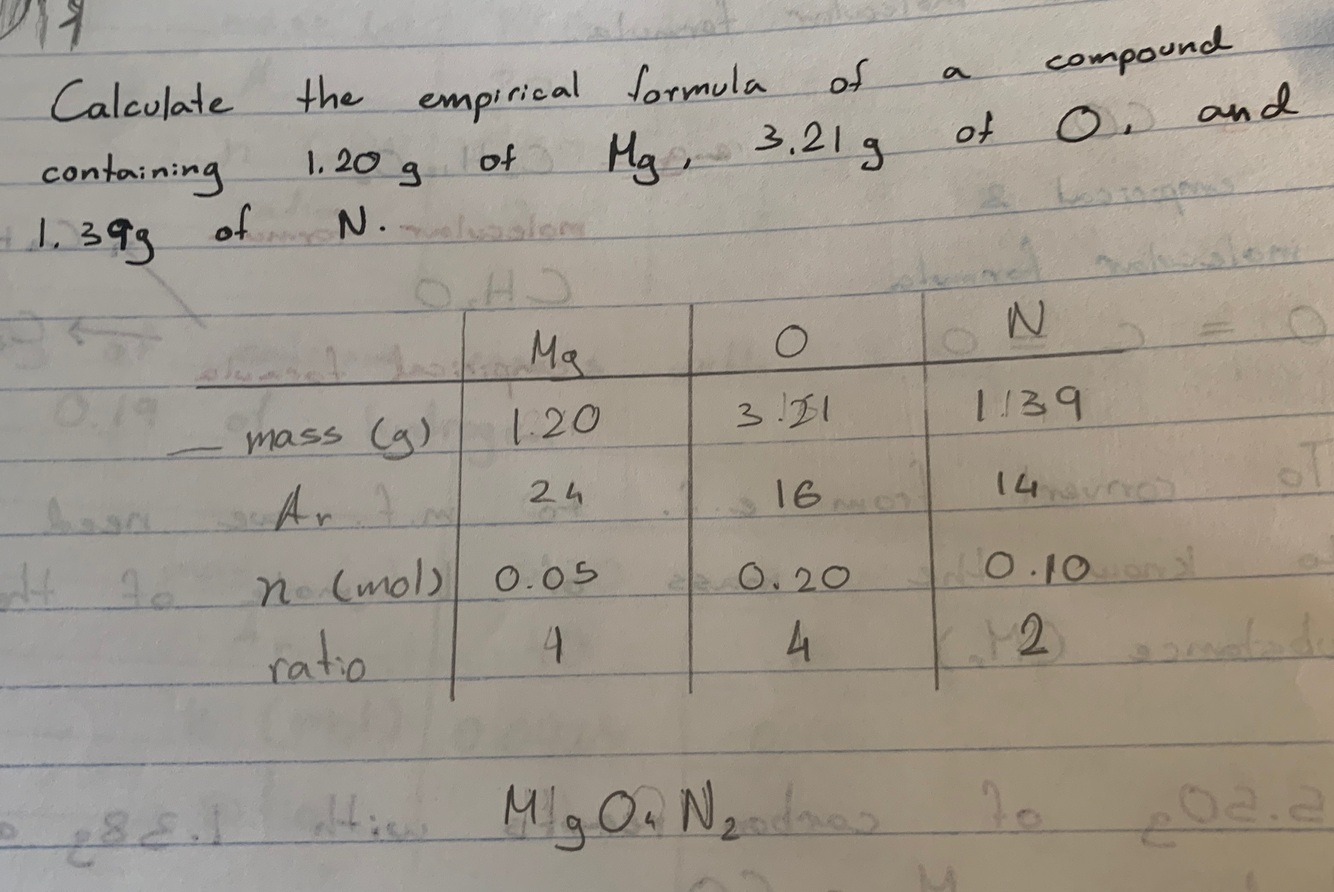
Define empirical formula
chemical formula calculated from an experiment, expressed as the lowest ratio of elements
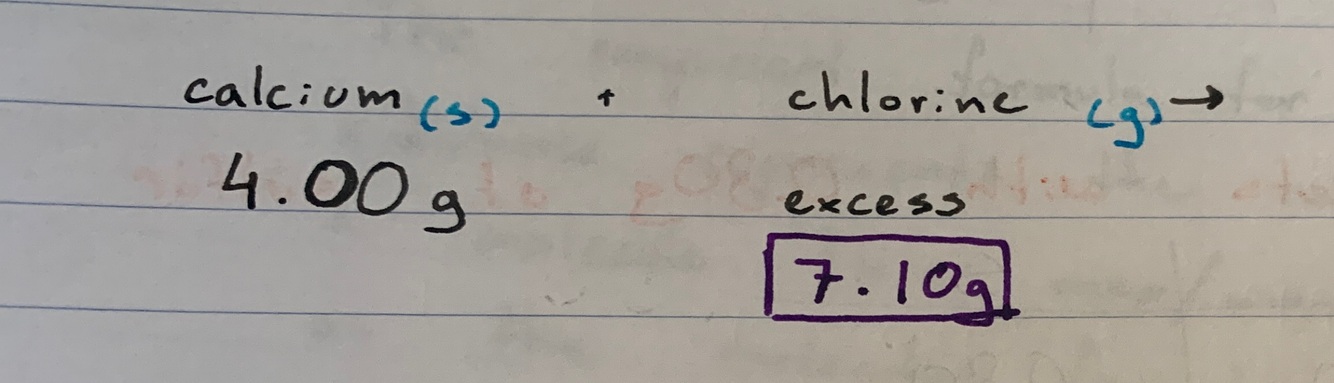
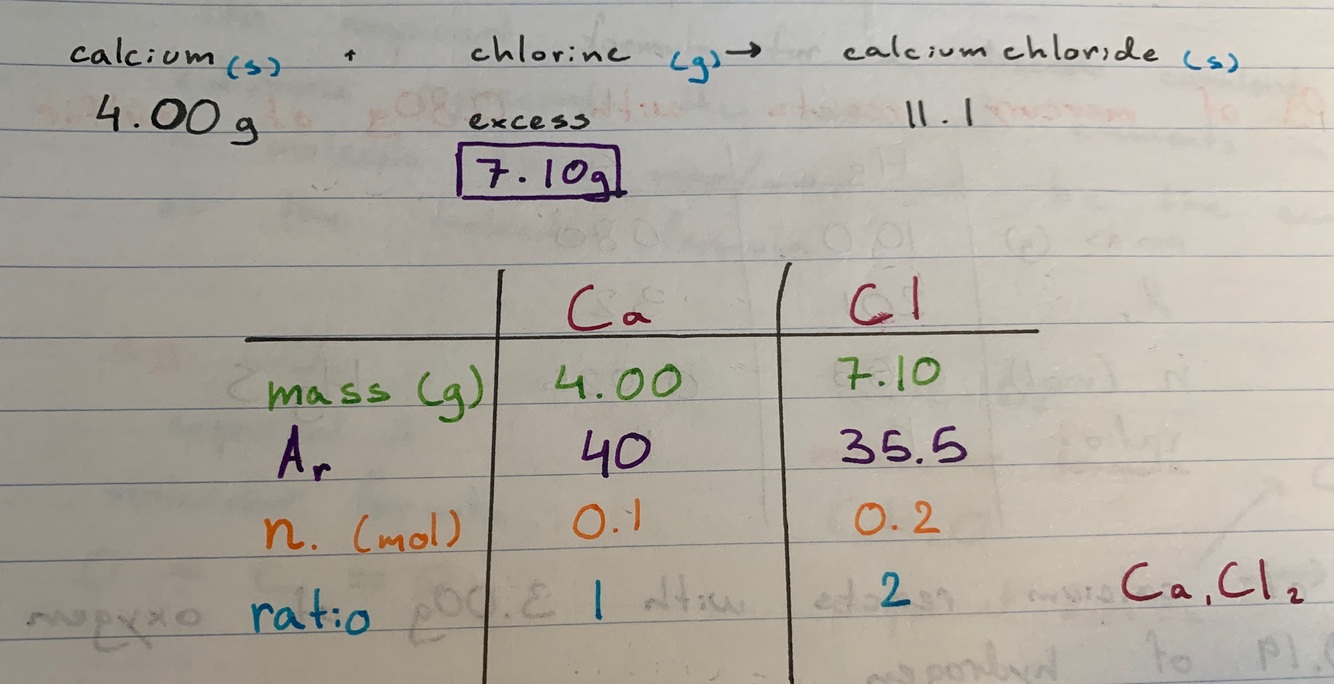
Grab a notebook. Figure out the empirical formula of Calcium Chloride
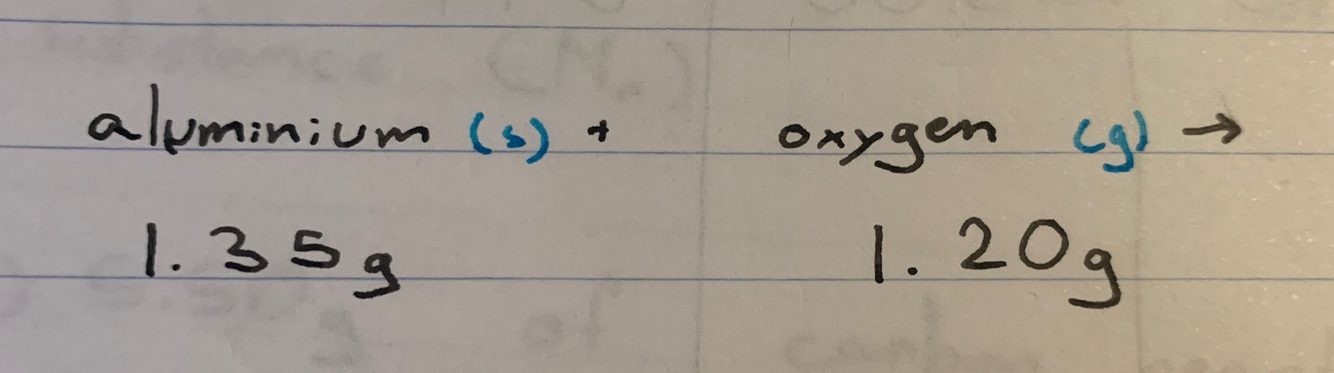
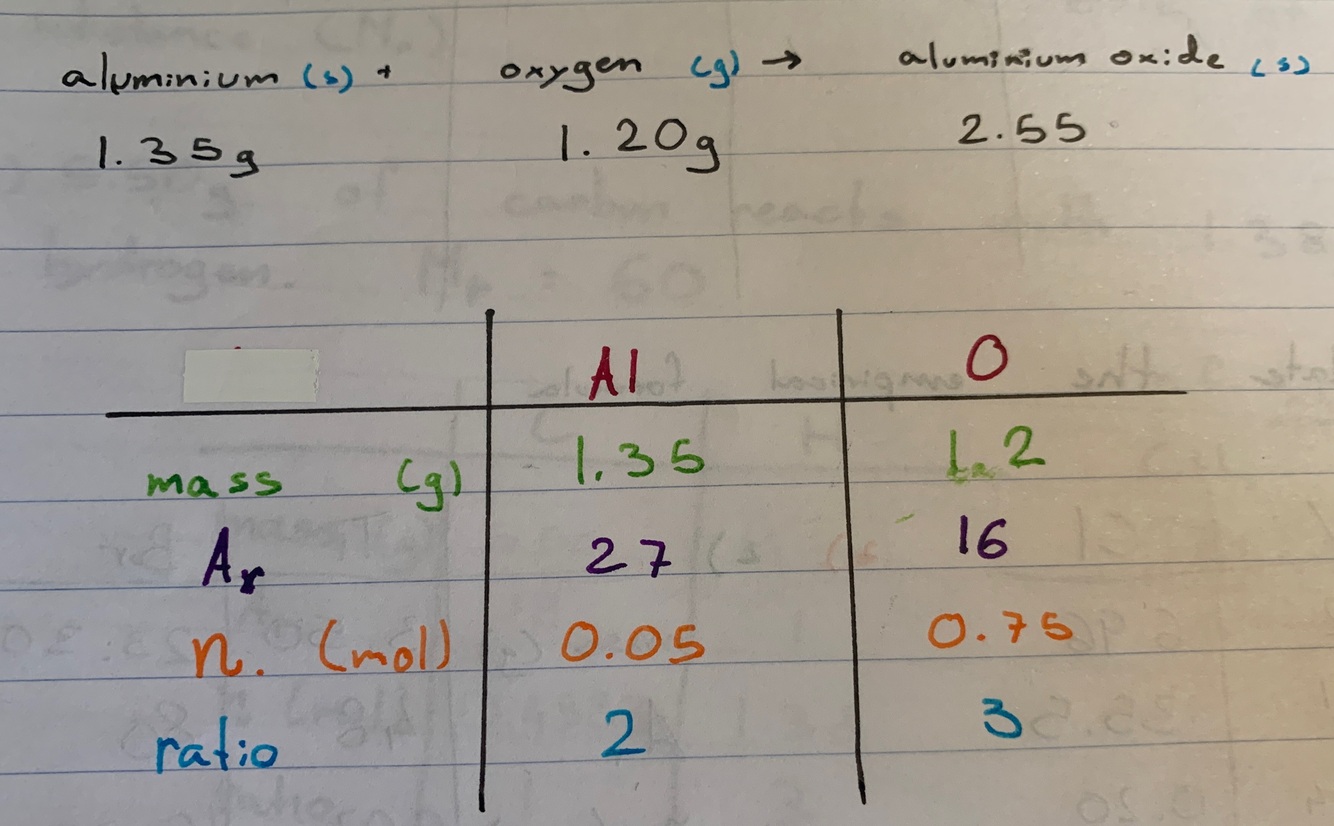
Calculate the empirical of Aluminium and Oxygen



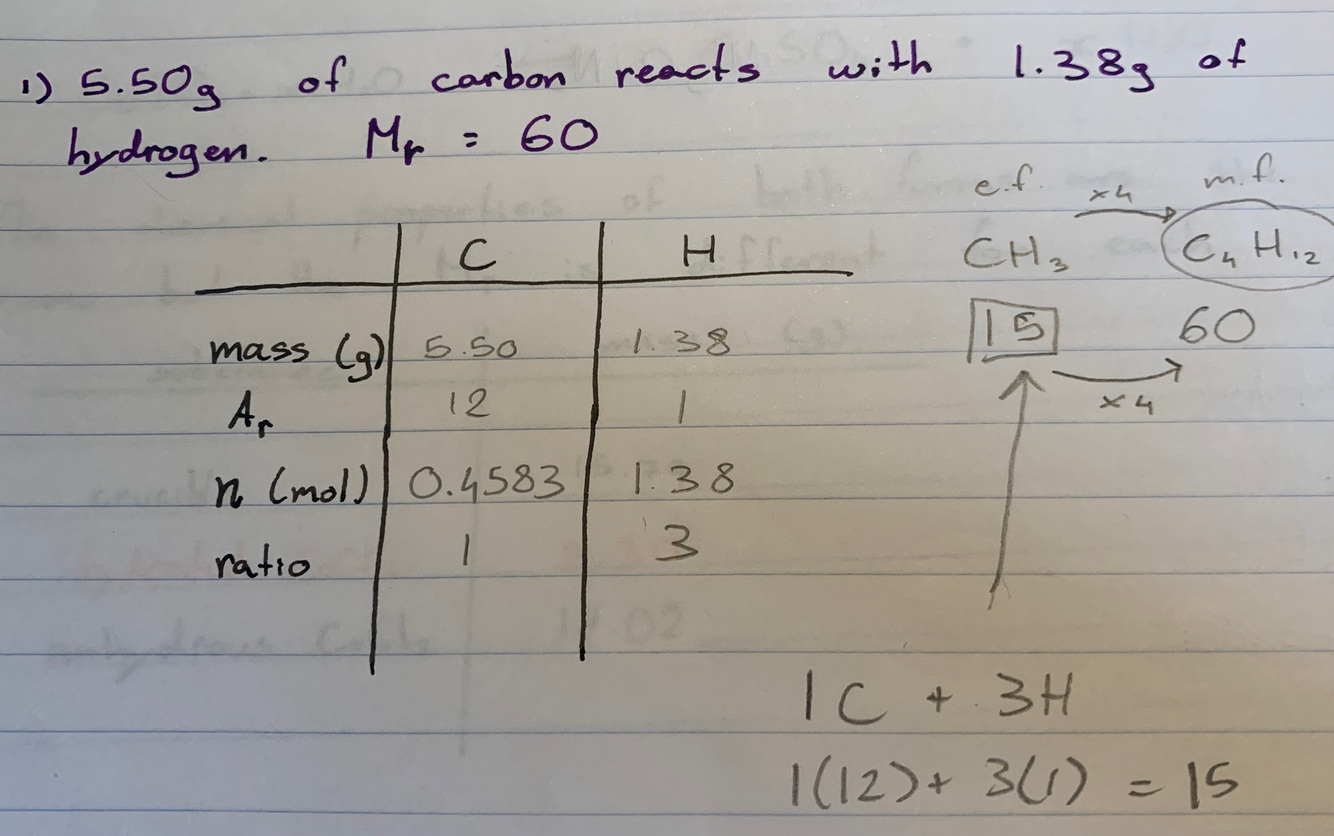
What do we need to know to be able convert from empirical formula to molecular formula?
Mr (mass of 1 mole of the substance)


Define ionic structure
lattice of anions and cations in an alternating pattern, held together by electrostatic forces
What do the large spaces between particles have?
small molecules like water
What do the sizes of spaces between particles depend on?
the ratio of the ionic radius