Ecosystem Feedbacks
No description yet. This curated deck is ready for daily study.
Card preview (24)
What is an Ecosystem feedback?
• It is something which is a positive feedback which exacerbates the original process
Explain the carbon cycle feedbacks due to rising temperature?
• We are warming the earth’s climate • This is causing permafrost to melt within the Artic • Resulting in increased methane released which was stored within the permafrost • Hence the warming is exacerbated
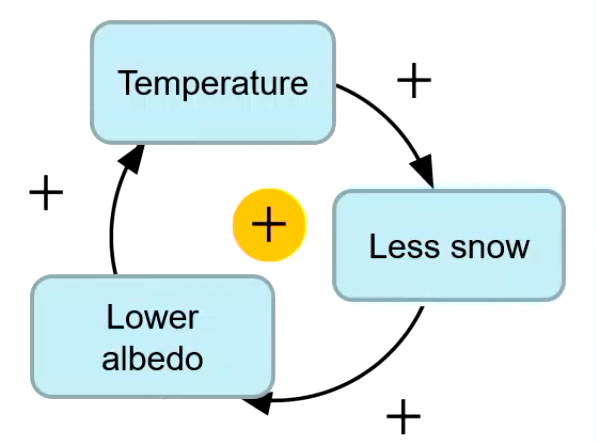
Explain Albedo feedbacks due to rising temperatures
• We are warming the earth’s climate • resulting in shorter periods of snow cover + reduced snow+ice cover • Resulting in increase radiation which can be trapped at the land surface • Resulting overall in increased warming
What is a source in terms of carbon cycle feedbacks
• Net release of GHG into the atmosphere • e.g. biomass burning, wetland CH₄ emissions
What is a sink in terms of carbon cycle feedbacks
Net uptake of a GHG e.g. afforestation, CO₂ uptake by the oceans reducing atmospheroc concentrations
What is carbon storage in terms of carbon cycle feedbacks
• If ecosystem sinks are greater than sources carbon accumulates in ecosystems • Slow decomposition in cold wet soils results in large carbon storage at high latitudes
How can elevated CO₂ affect carbon cycle feedbacks? What can limit this however?
• Increase plant photosynthesis (more CO₂ sequestered) • Increased carbon stored in vegetation • BUT low nitrogen availabuluty will limit carbon storage on land
How can elevated temperatures affect carbon cycles feedbacks?
• Increased plant and soil respiration (more CO₂ given out) • Reduces terrestrial carbon store
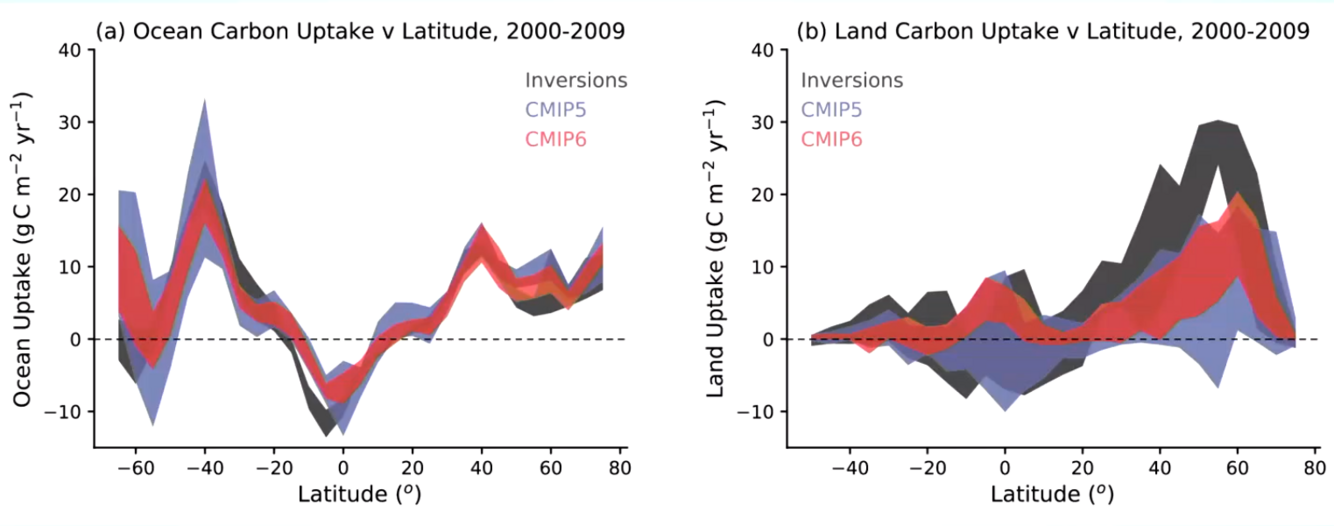
Explain what these graphs demonstrate
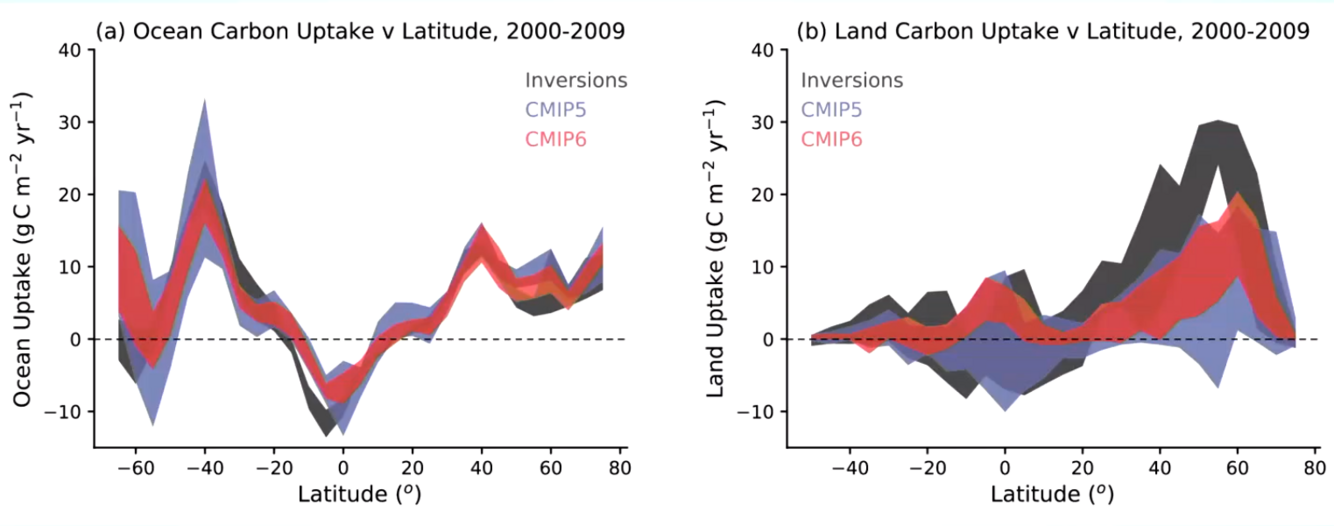
In the southern ocean there is large carbon uptake linked by the consumption and high nutrient concentrations there There is also more carbon sequestration on land in the northern hemisphere due to high amounts of rainfall and not being too cold
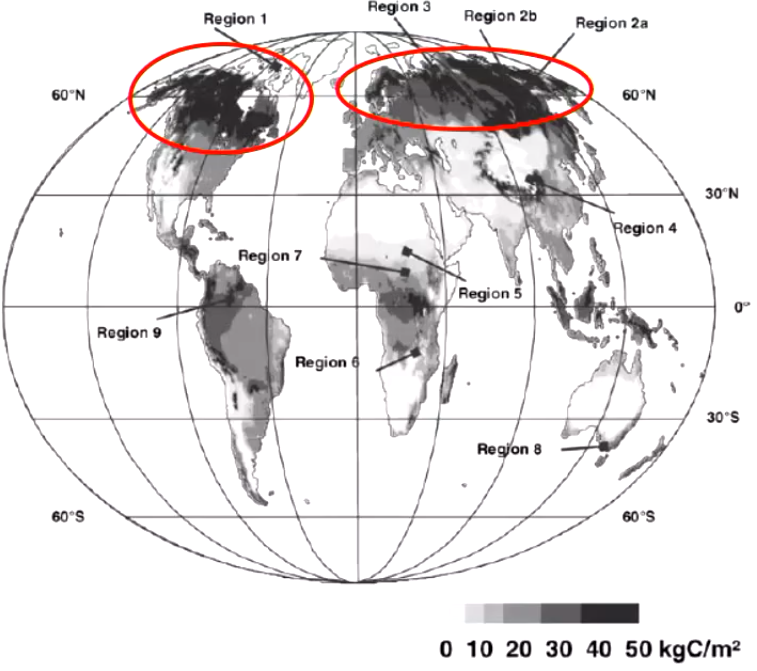
Following these graphs (mainly on the right) Where would we expect to find the highest amounts of biomass globally
In the high northern latitudes
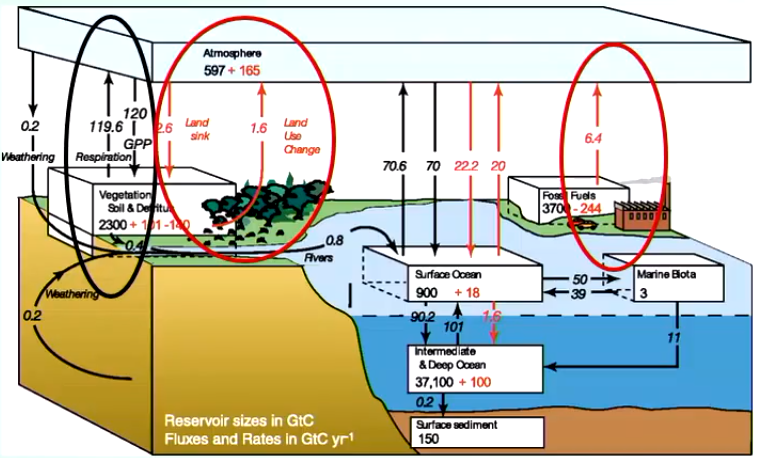
Natural transfers of CO₂ are x times greater than those due to human activity
natural transfers (black) of CO₂ are 20 times greater than those due to human activity (red)
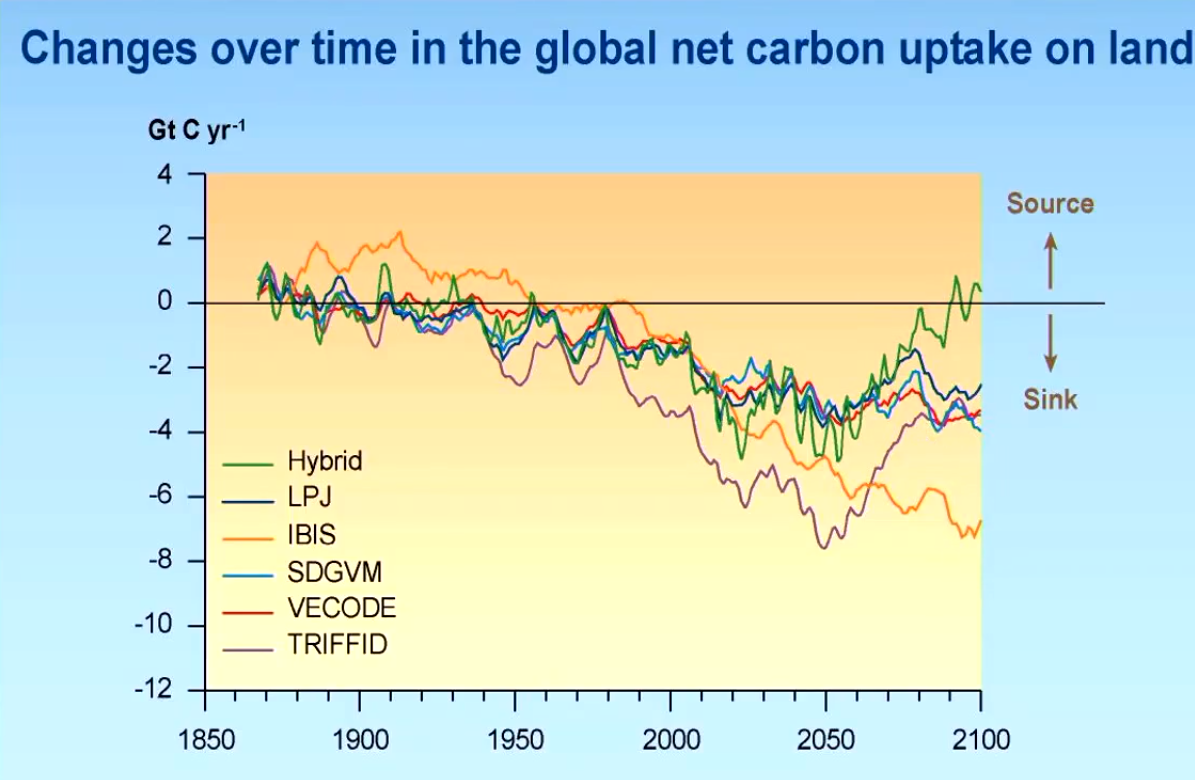
What does the following graph show?
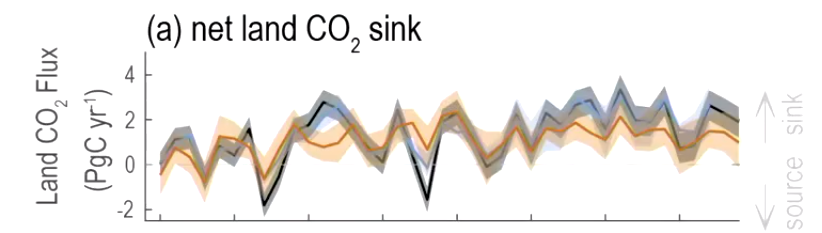
The sink strength of net land CO₂ sinks has a tendency to be increasing over the measurement period
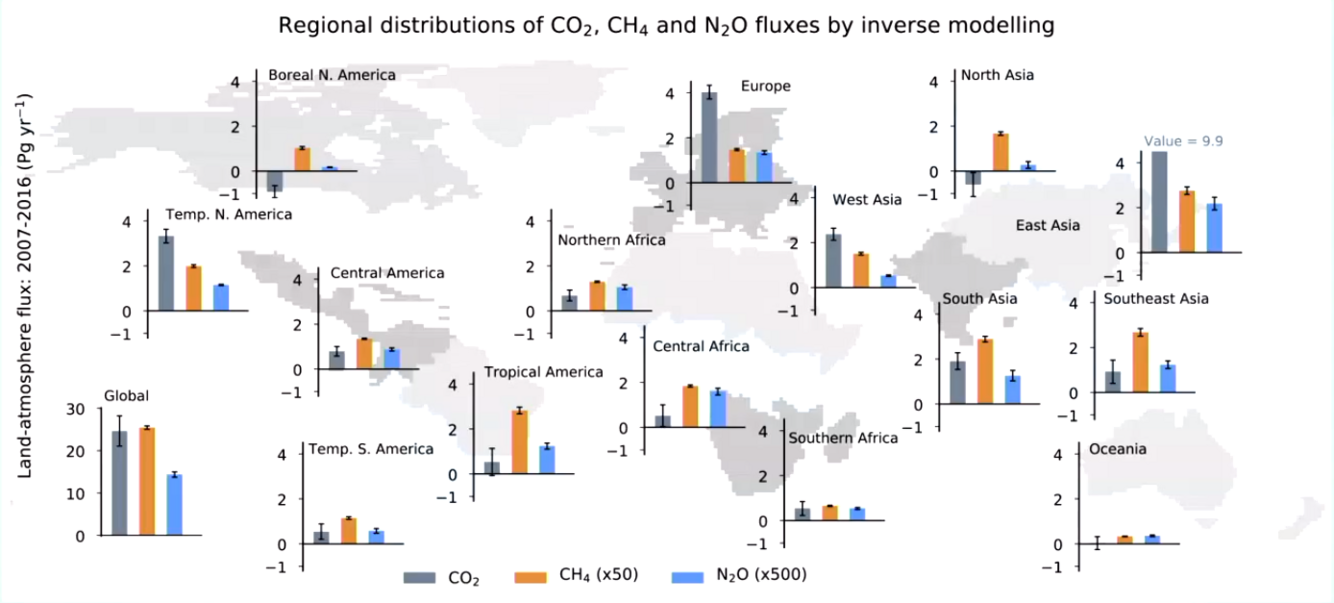
True or False? The net fluxes of carbon dioxide, methane and nitrogen oxide are all equal
False The fluxes vary from location to location With reasons due to temperature or moisture levels affecting fluxes
How can anthropogenic activity cause disruption to the global carbon cycle
• Land use changes - short term imbalances (terrestrial flux) • Deforestation • Agriculture • (positive feedbacks)
Thawing of permafrost due to warming will…
release frozen carbon which will increase CH₄ emissions (50-250 GtC with RCP8.5 scenario compared with 6.4 GtC/yr of fossil fuel emission) Huge impacts
The tipping point is expected to be hit with carbon sinks with future climate change What is expected to occur?
The decline of global soil and vegetation sinks by 2100 (suggested reasons like drought, fire, heat stress, increased CO₂ from the soil)
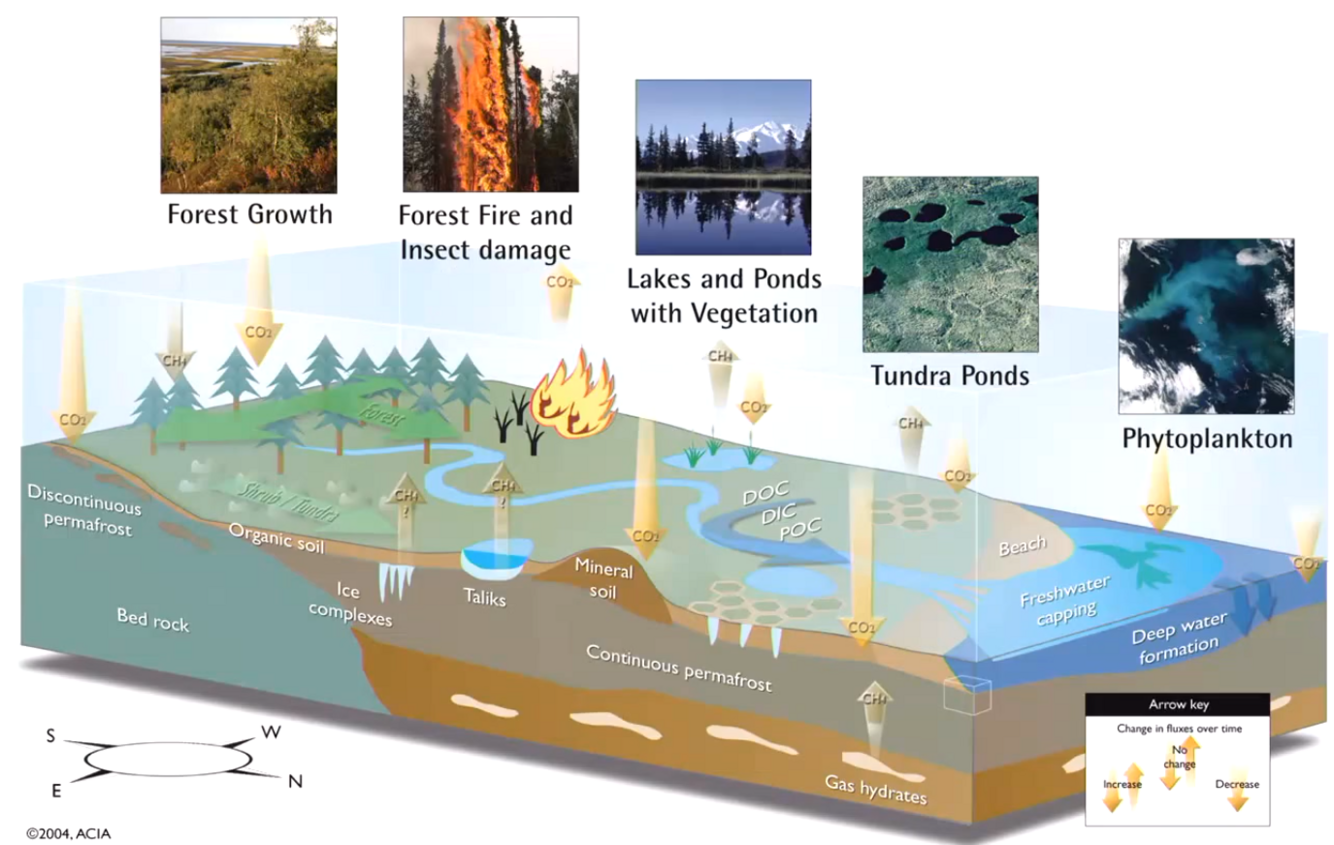
List some environments which are affected by GHG fluxes (CH₄, CO₂) with climate change
• Forests (growth or fire/insect damage) • Lakes and Ponds with vegetation • Phytoplankton
Snow and ice reflects how much incoming solar radiation?
85-90% (as sea ice melts increasing heat absorbtion)
Oceans reflect how much incoming solar radiation?
10%
What affect would afforestation have on albedo?
• Afforestation reduces surface albedo • Dark conifer forest replaces snow covered areas e.g. grassland or tundra • This increases the radiative forcing from the land surface • 1 Ha of plantation of forest increases global shortwave radiation in many areas
What are the main changes which will occur with a warming climate which will decrease the earth albdeo?
• Taller vegetation makes surfaces dark - more energy absorbed • Less snow increases energy absorption • Less sea ice makes the ocean darker - more energy absorbed (particuarly in the artic)
The following region can store over 140KgC/m² Why is this value so high
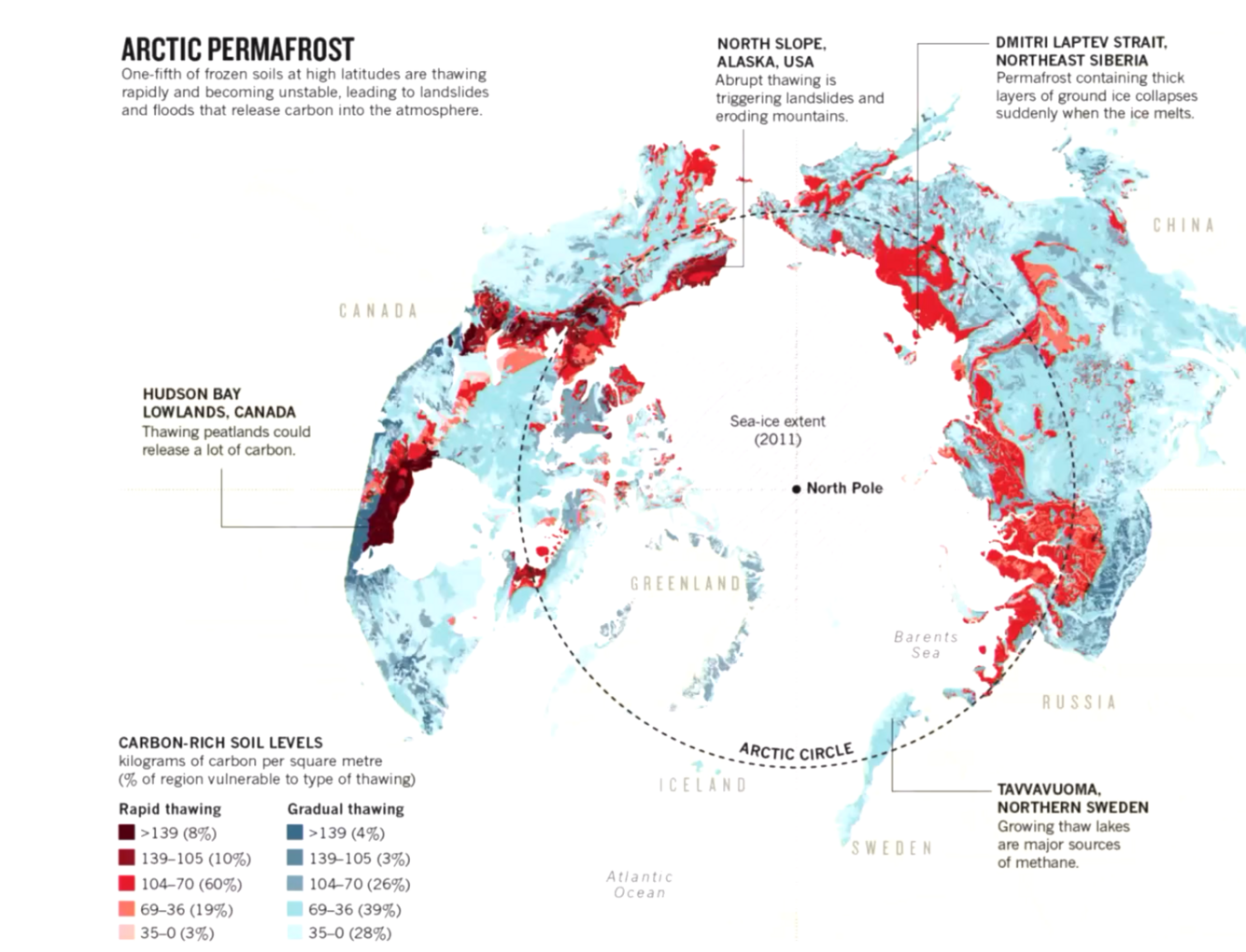
• They are areas which are high in peatlands (due to cold conditions and relatively high levels of precipitation)
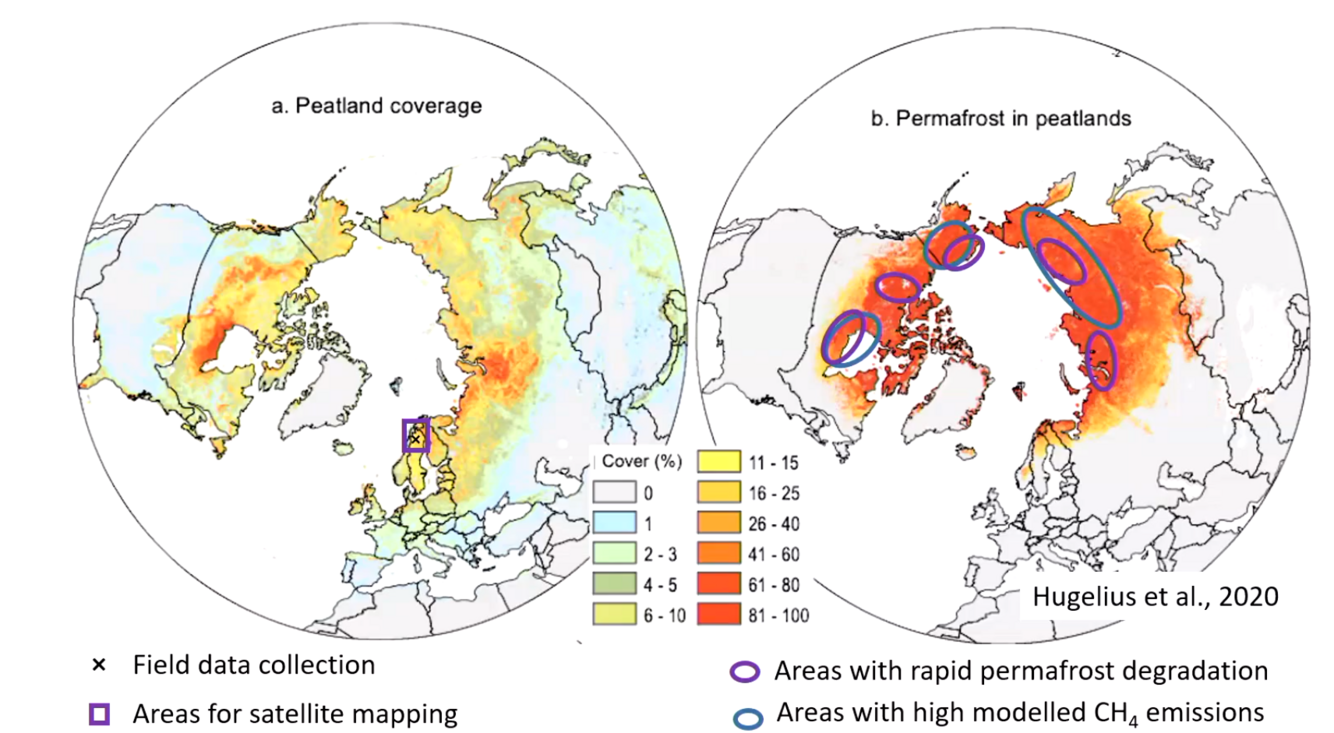
What are 3 approaches used to monitor the degredation of peatland due to climate change?
• Field measurements of CH₄ fluxes in common vegetation types/species assemblages • InSAR measured subsidence affords assessment of ongoing degradation and identification of areas at risl of flooding over large areas • Detailed vegetation mapping achieved by combining UAV and Sentienel-2 data
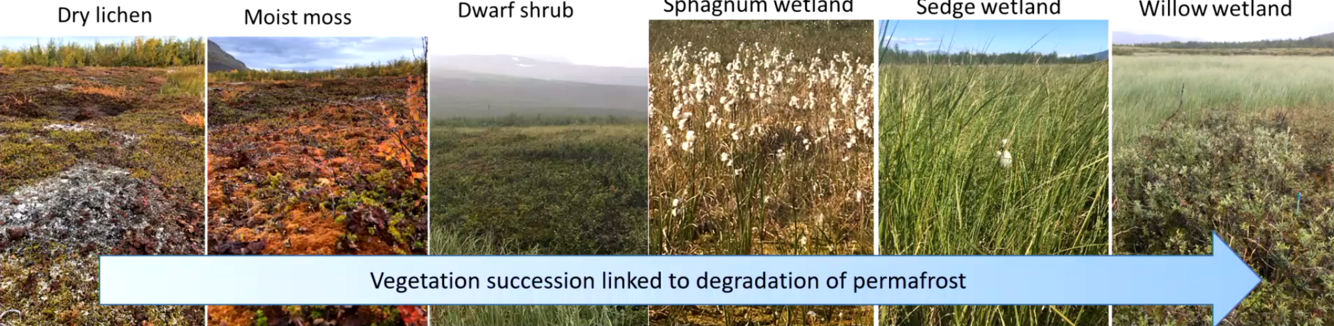
How is degradation of permafrost linked vegetation changes?
Vegetation succession linked to degradation of permafrost (this process has been suggested to have been occuring for decades) Moving to the right, the active layer become shallower, moisture content increases