Chapter 27 Amines
No description yet. This curated deck is ready for daily study.
Card preview (24)
what is an aliphatic amine ?
nitrogen atom attached to at least one straight or branched carbon chain (methyl amine)
What is an aromatic amine ?
Nitrogen atom attached to an aromatic ring (benzene) phenylamine is simplest aromatic
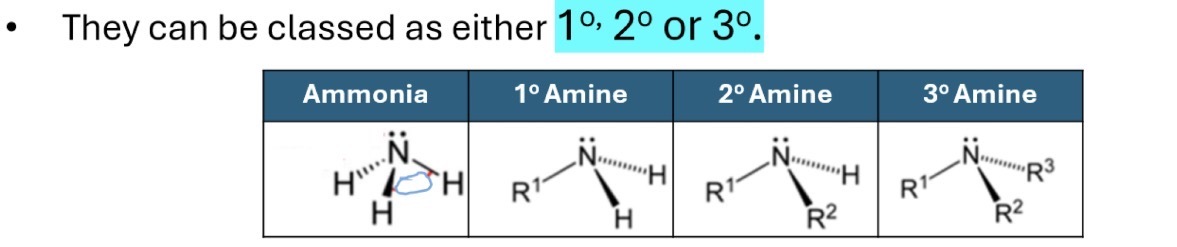
How are amines classified ?
How to name amines ?
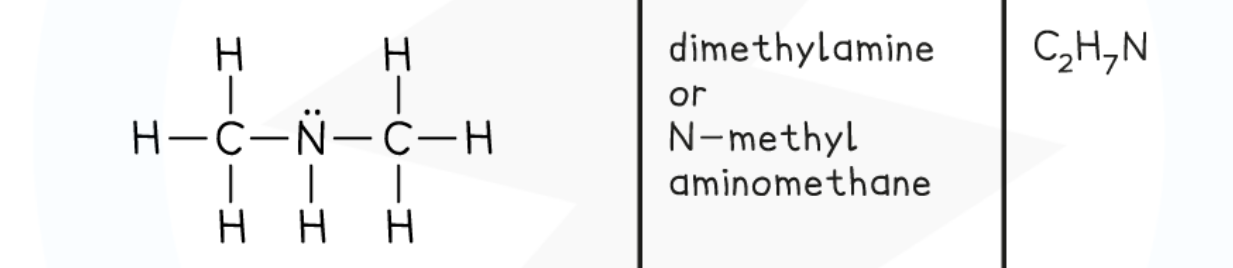
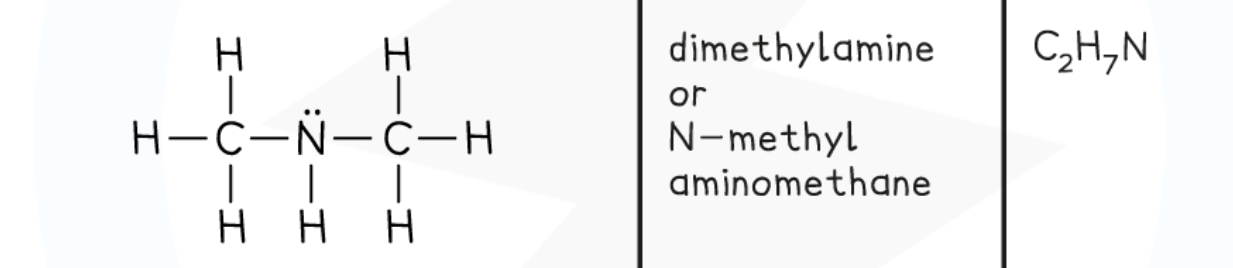
• alkyl or Aryl prefix followed by amine e.g methylamine, phenylamine • amino prefix followed by alkane or aromatic stem
How do amines act as weak bases ?
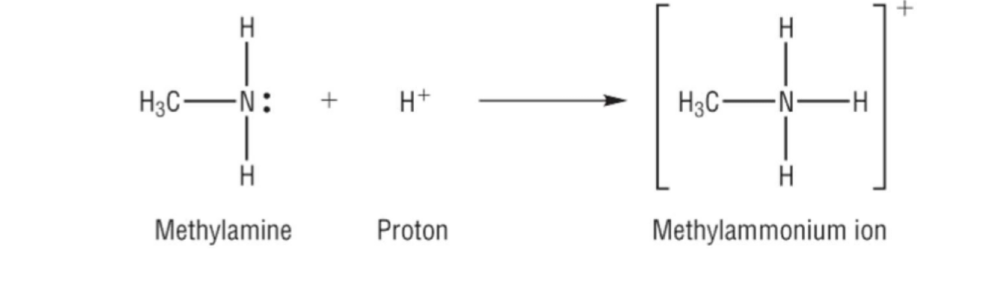
• Amines act as weak bases since the lone pair on the N is able to form a dative bond with a proton (proton acceptors) • the salt is called ammonium salt
How to prepare primary aliphatic amines ?
• haloalkanes are gently warmed with excess ammonia with an ethanol solvent

How to produce amines (from nitriles) ?
• react the nitrile with H2 and Nickel catalyst
How to produce amines (from nitriles) ?
• react the nitrile with H2 and Nickel catalyst
How to produce secondary and tertiary amines from haloalkane ?
• nucleophilic substitution reaction • a primary amine + haloalkane + (ethanol + heat) -> secondary amine • tertiary amine can be formed by further substitution of secondary amine
How to form an aromatic amine ?
• a nitrobenzene compound is made first • nitrobenzene + Tin + HCl + reflux -> phenyl amine • phenyl amine reacts with HCl so the ammonium salt formed is removed by adding NaOH, forming the amine, NaCl, H2O
What are the physical properties of primary Amines ?
• boiling points higher than similar hydrocarbons due to hydrogen bonds • if the carbon chain isn’t too long soluble in water due to H-bonds
Why are aliphatic amines more basic than aromatic amines ?
• if the electron density on the N is increased it is a stronger base • alkyl groups repel electrons leading to greater electron density on N • aryl groups attract electrons leading to less electron density on N

What is an alpha-amino acid ?
• alpha amino acid contain both an amine and CA group that is separated by the alpha carbon atom
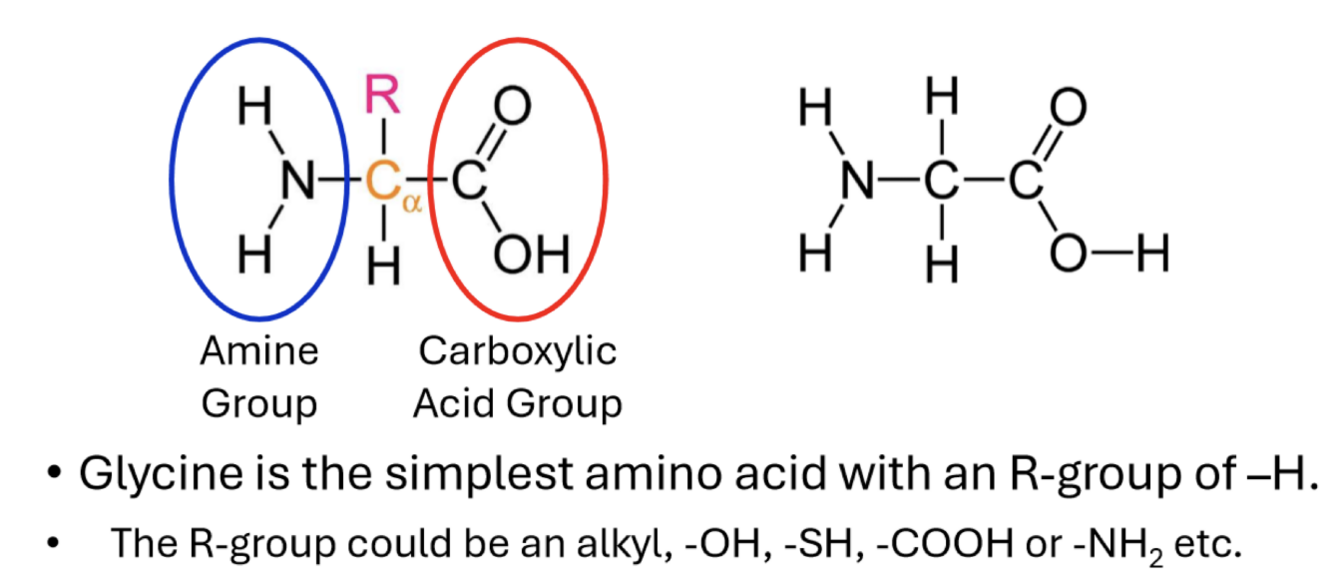
what is the general formular for amino acids ?
• RCH(NH2)COOH
how to name amino acids ?
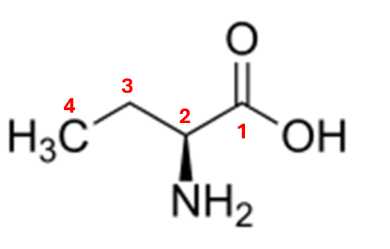
• CA group always takes priority so amine will be at position 2 • 2-aminobutanoic acid
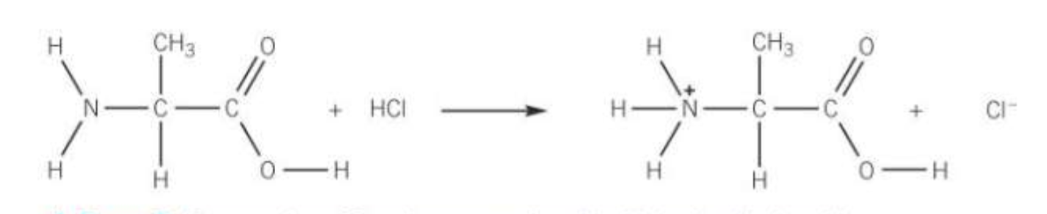
what is the reaction of AA with acids ?
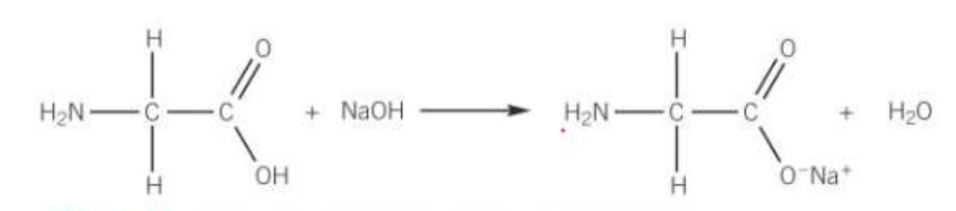
what is the reaction of AA with alkalis ?
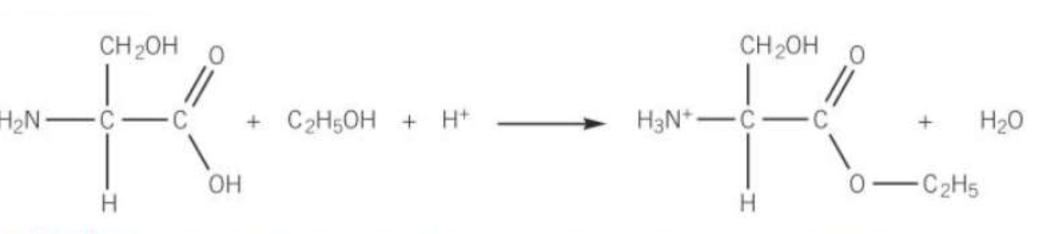
what is the reaction of AA with alcohols ?
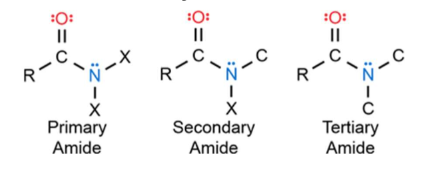
what are amides ?
• amine group bonded with a carbonyl group • produced when acyl chloride + ammonia/amine • can be primary, secondary, tertiary
how are amides hydrolysed under acidic conditions ?
• Amide -> CA + ammonium salt • since amine formed will react with acid
how are amides hydrolysed under alkali conditions ?
• carboxylate salt and amine • CA formed will react with alkali
what is a chiral centre ?
• a chiral centre is a carbon with 4 different atoms/groups bonded to it • AKA enantiomers
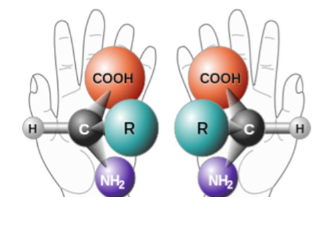
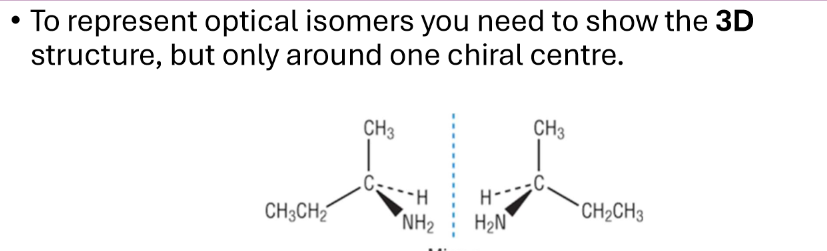
how to draw an opical isomer ?
what are condensation polymers ?
• condensation polymers are the joining of 2 monomers with 2 different functional groups with the elemination of a small molecule e.g H20 • polyesters have an ester link (COOH + OH) • polyamides has an amide link (COOH + NH2)