Exam Review II
No description yet. This curated deck is ready for daily study.
Card preview (20)
1. Define food processing • What are concerns • What are reasons
• the activities applied to primary agricultural products • loss of nutrients,exposure to harmful substances, impact on environment • reasons include • extend the availability beyond the season and location it is grown • improve nutritonal value of food • improve food safety • for convenience
food processing examples
• removal of unwanted outer layers • chopping • mincing • emulsification • deep frying • mixing
Preservation
• food is biological material that will decay with time • preservation techniques include • use of low temps • low temperatures slow the rate of food decay reactions • chilled storage (-1 to 8 degree) or freezing • or high temps • irradiation • drying or with salt, sugar and other chemicals
Preservation - chilled storage
• cooling food to below room temp slows rate of decay reactions • -1 to 1 degree for fresh meat and fish • 0 to 4 degree for milk products and baked goods • nutrient content is not significantly reduced provided the food is consumed within its shelf life *
preservation - freezing
• very little effect on nutrient content • some fruit and vege are blanched before freezing to inactivate enzymes and yeasts that would cause spoilage even in freezer • this can cause some vit C loss • Harvested produce can take days to be sorted, transported and distrubuted to stores = slow loss of vitamins and minerals • Avoid frozen dinners as they have undergone further processing
Fresh vs frozen
• green beans • frozen had 2x vitamin C • carrots • canned carrots more beta-carotene • broccoli • frozen broccoli 92% less vitamin C than fresh • slow loss of vit c in the fridge • spinach • frozen higher in vit C • peas • frozen higher in vit C
preservation: high temperatue techniques
• blanching • briefly immersed in boiling water or steam • inactivates enzymes • often loss of water soluble vitamins occurs • pasteurisation • destroys bacteria and extends shelf life • eg milk - heated to high temp of 72C then cooled immediately to 4C or less • unpasteurised cows milk is illegal to sell in australia due to the risk of foodbourne illness resulting • sterilisation • high temp for sufficient duration to completely destroy microbe viability • nutrient content ramins for several months to years • eg canning or ultra high temperature treatment
Nutritional impact of pasteurisation
• Most of vitamin C is lost during handling, pasteurisation and packaging of milk • small loss of some nutrients such as thiamine, cobalamin etc • however the effects of pasteurisation on nutritional value of milk is negligible compared to health risks without it being done
preservation: sterilisation -> canning process and nutrient losses
• food is processed and stored in airtight container • a number of different methods may be used to prevent spoilage before and during containment eg freezing, boiling, drying etc • often packages in tinplate or aluminium containers • all are sterilised by heating during manufacturing • no microbe spoilage occurs in canned products • large tinned food consumption increases the level of tin consumed Nutrient losses • vegetables loss carotenes, vit C and B vitamins • meat loss of thiamin and complete loss of riboflacin • UHT milk loss of B group vitamins
preservation: irradiation
• food is exposed to ionising radiation • eg gamma rays or high energy electron beam or powerful xray • Rays pass through the food, but don’t heat it, and kill bacteria • irradiation (measured in kGy) has set ranges to maintain health safety • A food which has been irradiated must be labelled as such
preservation: drying
• old traditional method of preservation • Bacteria and other micro-organisms within the food and from the air need the water in the food to grow. • Drying effectively prevents them from surviving in the food. It also creates a hard outer-layer, helping to stop micro-organisms from entering the food. • e,g, bananas, apples, beef jerky
preservation: drying methods and nutrient concerns
• methods • solar drying - suns energy • oven drying • electrical drying • freeze drying - commercial method • nutrition • dried foods are more energy dense • cooking dehydrated foods in water causes nutrient loss into the water • vit C and B6 loss • pro-vitamin A and C destroyed by heat and air
preservation: salting
• salting often used on fish, meats and veg • high salted food consumption can increase risk of gastric cancer and hypertension
preservation: smoking
• process of flavouring, cooking or preserving foods by exposing it to smoke from burning or smouldering material, such as wook • meat and fish common • Smoking food produces polycyclic aromatic hydrocarbons (PAHs) which are potentially carcinogenic.
preservation: sugar and other chemicals
• sugar is used to preserve fruit by creating an osmotic gradient that impedes microbe processes • various other chemicals may be used • usually in combination with other methods such as dehydration, pasteurisation
preservation: pickling
• two methods of pickling • lacto-fermentation pickling - lactic acid • vinegar pickling - acetic acid • Health effects • some are associated with increased gastric cancer risk • vinegar may be beneficial for glycaemic affect and immune system
Food processing: milling
• Grains can be cooked in their whole form with water (eg brown rice) or milled in flour (eg breads, pastas etc) • Wholemeal flour - all elements included • white flour - formed only by crushing the endosperm
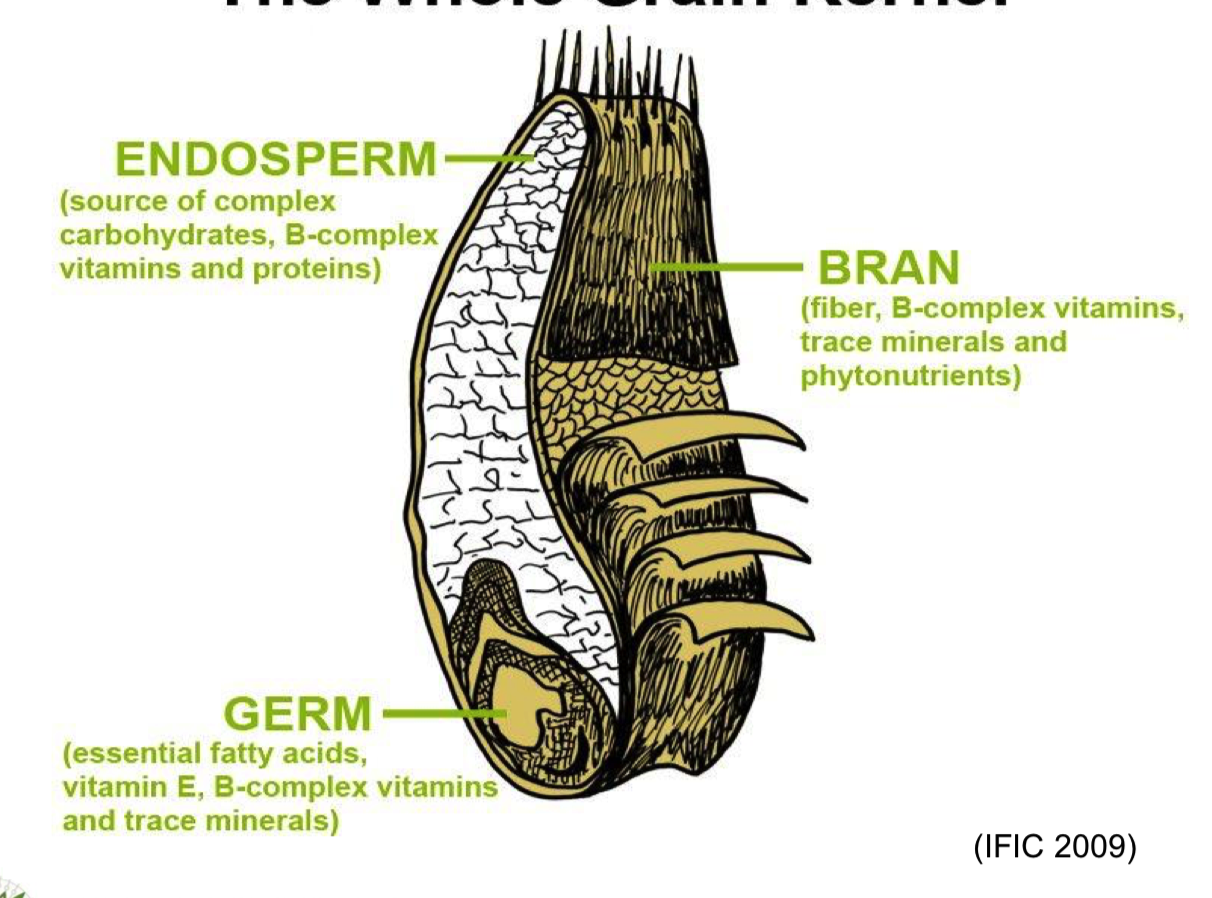
Food processing: milling • Nutrients in whole grains
• endosperm • starch, vit B2 and B5, aleurone • germ • unsat fats, vitamins B1, B2 and B6 • high in protein • minerals eg potassium • bran • fibre, lignin, Mg, Ca, Na etc
wholemeal vs refined flour
• white flour has significant losses of vitamins, minerals, dietary fibre etc and increases glycaemic index • Wholegrain/wholemeal contain prebiotic substances
processed foods contain potentially harmful substances such as
• acrylamide • forms when starchy foods are cooked or processed • cancer association • advanced glycation end products (AGEs) • promote oxidative stress and inflammation • eg beef, cheeses, poultry • Bisphenol A (BPA) • used in the lining of some food and beverage packaging • is an endocrine disrupter • Phthalates • plasticisers often in commercial cling wraps and other plastics • endocrine disruptors • linked to obesity ,heart disease, cancer • HCAs and PAHs • chemicals formed when muscle meat, including beef, pork, fish, or poultry, is cooked using high-temperature methods, such as pan frying or grilling directly over an open flame • HCAs form when amino acids, sugars and creatine react at high temp • PAHs form when fat and juices from meat drip onto fire