HL Further Anatomy - The Brain (7.2)
No description yet. This curated deck is ready for daily study.
Card preview (8)
structures of brain
• cerebrum (top of brain) • cerebellum –> balance & coordination
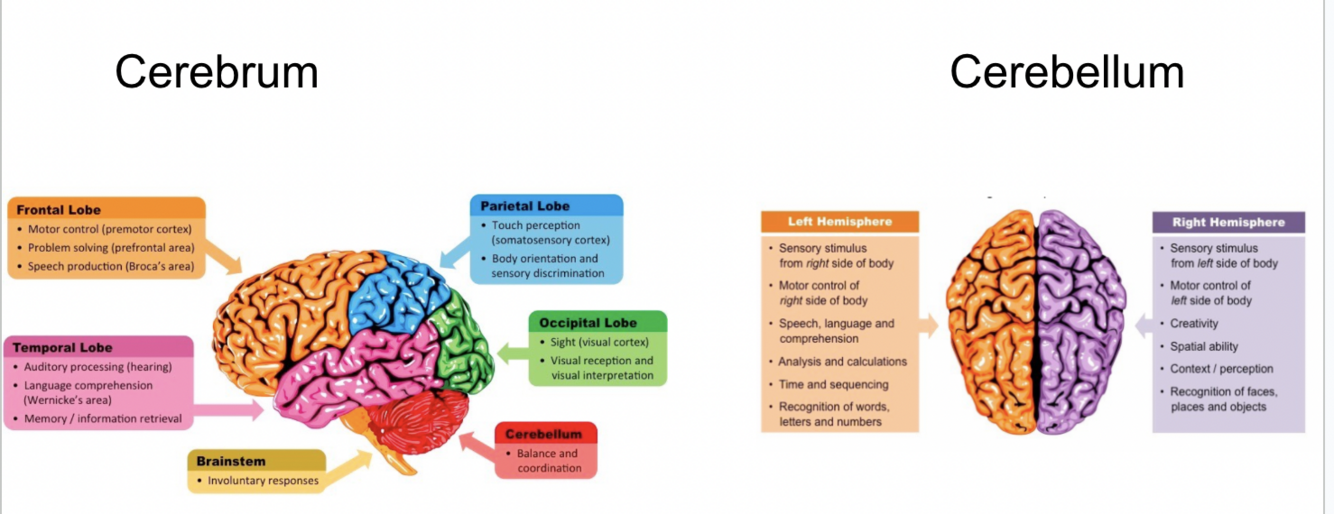
left hemisphere roles: (6)
• sensory stimulus from right side of body • motor control of right side of body • speech, language, comprehension • analysis and calculations • time and sequencing • recognition of letters, words, #
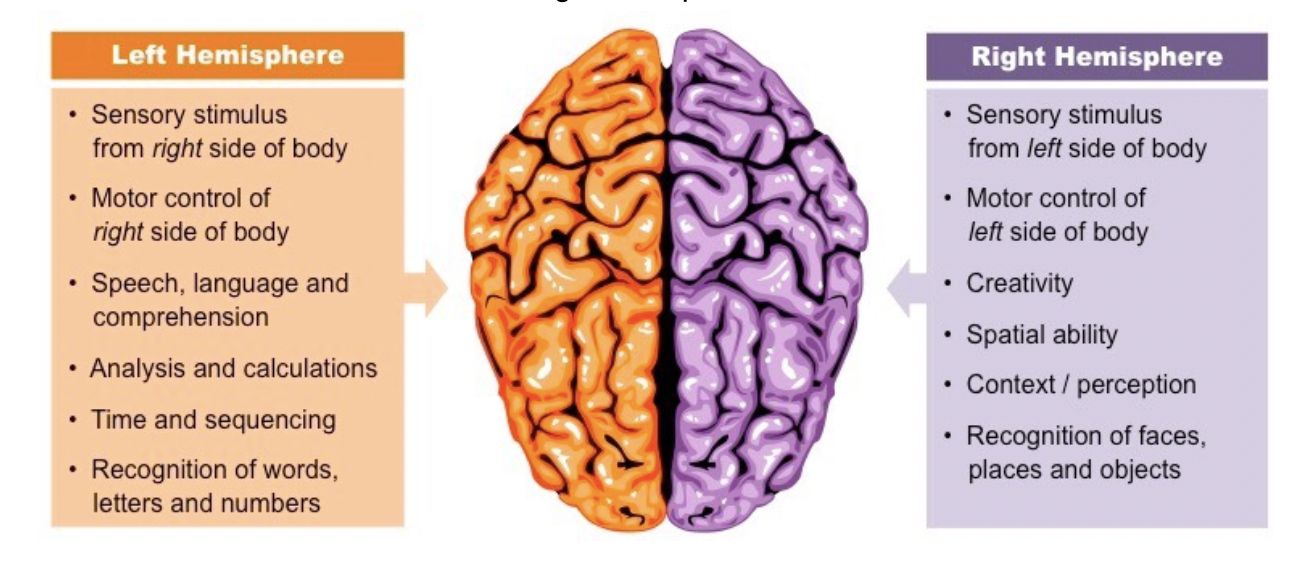
right hemisphere roles: (6)
• sensory stimulus from left side of body • motor control of left side of body • creativity • spatial ability • context/perception • recognition of faces, places, objects
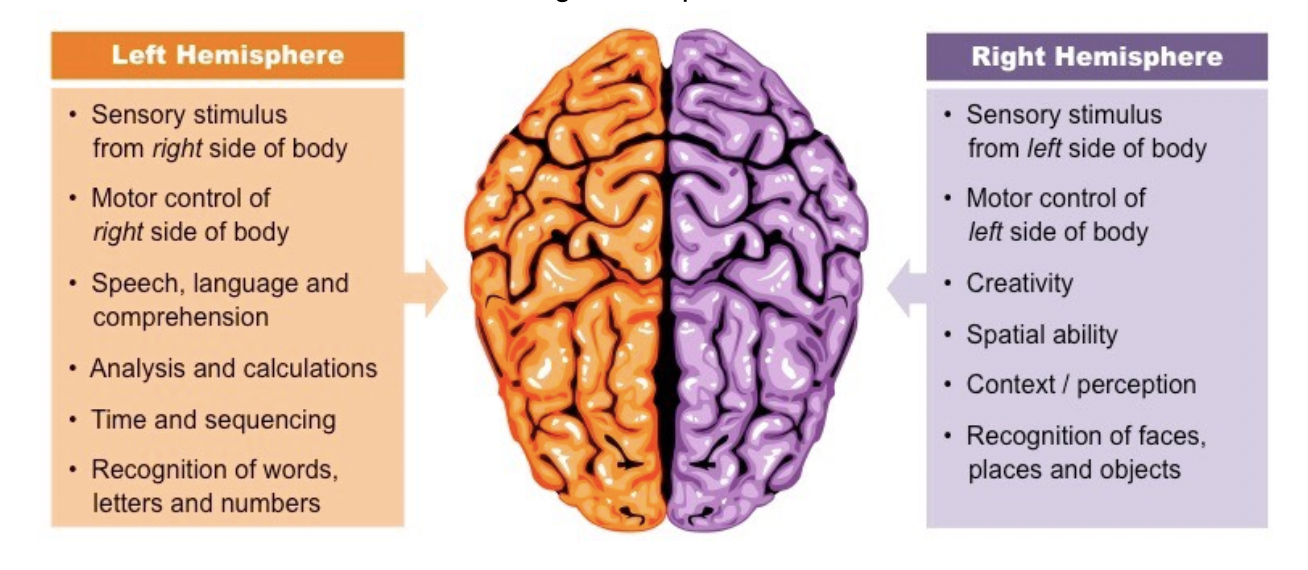
cerebrum lobes (4):
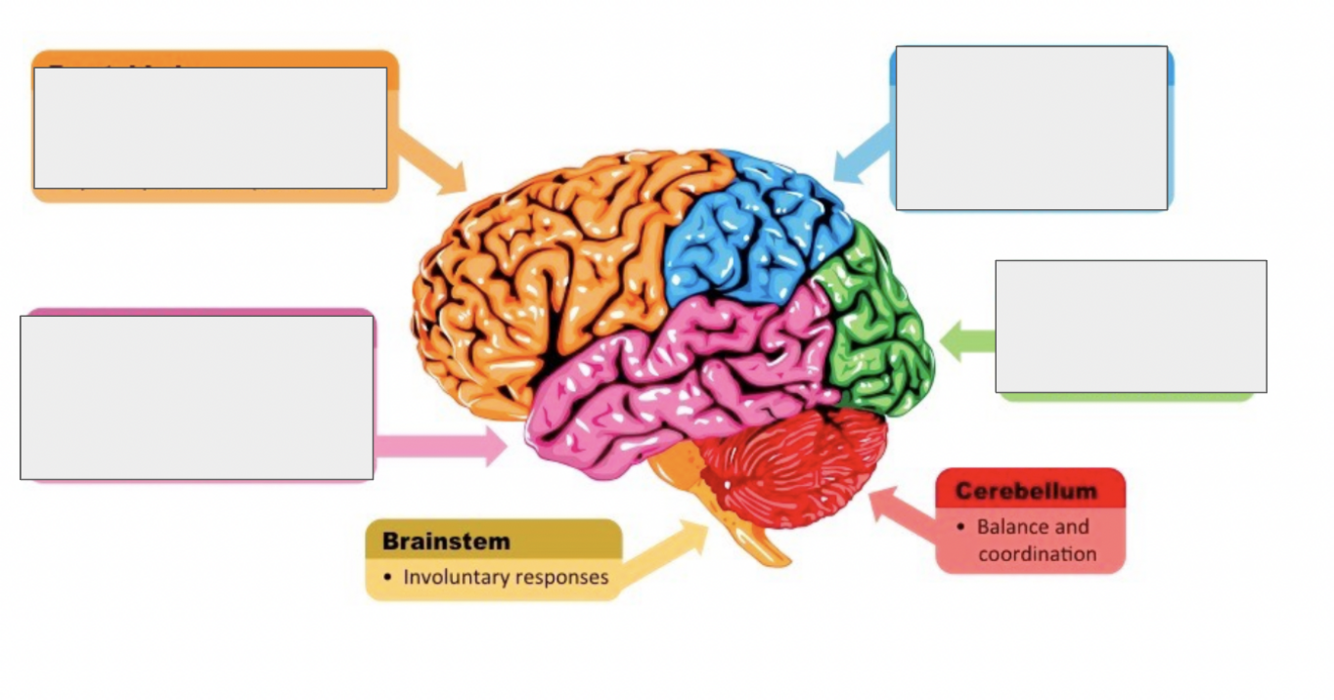
• frontal lobe (anterior) * motor control * problem solving * speech production • temporal lobe (inferior) * auditory processing * lang comprehension * memory/info retrival • parietal lobe (superior) * touch perception * body orientation and sensory discrimination • occipital lobe (posterior) * sight * visual reception * visual interpretation
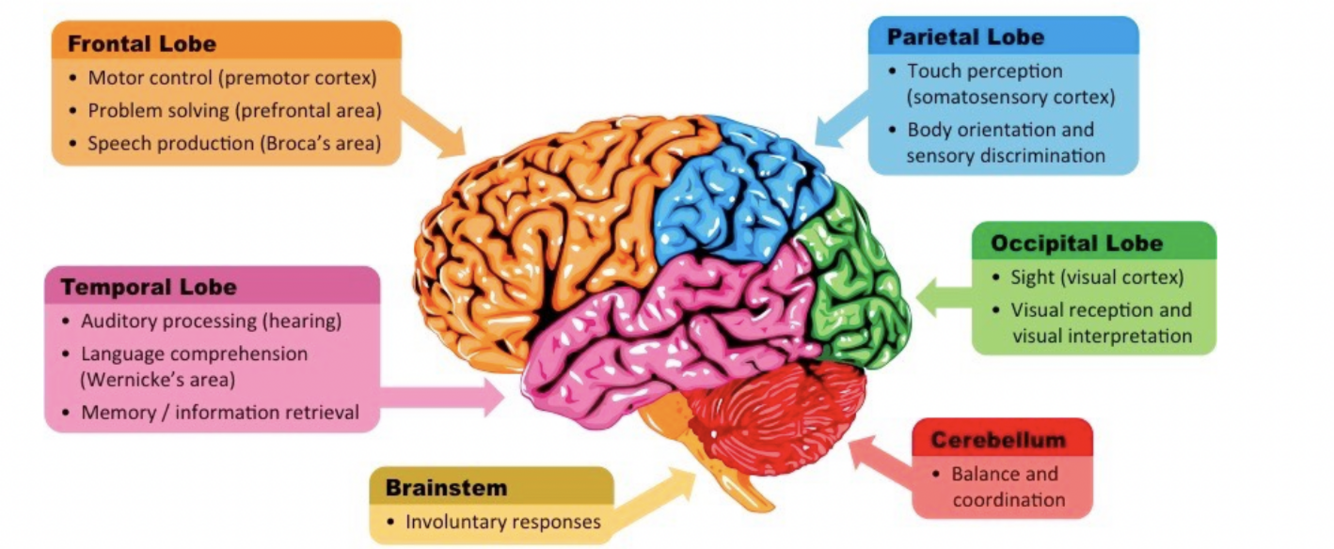
blood supply to brain+ vertebral arteries functions
• blood comes from the heart to the brain • vertebral arteries: carry blood to the right or left side of brain right side of brain goes through the branchiocephalic trunk (1st exit) left side is 3rd exit
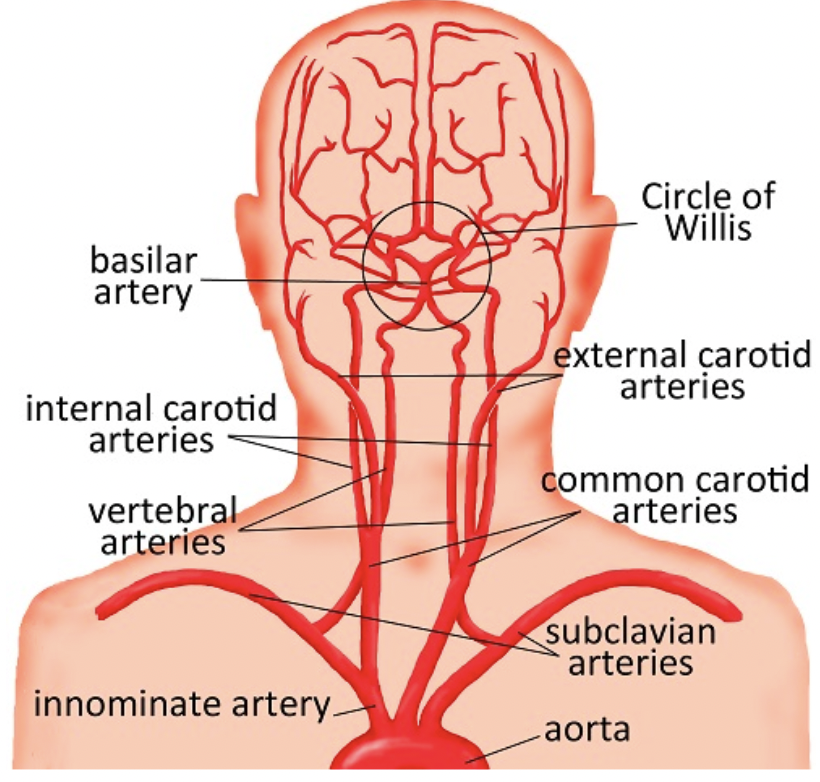
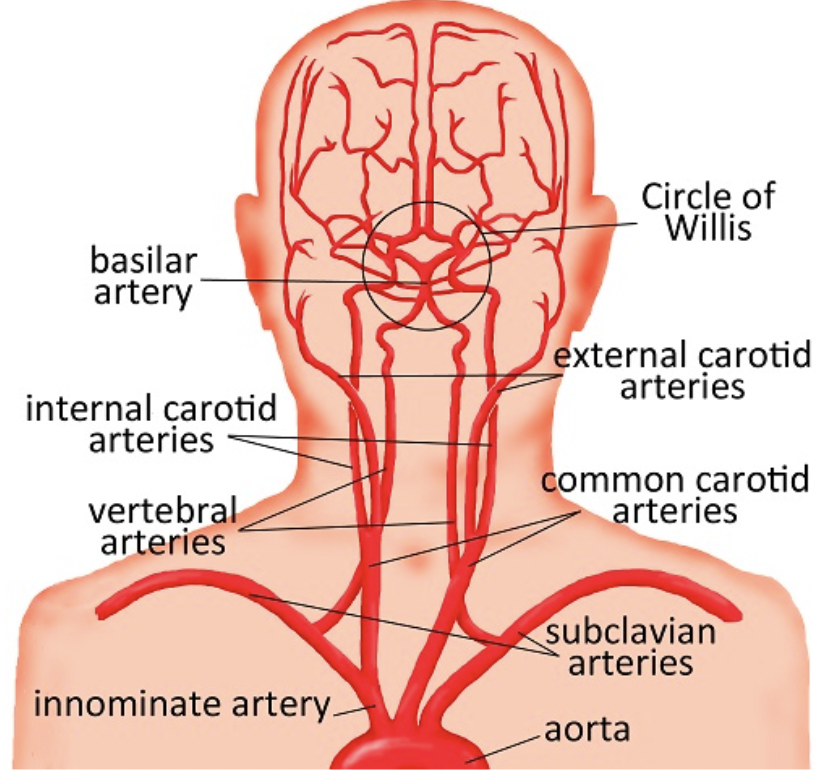
carotid arteries
splits into: internal carotid arteries: carries blood to inside/middle of brain external carotid arteries: carry blood to outside of brain
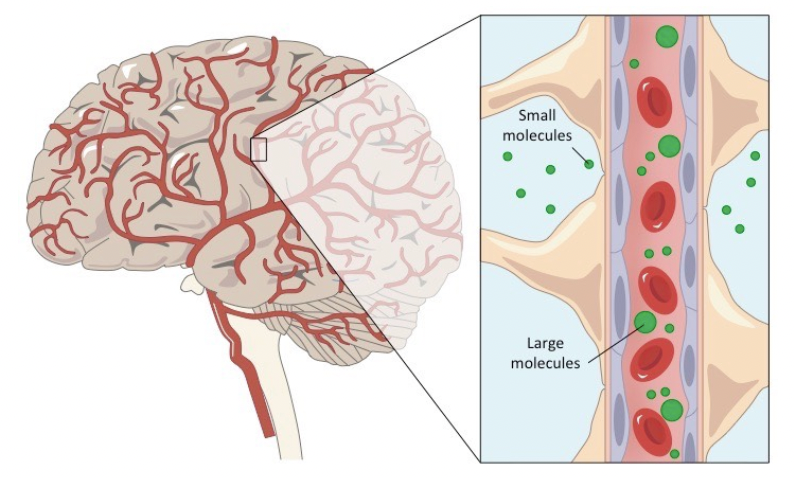
blood brain barrier (5)
• a selective barrier that separates circulating blood from cerebrospinal fluid of the brain • purpose= protect brain from most pathogenic infections • function= prevent movement of large molecules from blood to brain (bacteria) • formed by brain endothelial cells which are very closely connected • Smaller molecules (such as O2, CO2 and hormones) can still freely cross the blood-brain barrier
energy supply to brain (5)
• brain runs on glucose (sugar) • brain obtains energy using glucose & oxygen, which passes rapidly from the blood to the brain cells • glucose &oxygen make ATP inside the brain by process of aerobic respiration • carbohydrate (glucose) storage in the brain is limited, so the supply of glucose must be continuous • If blood entering the brain has low glucose or oxygen levels, mental confusion, dizziness, convulsions, and loss of consciousness may occur