3.2 PHYSICAL CHEMISTRY
No description yet. This curated deck is ready for daily study.
Card preview (24)
Define chemical energy
• The energy held within the bonds between atoms
Define enthalpy
• A measure of the heat/thermal energy content of a substance
Define enthalpy change ∆H
• The heat exchange with the surroundings during a chemical reaction
Define system and surroundings
System = the atoms and bonds in the chemical reaction Surroundings = everything around
Describe the relationship between energy and system/surroundings
• Heat/energy loss in a chemical system = heat/energy gain to the surroundings • Heat/energy gain in a chemical system = heat/energy loss to the surroundings
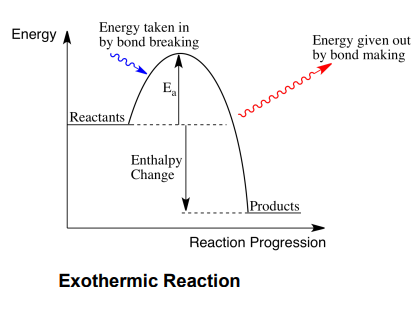
Draw a labled exothermic diagram for enthalpy change
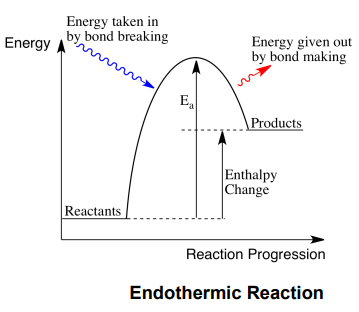
Draw a labled endothermic diagram for enthalpy change
Describe the term exothermic reaction in three ways
1) Heat energy is given out to surroundings from chemical reaction 2) More energy is released when product bonds are formed than the energy absorbed when breaking the reactant bonds 3) The enthalpy of reactants higher than enthalpy of products (thus, negative value)
Is bond breaking an exothermic or endothermic process?
• Endothermic
Is bond forming an exothermic or endothermic process?
• Exothermic
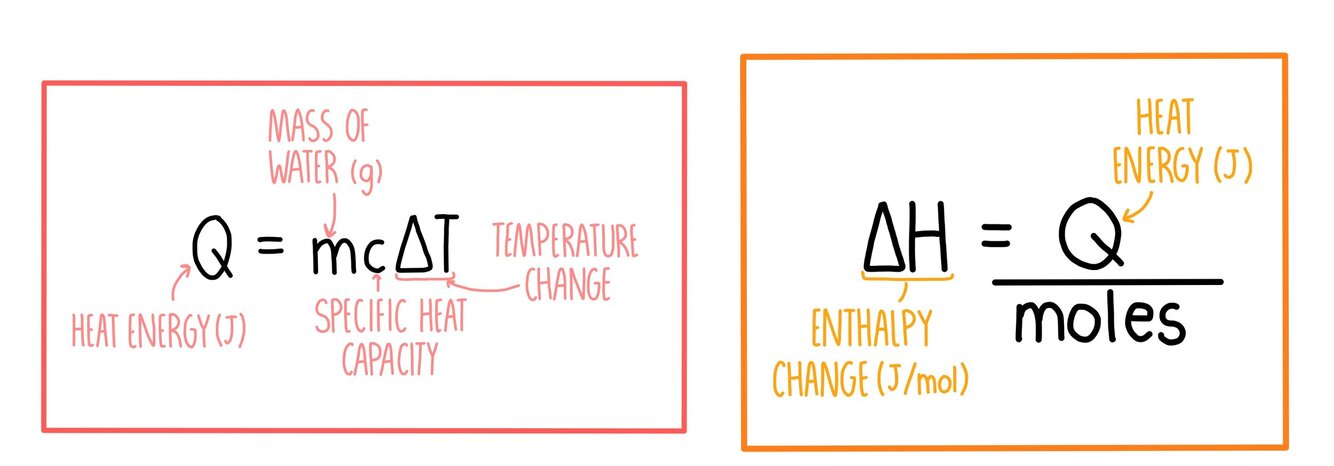
State and lable the two equations needed to work out ∆H from heat energy
Define activation energy Eₐ
• The minimum amount of energy required for a reaction to take place
Define calorimetry
• Working out the enthalpy change of a reaction
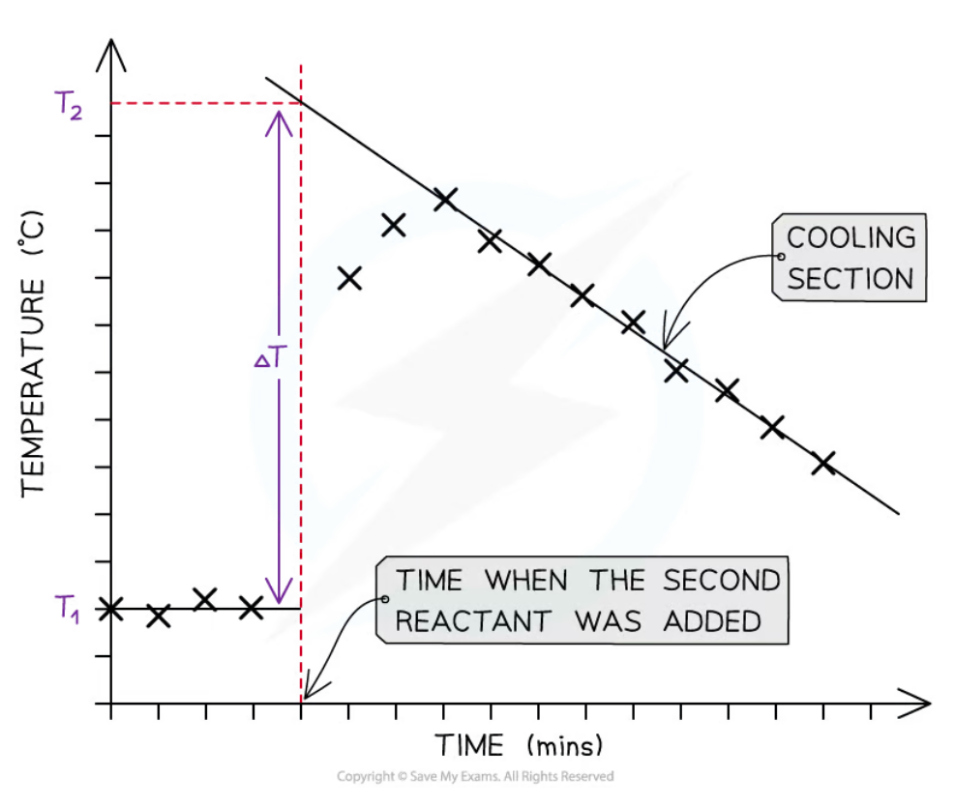
State what is measured during calorimetry to determine enthalpy change
• The temperature change of a chemical system (the reaction)
Conclude the type of reaction if a temperature rise is detected during calorimetry
• The reaction is exothermic • Heat energy has been released to the surroundings
Conclude the type of reaction if a temperature drop is detected during calorimetry
• The reaction is endothermic • Heat energy has been taken in from the surroundings
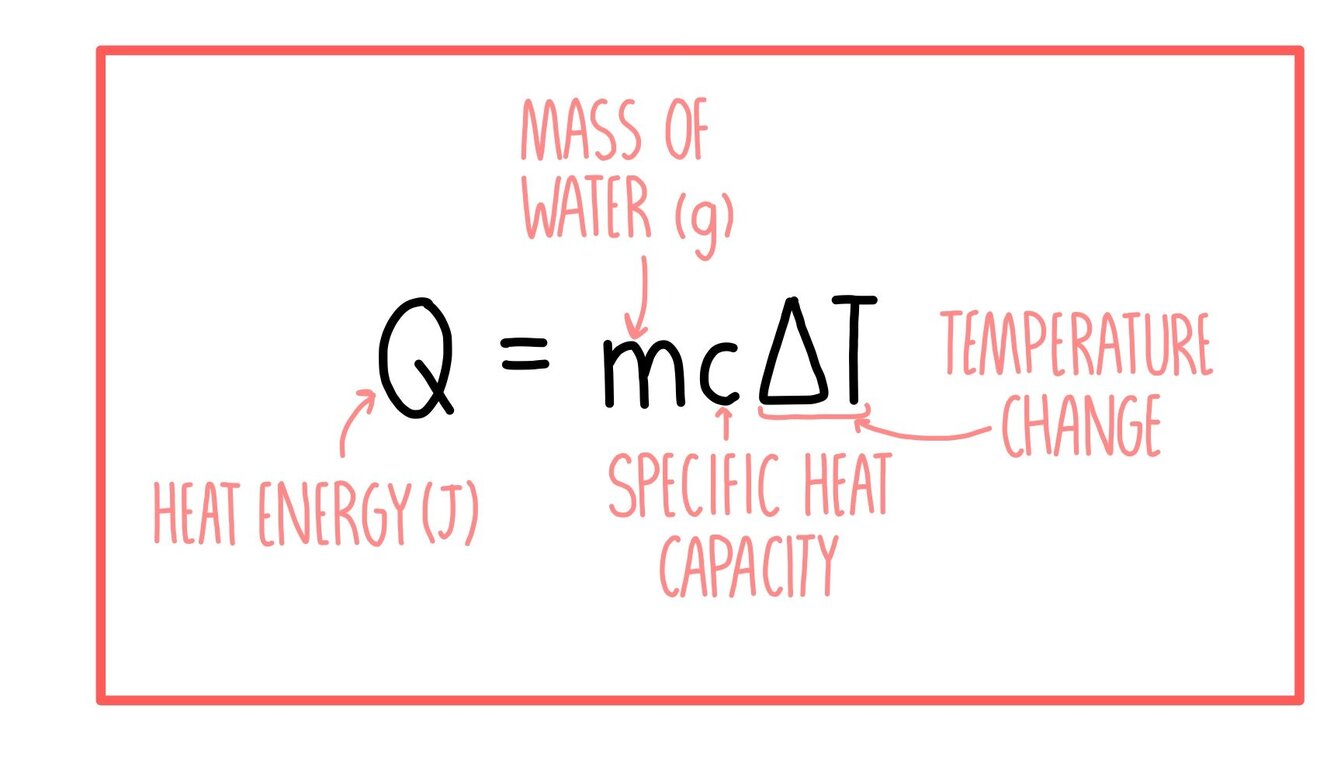
State the equation used after calorimetry
State why a polystyrine cup is used in a beaker during calorimetry
• Polystyrine acts as an insulator to reduce heat loss by evapourisation
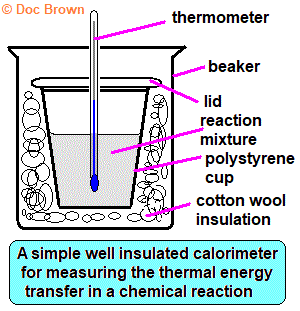
Draw and lable a graph for calorimetry
Describe the term copper calorimetry for combustion enthalpy
• When the heat energy from the combustion of a fuel is used to increase the temperature of a known mass of water
State the three reasons why experimental values differ from data values for combustion enthalpy
1) Non-standard conditions (298K 100kPa) 2) Incomplete combustion 3) Potential heat loss to surroundings
Define average bond enthalpy
• The energy needed to break 1 mole of gaseous bonds in GASEOUS MOLECULES to form gaseous atoms
State why bond enthalpy values are always positive
• Because bond breaking is an endothermic process
Describe what a smaller bond enthalpy indicates about that bond
Smaller bond enthalpy = weaker bond = less energy to break = more reactive