Ch 16 Practical Electricity
No description yet. This curated deck is ready for daily study.
Card preview (19)
What is the name of 2 types of high resistance wire?
nichrome and tungsten
What is the energy change in a high resistance wire?
electrical energy to heat
What is the relationship between P, I and V?
P = VI P: power V: voltage I: current
What is the relationship between E, I, V and t?
E = VIt E: energy V: voltage I: current t: time
State the 2 other variations of the formula E= VIt
E = I2Rt E = (V2/R)t
State 2 other variation of the formula P= VI
P = I2R P = V2/R
What is the unit of energy used for calculating home electrical consumption?
kWh (kilowatt-hour)
Conversions of unit needed for calculating energy in kWh. 1 s = __________ h 1 W = ____________ kW
1 s = 1/3600 h 1 W = 0.001 kW
Why are damaged insulation so dangerous? (There are 2 answers)
• Causes electric shock when someone touches an exposed live wire • Causes an electric fire when the exposed live and neutral wire touches each other resulting in a short circuit
What is overloading?
When there are too many electrical appliances connected to the same power socket.
Why is overloading dangerous?
Overloading causes the wires to overheat and eventually causes a fire.
Why should we not handle electrical appliances with wet hands?
Water lowers the resistance of our body, making it easier for current to pass through giving us an electric shock.
What is the purpose of a fuse?
The fuse melts and breaks the circuit when the current exceeds the current rating of the fuse. It protects the electrical appliances by preventing overheating of wires. It protects the user from an electric shock.
What is a fuse rating?
The maximum amount of current allowed to pass through the fuse before it melts and breaks the circuit.
What is the colour of the live wire? What is the colour of the neutral wire? What is the colour of the earth wire?
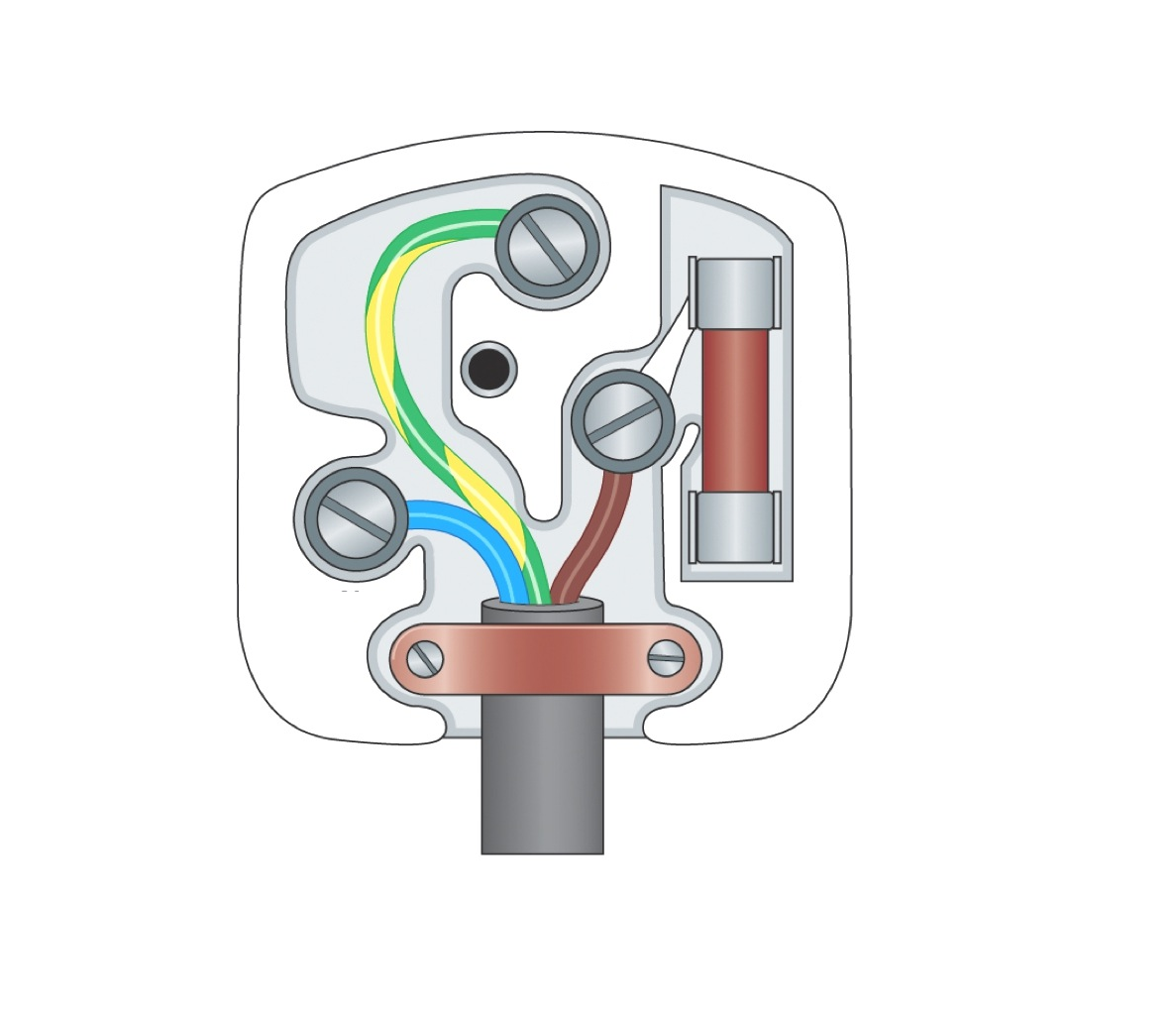
Live wire: brown (labelled C in diagram) Neutral wire: blue (labelled B in diagram) Earth wire: yellow and green stripes (labelled A in diagram)
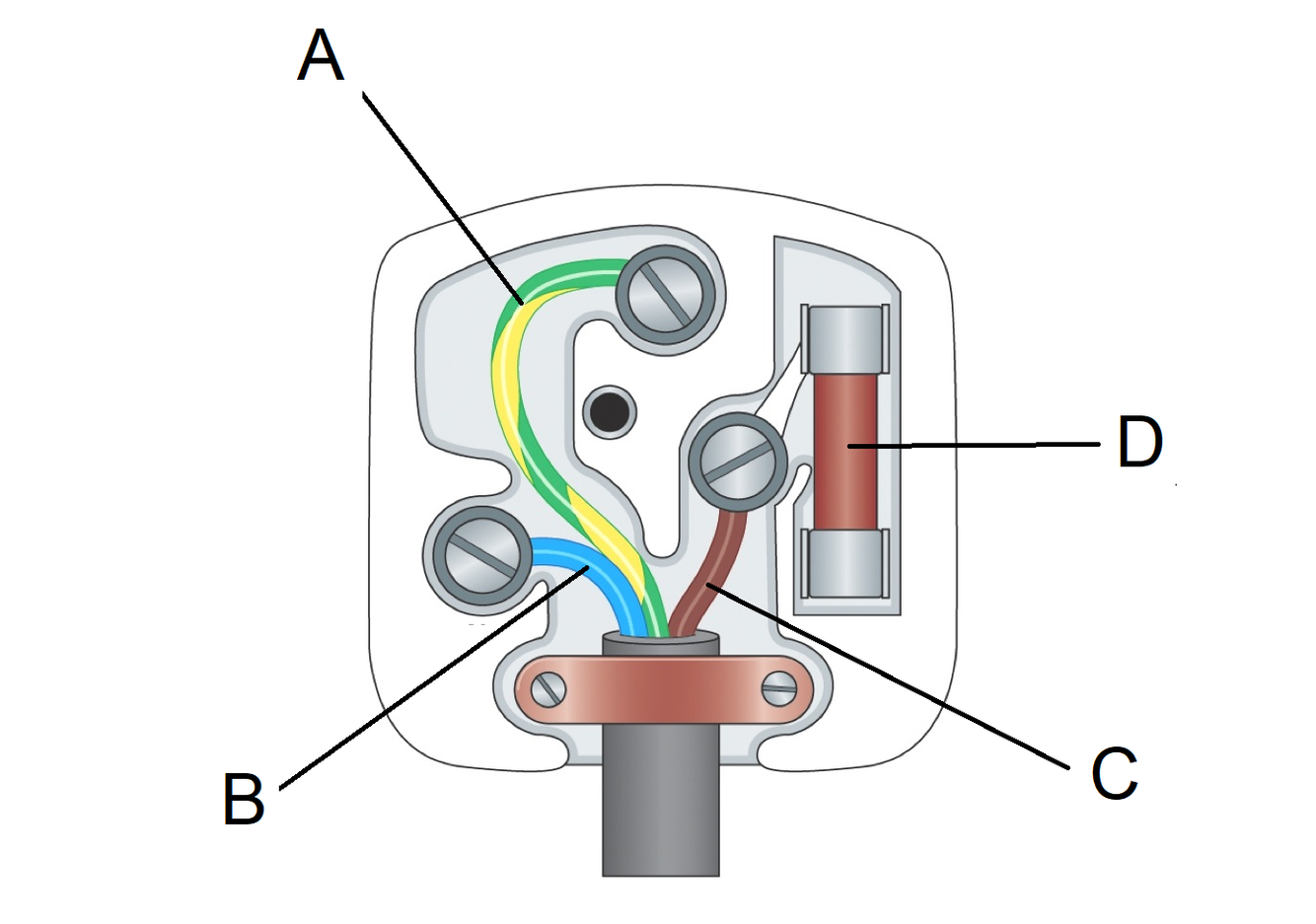
Explain how the earth wire works with a fuse to protect the user from an electric shock.
The earth wire is connected to the metal casing of the appliance. When there is an electrical fault such as the live wire touching the metal casing, a large current will flow from the live wire to the earth wire. This causes the fuse in the live wire to melt and break the circuit, protecting the user from an electric shock.
How do a double insulated wire help to protect the user from electric shock?
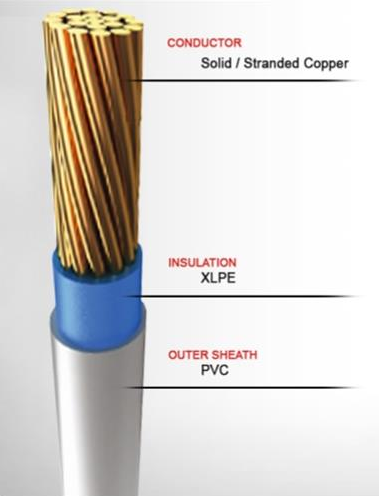
When the inner insulation of the live wire fails, the outer casing will still insulate the live wire from the user thus preventing an electric shock.
Why is the switch, fuse and circuit breaker connected at the live wire?
When the switch is off, it isolates high voltage of the live wire from the rest of the appliance. When the fuse melts and breaks, it isolates high voltage of the live wire from the rest of the appliance. When the circuit breaker breaks, it isolates high voltage of the live wire from the rest of the appliance.
An electrical appliance is rated ‘60 W, 240 V, 0.25 A’. What is the voltage and current value in the following wires when the appliance is working normally? Live wire: V = _____ I = ______ Neutral wire: V = _____ I = ______ Earth wire: V = _____ I = ______
Live wire: V = 240 V I = 0.25 A Neutral wire: V = 0 V I = 0.25 A Earth wire: V = 0 V I = 0 A