aldehydes and ketones
No description yet. This curated deck is ready for daily study.
Card preview (9)
Carbonyls
Carbonyls are compounds with a C=O bond. They can be either aldehydes or ketones
Intermolecular forces in carbonyls
Pure carbonyls cannot hydrogen bond to themselves, but are attracted instead by permanent dipole forces
Solubility in water
The smaller carbonyls are soluble in water because they can form hydrogen bonds with water.
Reactions of carbonyls
In comparison to the C=C bond in alkenes, the C=O is stronger and does not undergo addition reactions easily. The C=O bond is polarised because O is more electronegative than carbon. The positive carbon atom attracts nucleophiles. This is in contrast to the electrophiles that are attracted to the C=C .
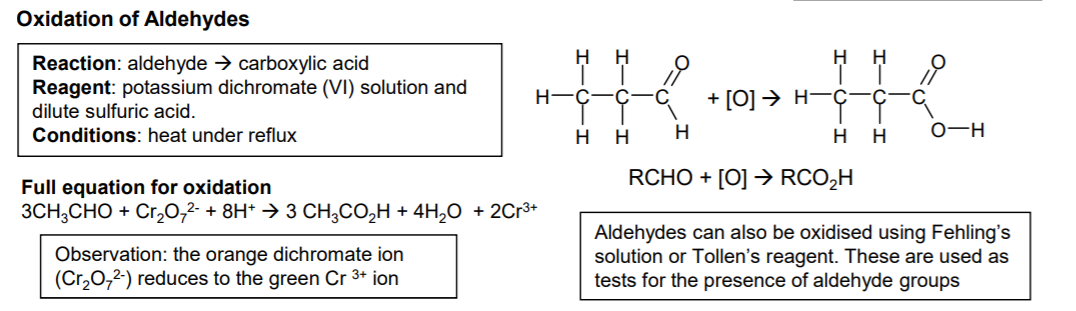
Oxidation of Aldehydes
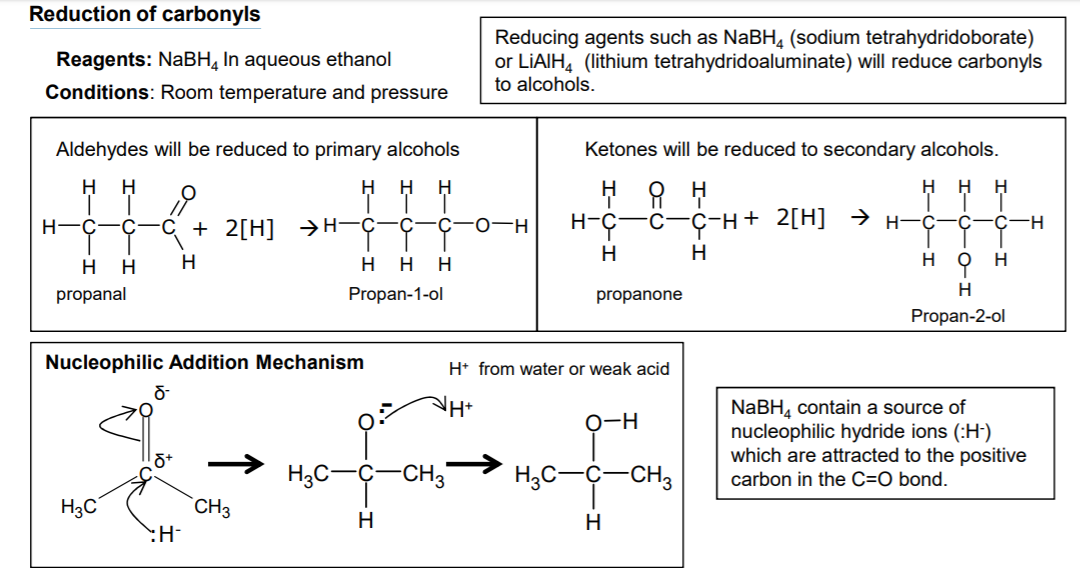
Reduction of carbonyls
Catalytic Hydrogenation

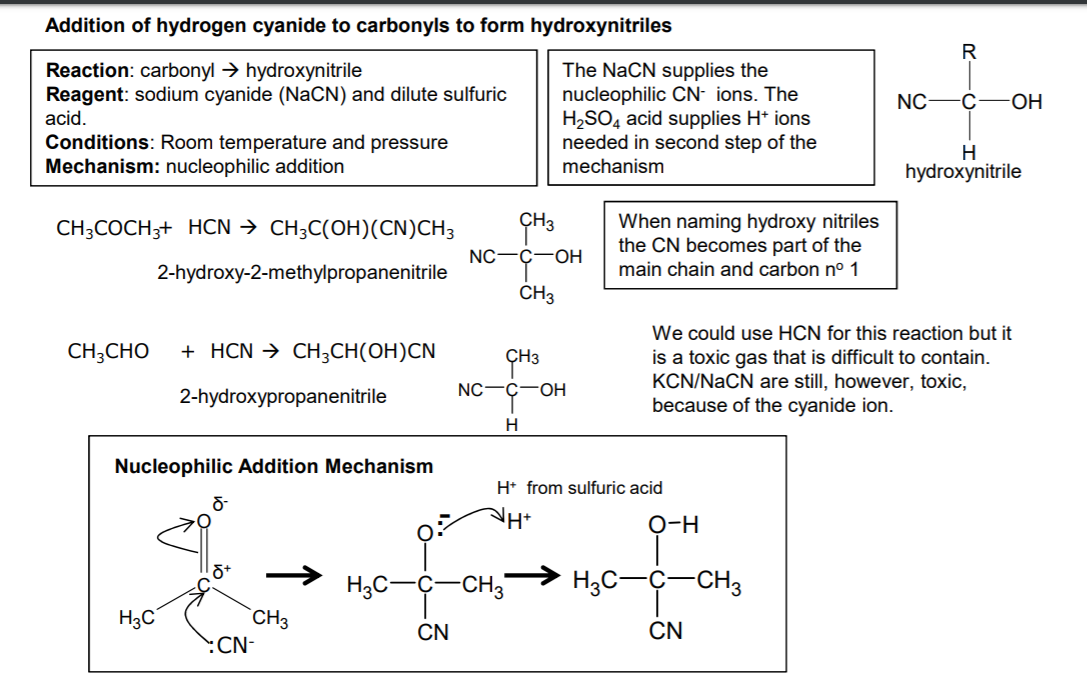
Addition of hydrogen cyanide to carbonyls to form hydroxynitriles