Chapter 12: Alkynes
No description yet. This curated deck is ready for daily study.
Card preview (24)
What is this alkyne called?
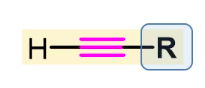
Terminal Alkyne
What is this alkyne called?
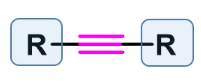
Internal Alkyne
Why is sp3 hybridized carbon the least stable base and F- the most stable base

Use ARIO; Most importantly atom and orbital sp3 hybridized carbon is the least stable base because it the smallest atom, there are no resonance structures, and sp3 is the least stable hybridized orbital
Why can’t you use RO- (alkoxide) such as NaOEt or NaOMe to deprotonate a terminal alkyne?

Bases that are more stable than an alkynide ion can not be used to deprotonate a terminal alkyne to form one
What is this molecule?
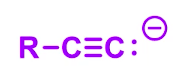
Alkynide ion
How is an alkynide ion formed?
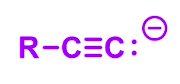
A terminal alkyne is deprotonated by a strong base (less stable base)
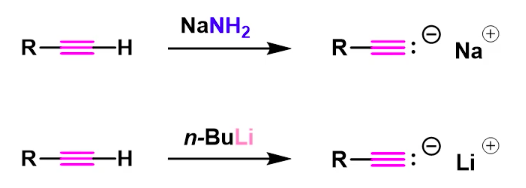
What is the significance of these reagents?
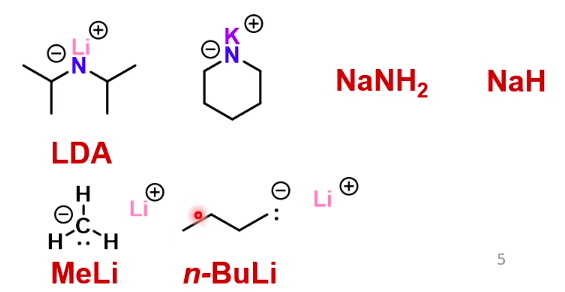
They are strong bases that can deprotonate a terminal alkyne to form an alkynide ion
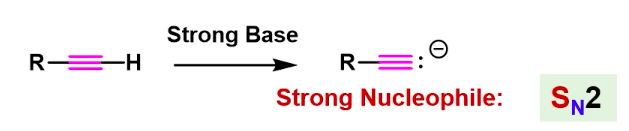
What is the mechanism for an alkylation reaction?
A strong base deprotonates the terminal alkyne to from an alkynide ion. The alkynide ion then acts as a strong nucleophile that, when treated with an electrophile, will undergo a SN2 reaction. This is called alkylation. Only efficient when the electrophile is a Me-Halide or RCH3-Halide
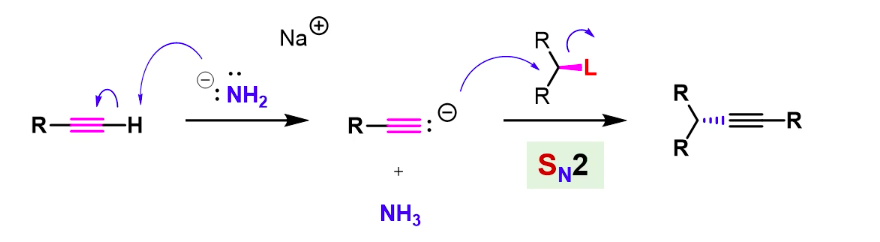
What is the outcome of this reaction?
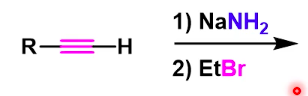
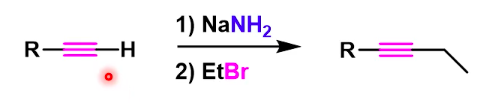
Why won’t this reaction work?
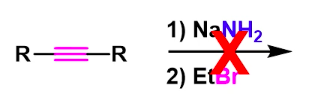
Can only alkylate terminal alkynes (shown is an internal alkyne)
Why do you have to form two separate alkynide ions in this reaction?

A dianion is too high in energy and doesn’t exist
What is happening in this reaction?
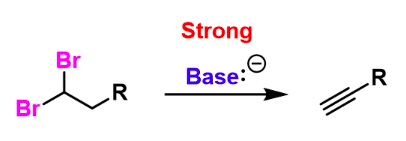
E2 elimination reaction of geminal dihalide
What is happening in this reaction?
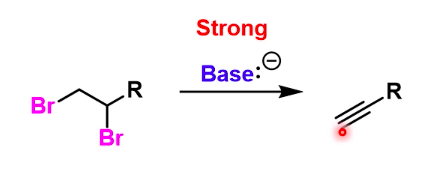
E2 elimination reaction of vicinal dihalide
What is this reaction?
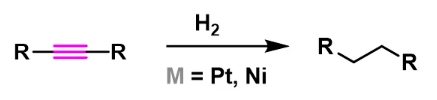
Complete hydrogenation (reduction) alkyne reduced to alkane
What is this reaction?
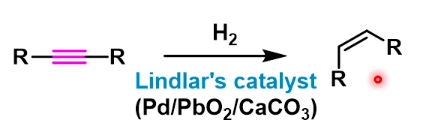
Partial hydrogenation (reduction) Using a partially deactivated catalyst (Lindlar’s catalyst) will result in a cis alkene to form
What is this reaction?
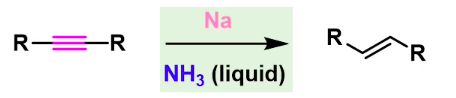
Partial hydrogenation (reduction) Using Na, NH3 as reagents will result in a trans alkene to form
NaNH2 vs Na, NH3 as reagents
NaNH2 is used as a strong base to deprotonate a terminal alkyne to from a alkynide ion Na, NH3 is used to partially reduce an alkyne through a dissolving metal reduction to form a trans alkene
What reagents in a hydration reaction of an alkyne will result in markovnikov regiochemistry?
H2SO4, H2O HgSO4
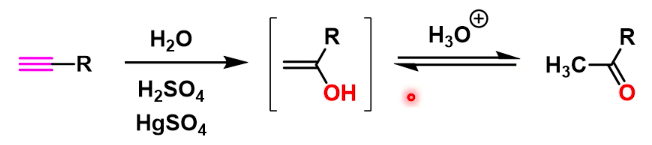
What is this molecule?
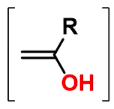
Enol it is a tautomer of a ketone (constitutional isomer that can rapidly interconvert via the migration of a proton) Equilibrium greatly favors a ketone over enol
Why does this hydration reaction form two products?
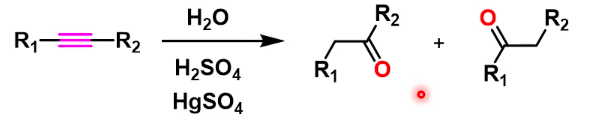
It is an asymmetrical internal alkyne and the reaction will occur on both sides of the alkyne
What reagents in a hydration reaction of a terminal alkene will result in anti-markovnikov regiochemistry?
BH3 THF (or R2BH) and H2O2, NaOH Called Hydroboration-oxidation It is anti-markovnikov because BH3 is bulky and sterically hindered by the more substituted carbon Results in an aldehyde formation

What are these used for?
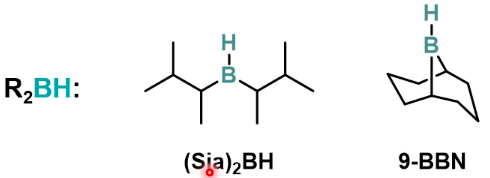
Hydroboration oxidation reaction of alkynes
What is this molecule?
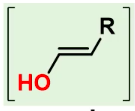
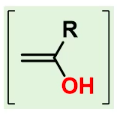
Enol (also can look like this)
What is happening here?

The same alkyne can be converted to an aldehyde or a ketone based on what reagents are used in the reaction