Final Exam Practice
No description yet. This curated deck is ready for daily study.
Card preview (24)
What is LDA?
lithium diisopropylamide It is used as a base in reaction to favor an enol in equilibrium and allow for the alkylation of alpha ketones. Often used with THF as solvent. **Bulky, so wil pull off less crowded alpha hydrogen
What is the result if you treat an ester with NaOet and then H+
Claison condensation. Remember R-O is a good leaving group.
what reagant allows you to reduce phNN group?
H3PO2
What is true of the reaction rate in allylic, benzylic, and vinyl halides undergoing SN2 reactions?
-Vinylic halides do not undergo SN2 reactions (No SN2 on SP2) -Allylic and benzylic halides undergo SN2 much quicker than corresponding simple alkanes
What is important to know about Michael reactions?
There are 1,2 additions and 1,4 additions. A 1,4 addition is also known as a Michael addition or a conjugate addition. In this situation, the nucleophile attacks the C=C bond and forms a temporary enol that rapidly tautomerizes into a ketone.
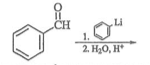
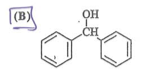
adding this to phNN

phOH
What happens when you have a ketone in basic conditons (OH)?
A beta-hydroxy ketone forms. The alpha carbon of one ketone attacks the carbonyl of the other, a tetrahedral intermediate is formed, and the protonated. (Aldol addition) **You can also go all the way to an alpha,beta unsaturated ketone by reforming the carbonyl (Aldol condensation)
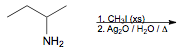
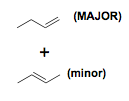
What is the result of adding the following to an amido group?
“decarbonyl” Hofman rearrangement
What reagant allows you to add F to a benzene
• HNO3/ H2SO4 • H2/ Pt • NaNO2/ HCl • HBF4/ heat
Adding this to ph-NN

ph-Br or ph-Cl
What is the difference between epoxide opening in acidic and basic conditions?
Acidic conditions: epoxide is activated and then the nucleophile attacks the more positive (more substituted side). Basic conditions: the strong nucleophile attacks the more available side (less substituted)
What are examples of common michael donors?
Michael Donors= (nucleophile) Beta di-ketone Beta-keto ester Gilman (R2CuLi) Beta-keto nitrile alpha-nitro ketone
What are these reactants responsible for?
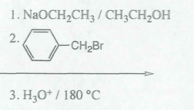
• deprotonate methylene carbon • add Br group • hydrolyze R-O-R and decarboxylate
If you are creating a cyclic acetic acid derivative from a malonic ester, how would you do this?
• NaOEt/ EtOH • Br-R-Br (two Brs allows a cyclic compound to form at the methylene carbon) • H3O+/ heat to hydrolyze and decarboxylate
adding this to phNN

ph-I
Adding the following to a carboxylic acid
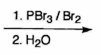
Alpha-Bromination Replaces hydrogen with Br in a keto enol reaction
When looking at ethers and figuring out what happens in a reaction, what should I look for specifically?
Look for ACETALS!!! Ethers don’t react unless you have lots of heat or a strong acid. Acetals react.
How can you identify if something is a Michael donor?
Has two electron withdrawing groups and an active methylene group!
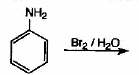
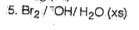
POWERFUL ACTIVATOR! No catalyst necessary. Br will add in all ortho/para positions
adding this to phNN

phF
What is the result of the addition of X2 to a double bond? and why?
Anti-addition because of the formation of a halonium ion!
What is the result of you add CN to an alpha beta substituted ketone
favors conjugate 1,4 addition!