2A: Bonding
No description yet. This curated deck is ready for daily study.
Card preview (24)
What is ionic bonding?
The strong electrostatic attraction between oppositely charged ions
How do ionic radius and ionic charge affect the strength of ionic bonding?
• Smaller ionic radius and greater ionic charge • So greater charge density • So stronger ionic bonding
Describe the formation of ions in terms of electron loss or gain.
Loss of electrons forms positive ions. Gain of electrons forms negative ions.
Explain the trend in ionic radius down a group.
Ionic radius increases, because more electron shells.
Explain the trend in ionic radius for isoelectronic ions.
Ions with a higher nuclear charge have a smaller ionic radius.
Describe the experiment to show the migration of ions.
Ionic compound on damp filter paper with oppositely charged electrodes. The opposite ions migrate towards the electrodes. Proves the existence of ions.
What is covalent bonding
The strong electrostatic attraction between two nuclei and the shared pair of electrons between them
Explain the relationship between bond lengths and bond strengths for covalent bonds?
Shorter bond = stronger bond, because electrons are closer to the nucleus
State and explain the trend in X-X bond length as you go down group 7.
More electron shells, so more shielding, so weaker attraction between the nuclei and the bonding electrons, so longer bond.
What determines the shape of a simple molecule or ion?
The repulsion between the electron pairs that surround a central atom. Electron pairs will take a position where repulsion is minimised.
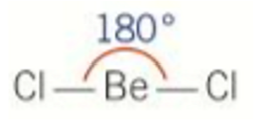
Shape and bond angles of BeCl2
Linear 180
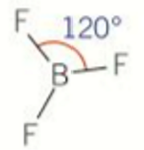
Shape and bond angles of BCl3
Trigonal planar 120
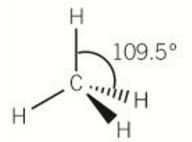
Shape and bond angles of CH4
Tetrahedral 109.5
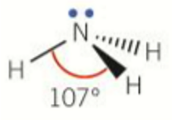
Shape and bond angles of NH3
Trigonal Pyramidal 107
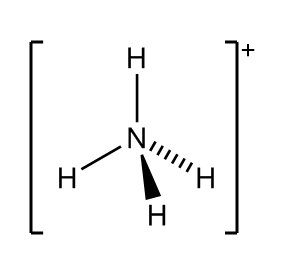
Shape and bond angle of NH4+
Tetrahedral 109.5
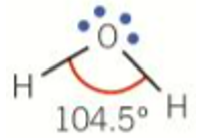
Shape and bond angle of H2O
Bent 104.5
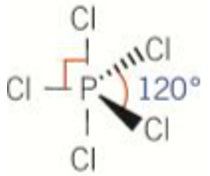
Shape and bond angles of PCl5
Trigonal Bipyramidal 120 and 90
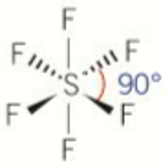
Shape and bond angle of SF6
Octahedral 90
What is electronegativity?
The ability of an atom to attract the bonding electrons in a covalent bond
How is a dipole formed?
When bonding atoms have a large difference in electronegativity, they attract electrons unequally, and one gets a slight positive charge and the other a slight negative charge.
What is a polar molecule?
A molecule with polar bonds creating an overall dipole.
How do you practically check if a substance contains polar molecules?
Electrostatic charge next to a jet of liquid. Polar molecules will be attracted.
Describe London Forces.
Instantaneous dipole - induced dipole. Caused by an instantaneous imbalance of electrons in the molecule. The resultant dipole induces a dipole in a nearby atom or molecule. Strength increases with number of electrons.
Describe permanent dipole attractions.
Two molecules with permanent overall dipoles. Attraction between the positive charge in one molecule and the negative charge in the other.