17 - CARBOHYDRATES
No description yet. This curated deck is ready for daily study.
Card preview (19)
functions of carbohydrates/where can you find them
most abundant organic compounds in the plant world storehouses of chemical energy components of supportive structures they are everywhere in nature also components of nucleic acids (DNA and RNA)
formula for sugars
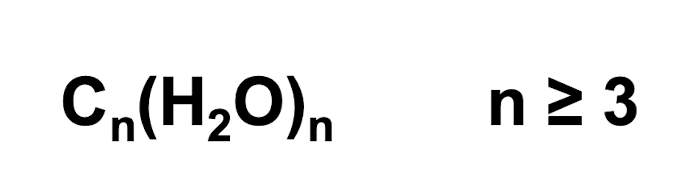
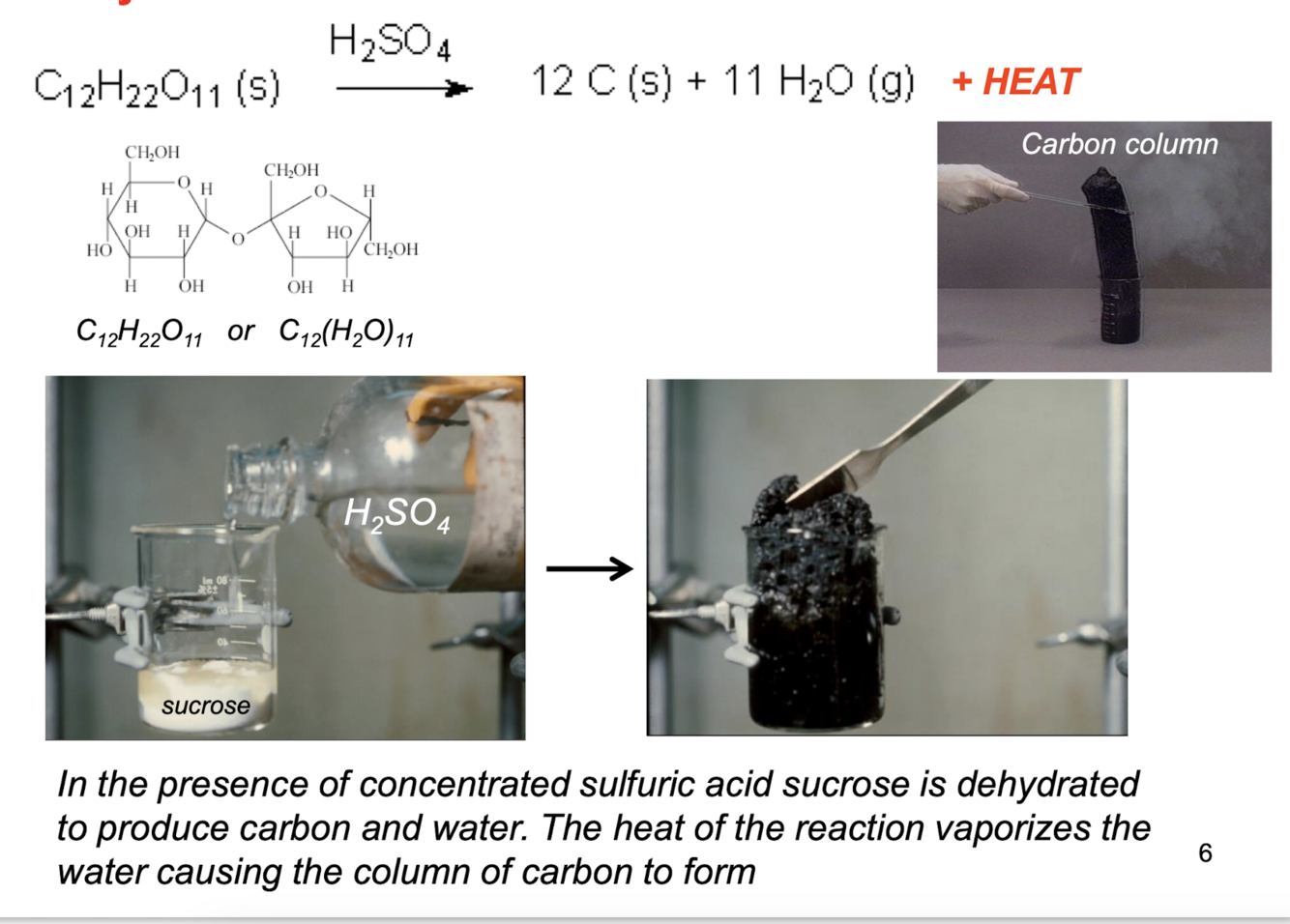
dehydration of sucrose with sulfuric acid
formula of monosaccharides and some examples
(CH2O)n where n=3 glyceraldehyde (an aldose) dihydroxyacetone (a ketose), an active ingredient in self tanning product
how do you figure out D or L nomenclature of sugars
look at the orientation of the OH group the furthest away from the aldehyde D or L does not tell us about the rotation
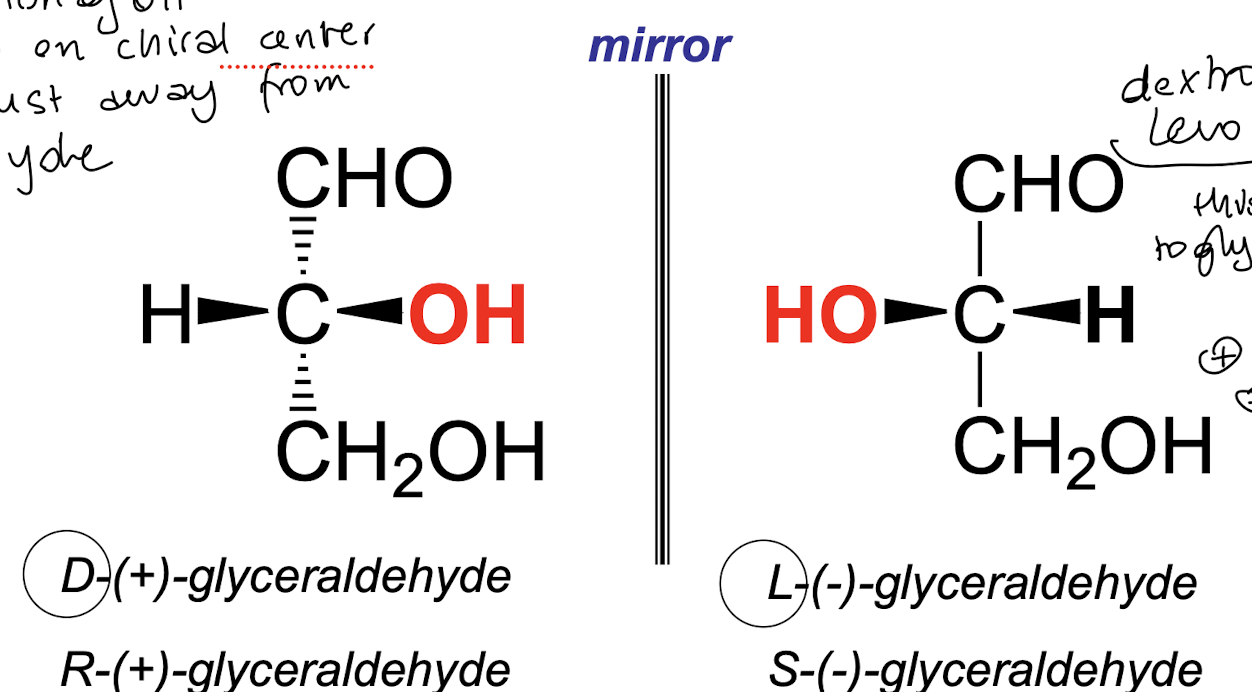
dextrorotatory and levorotatory in a polarimeter
only applies to glyceraldehydes + = dextrorotatory L = levorotatory
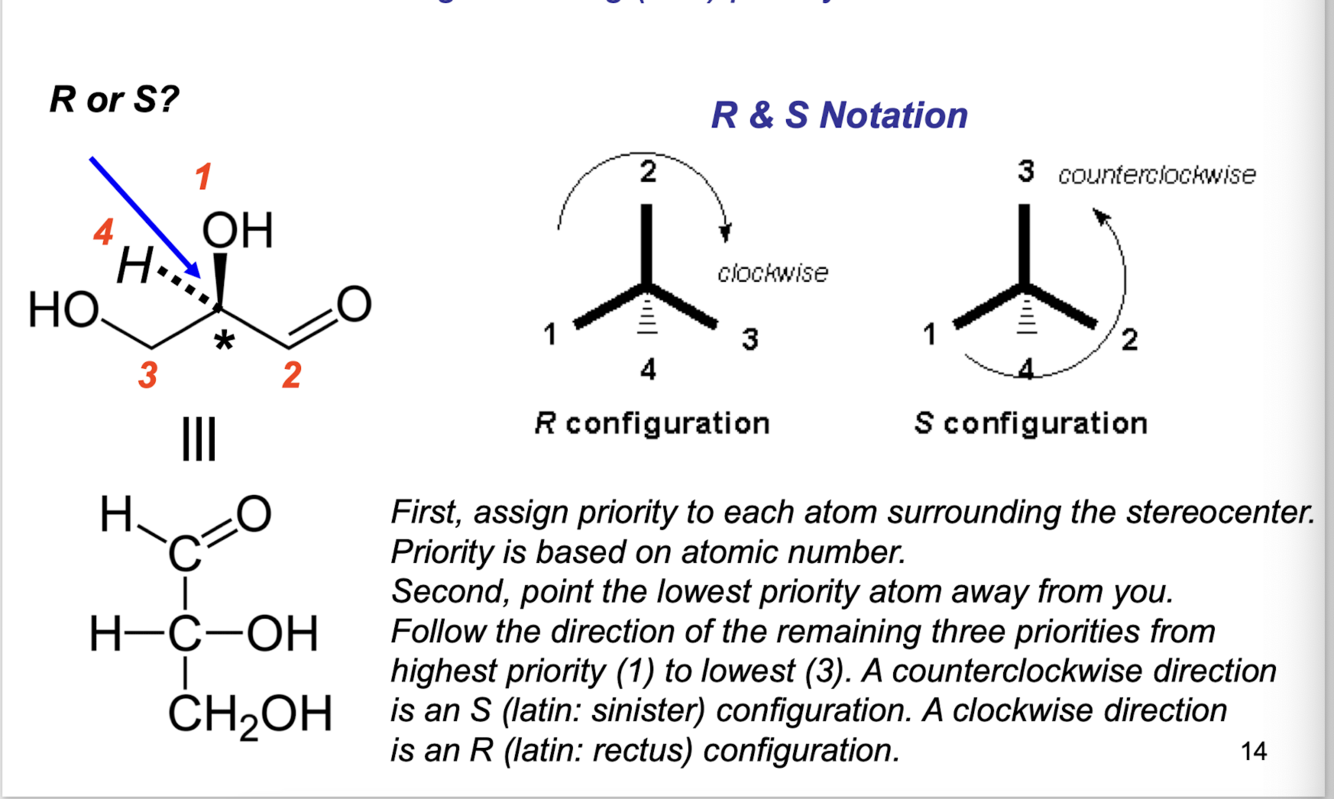
reminder on R or S notation
counterclockwise=S clockwise=R
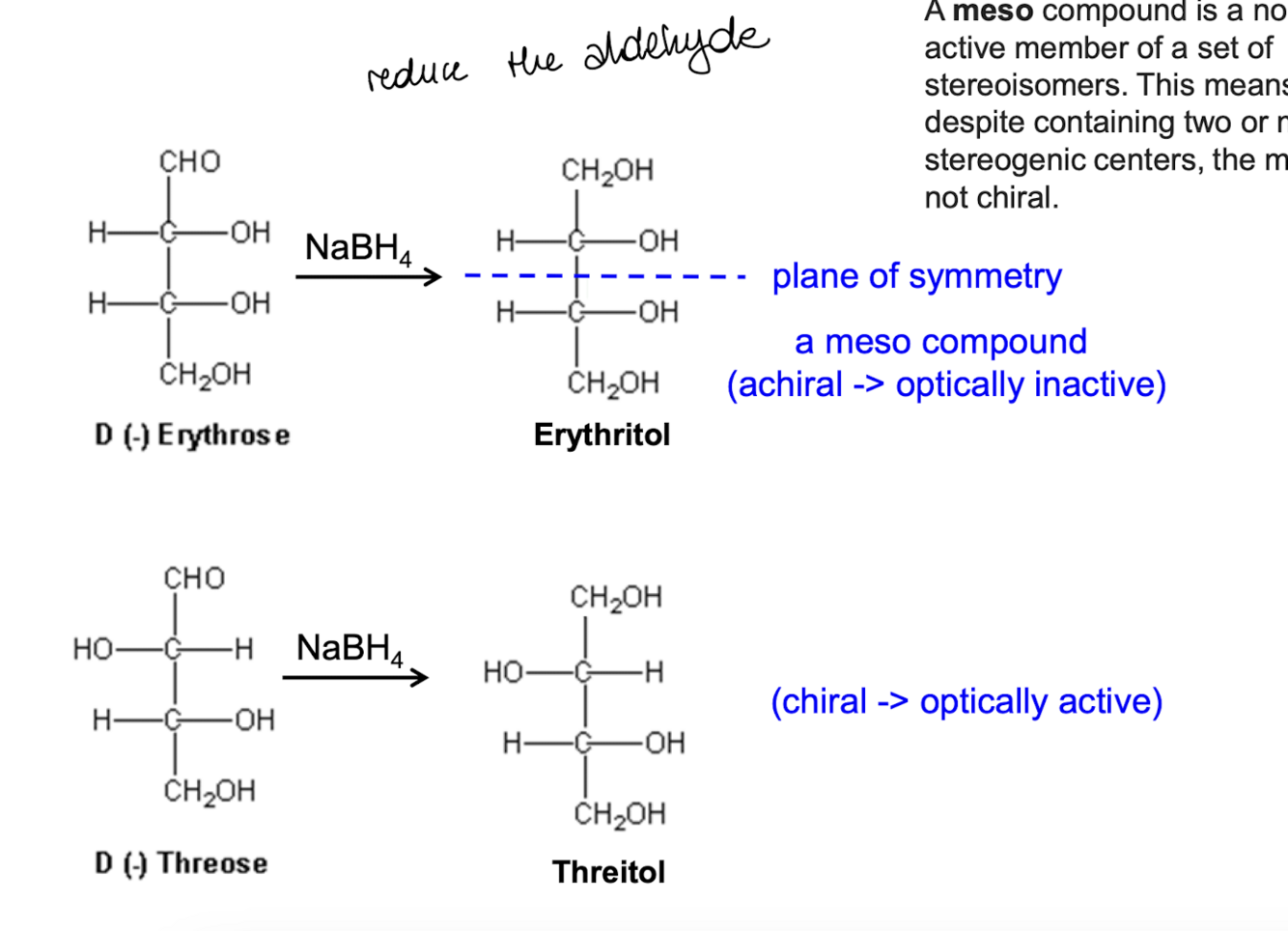
how can you distinguish between D(-) erythrose and D(-) threose using NaBH4 and a polarimeter?
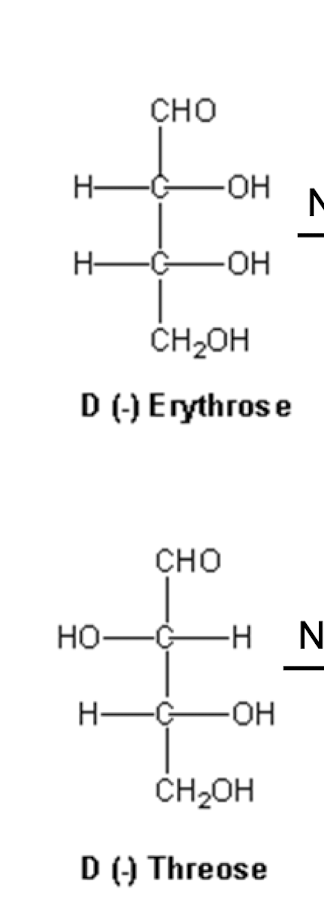
those are the two tetroses
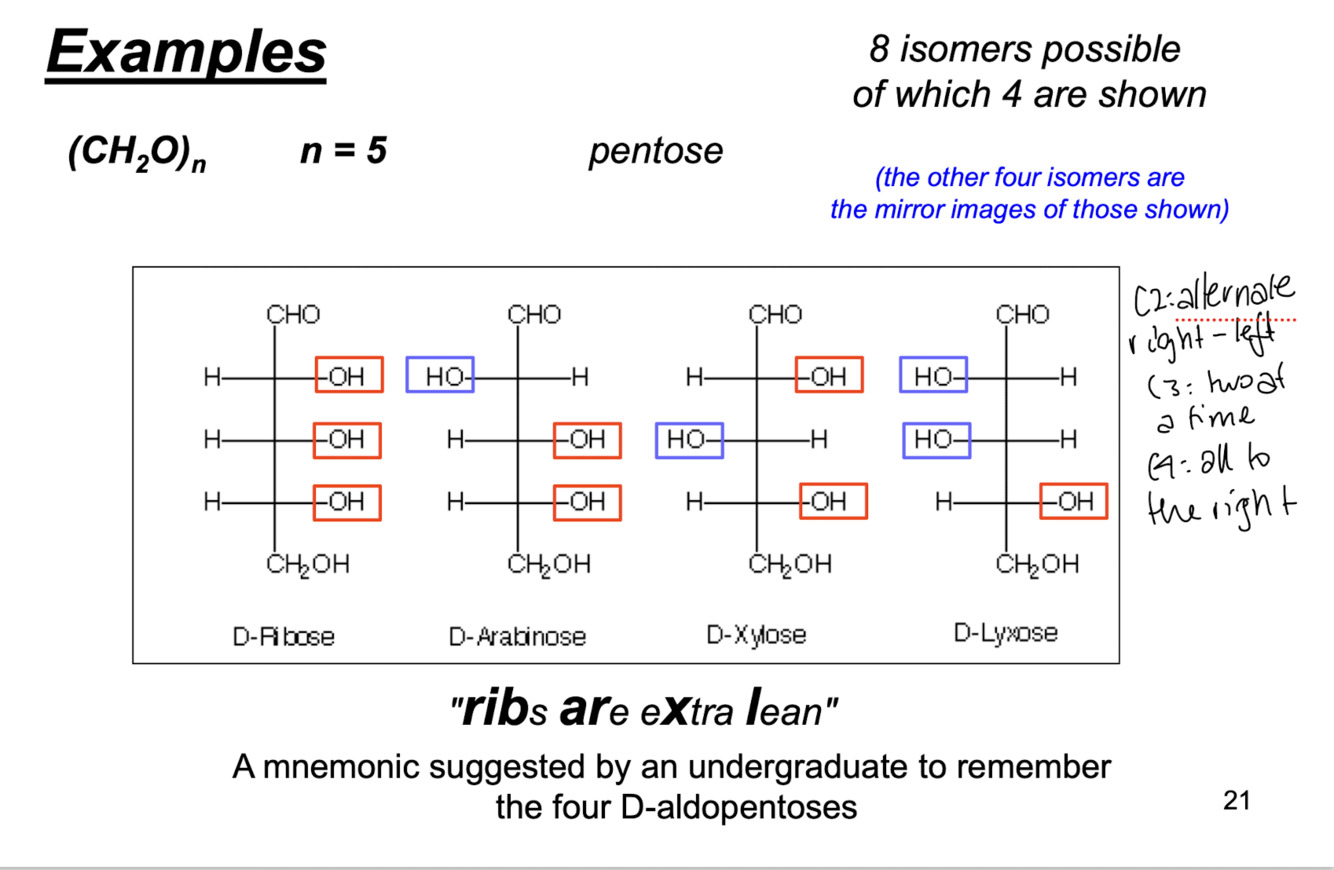
what are the four D-pentoses and how you can remember them?
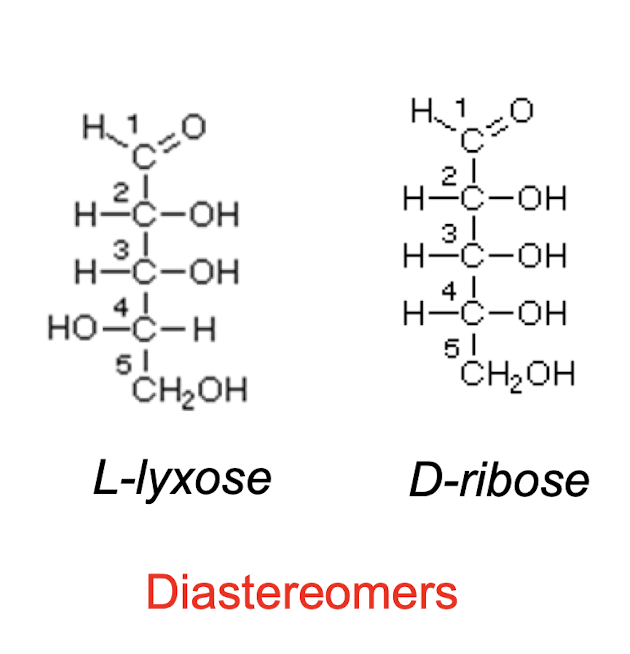
structures of L-lyxose and D-ribose and their relationship
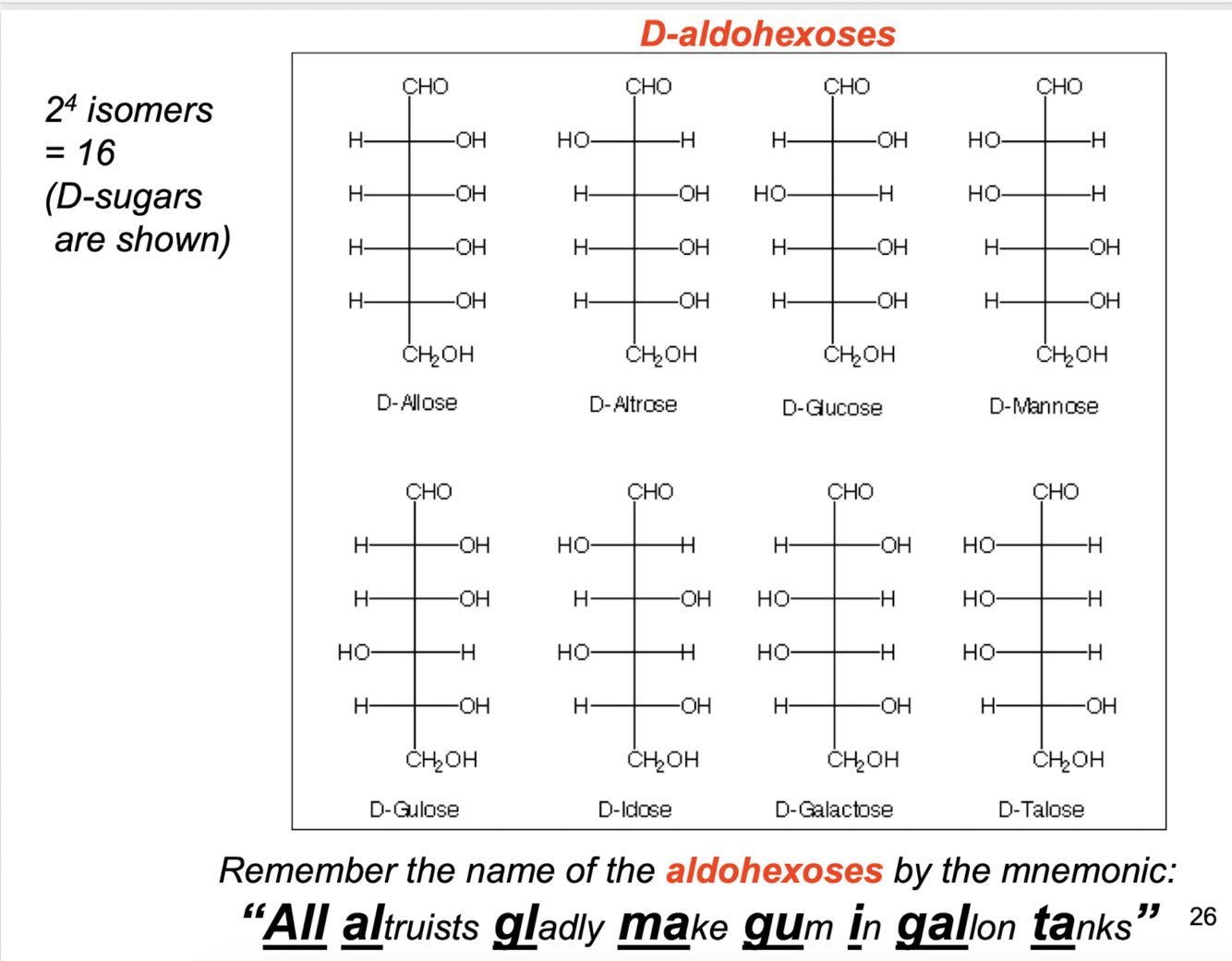
what are the 8 D-aldohexoses?
method: allose has all 4 hydroxyls on the right at C2: hydroxyls alternate right left at C3: the first two are right, next to left, and so on C4: first four on the right, rest on the left C5: all hydroxys are on the right
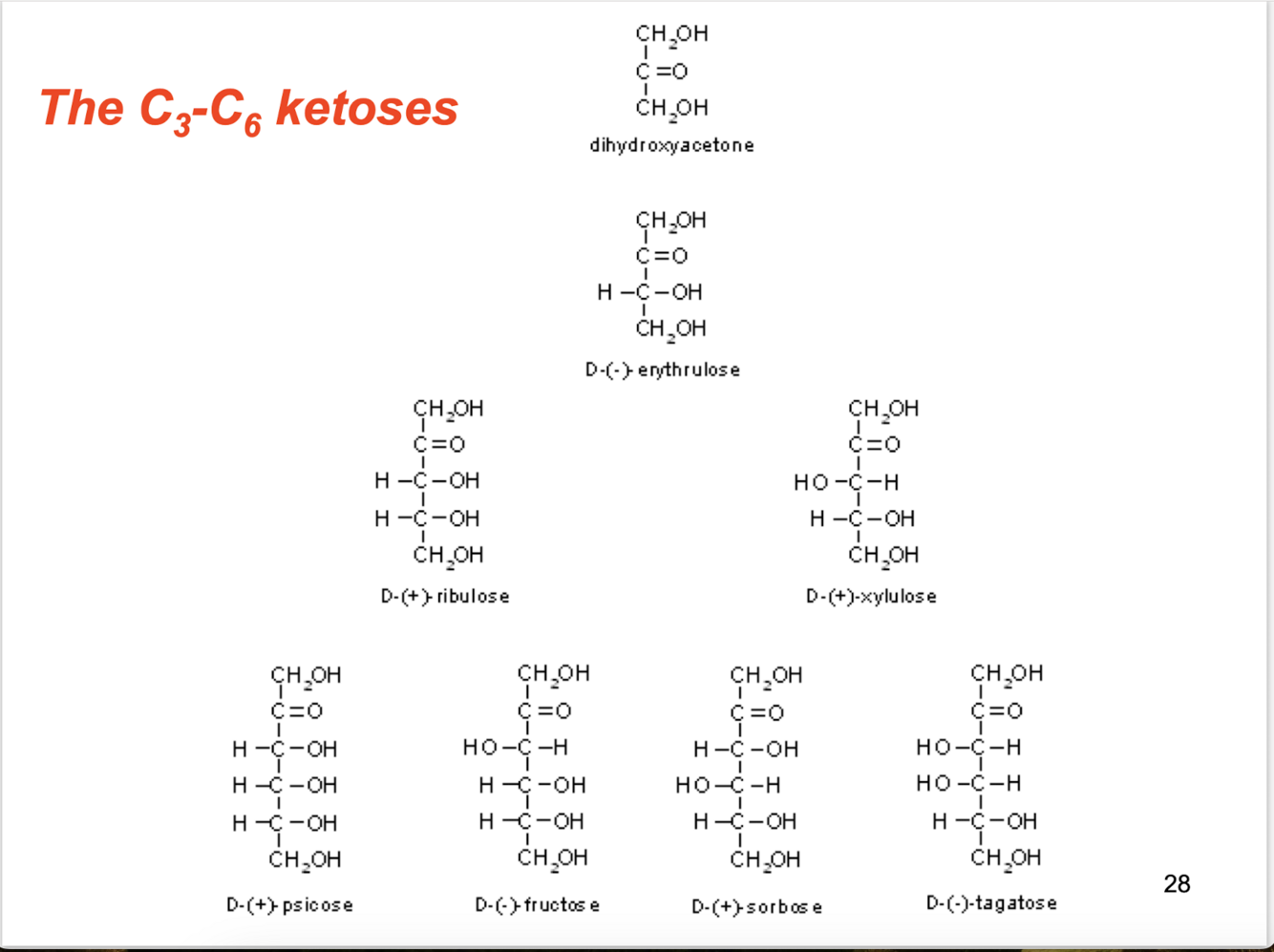
what are the C3-C6 ketoses
how does glucose form a cyclic hemiacetal
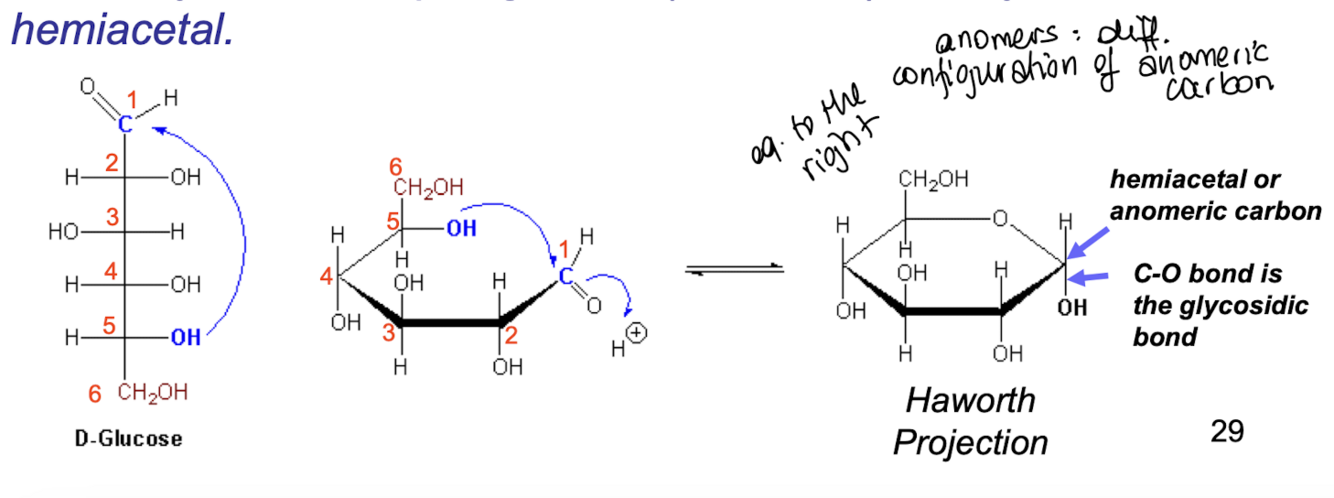
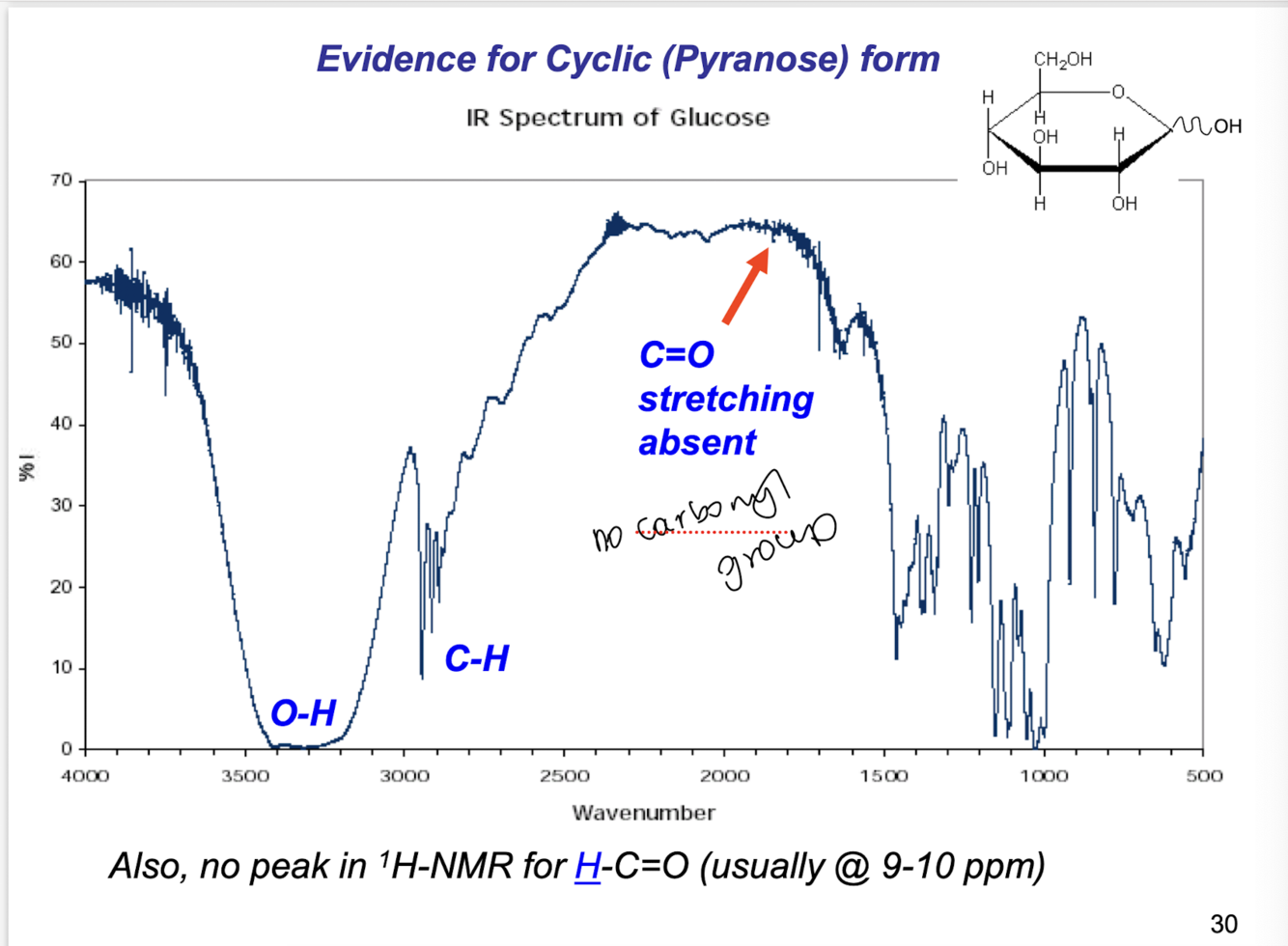
what is the evidence for the cyclic pyranose form of glucose
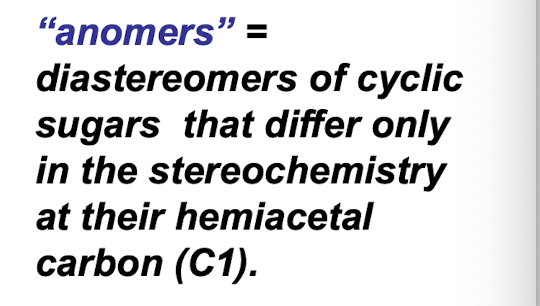
what are anomers
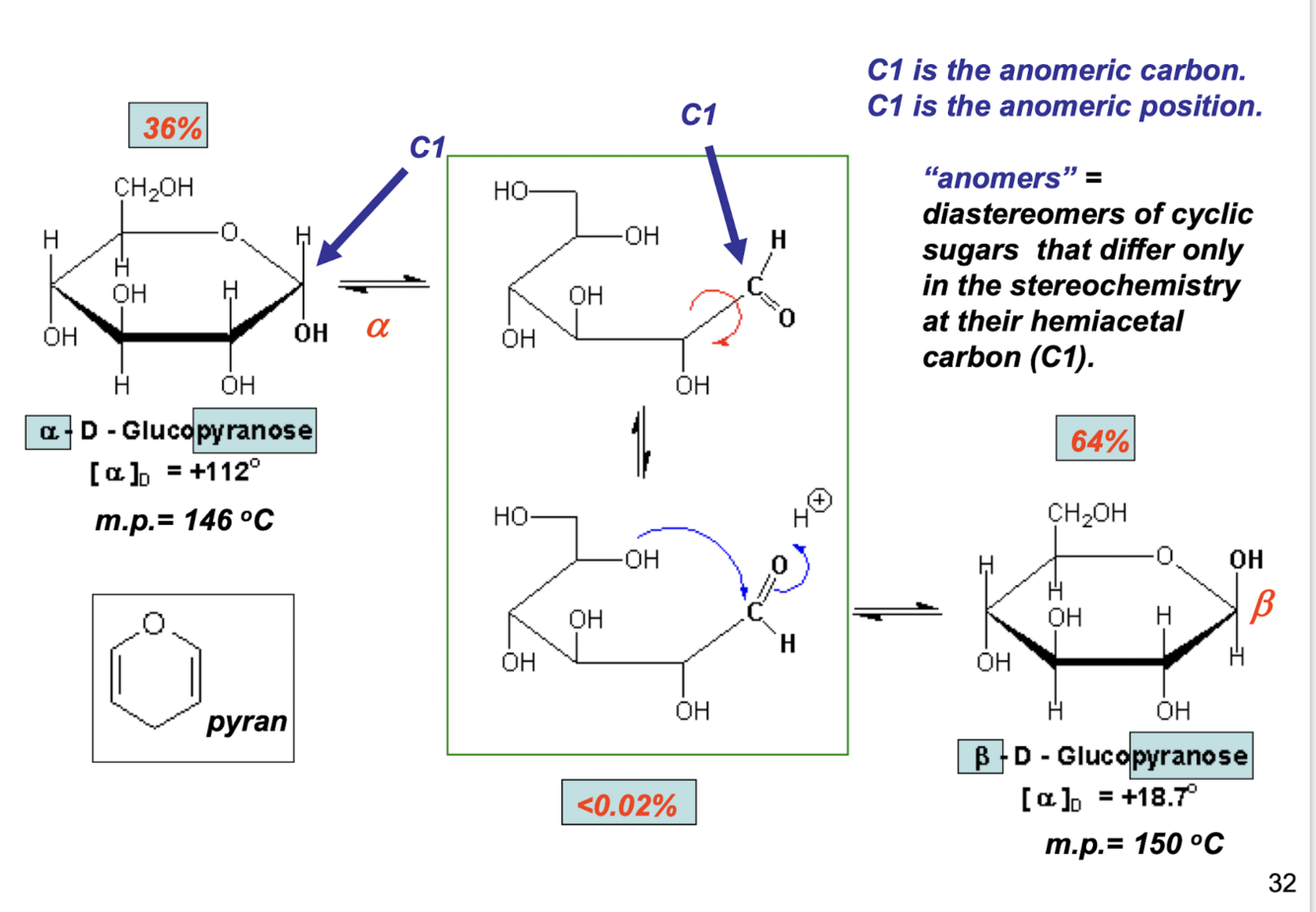
what are the two possible hemiacetal structures of glucose
roughly a 2:1 ratio of beta to alpha
how are the anomers of glucose separated
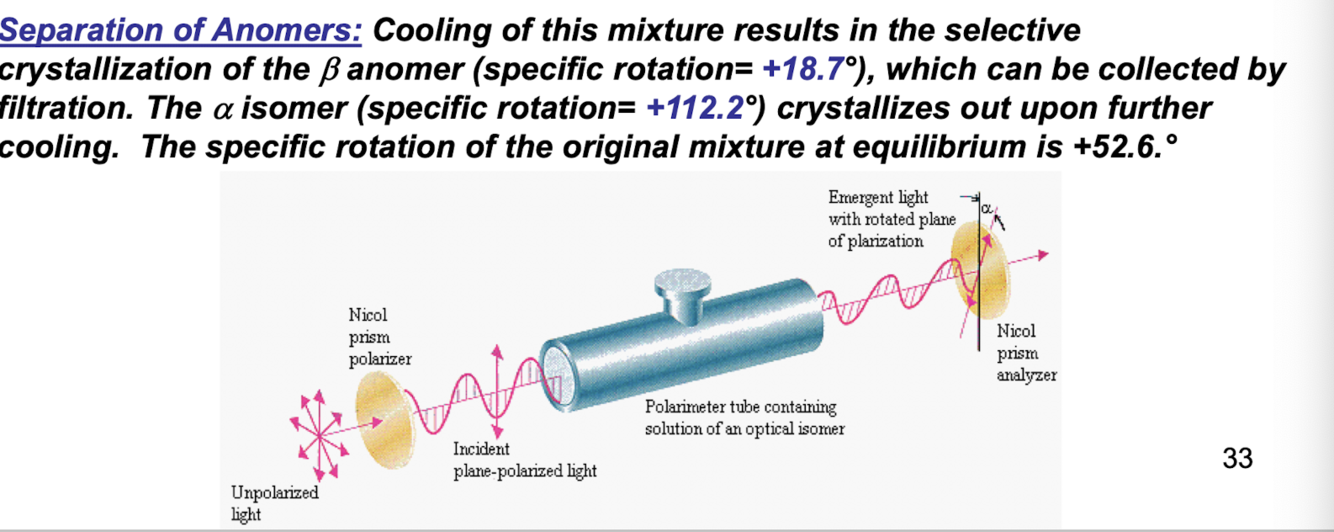
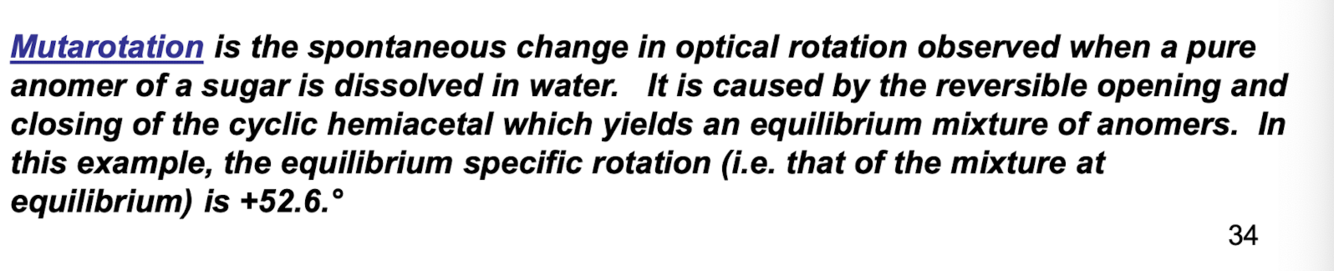
what is mutarotation
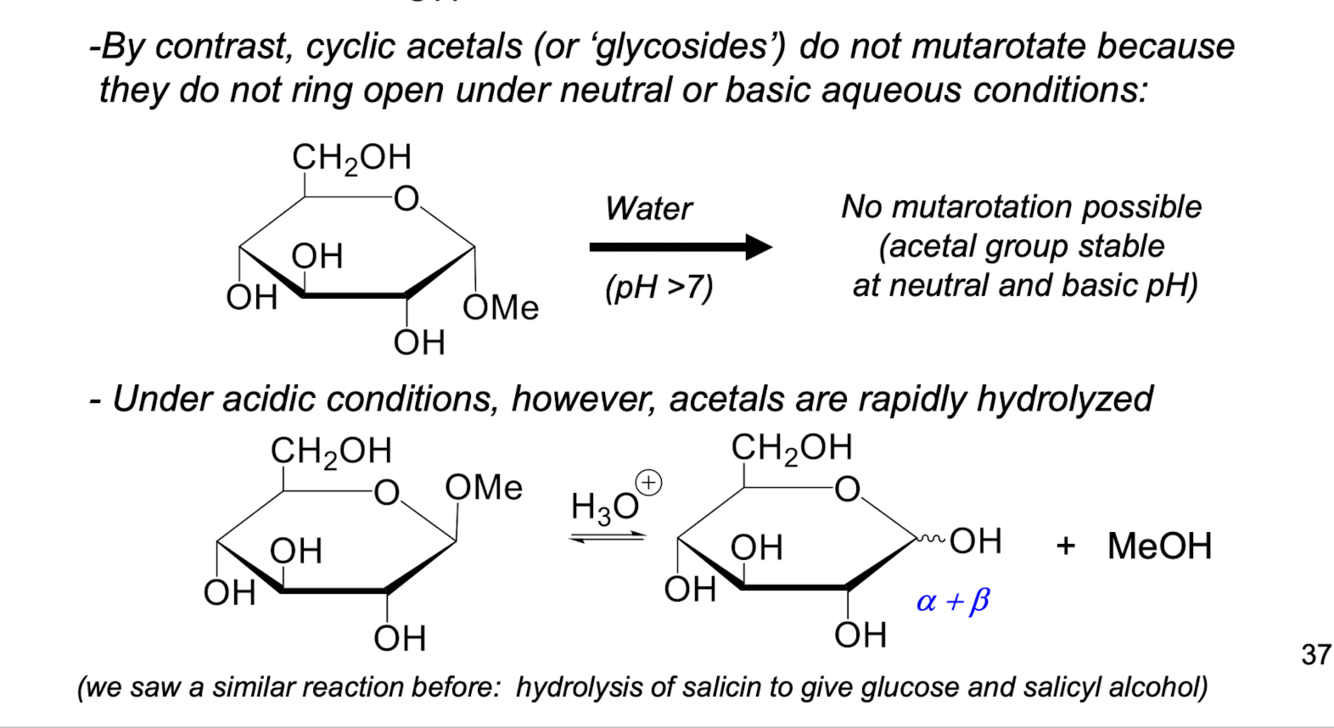
cyclic acetals reactions