Organic Synthesis
No description yet. This curated deck is ready for daily study.
Card preview (24)
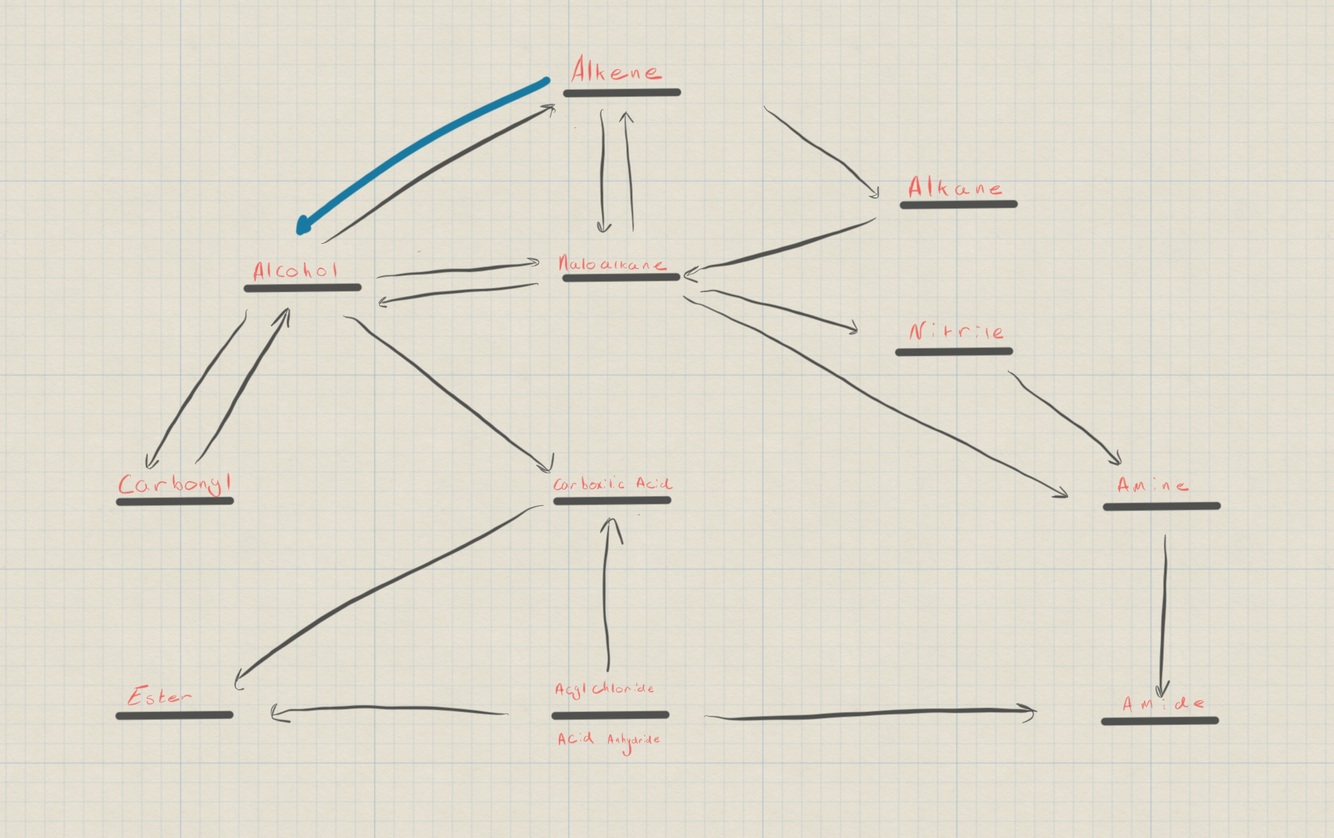
Electrophilic addition Conc H3PO4 Catalyst Steam 60-70 ATM of pressure 200-450 degrees
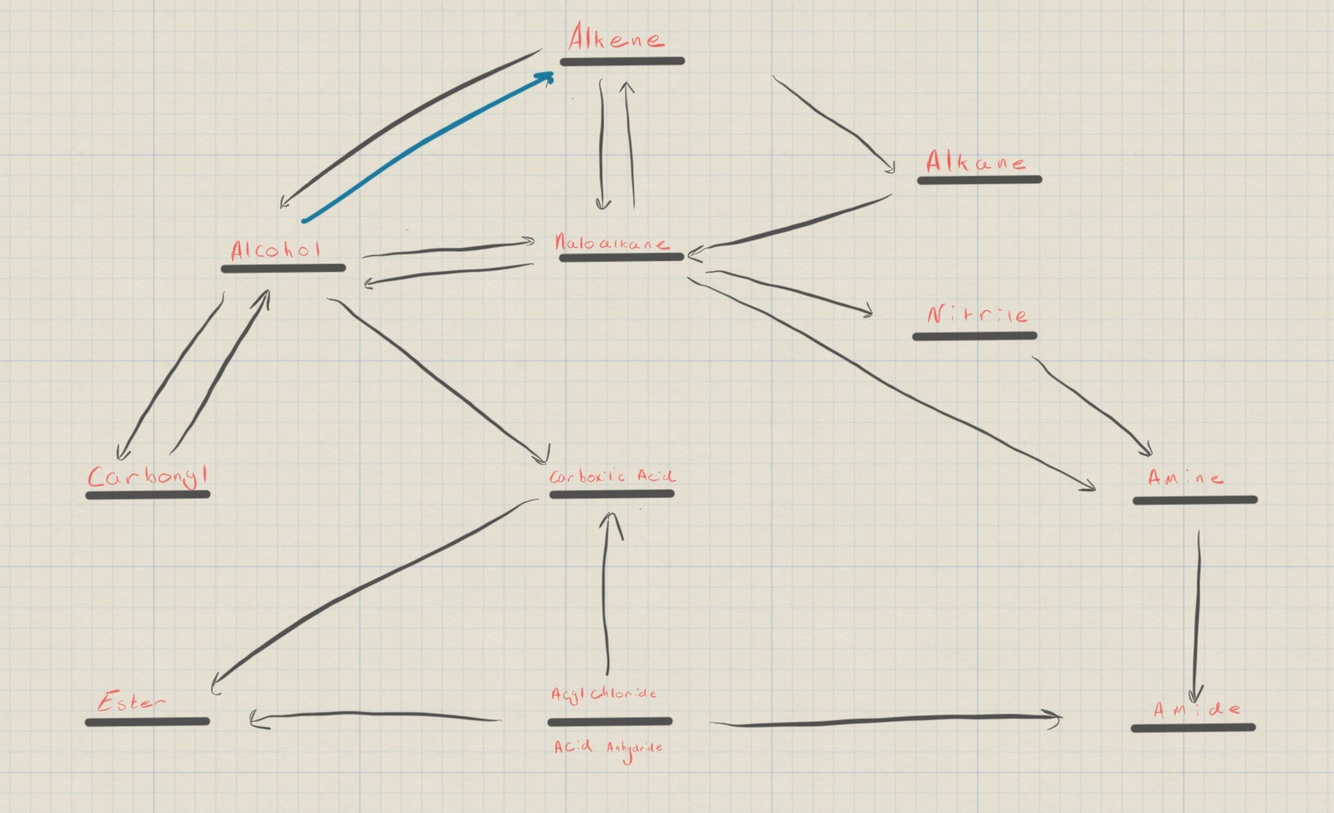
Elimination Conc H2SO4 Catalyst Under Reflux
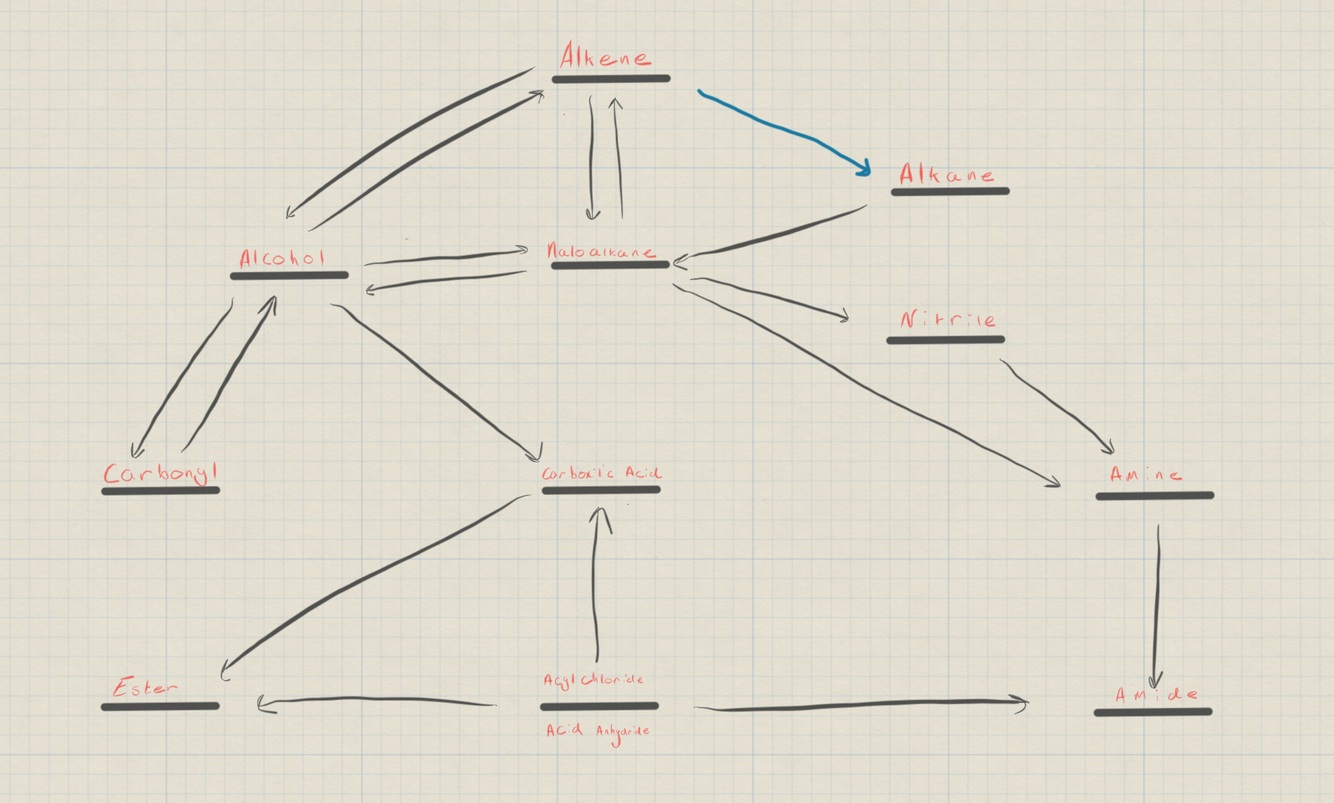
Hydrogenation H2 Nickel Catalyst
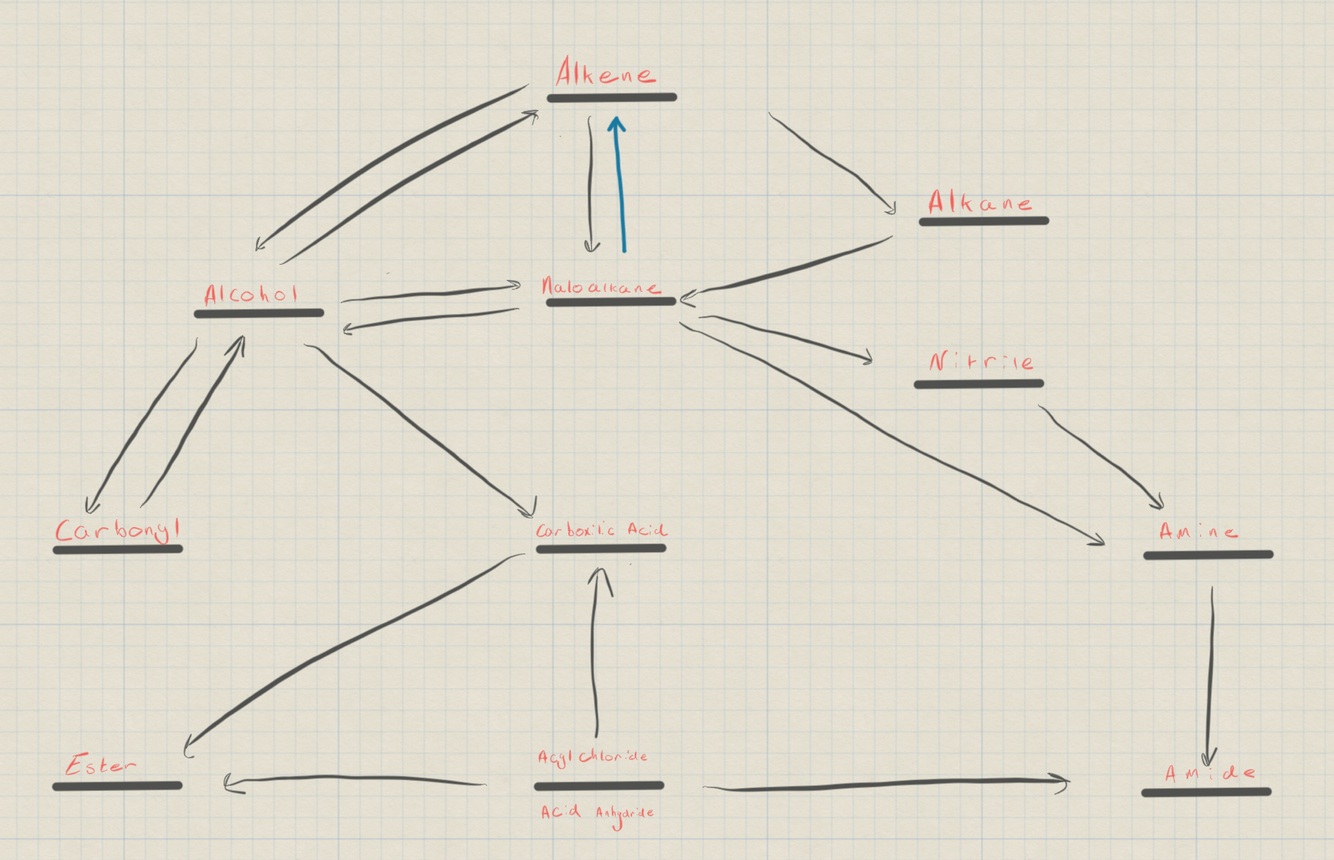
Elimination KOH Hot & Ethanoic Conditions
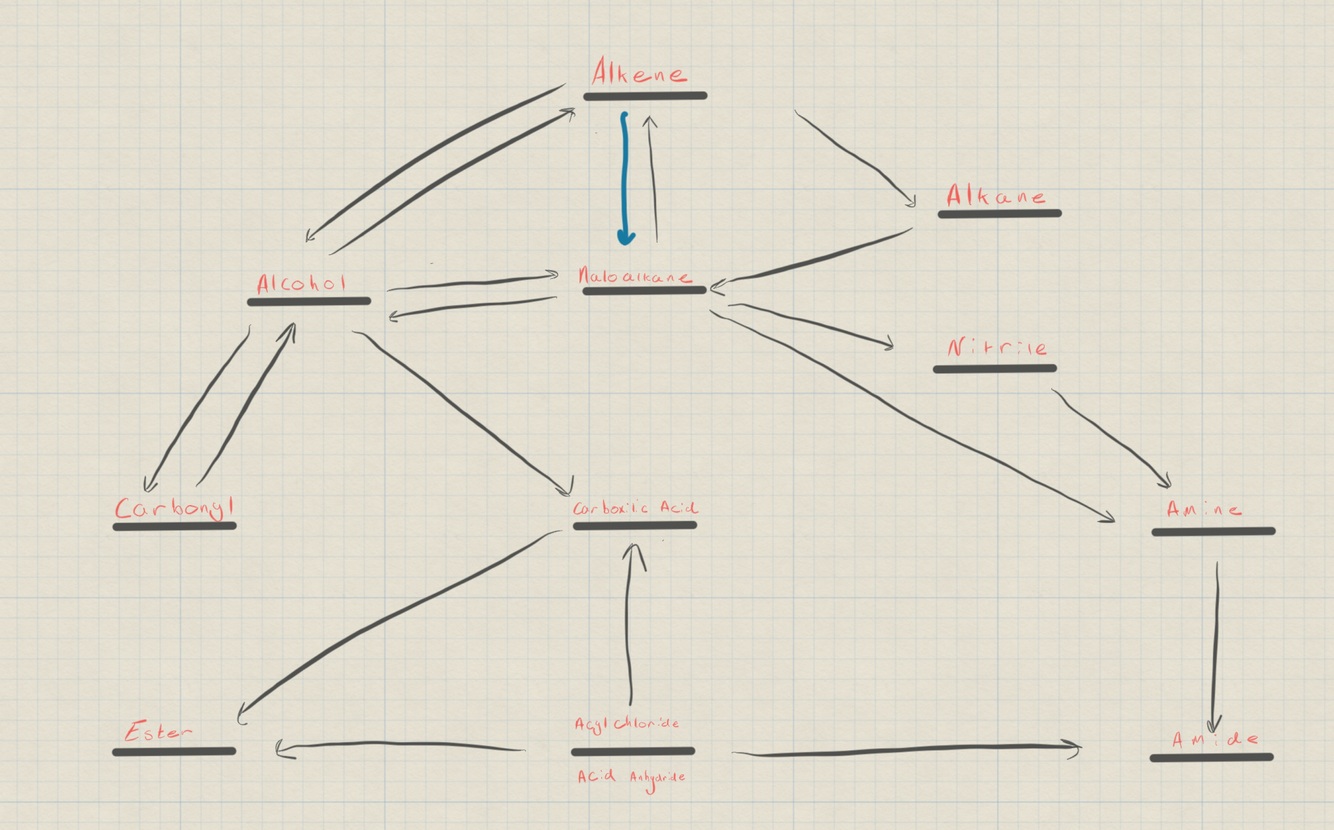
Electrophilic Addition HX (Where x = Halogen) 20 Degrees
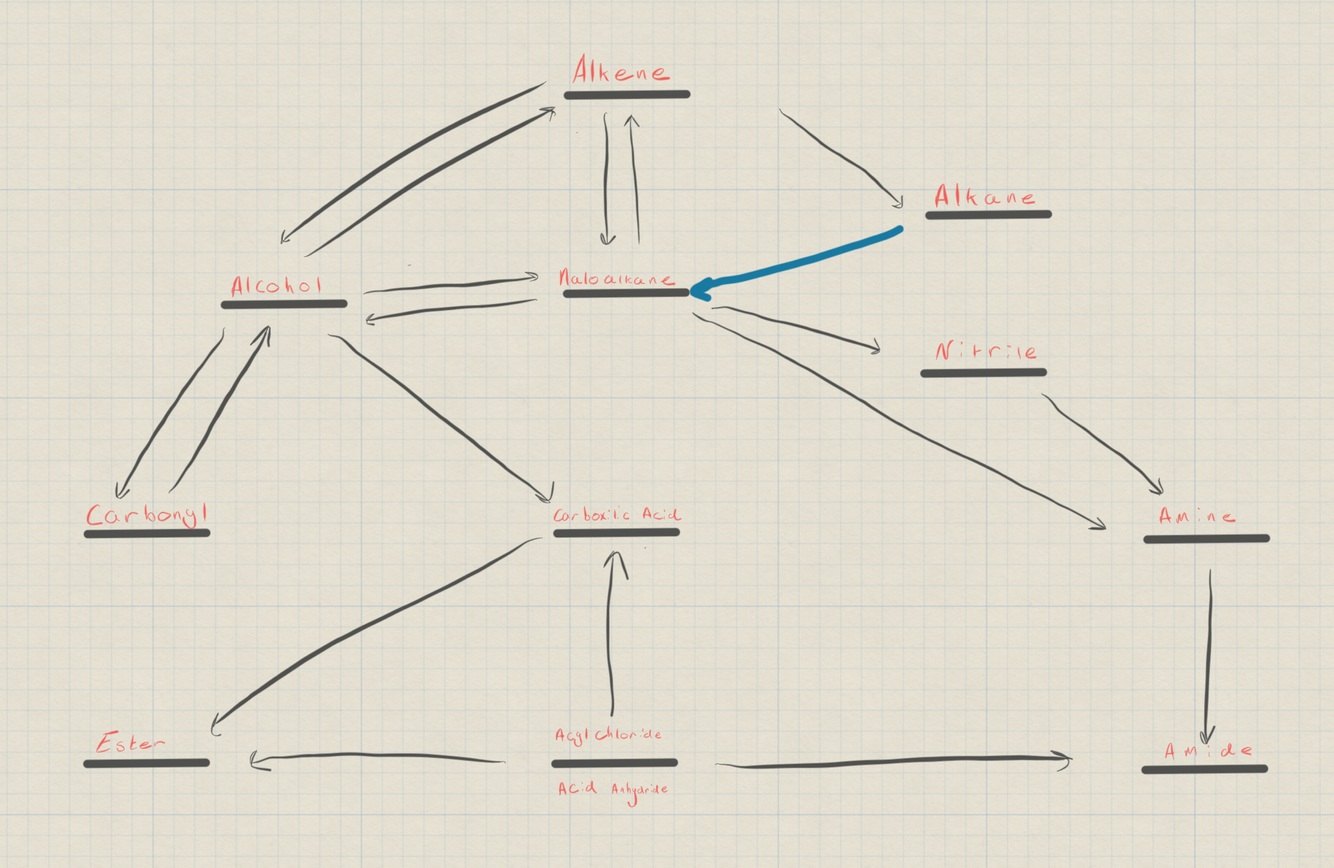
Free Radical Substitution X2 (where x is a halogen) UV Light
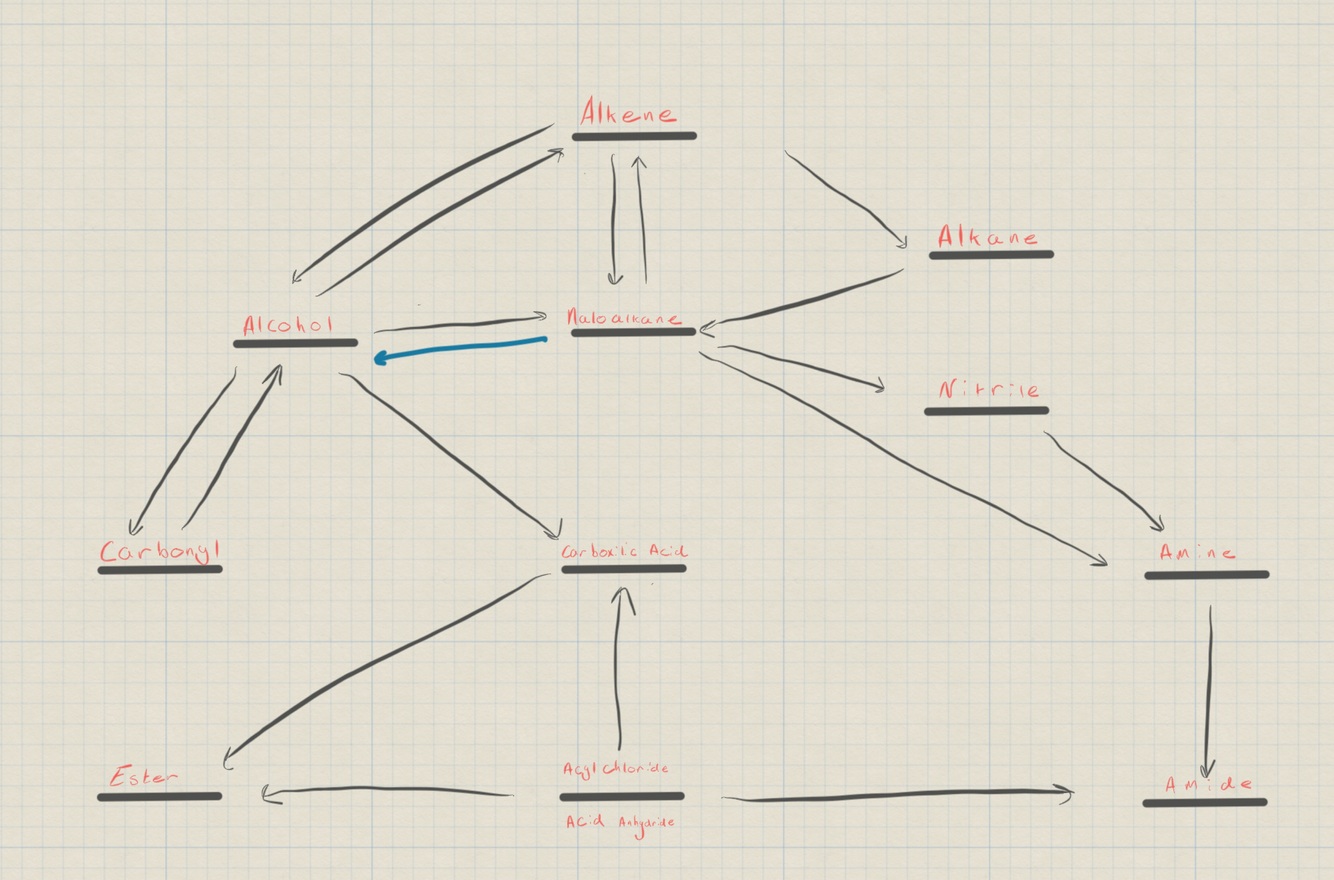
(Don’t need at this level) Elimination XBr
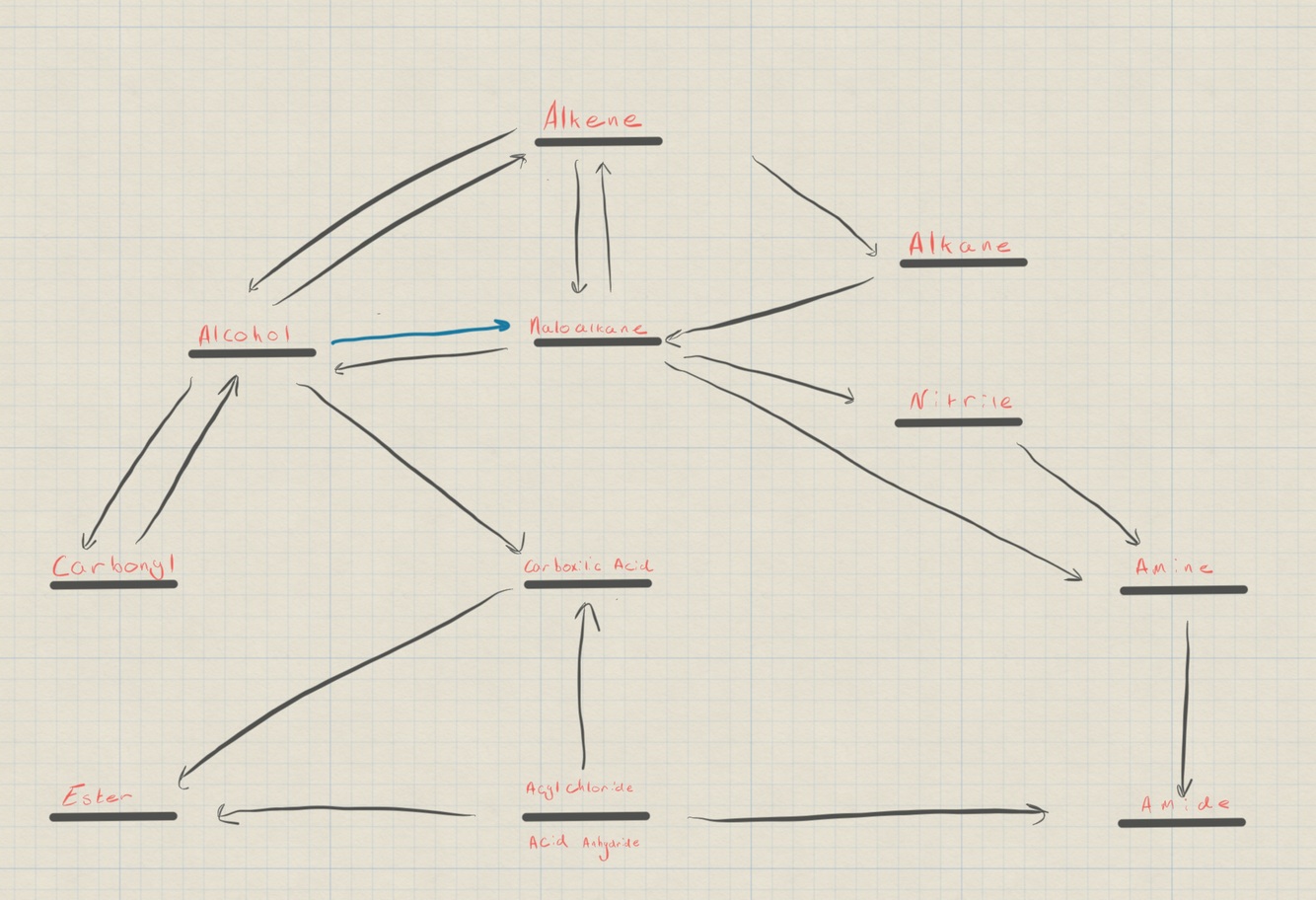
Nucleophilic Substitution KOH Cold and Aqueous
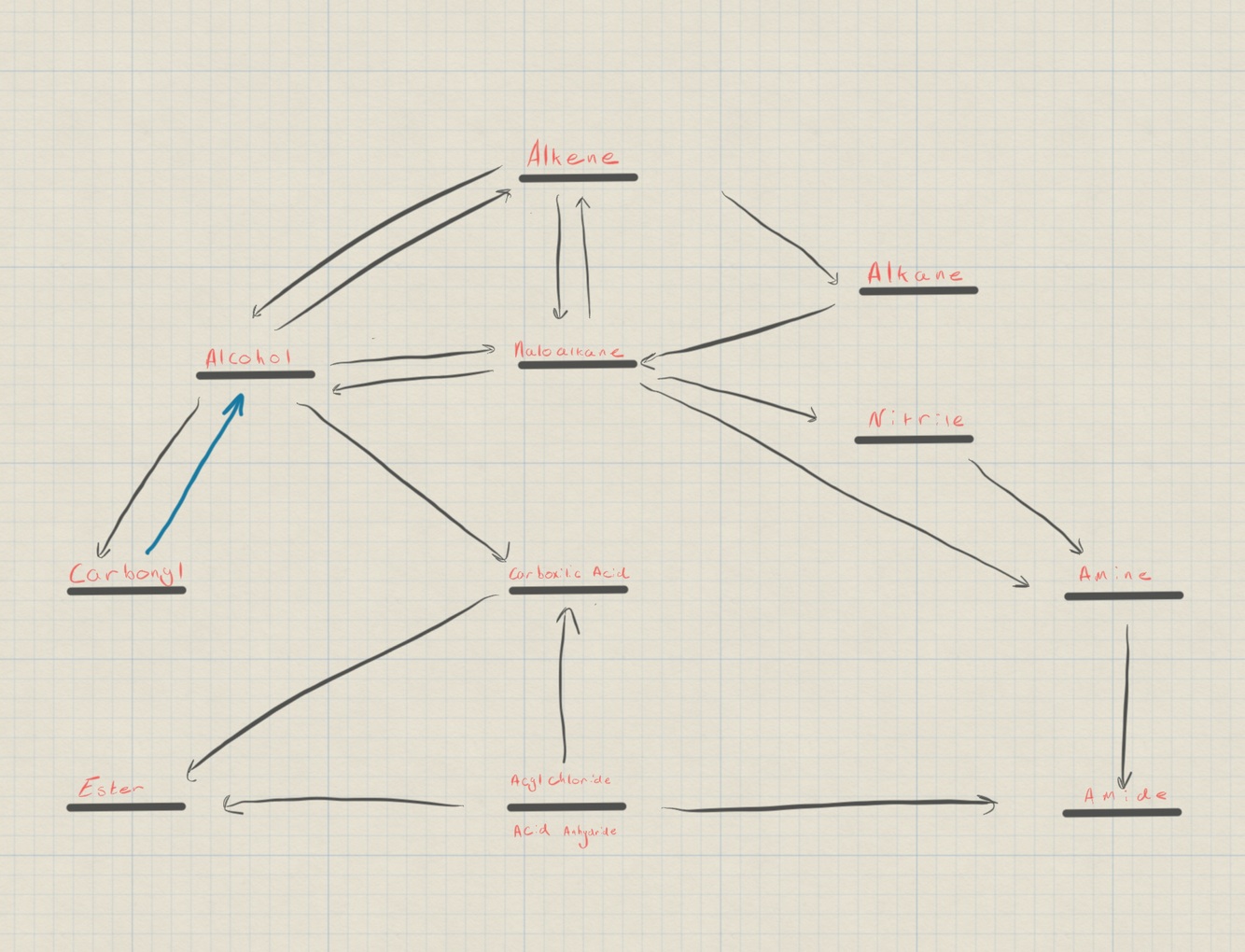
Nucleophilic Addition (Reduction) NaBH4 or LiAlH4 Reducing agents
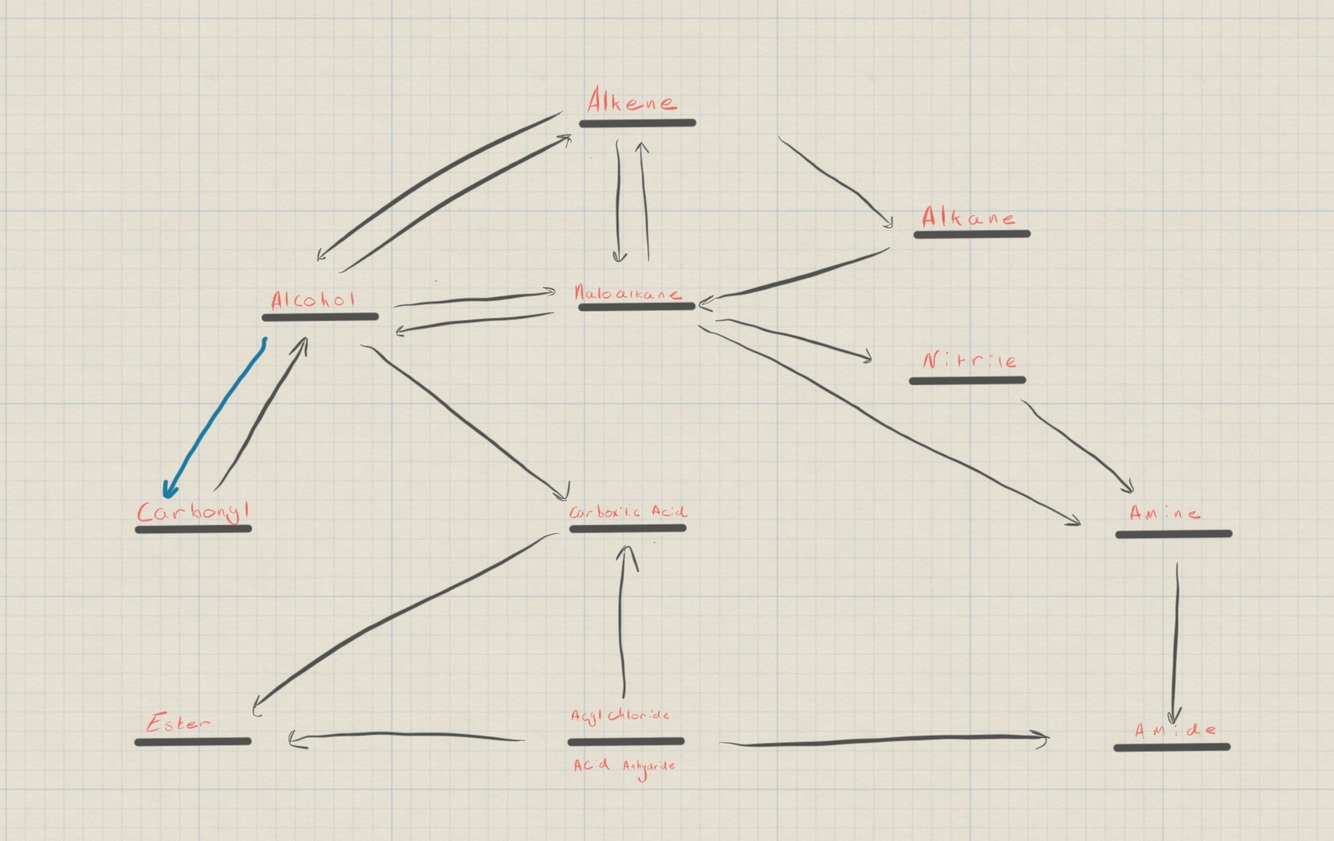
Oxidisation H+ or Acidified Potassium Dichromate
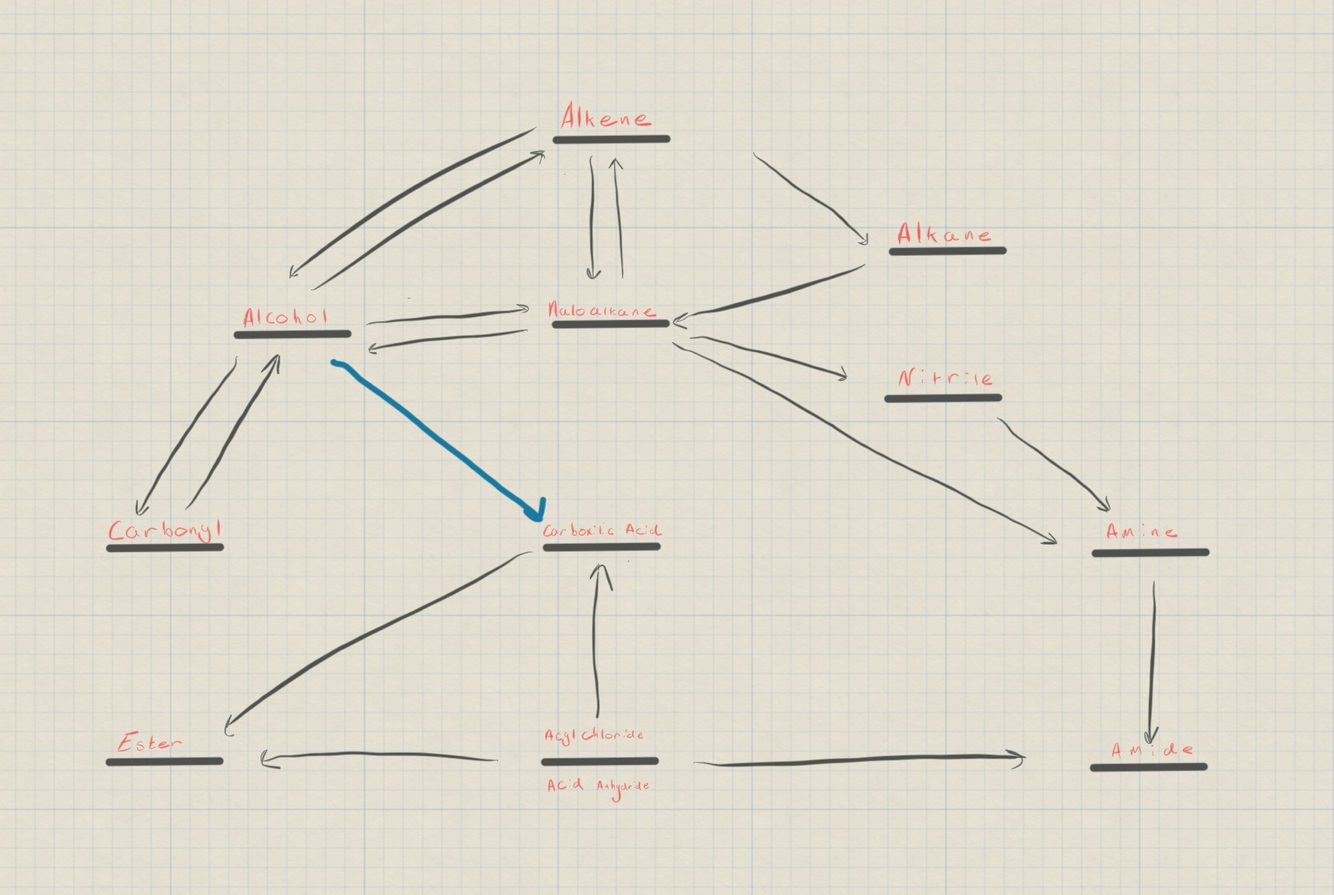
Oxidisation H+ or Acidified Potassium Dichromate
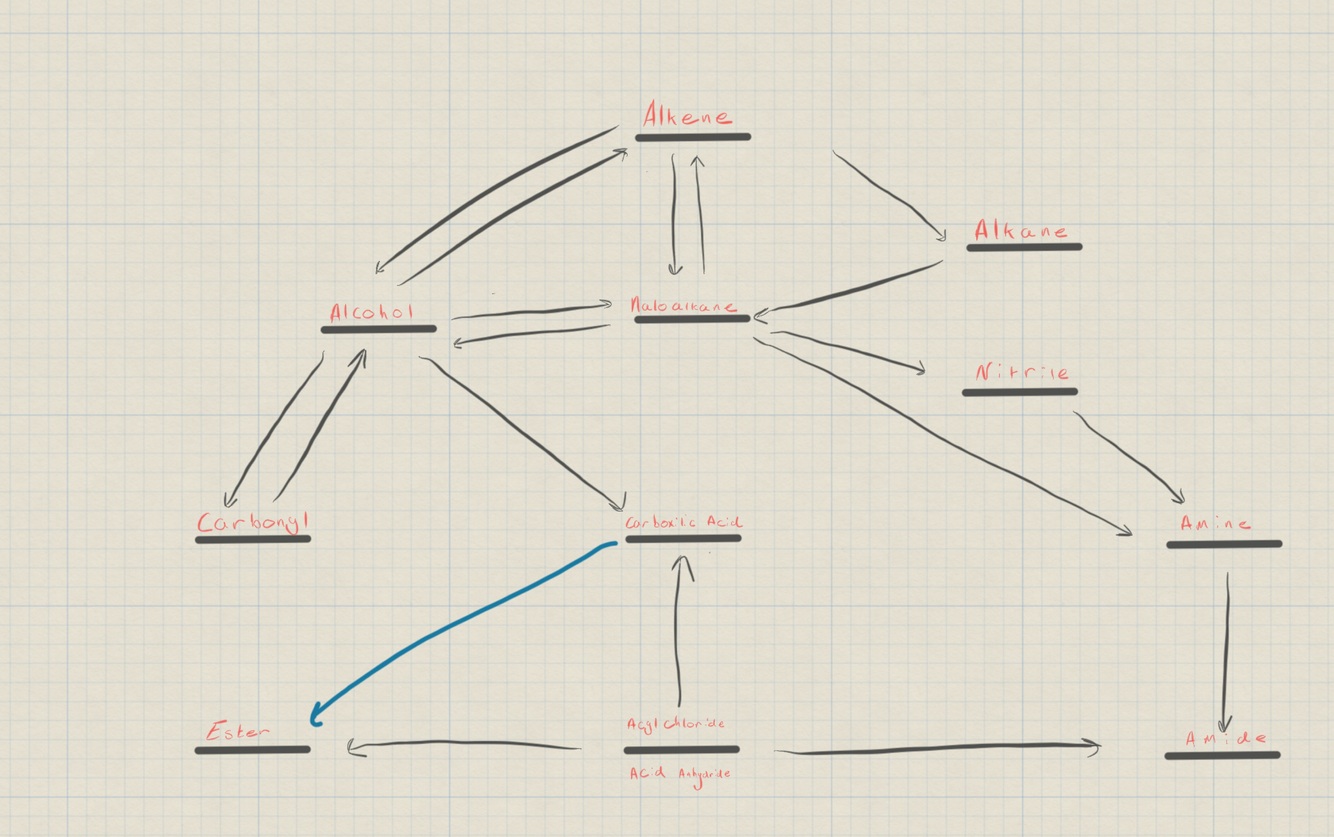
Esterification :OH - (alcohols) Strong Acid Catlayst
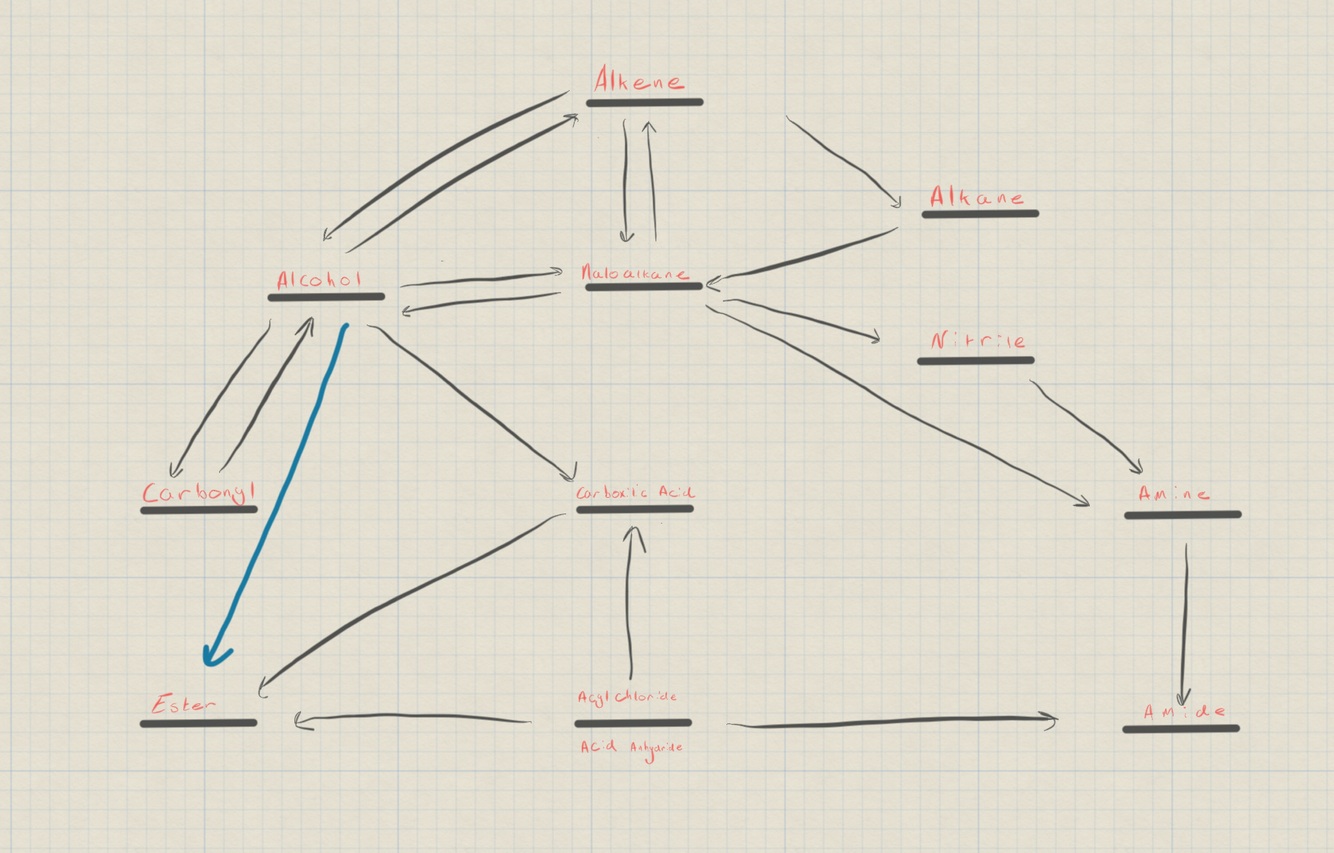
Esterification Acid Anhydride or Acyl Chloride String Acid catalyst
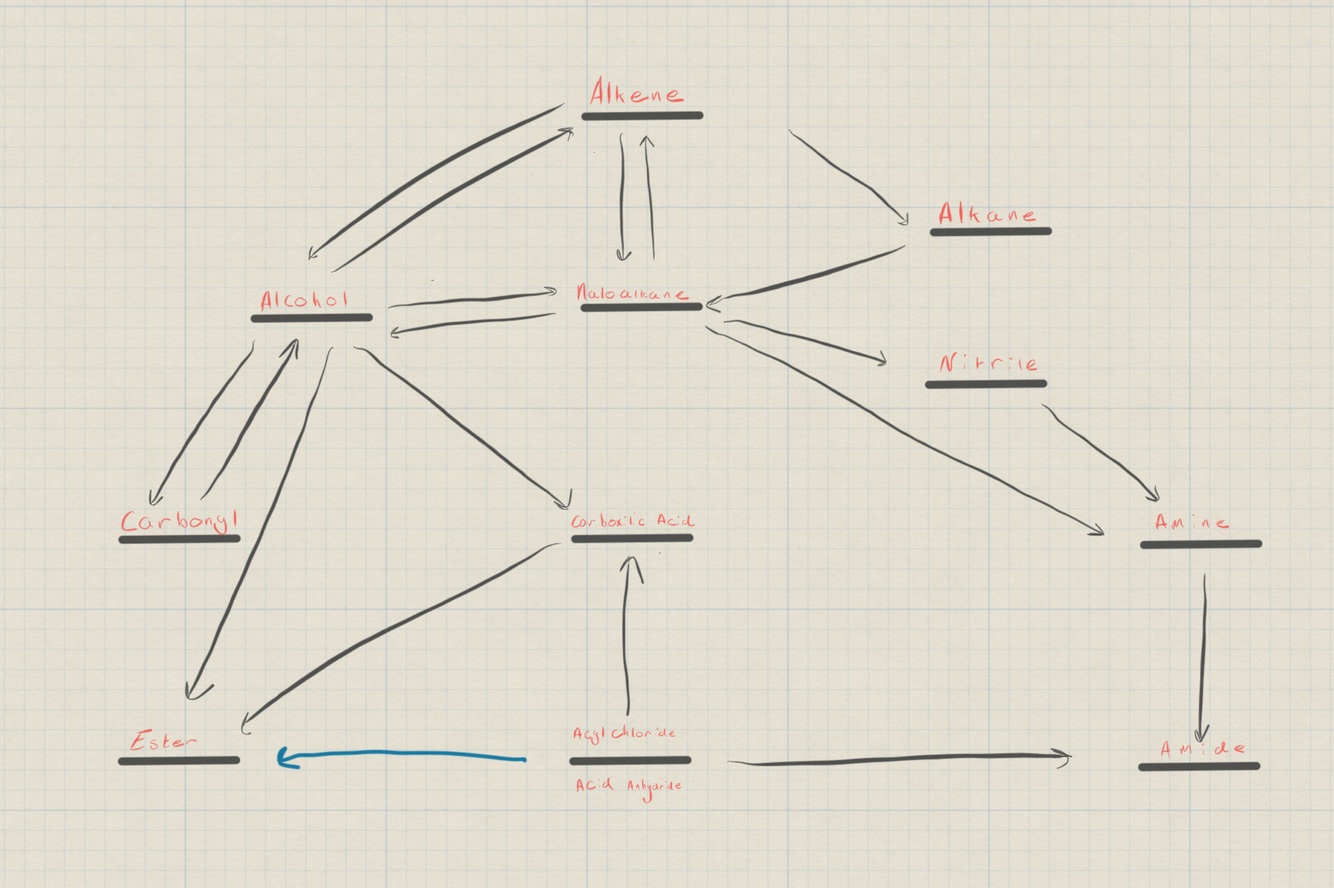
Nucleophilic Addition Elimination :OH- (alcohols)
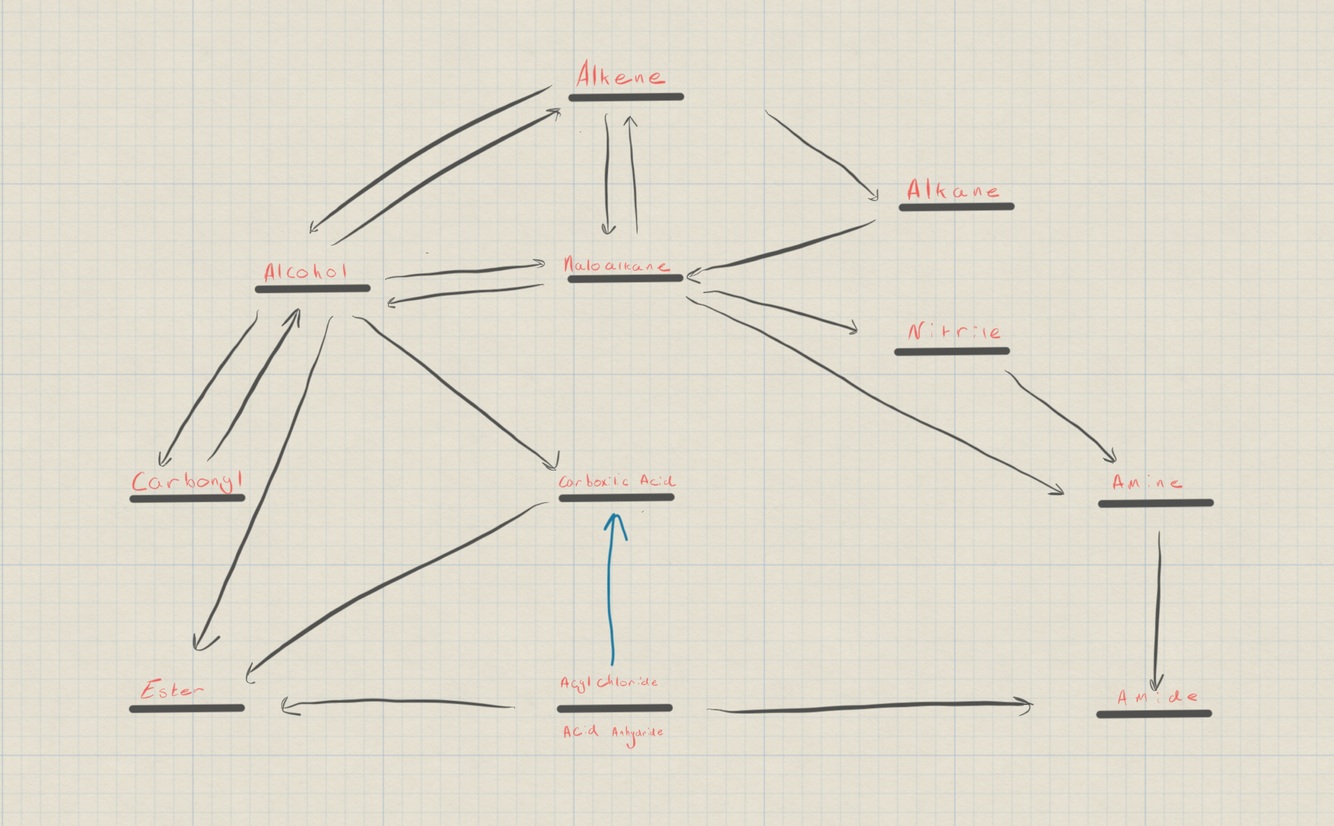
Nucleophilic Addition Elimination (Hydrolysis) H2O
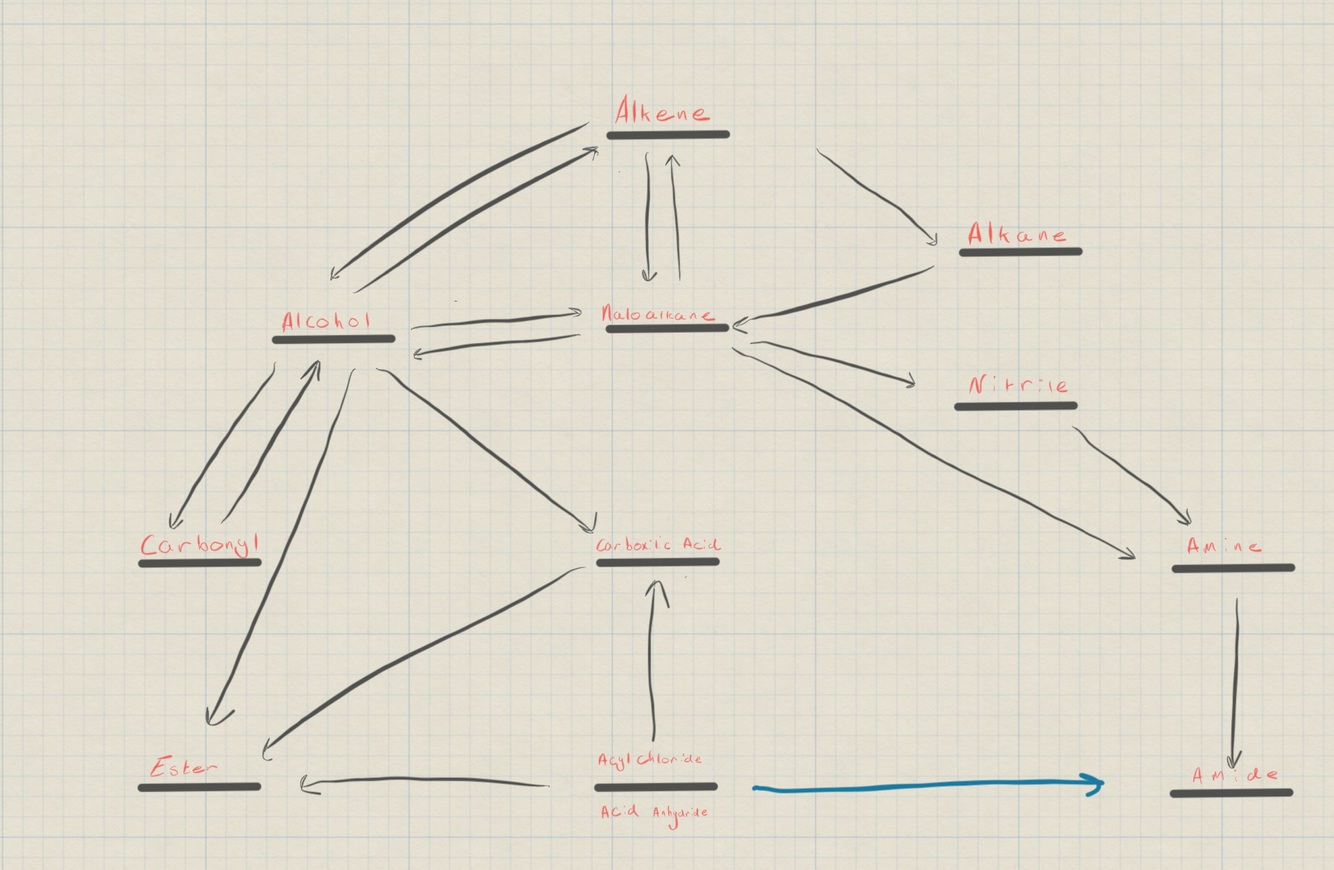
Nucleophilic Addition Elimination :NH3 or Amines
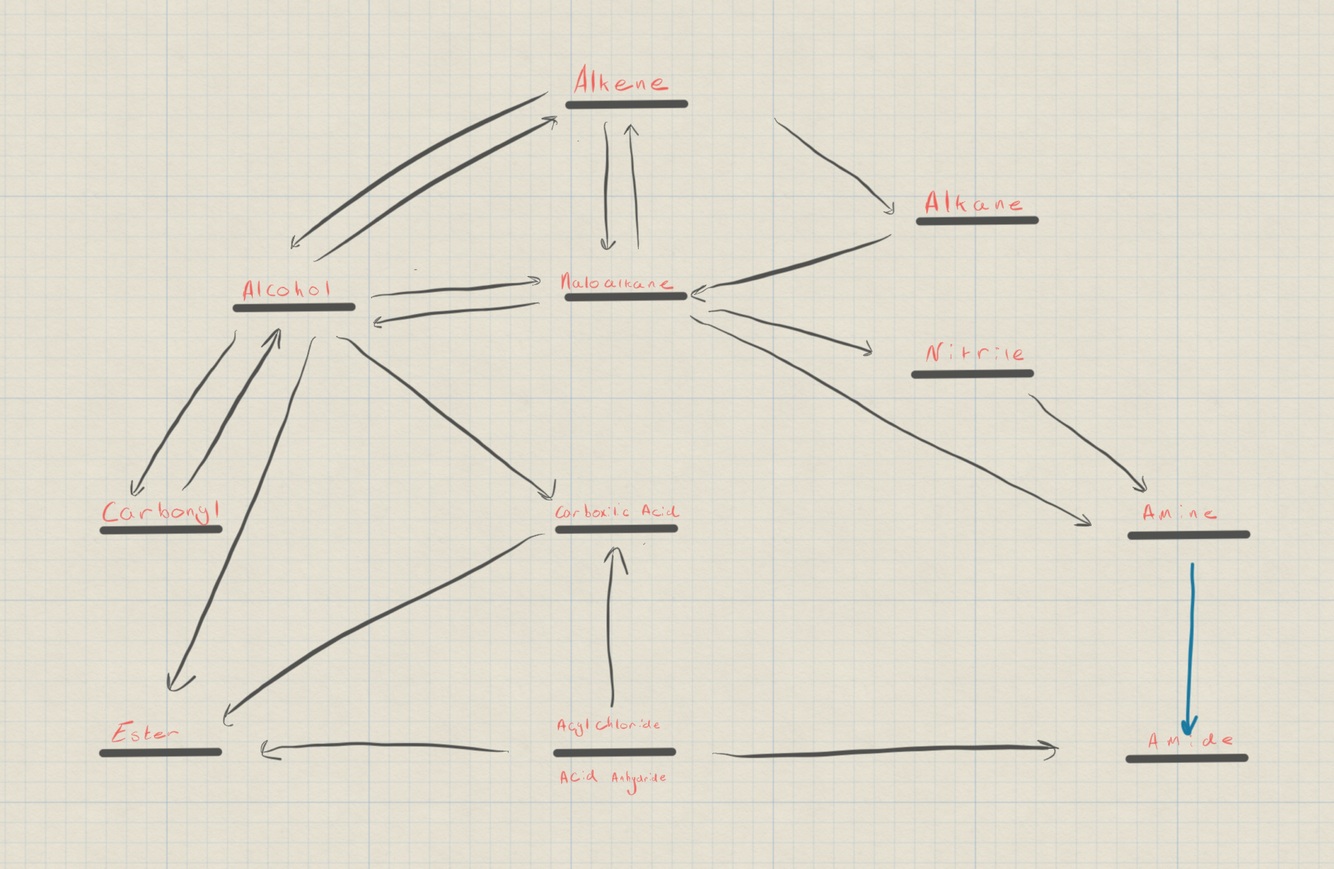
Nucleophilic Addition Elimination Acid Anhydride or Acyl Chloride
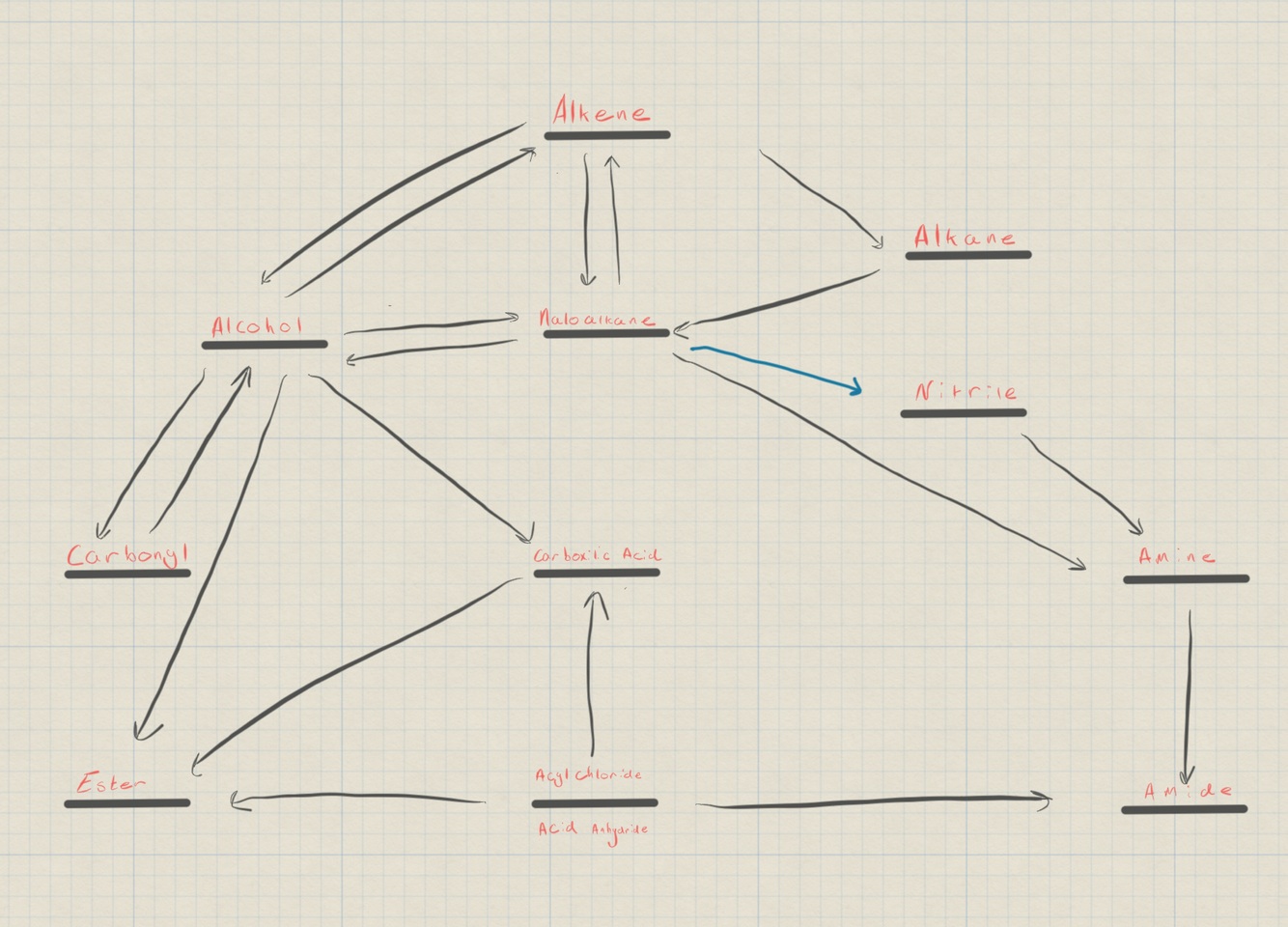
Nucleophilic Subsitiution KCN Aqueous Ethanoic Conditions
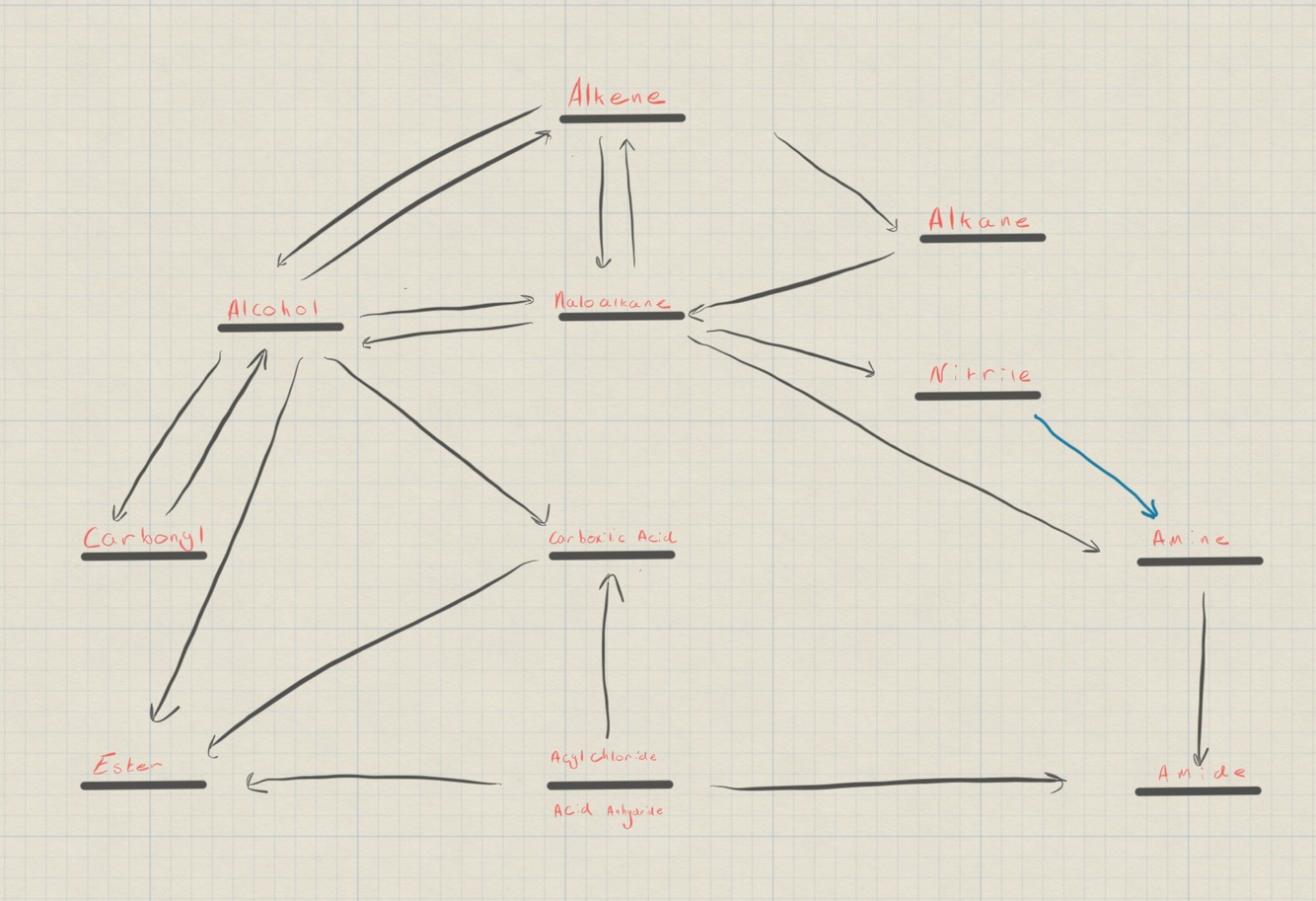
Nucleophilic Addition H2 Nickel Catalyst or LiAlH4
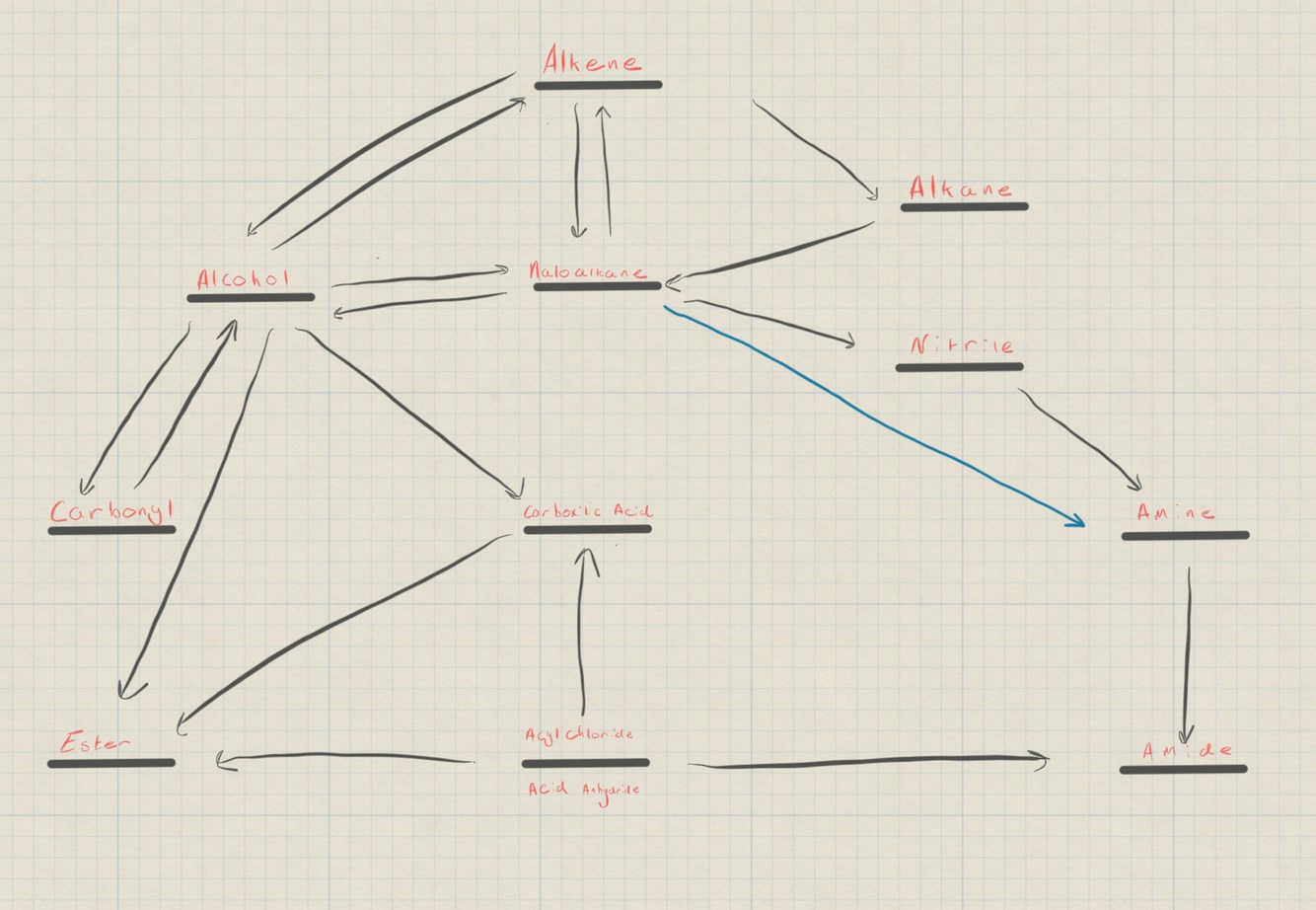
Nucleophilic Subsitution Excess Conc :NH3 Ethanoic Heat with Sealed System/Container
What is Organic Synthesis
Using reaction mechanisms to create a target molecule
Why is it preferable to create a molecule with as little steps as possible
To improve the % yield of the Product
What Could Cause the yield of an individual step to be low? (2)
Chemicals are lost when transferring between containers - some product could be left in the refraction mixture each time Incomplete/ reversible reactions
What are the two main dehydrating agents used?
Al2O3 (Vapours pass over it) Acid-Catalysed elimination (Strong acid catalysts)