NB15-1 - Addiction Medicine 1
暂无描述。系统推荐的高质量记忆内容,适合每天坚持背诵学习。
卡片预览 (14 张)
Describe the criteria for Dependence Syndrome
At least three of the following occurring together at some time during the previous year: • Strong desire to take substance • Difficulties in controlling substance-taking behavior • A physiological withdrawl state; or use to avoid such state • Evidence of tolerance • Progressive neglect of alternative pleasures or interests • Continued use despite clear evidence of harmful consequences
What type of upbringing is likely to lead to dependency issues and why?
Research shows that children raised in an abusive upbringing crave mood changes which their addiction provides them.
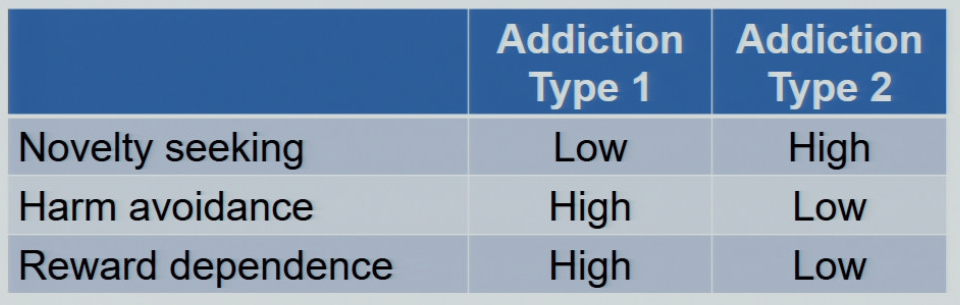
Describe cloninger’s tri-dimensional personality theory.
Typically addiction Type 1s begin their abuse after 25yo while Type 2s begin before 25yo
What is the general theme to the learning model of addiction?
Positive consequences of substance use are remembered while negative consequences are forgotten or ignored
What are the key components of the brain reward system?
The dopaminergic surge originating in the ventral tegmental area (VTA) and projecting to the nucleus accumbens Mesocortical and Mesolimbic projections are also invovled
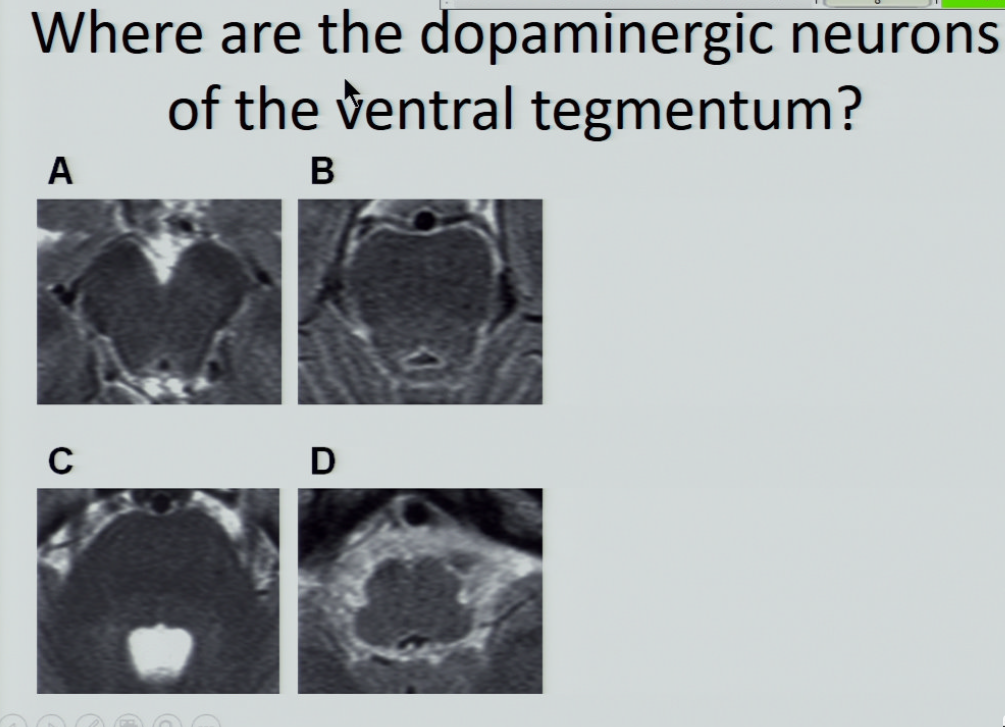
A
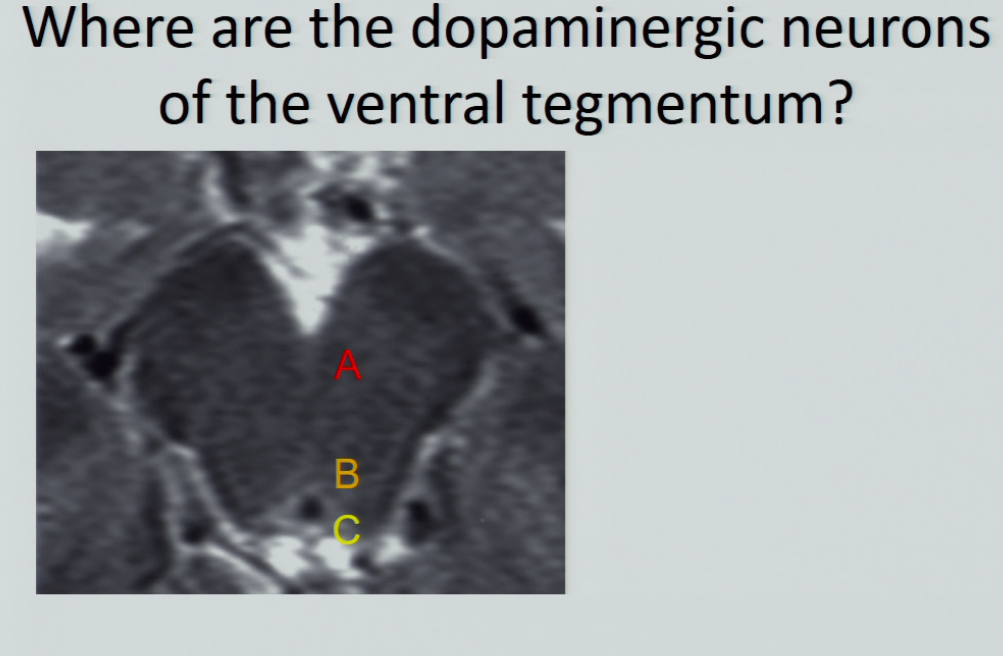
A
List the habit forming drugs we need to know and the effects these drugs have.
• Sedatives - alcohol, barbiturates, benzodiazepines, solvents • Stimulants - amphetamines, cocaine, ecstasy, nicotine • Hallucinogenics - ketamine, LSD, phencyclidine (angel dust), psilocybin (magic mushrooms), cannabinoids
Describe the two types of drug dependencies.
Psychic dependence - experience of impaired control Physical dependence - tolerance and withdrawl symptoms
List the alcohol withdrawl symptoms and what causes them.
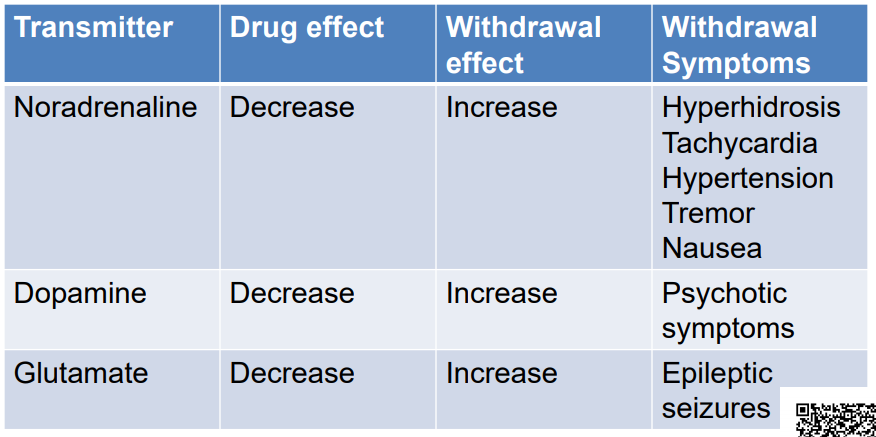
List the medications most commonly used to combat sedative withdrawl symptoms. Which symptoms are these medications best at combatting?
• Diazepam - best used as an anti-convulsive but is also effective as an anti-psychotic and anti-adrenergic • Haloperidol - only used as an anti-psychotic • Clonidin - only used as an anti-adrenergic
Describe the course of symptoms typically experienced when undergoing “cold” opiate detoxification.
Symptoms are typically nausea, diarrhea tachycardia/hypertension, and hyposomnia with the 2nd and 3rd days being the worst. All symptoms, except hyposomnia, are usually gone by the 7th day. Hyposomnia can continue for weeks
Describe how a “warm” opiate detoxification is done.
Patient is admitted into a closed ward and given methadone to replace their opiate addiction. The methodone is then steadily reduced over about three weeks. Other medication can also be given to help with nausea, diarrhea, and tachycardia/hypertension.
Why is methadone used for “warm” detoxification?
It has the lowest severity of withdrawl symptoms.