Ch 12. Alcohol (ROH) reactions
No description yet. This curated deck is ready for daily study.
Card preview (24)
What is the suffix for an alcohol when it is the priority functional group?
-ol
What is the name when an alcohol is substituent of a molecule?
hydroxyl-
A higher pKa value indicates…
lower acidity
pKa of alcohol (roughly)
~15
How does an alcohol behave frequently in a reaction?
As a Nucleophile, because of the two lone pairs on the oxygen.
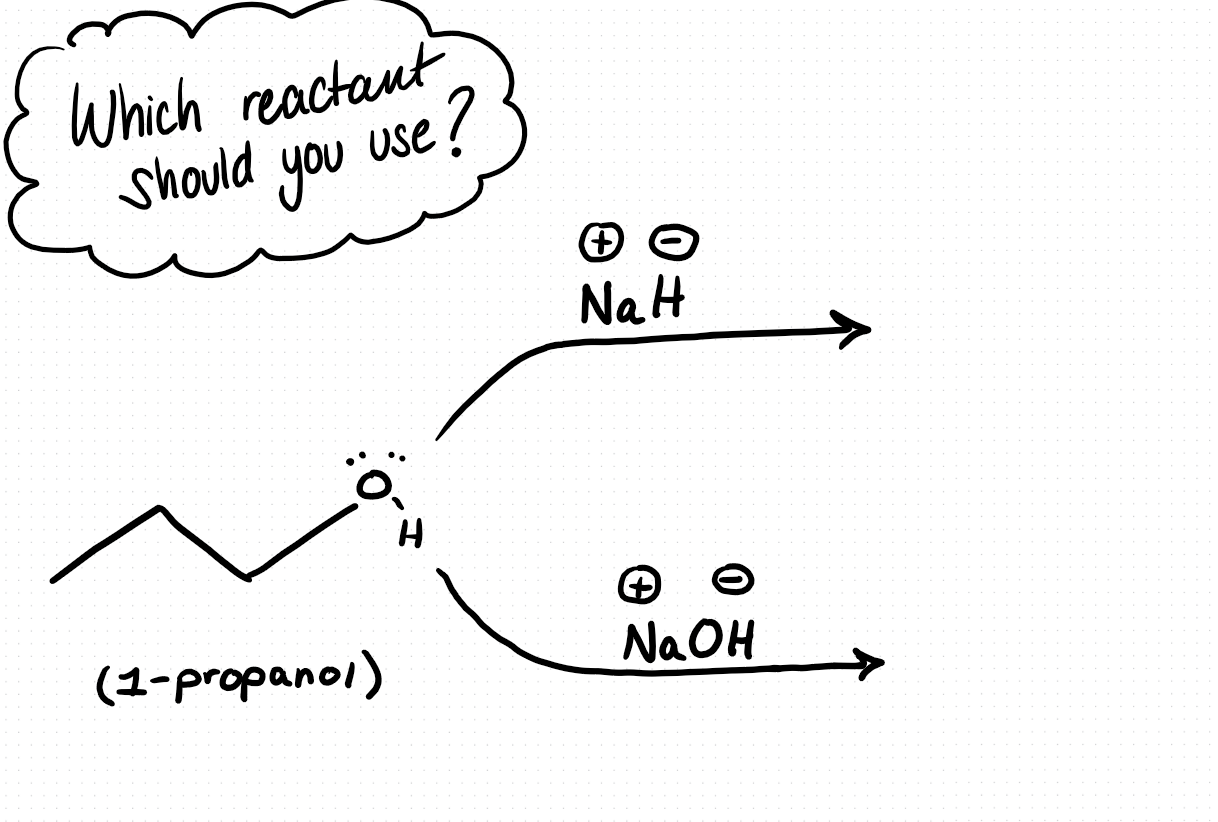
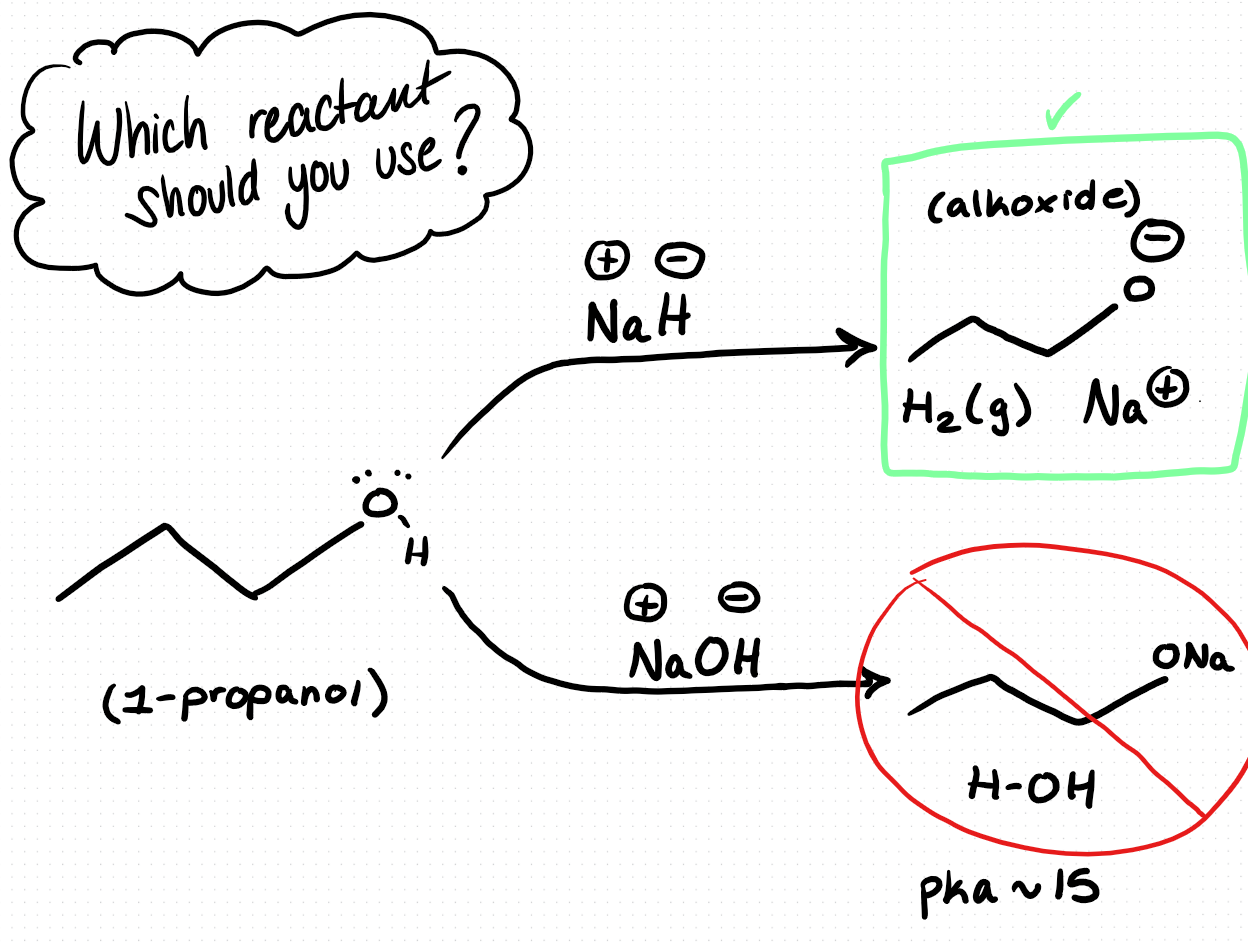
When doing these sorts of reaction, you want to use a really strong base, like NaH, because using the weaker NaOH will result in a molecule with a similar pKa, and you want to favor the formation of a weak acid.
What are the qualities of a Sn2 reaction?
-Good Leaving Group -Less Hindered carbon -Concerted mechanism because the carbon is accessible
What are the qualities of an Sn1 reaction?
-Good Leaving group -A hindered carbon does not allow for a concerted mechanism - Goes through carbocation intermediate
What kind of reaction is this? And what are the products?
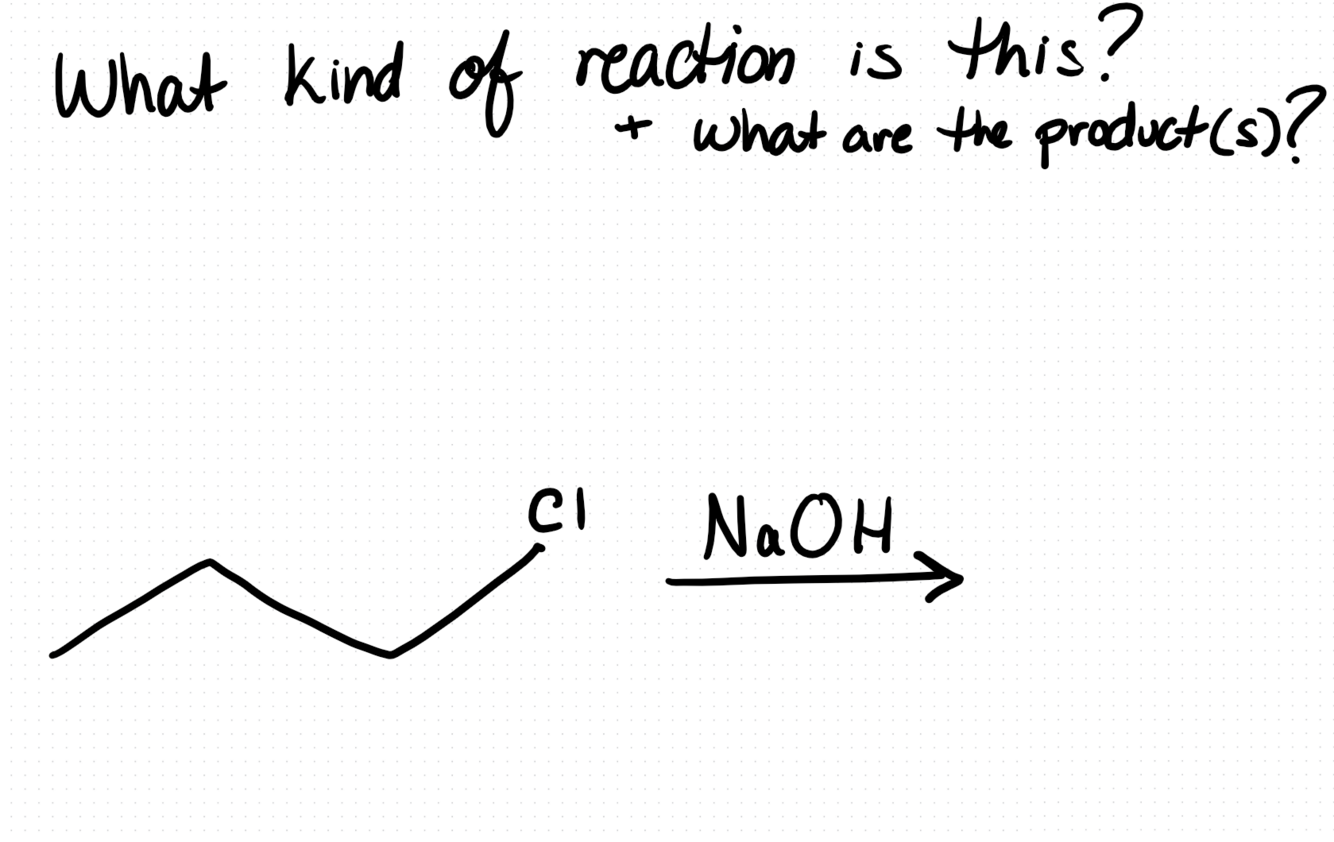
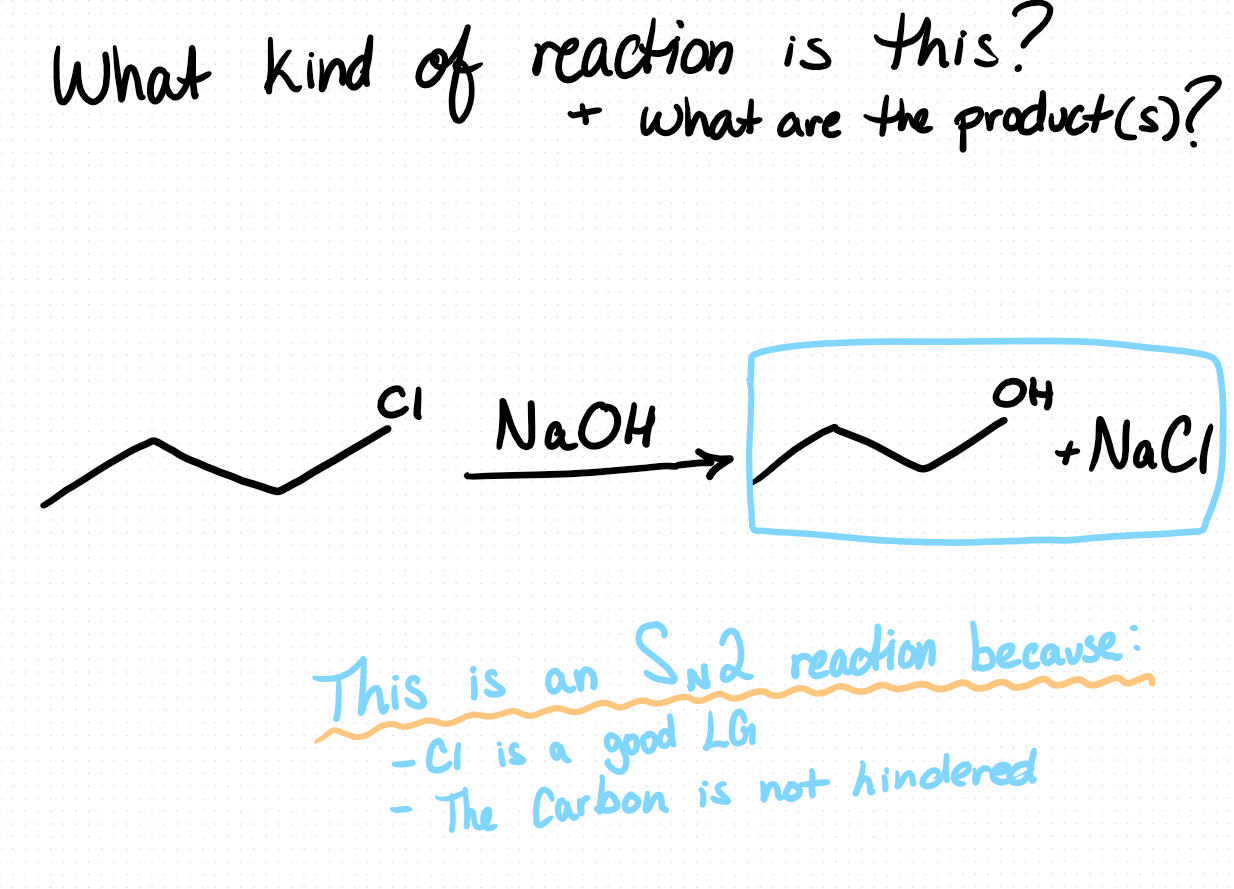
What kind of reaction is this? And what are the products?
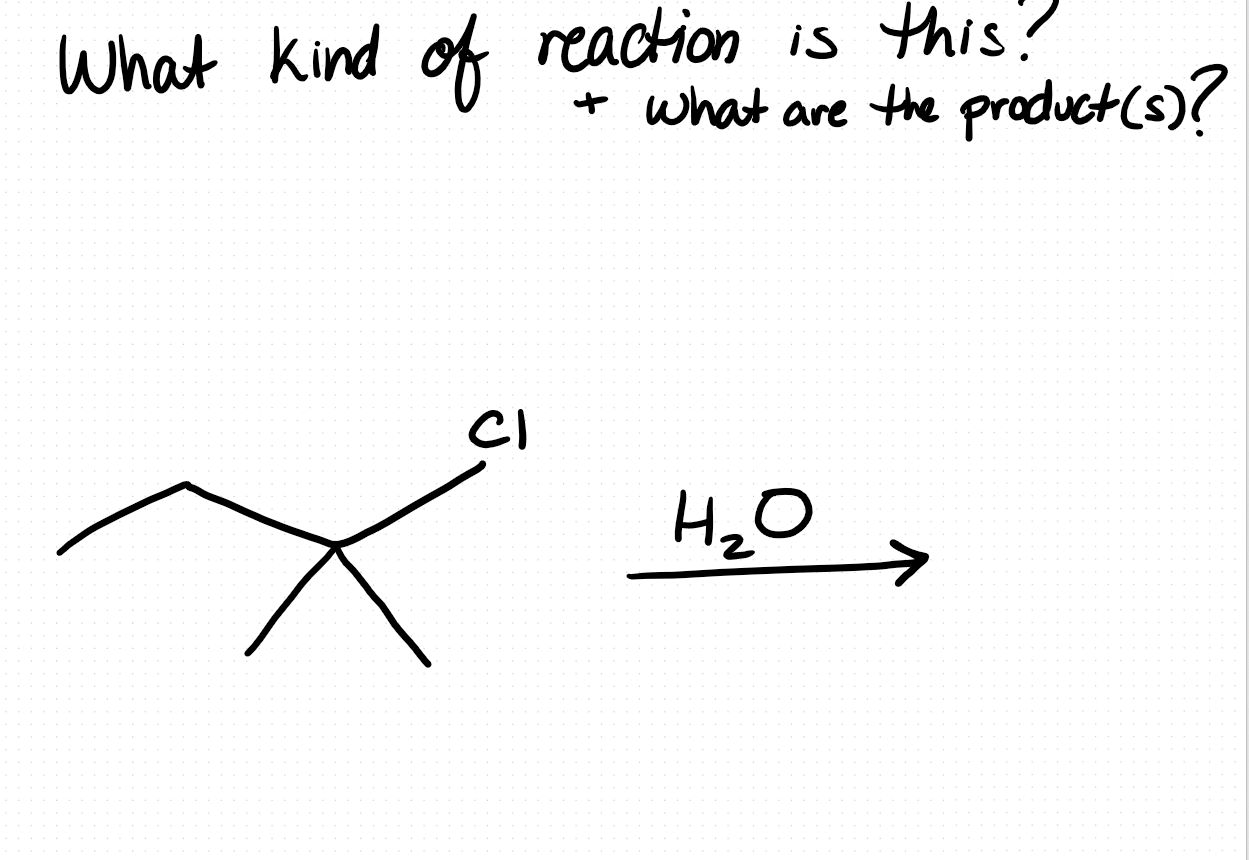
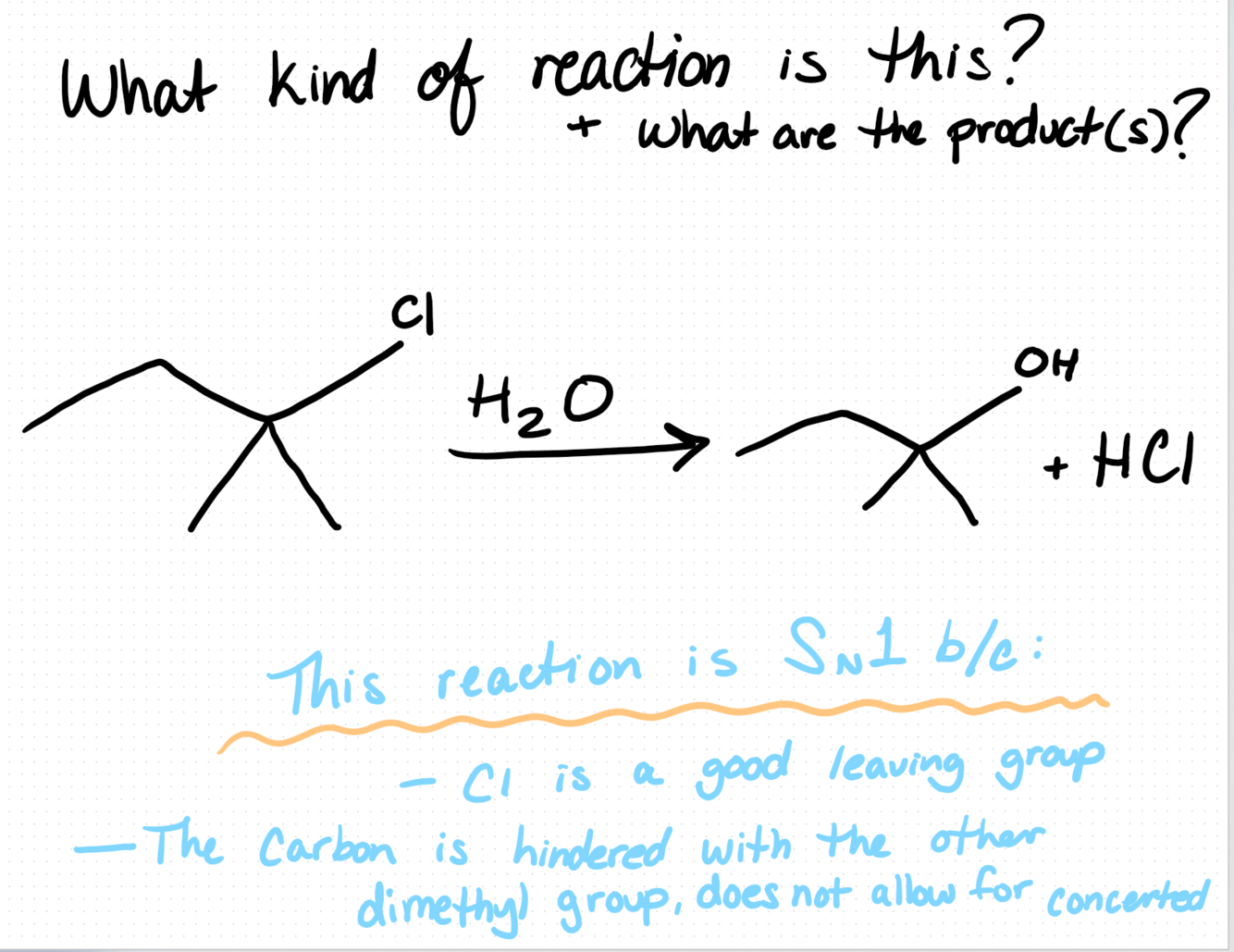
What do you use for an Addition reaction?
Since it is a hydration reaction on an alkene, use a dilute acid. H3O+
Are rearrangements possible in Addition reactions, and if so, what kind?
Carbocation rearrangements are possible (3>2>1)
What reagents do you use for an oxymercuration-demercuration reaction?
This is an alkene reaction 1. Hg(OAc)2, H2O 2. NaBH4 The second step gets rid of the mercury
What are the pros and cons of oxymercuration-demercuration?
Pros: -Does not go through carbocation -No rearrangements Cons: -Dangerous!
What kind of reactions are oxymercuration-demercuration and addition?
Markovnikov reactions
Review: What are Markovnikov reactions?
When a protic acid (HX) adds onto an alkene, -The hydrogen attaches to the carbon with more hydrogens -The halide attaches itself to the carbon atom with more carbons
What reagents are needed for a Hydroboration-oxidation reaction?
An alkene is needed • BH3, THF • H2O2, NaOH
What kind of reaction is Hydroboration-oxidation?
Anti-Markovnikov
Review: What is an Anti-Markovnikov reaction?
describes the regiochemistry where the substituent is bonded to a less substituted carbon, rather than the more substituted carbon
What does “syn” mean in chemistry?
On the same face, with the same stereochemistry (2 wedges or 2 dashed)
What product would result from an alkene being reacted with Potassium Permanganate (KMnO4) (cold, dilute)
A syn 1,2-diol + enantiomer
What product would result from an alkene being reacted with OsO4 and H2SO4?
A syn 1,2-diol +enantiomer
What product would result from an alkene reaching with 1)RCO3H 2) H3O+
An anti 1,2-diol + enantiomer
What type of molecule is used to make an organometallic?
A transition metal such as Lithium or Magnesium