CHP 10 - 11
No description yet. This curated deck is ready for daily study.
Card preview (24)
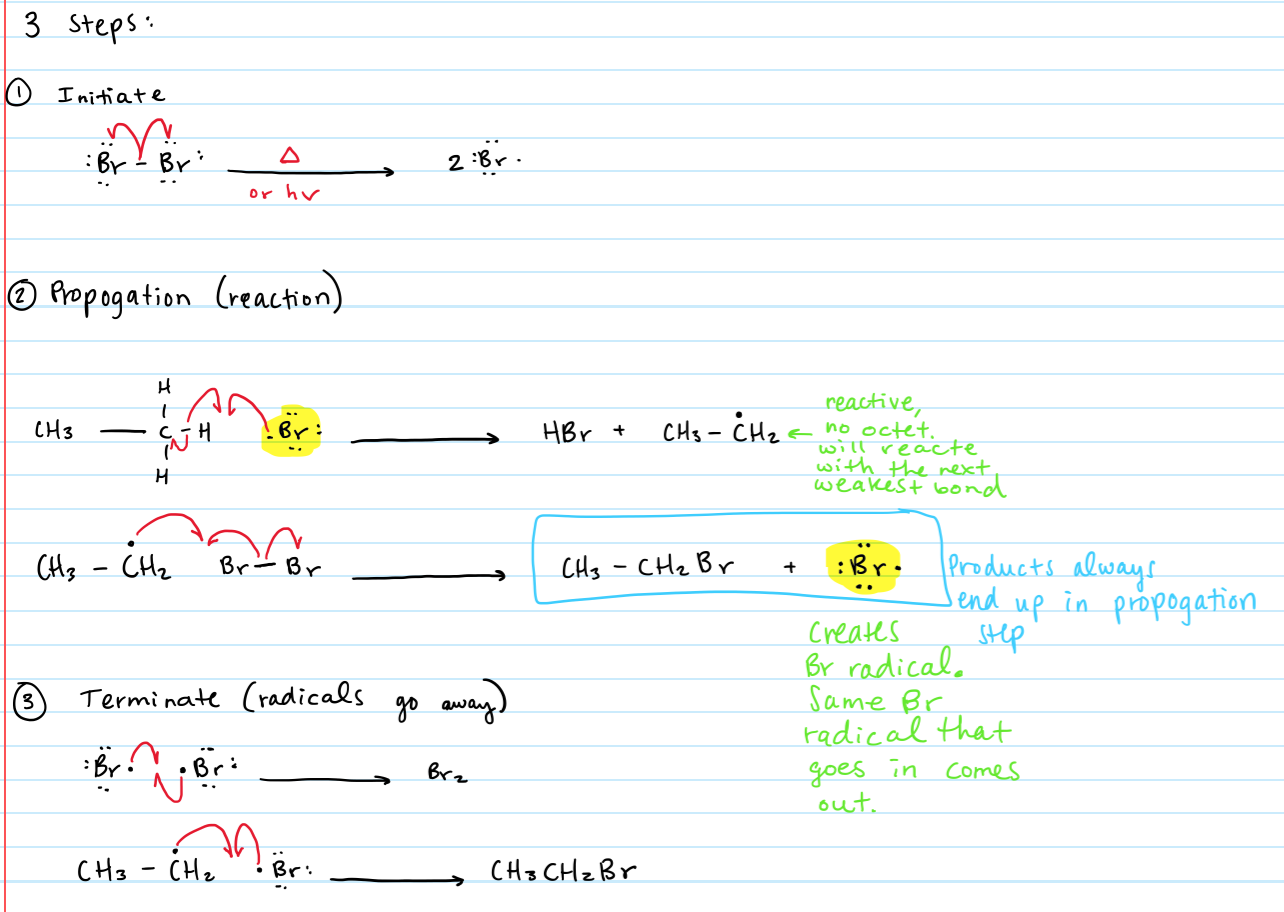
What are the 3 steps in radical chain rxn mechanisms?
• Initiate • Propagation (rxn) • Terminate (radicals go away)
What happens in the initiation step of a radical chain mechanism?
homolysis
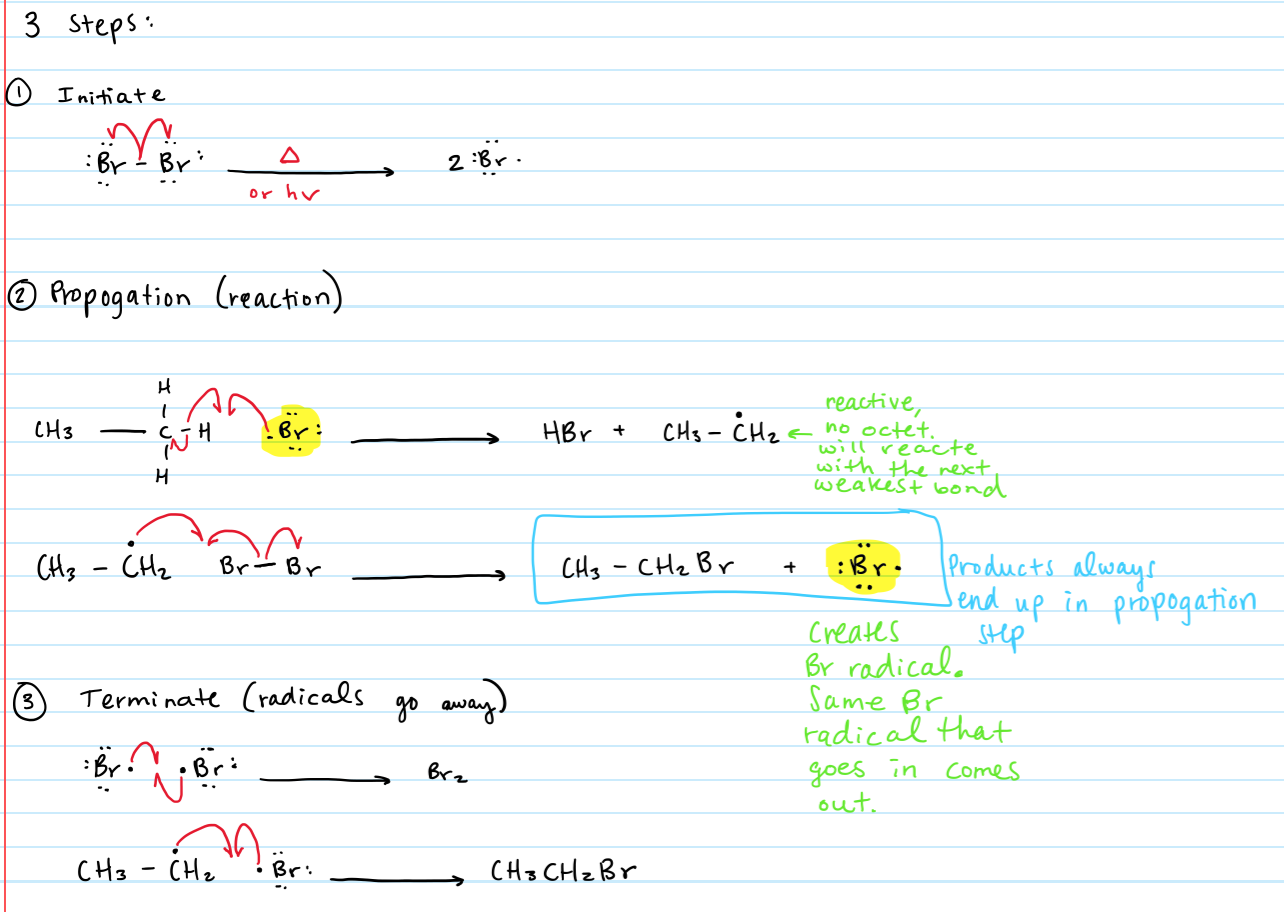
What happens in the propagation step of a radical chain mechanism?
Product always ends up in propagation step
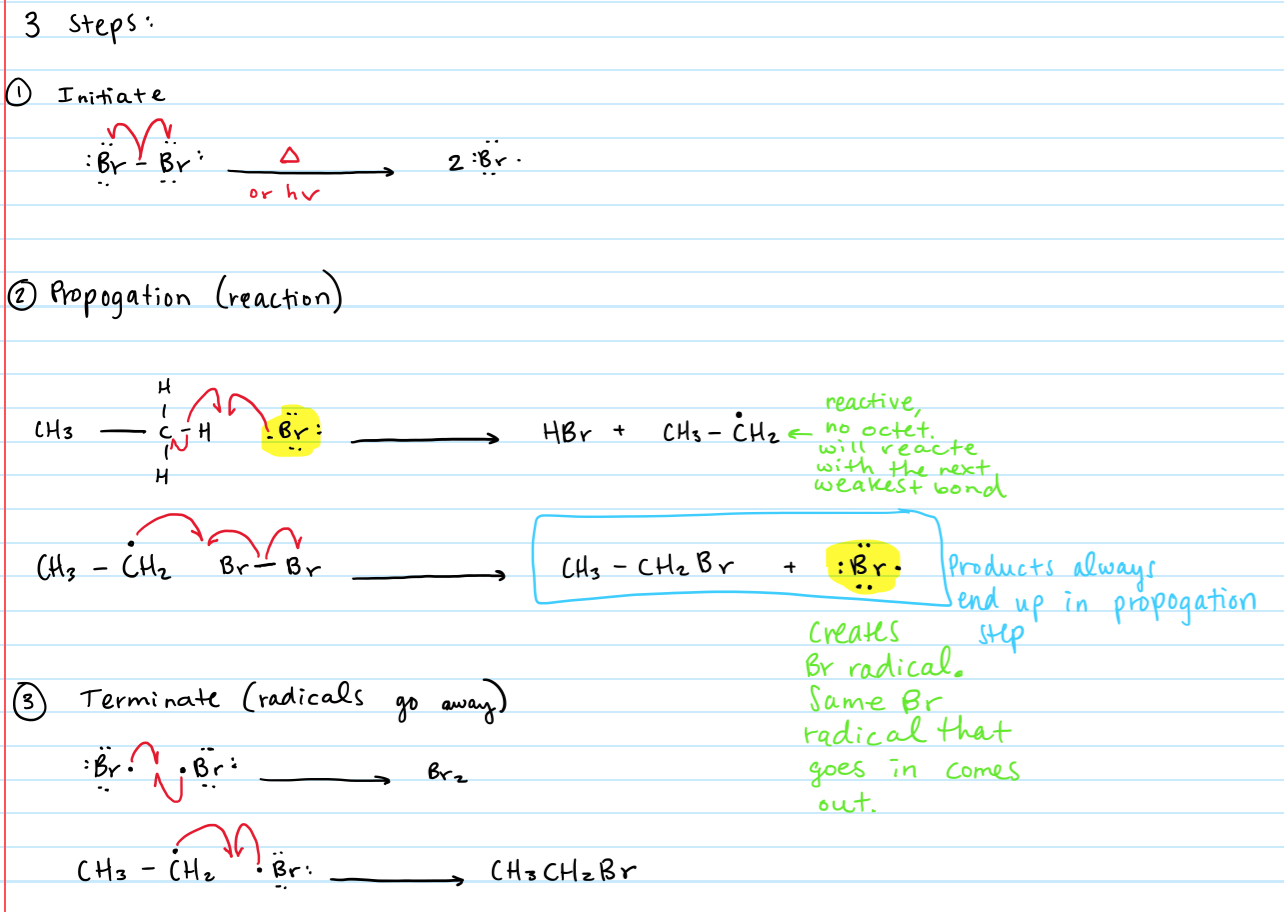
What happens in the termination step of a radical chain mechanism?
The radicals (terminate) go away
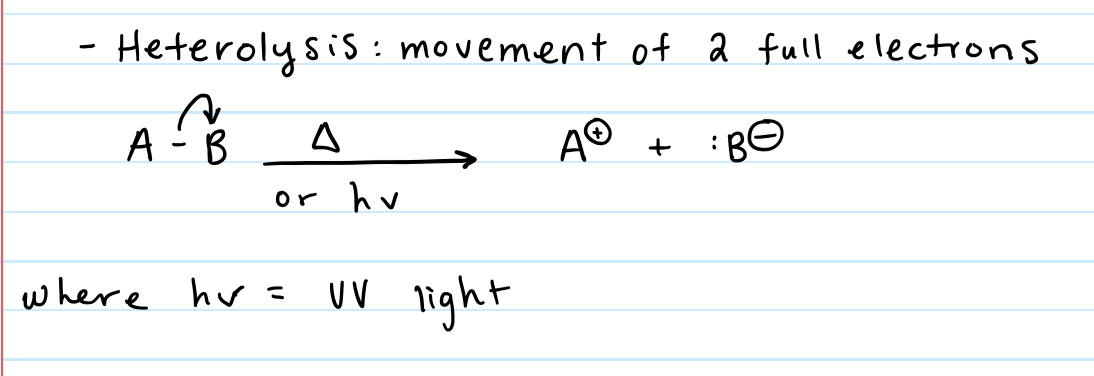
What is Heterolysis?
The movement of 2 full electrons
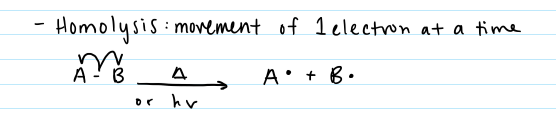
What is homolysis?
The movement of 1 electron at a time. Energy introduced into the system to create a radical. AKA homolytic bond cleavage when the bond breaks, each atom will add 1 electron.
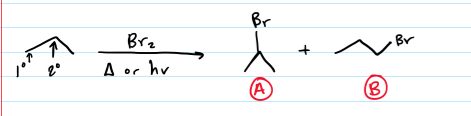
Name this overall reaction
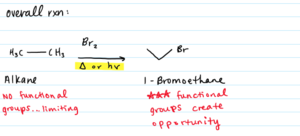
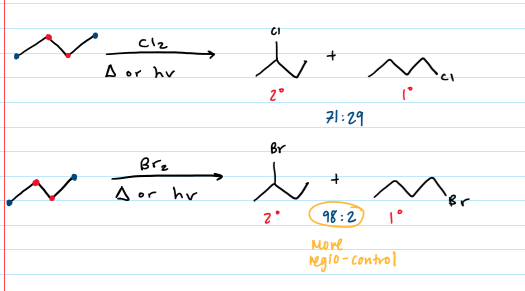
Reaction of Radical: Halogenation of Alkanes
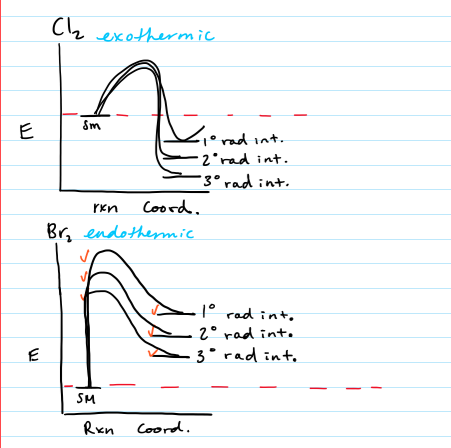
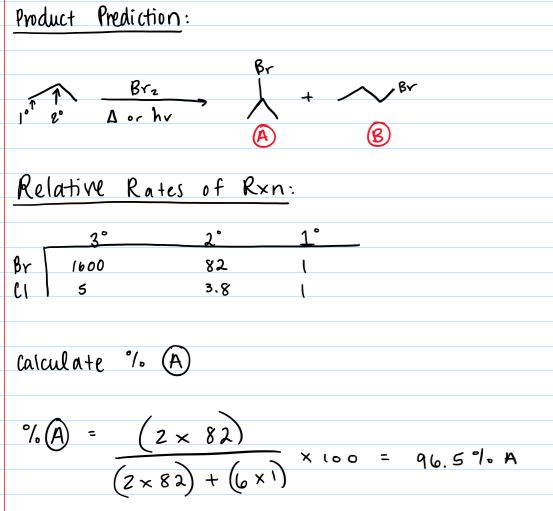
Why is there selectivity (differenced in reactivity) between Br and Cl?
Reaction Kinetics. The rxn of Cl2 has exothermic intermediates The rxn of Br2 has endothermic intermediates
How to predict the major product of the following reaction
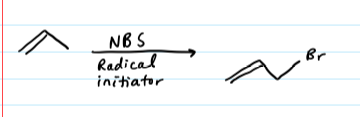
What is N-bromosuccinimide (NBS) and N-chlorosuccinimideused (NBS) for?
NBS and NCS are specifically used for brominating and chloronating allylic/benzylic positions
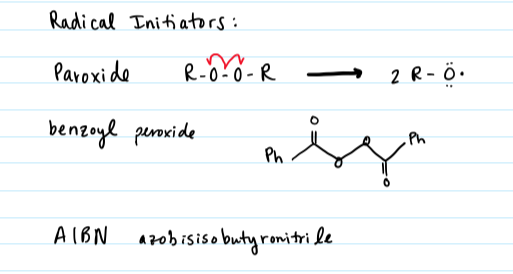
What radical initiators can be used with NBS?
peroxides ROOR
Name this overall reaction
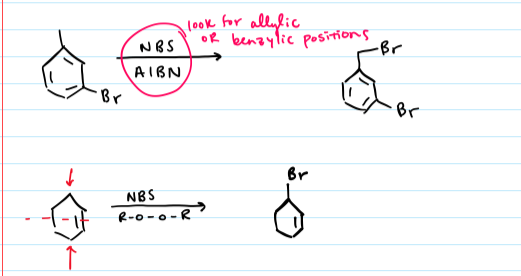
Halogenation at the allylic/benzylic position
Name this overall transformation
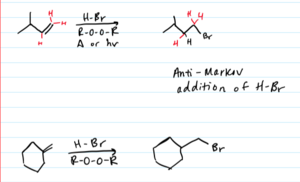
Addition of radicals to Alkenes
Properties of Addition of radicals to Alkenes
• Anti-Markov addition of H-Br • Radicals do not rearrange ( remember carbocations do rearrange) • Reaction does not work w/ HI or HCl Stereochemistry (50/50 mixture)
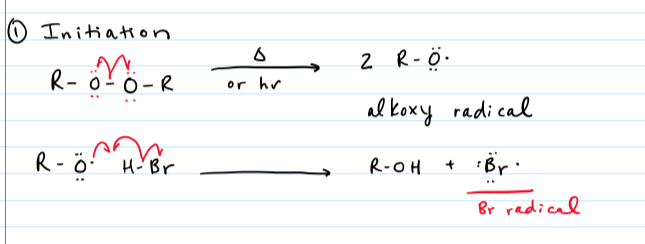
What is the initiation step of the radical chain reaction mechanism for Addition of radicals to Alkenes?
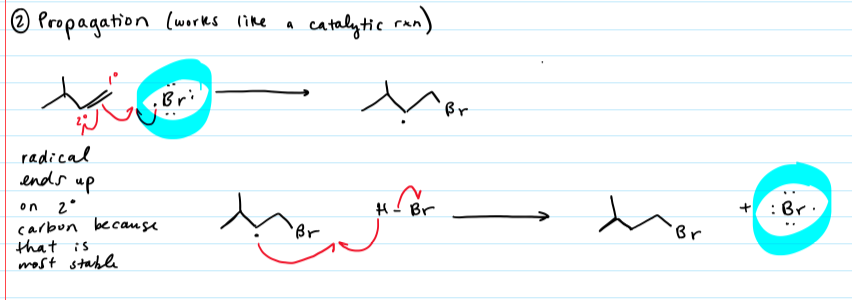
What is the propagation step of the radical chain reaction mechanism for Addition of radicals to Alkenes?
What is the termination step of the radical chain reaction mechanism for Addition of radicals to Alkenes?
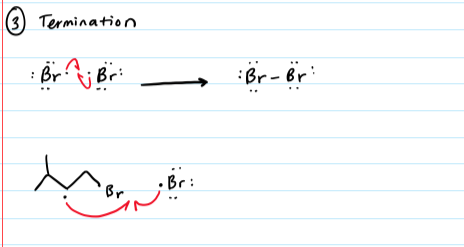
What are the following examples?
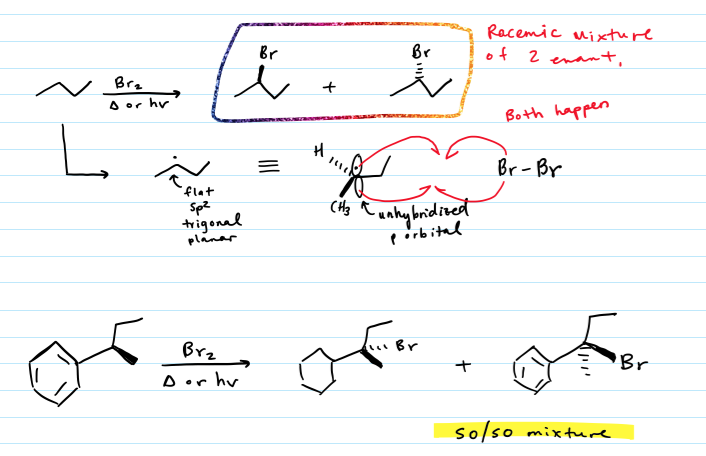
Examples of stereochemistry in Addition of Radicals to Alkene mechanisms
Solve this Addition of Radicals to Alkenes synthesis
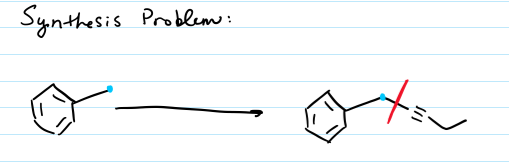
What’s changed? New C-C bond
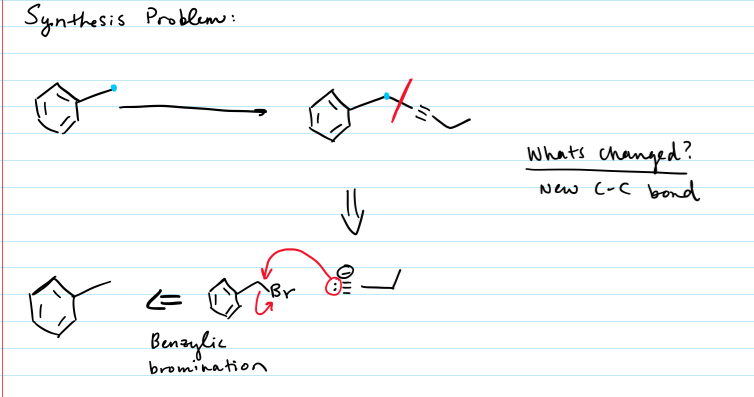
What are the two organometallic compounds to know for this class?
organolithium (R-Li) and Grignard organomagnesium (RMgBr)
What is the reactivity of R-Li and RmgBr?
Carboanion Reactivity: 1. Very strong base 2. Strong nucleophile
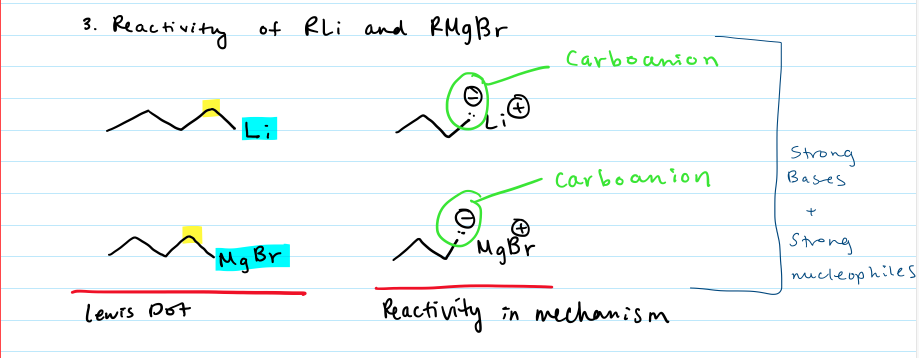
Name this organometallic mechanism
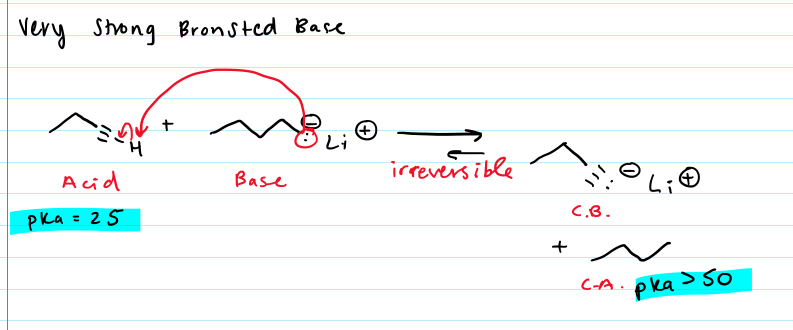
R-Li Conjugate acid is a stronger acid because pka is greater that 8 points so the rxn is R->P irreversible
Name this organometallic mechanism
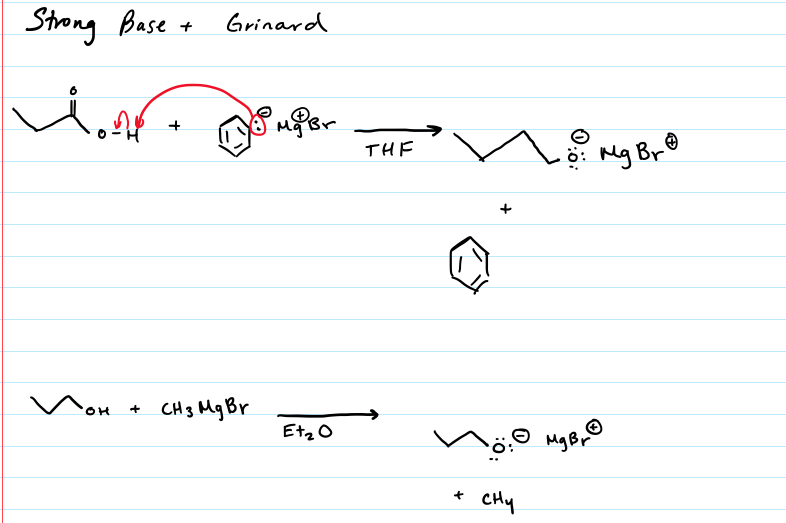
RMgBr Grinard
What type of solvents should be used for R-Li and RMgBr reactions?
Anhydrous or “dry” solvents such as Et2O to avoid H2O ruining the reaction