6.22 The Heart
No description yet. This curated deck is ready for daily study.
Card preview (5)
The Heart Structure
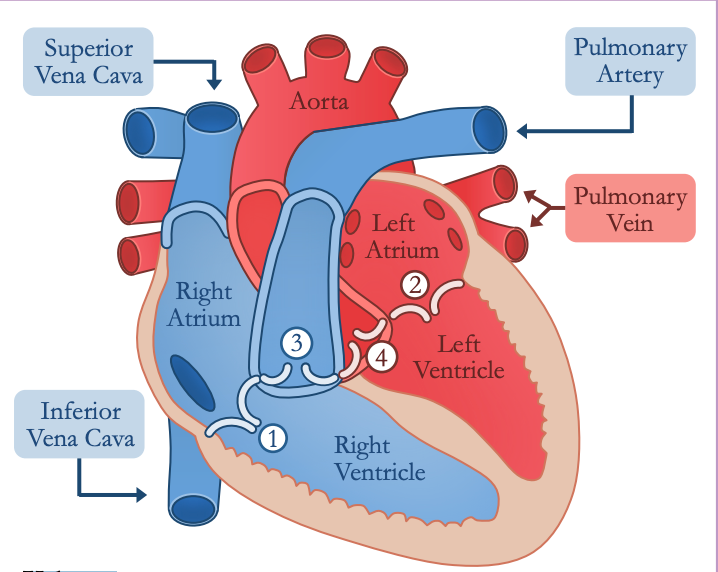
Superior Vena Cava Inferior Vena Cava Pulmonary artery Pulmonary vein Right Atrium Right Ventricle Left Atrium Left Ventricle Valves: 1. Tricuspid valve (right) 2. Bicuspid valve (left) 3. Pulmonary valve (right) 4. Aortic valve (left)
Mechanism of the Heart Beat
A heart beat is myogenic (contraction initiated by the heart) * Electrical signals are initiated by a sinoatrial (SA) node * This pacemaker stimulates the atria to contract and also relays signals to an atrioventricular (AV) node * The AV node sends signals to ventricular Purkinje fibres (via a Bundle of His within the wall of the septum) * The Purkinje fibres cause the ventricular walls to contract The SA node maintains a normal sinus rhythm (60-100 bpm) * The pacemaker is regulated by the medulla oblongata * Sympathetic nerves release noradrenaline (⇧ heart rate) * Parasympathetic nerves release acetylcholine (⇩ heart rate) * Heart rate may also be increased via hormonal action (via the release of adrenaline / epinephrine) * Adrenaline will cause a more sustained elevation in heart rate than that achieved by the action of the brainstem
The Cardiac Cycle
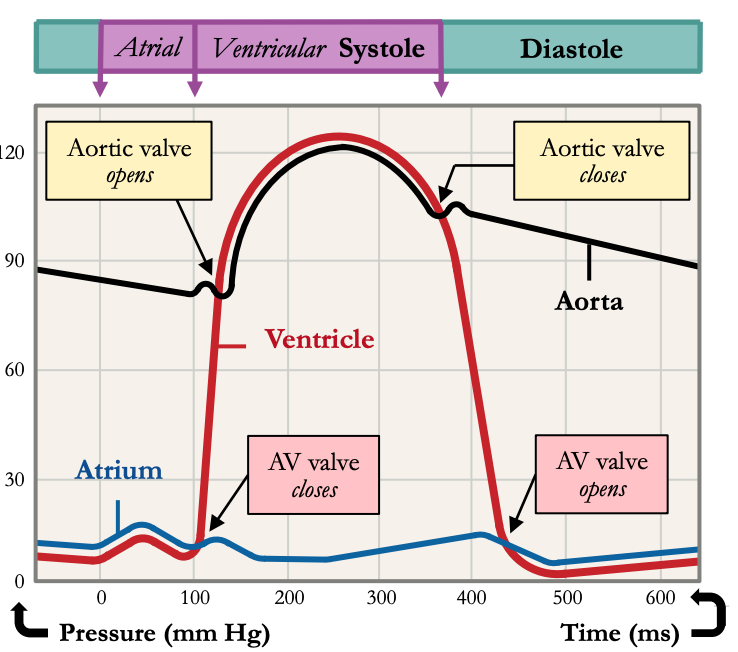
The cardiac cycle describes the events of a heart beat Systole (contraction) * As atria contract, atrial pressure exceeds ventricular pressure (AV valves open → blood flows to ventricles) * As ventricles contract, ventricular pressure exceeds atrial pressure (AV valves close → 1st heart sound) * Pressure builds (isovolumetric contraction) until the ventricular pressure exceeds the arterial pressure * Semilunar valves open and blood flows into arteries Diastole (relaxation) * As blood flows into arteries, ventricular pressure drops * Backflow closes semilunar valves → 2nd heart sound * When ventricular pressure drops below atrial pressure, the AV valves will open and cardiac cycle is repeated
Coronary Heart Disease
Coronary thrombosis is caused by clots within the coronary arteries * Vessels are damaged by cholesterol deposition (atherosclerosis) * The deposits reduce vessel diameter and increase blood pressure * The stress damages arterial walls (and is repaired with fibrous tissue) * The vessel wall loses elasticity and forms atherosclerotic plaques * If a plaque ruptures, blood clotting is triggered, forming a thrombus * If the thrombus blocks blood flow, a myocardial infarction results * These events are collectively described as coronary heart disease
Risk factors
Risk factors for CHD include: * Genetics (e.g. hypertension) * Obesity (overweight = risk) * Diseases (e.g. diabetes) * Diet (e.g. ⇧ trans fats) * Exercise (inactivity = risk) * Smoking (⇧ blood pressure) * Sex (males = higher risk)