Mammalian Form
No description yet. This curated deck is ready for daily study.
Card preview (6)
Mammalian Ancestors
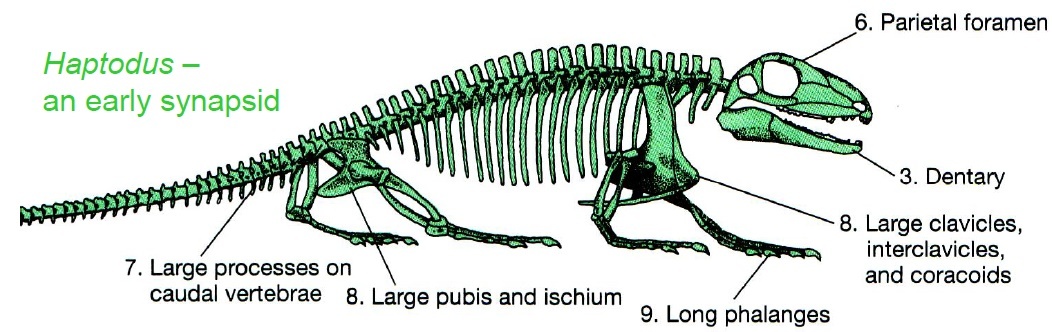
Mammals are synapsids Early synapsids were reptile-like with long tails, had “full” sets of ribs, and legs on the horizontal
The Mammalian Skeleton
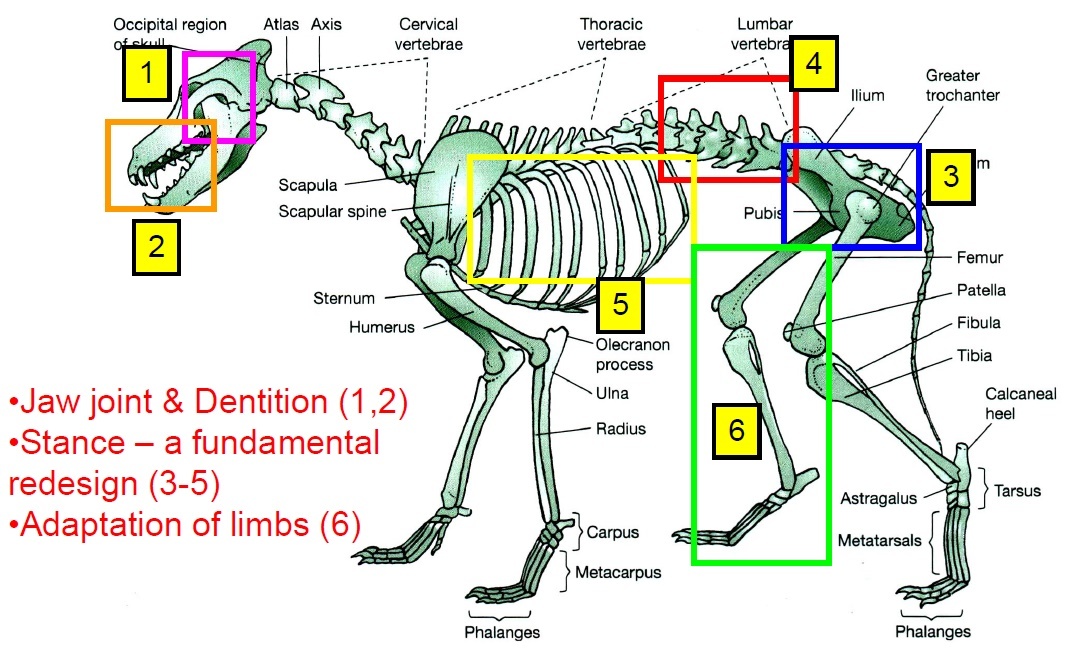
All mammalian skeletal features have been modified from reptilian(ish) ancestors Compared to synapsids there are a number of important changes: • jaw joint/dentition • stance - change in gait requires fundamental redesign • adaption of limbs
Mammalian Jaw
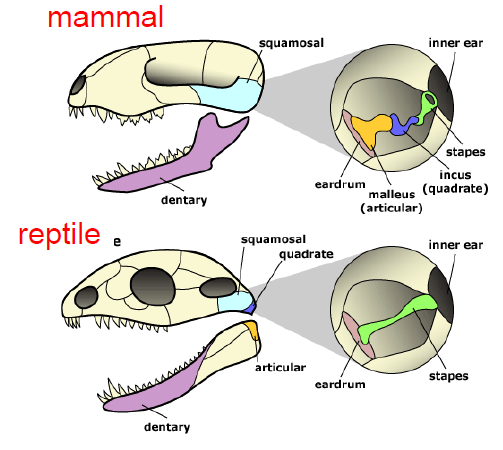
Mammals possess a simplified jaw and a new jaw joint - different to reptiles Significant lateral movement as well as a vertical hinge - mammalian herbivores can chew
Mammalian Dentition
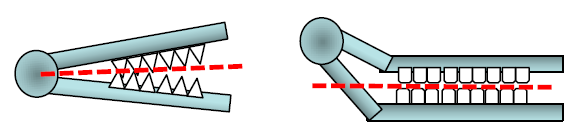
Differentiation/specialisation of teeth into: incisors, canines, molars & premolars Specialisation of teeth according to diet, multiple functions - killing, slicing, chewing, grinding, etc For grinding jaw changes to L-shape - hinge moved out of line with jaws
Mammalian Stance
Mammals have an “enhanced” gait over amphibians and reptiles - the parasagittal gait is better for bearing weight the abdominal spine flexes vertically (especially in carnivores) which increases stride length in gallops and keeps the legs below the body - the thoractic spine is stiff the ribs are restricted (not a “full set”) to the thorax, protecting the heart and lungs but not the abdomen
Mammalian Limbs
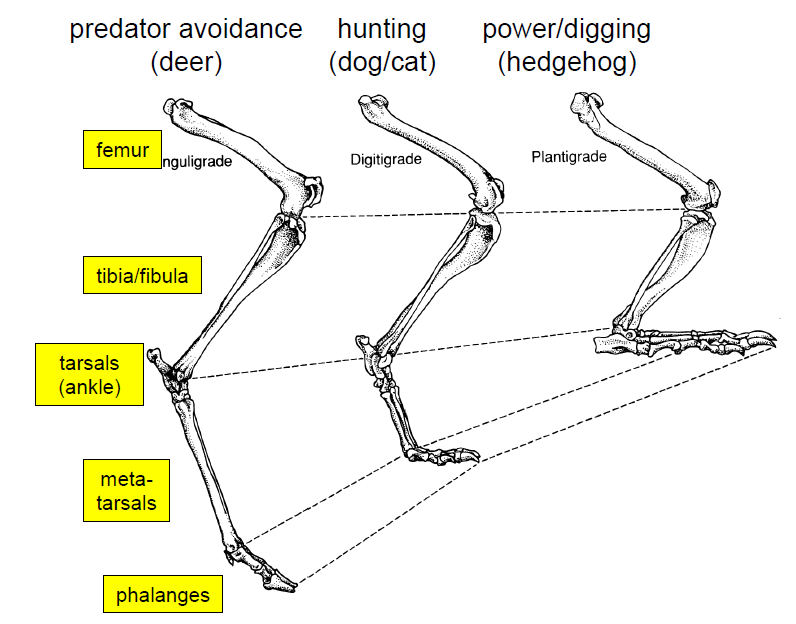
Mammalian limbs became specialised for various modes of locomotion All vertebrates have a standardised pentadactyl limb Bats use elongated metacarpals and phalanges as “umbrella” cetaceans have greatly reduced upper limbs with flattened 2D shapes with extended phalanges and reduced digits Femurs are relatively short in fast runners the tibia/fibula are shorter in plantigrades and longer in fast runners as are the wrist/hand