Chemistry of Cyclohexanes
No description yet. This curated deck is ready for daily study.
Card preview (15)
What is a big factor which affects the rate of Sₙ² substitution of cyclohexyl (pseudo)halides i.e. the reaction seen below

The rate of Sₙ² substitution of cyclohexyl (pseudo) halides is effected by steric hindrance to approach of the nucleophile
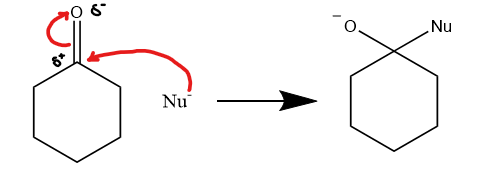
What is the mechanism for the following reaction?
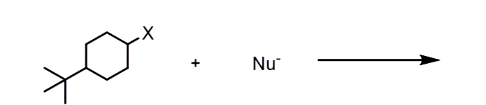
• Attack of the Nu at the δ⁺ carbon • Breaking of the C-X bond

tBu is so large it…
… always occupies the equatorial region
What is most stable chair conformer of the following anti isomer?
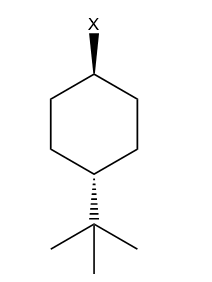
tBu must always be in equatorial
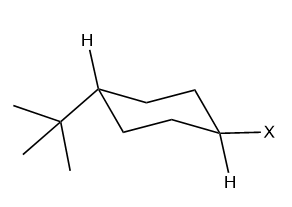
What is the most stable chair conformer of the following syn isomer
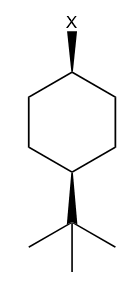
tBu must always be in equatorial
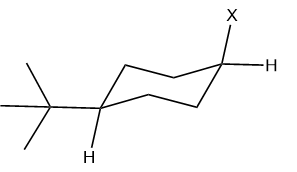
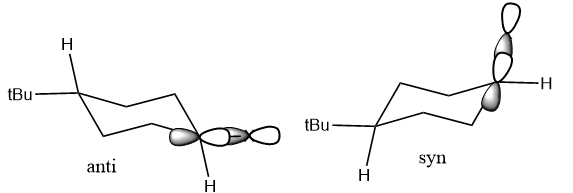
What is the difference between the direction of Nu attack for a Sₙ² substitution for the anti vs syn isomer
• Nu attacks from the bottom for the anti isomer (C-X bond in the equatorial plane) • Nu attacks from the top for the syn isomer (C-X bond in the axial plane) • Because of this, the C-Nu bond is in the axial plane for the product of the anti isomer • and the C-Nu bond is in the syn plane for the product of the syn-isomer
What is the difference between the speed of the Nu attack for a Sₙ² substitution for the anti vs syn isomer
The anti isomer will react so much slower because the sigma orbital which the Nu attack is within the ring of the cyclohexane
What is a 1,2-addition of cyclohexanone?
• Attack of the δ⁺ carbon by the Nu • Nu: H⁻ e.g. NaBH₄, LiAlH₄
6 membered rings with one sp² centre can adopt a chair conformation, and can therefore undergo attack…
From the axial or equatorial positions
How does the type of nucleophile affect the diastereoselectivity of addition
• Depends on the side of the nucleophile • Small (→ axial attack): LiAlH₄ (“small” H⁻ sources) • Large (→ equatorial attack): K[sBu₃B-H] (“large” H⁻ source)
What will be the product if the Nu attack from the axial position for the following reaction i.e. the way a small Nu would attack
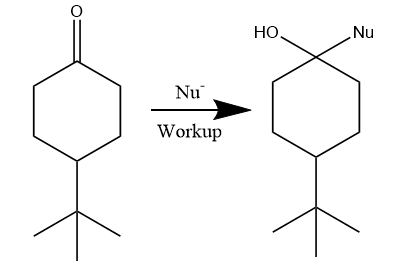
• Nu is in axial position
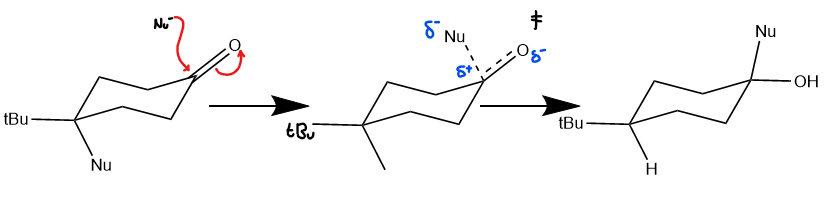
What will be the product if the Nu attacks from the equatorial position for the following reaction i.e. the way a large Nu would attack
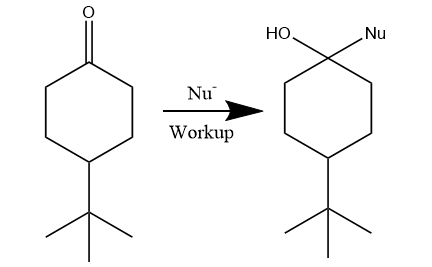
Nu is in equatorial position
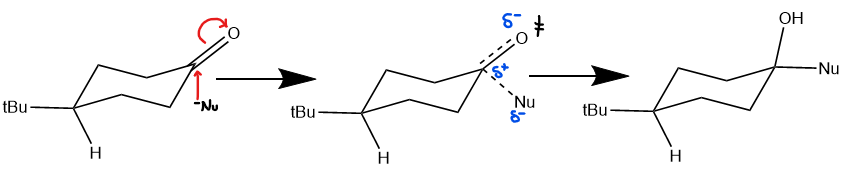
6 membered rings with two sp² centres adopt a half-chair conformation Their reactions occur via….
… a lower-E chair-like transition state, rather than the higher-E twist boat transition state
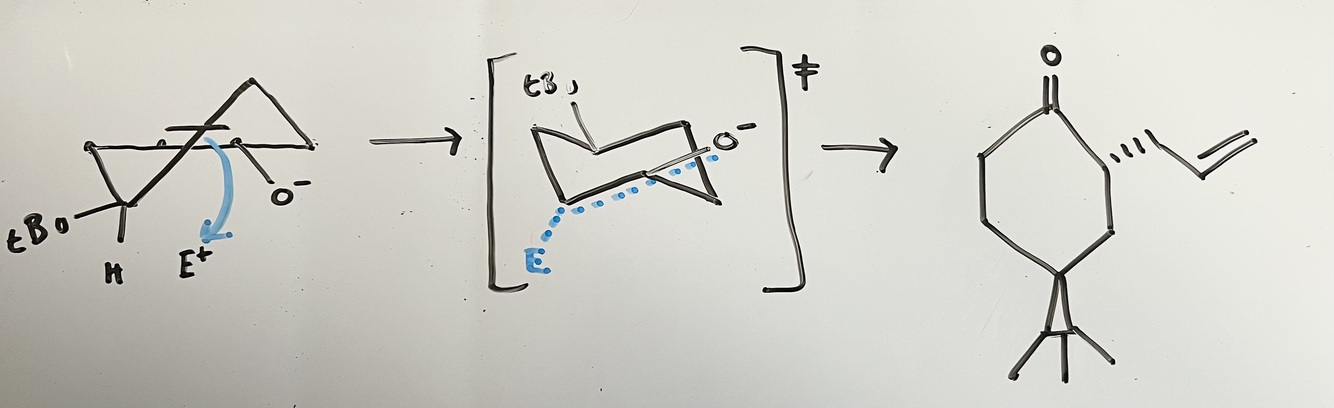
What would happen to the sterochemistry of the transition state and final product if the Electrophile was attacked from the top of the ring
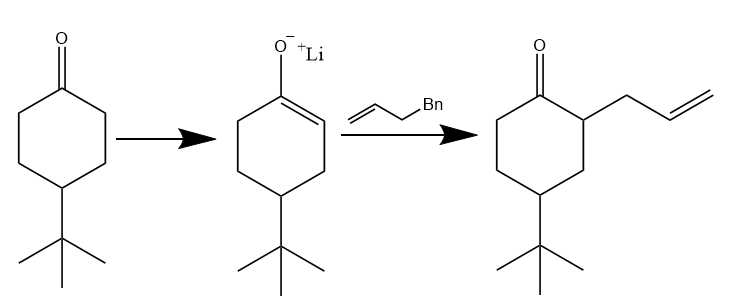
• Starts off as a ‘half-chair’ • Forms a ‘twist-boat’ intermediate • Electrophile points forward into the plane
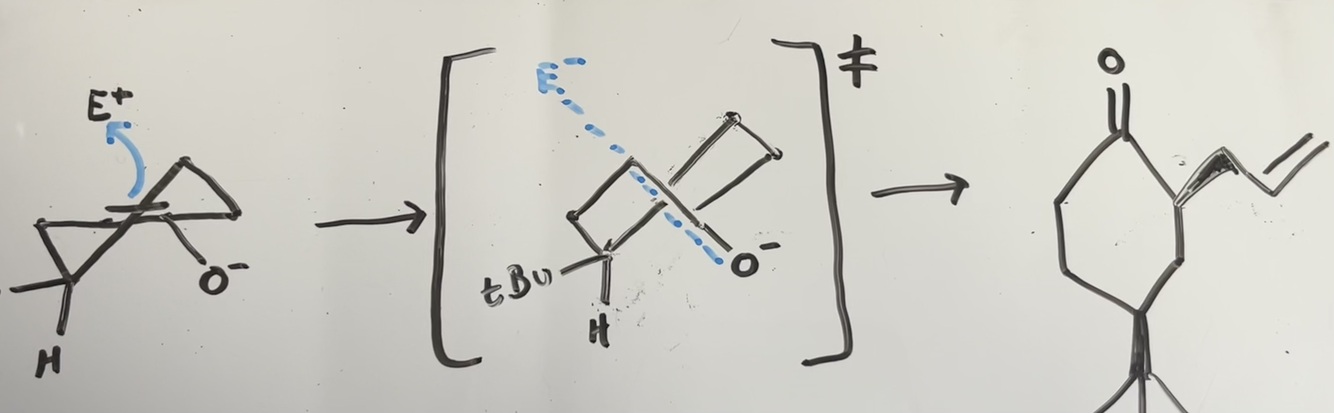
What would happen to the sterochemistry of the transition state and final product if the electrophile was attacked from the bottom of the ring?
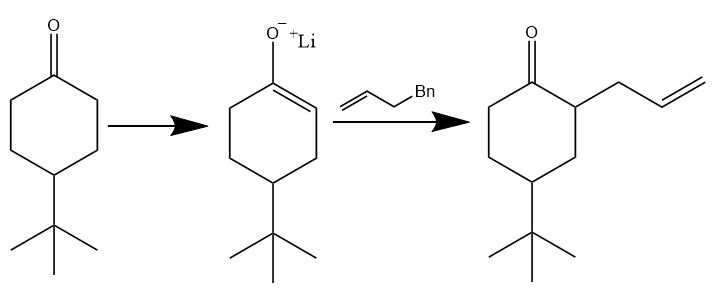
• Starts off as a ‘half-chair’ • Forms a chair intermediate • Electrophile points back into the plane • This is the major product because the chair intermediate is more stable