4. Esters
No description yet. This curated deck is ready for daily study.
Card preview (6)
State two properties of esters and their uses.
• Volatile with distinctive smells • In perfumes and as food flavourings
State the general formula for an esterification reaction and what is required.
Carboxylic Acid + Alcohol → Ester + Water An acid catalyst
Describe how to name an ester. Using the example of pentanol and butanoic acid.
• The first part of the name indicates the length of the carbon chain in the alcohol, and it ends with the letters ‘- yl’ • The second part of the name indicates the length of the carbon chain in the carboxylic acid, and it ends with the letters ‘- oate’ E.g. The ester formed from pentanol and butanoic acid is called pentyl butanoate
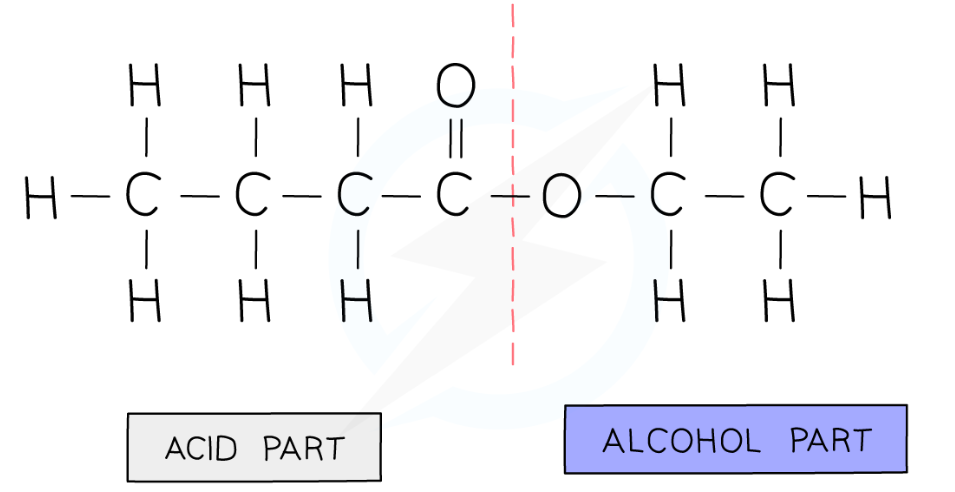
State the functional group of an ester.
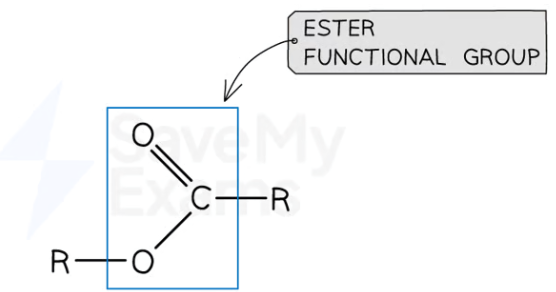
Describe how to draw the displayed formula of an ester.
• Draw out the alcohol and carboxylic acid groups with their functional groups adjacent with eachother • Remove a H from the alcohol and an OH from the carboxylic acid • Combine the remaining parts of the alcohol and carboylic acid to form the ester • Add the water as a product
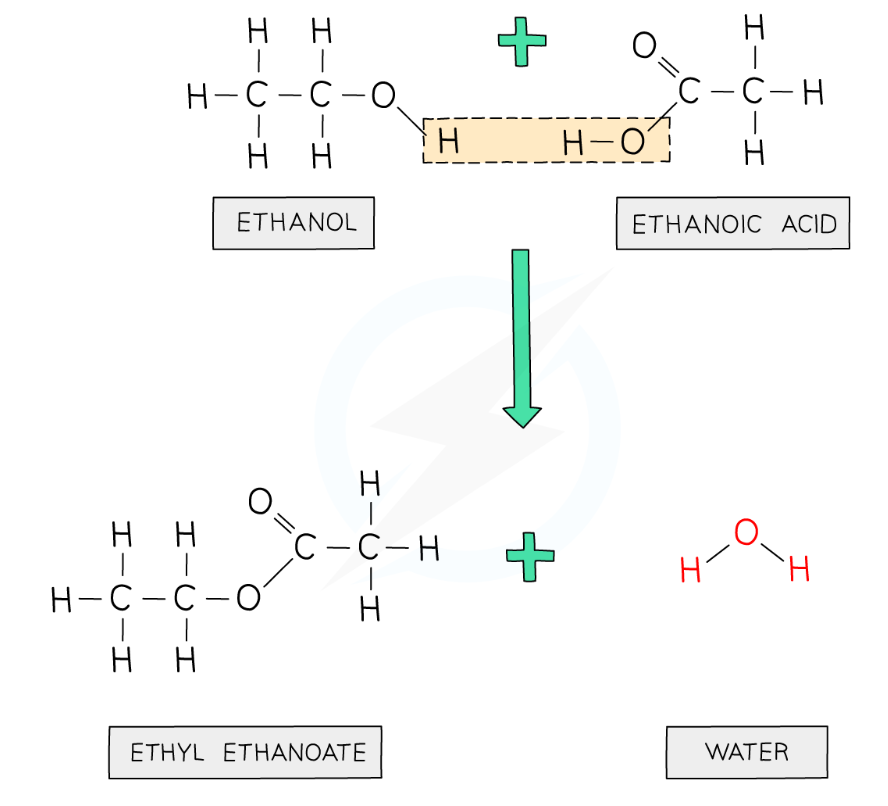
Describe how to prepare a sample of an ester such as ethyl ethanoate. Practical
• Mix ethanoic acid, ethanol, and concentrated sulfuric acid. • Heat gently using a water bath or electric heater (ethanol is flammable — no Bunsen burner!). • As the ester forms, it is distilled off and collected by condensation in a separate beaker. • Since esters are volatile (low boiling points), they evaporate first. • Distillation removes the ester from the reaction mixture, preventing the reverse reaction (hydrolysis). The distillate’s smell is tested — a sweet/fruity odour confirms the formation of an ester.