MECHANISMS ⚙️
No description yet. This curated deck is ready for daily study.
Card preview (24)
• What are curly arrows used to show and what are the rules for curly arrows?
• Curly arrows are used to show the movement of electrons • Curly arrows must begin at either a lone pair of electrons or a bond • Curly arrows must end at an atom or where a new bond is going to be made
• What are the reagents and conditions for electrophilic addition of alkenes with hydrogen halides?
• Reagents: HCl or HBr • Conditions: No specific conditions / room temperature • Type of reagent: Electrophile, HBr • Product: Haloalkane
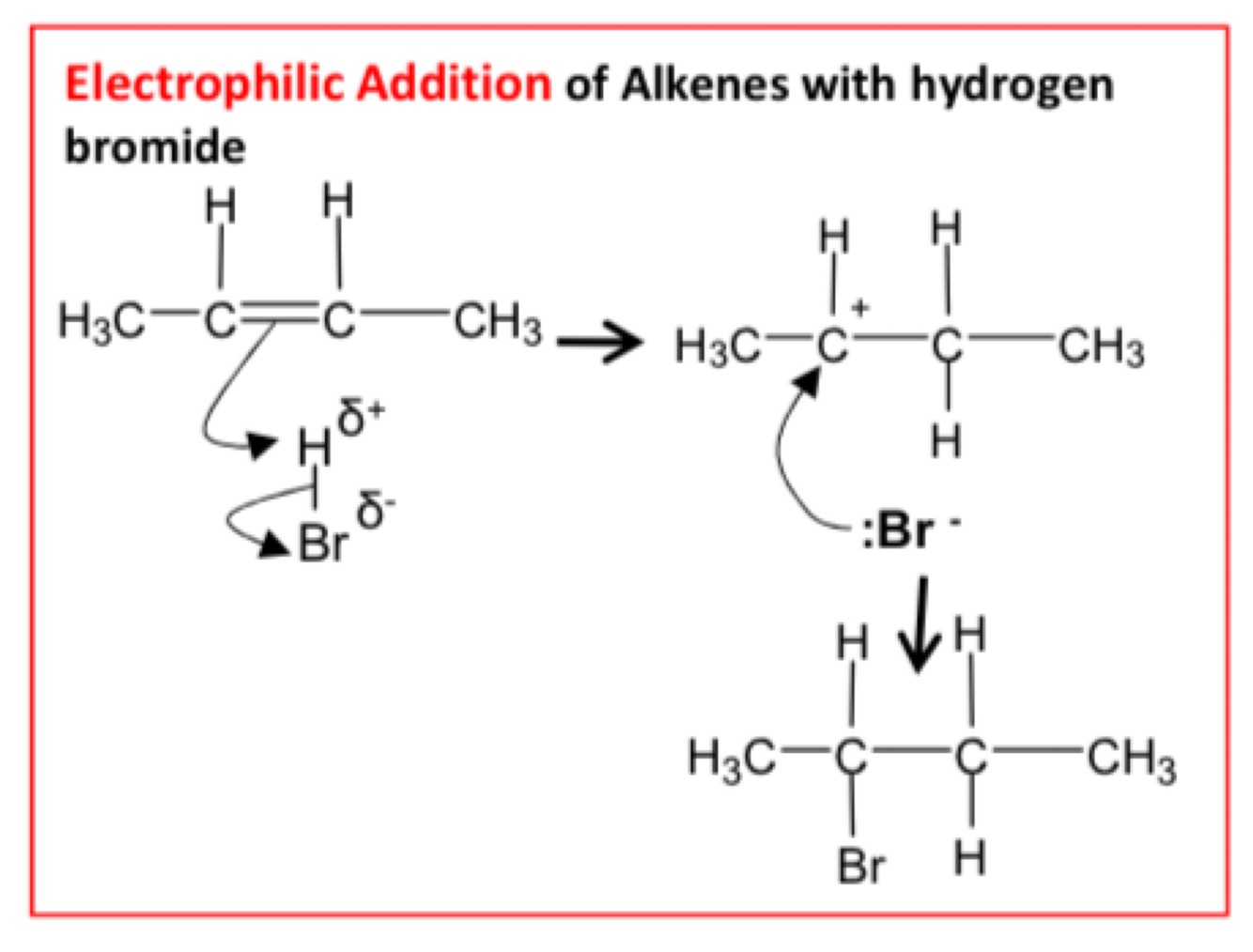
• Outline the mechanism for electrophilic addition of alkenes with hydrogen bromide (C4H8)
• What are the reagents and conditions for electrophilic addition with halogens?
• Reagent: Cl2 or Br2 (in water or in an organic solvent) • Conditions: No specific conditions / room temperature • Product: Haloalkane / dibromoalkane / dichloroalkane
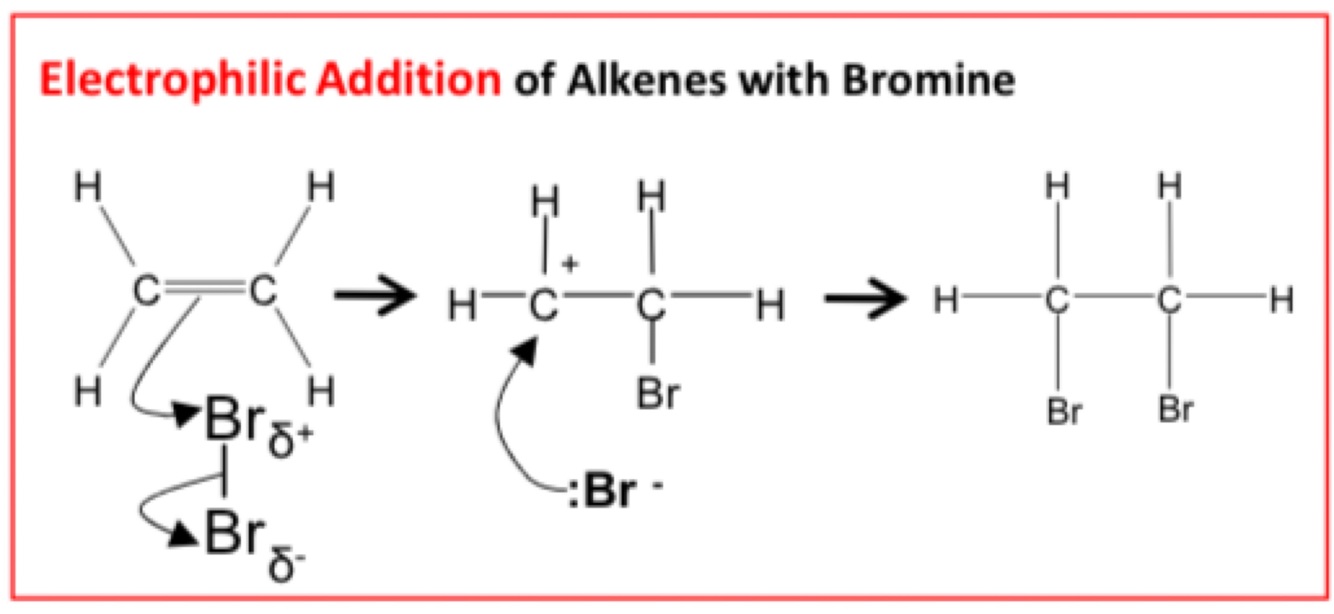
• Outline the mechanism for electrophilic addition of alkenes with Br2 (C2H4)
• What are the reagents and conditions for electrophilic addition of alkenes with sulphuric acid?
• Reagent: Concentrated H2SO4 • Conditions: Cold temperature • Product: Alkyl hydrogen sulphate
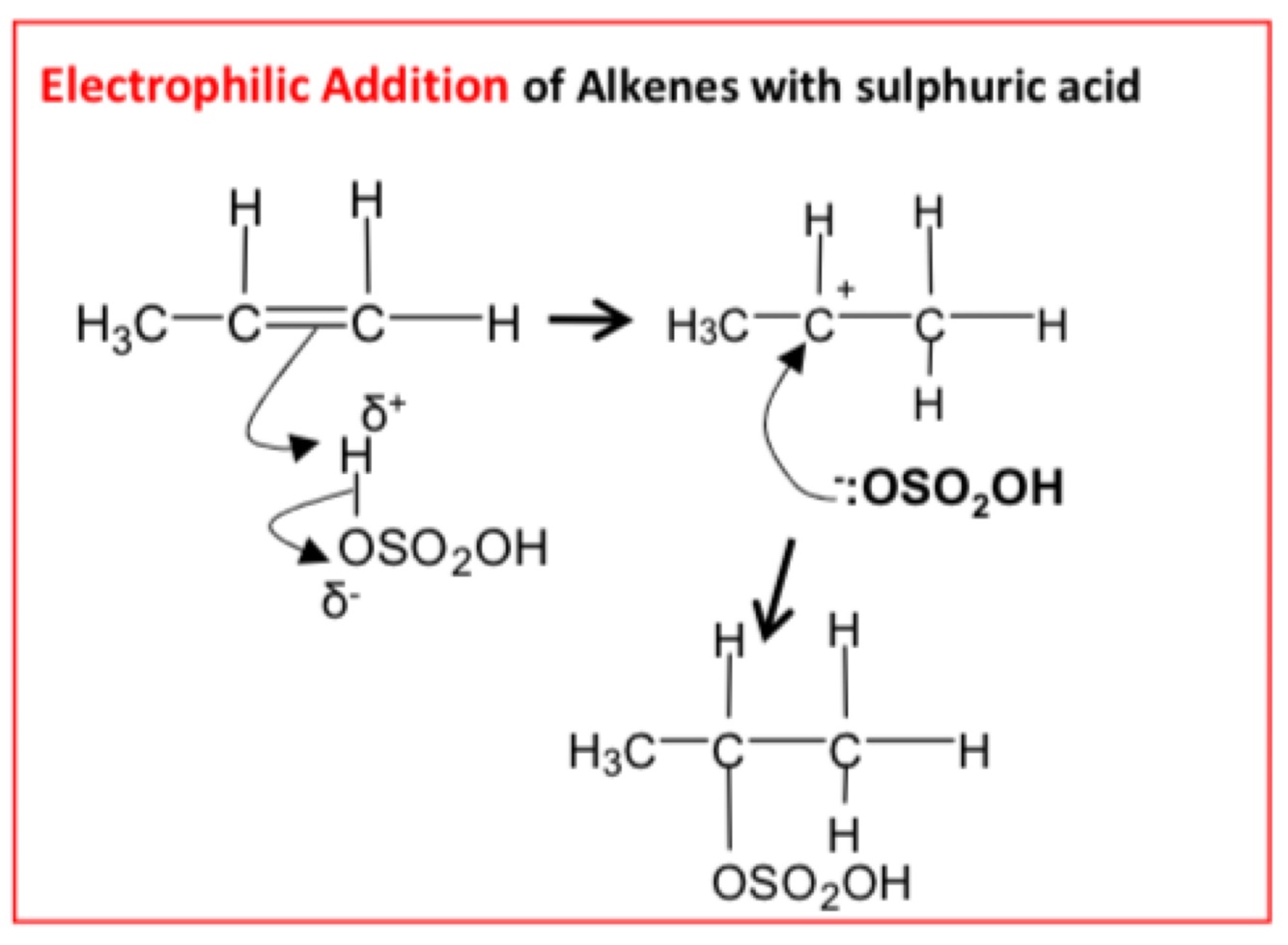
• Outline the mechanism for electrophilic addition of alkenes with concentrated H2SO4 (C3H6£
• In the Nucleophilic Addition mechanism, what can aldehydes and ketones be reduced back to?
• Aldehydes can be reduced back to primary alcohols • Ketones can be reduced back to secondary alcohols
• What are the reagents and conditions for Nucleophilic addition of aldehydes and ketones?
• Reaction: reduction • Reagents: NaBH4 in aqueous ethanol • Conditions: Room temperature and pressure • Nucleophile: Hydride :H-
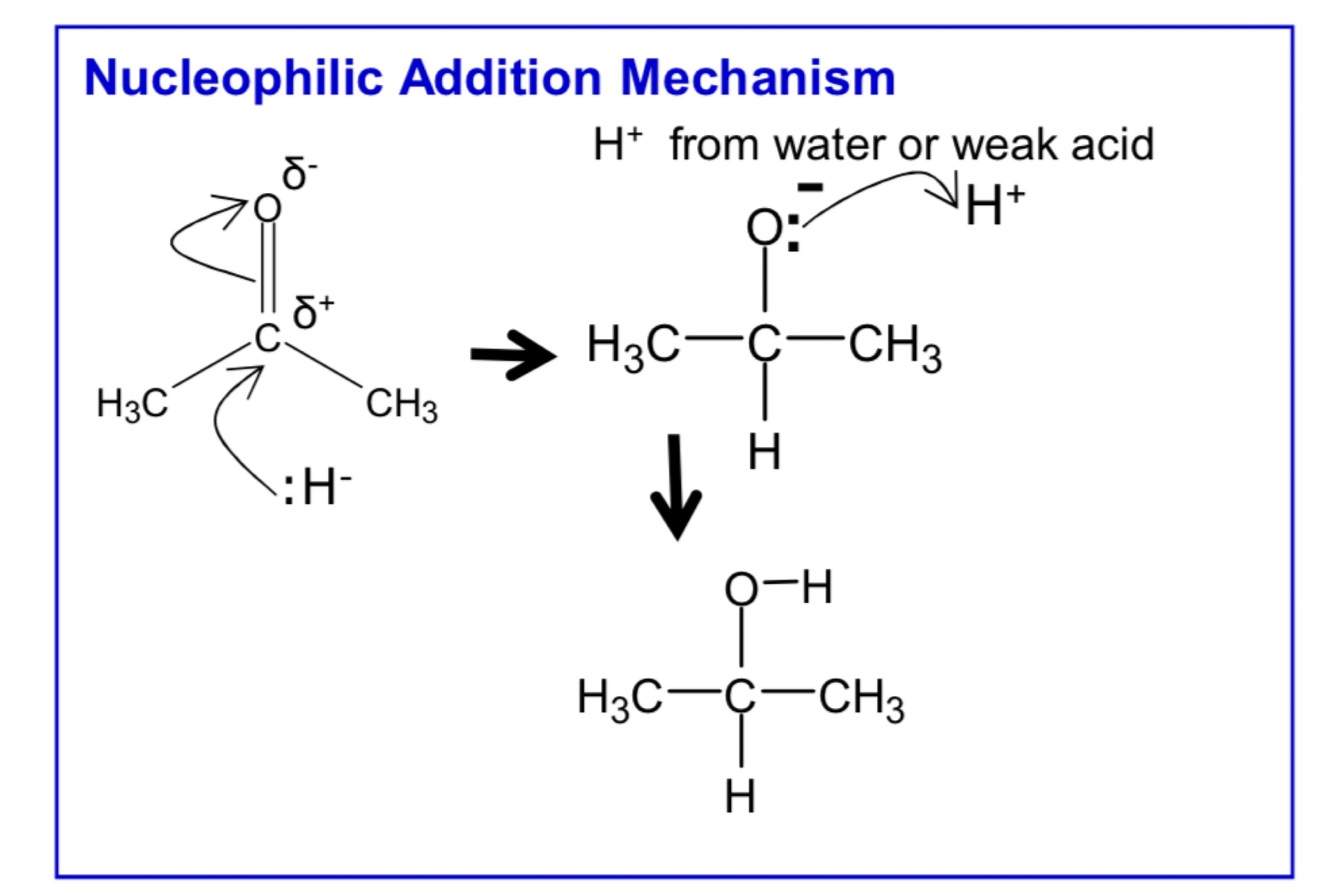
• Outline the mechanism for the reduction of propanone to a secondary alcohol
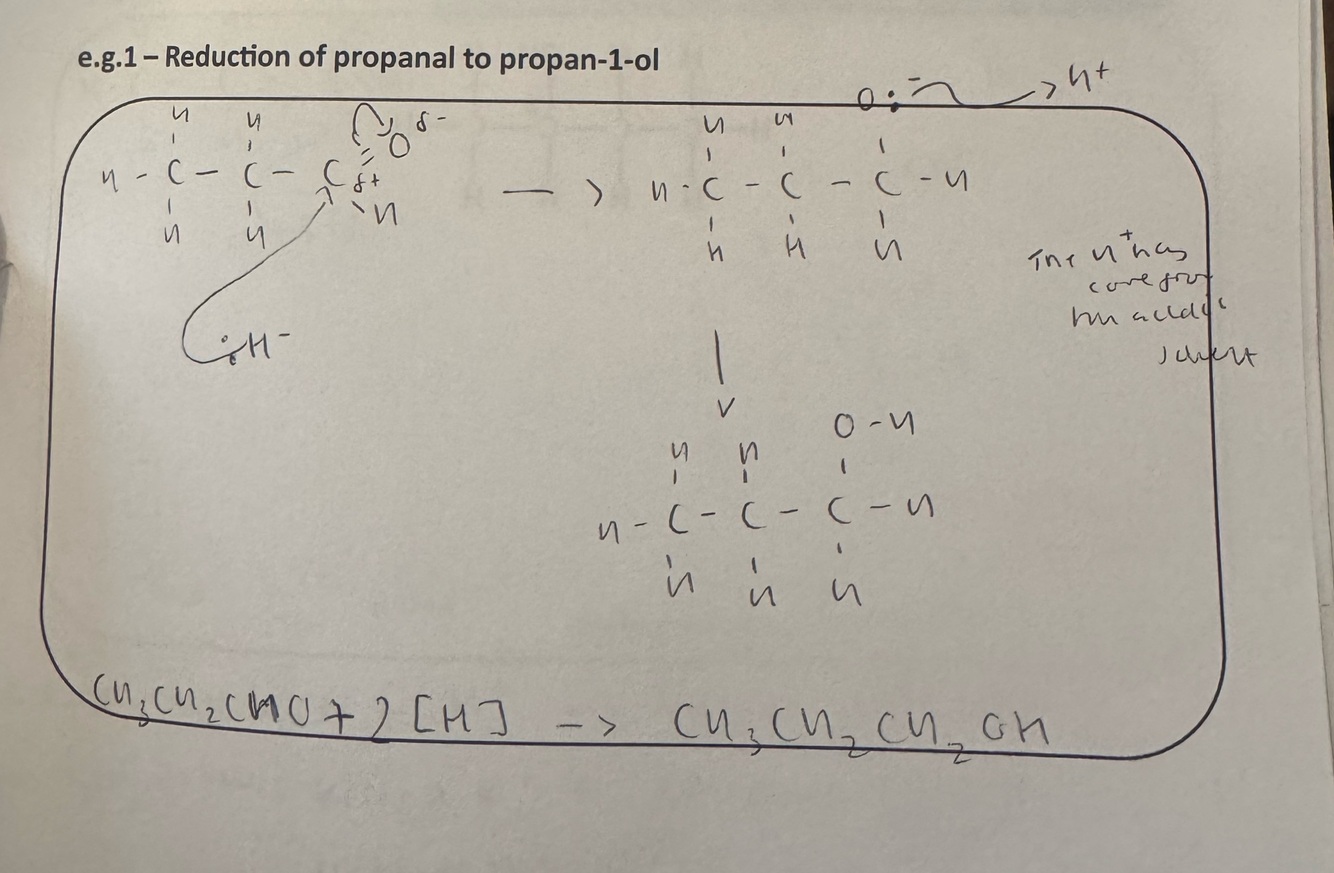
Outline the mechanism for the reduction of propanal to propan-1-ol
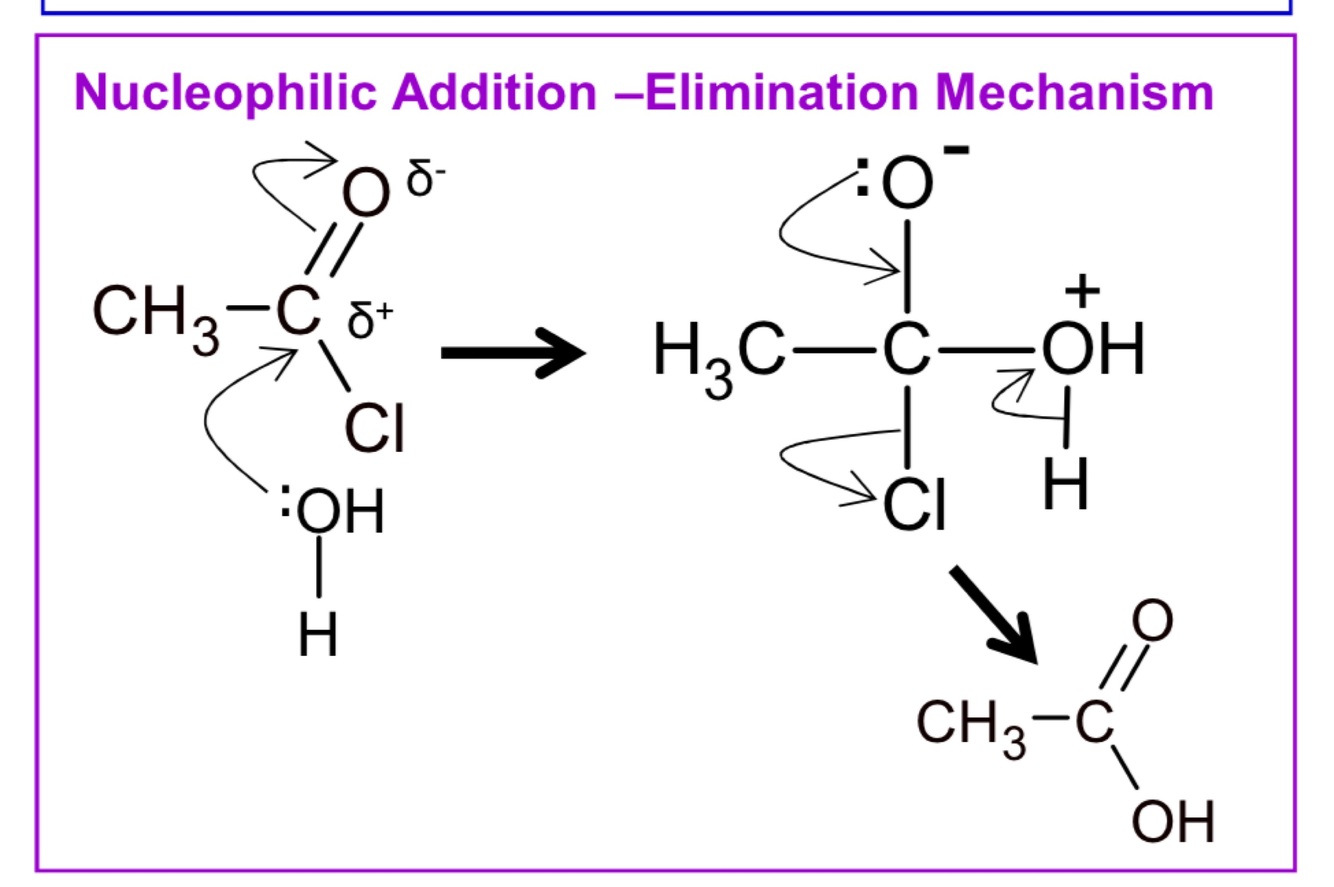
• Name and outline the mechanism and conditions for acyl chloride/ acid anhydride -> carboxylic acid
• Nucleophilic addition elimination • H2O room temperature
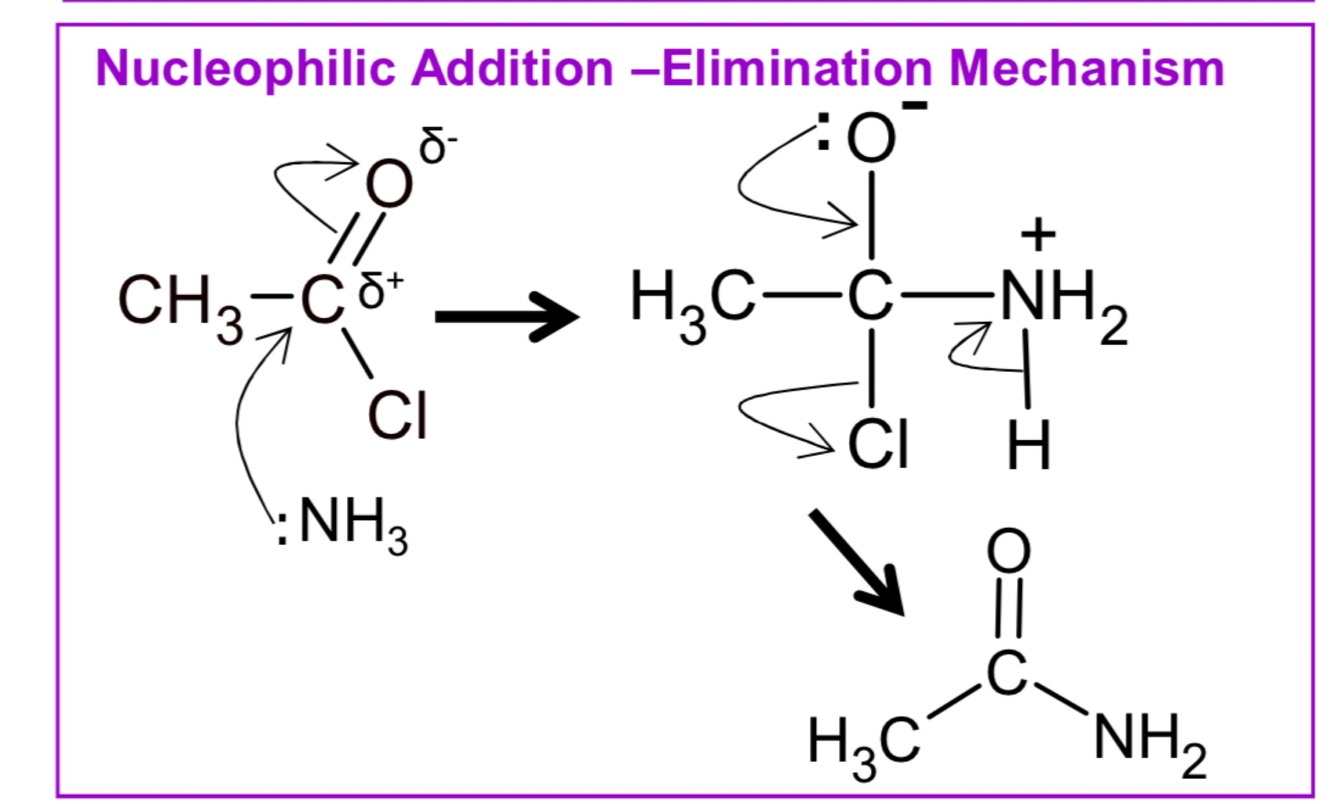
• Name and outline the mechanism and conditions for acyl chloride / acid anhydride to primary amide
• Nucleophilic addition elimination • NH3 room temperature
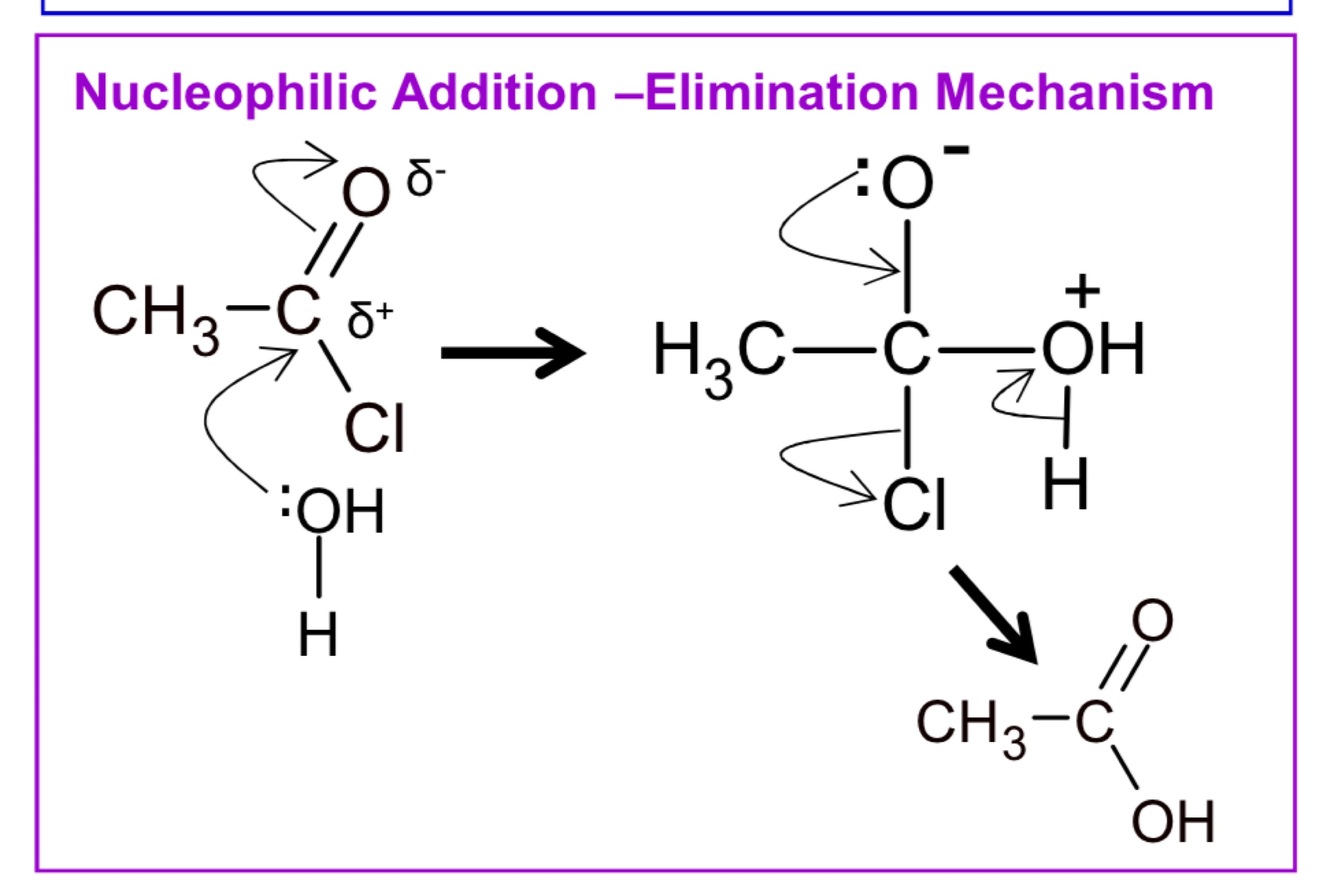
• Name and outline the mechanism and conditions for acyl chloride/ acid anhydride -> carboxylic acid
• Nucleophilic addition elimination • H2O room temperature
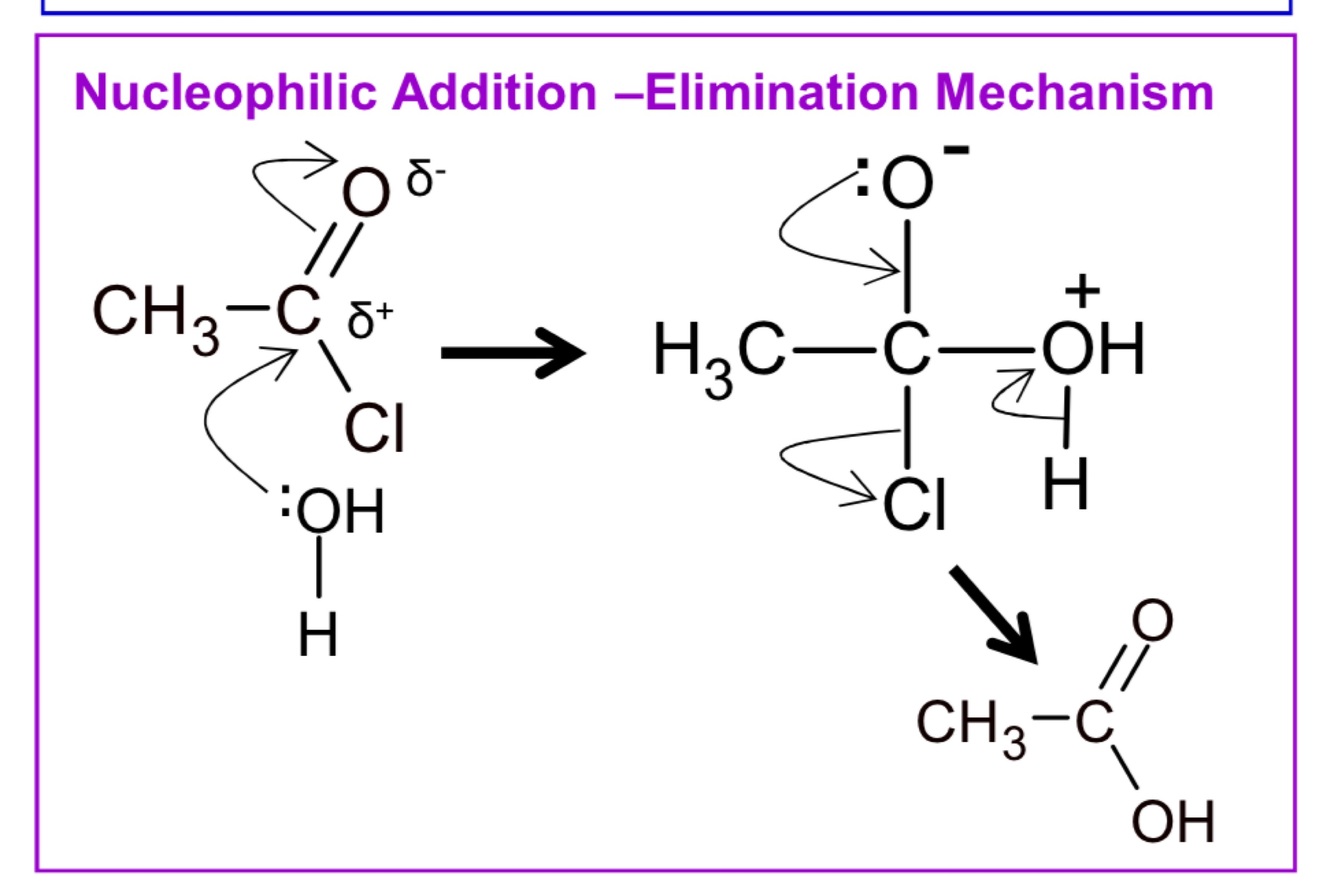
• Name and outline the mechanism and conditions for acyl chloride/ acid anhydride -> carboxylic acid
• Nucleophilic addition elimination • H2O room temperature
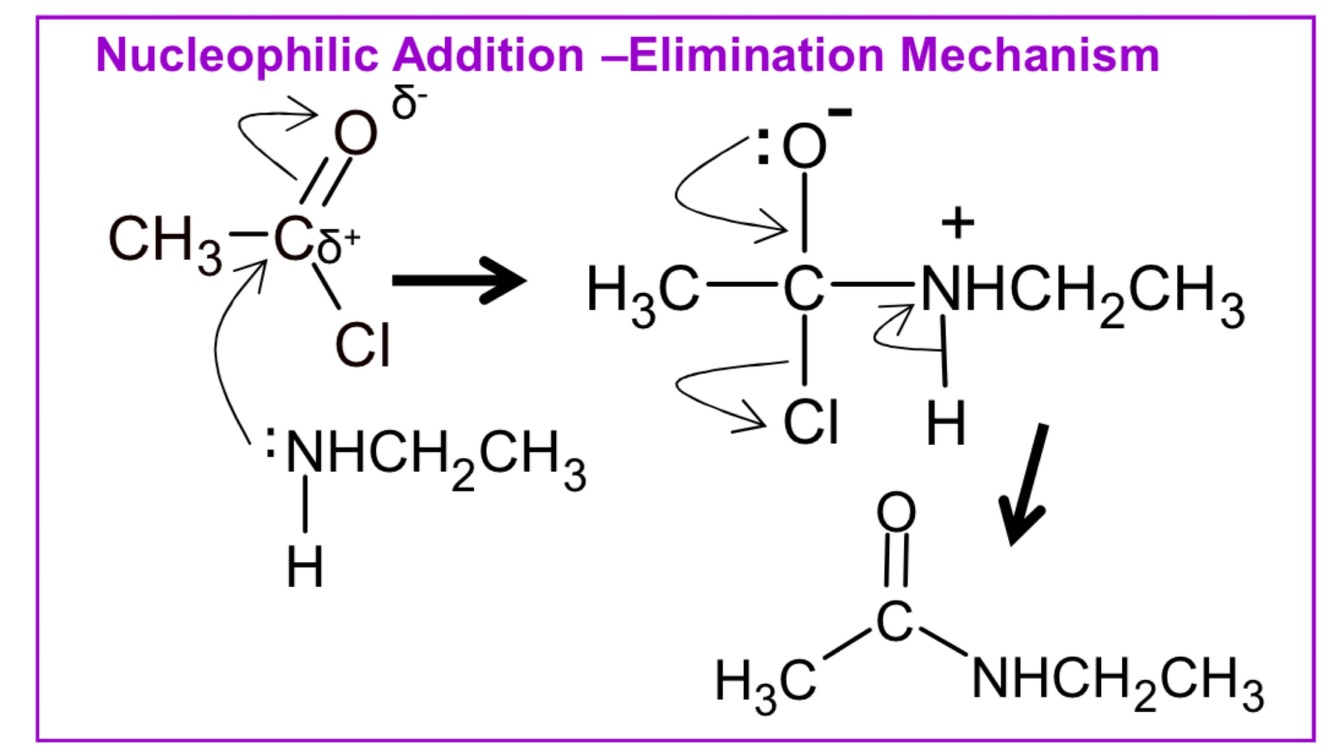
• Name and outline the mechanism and conditions for acyl chloride / acid anhydride to secondary amide CH3CH2NH2
• Nucleophilic addition elimination • Primary amine room temperature
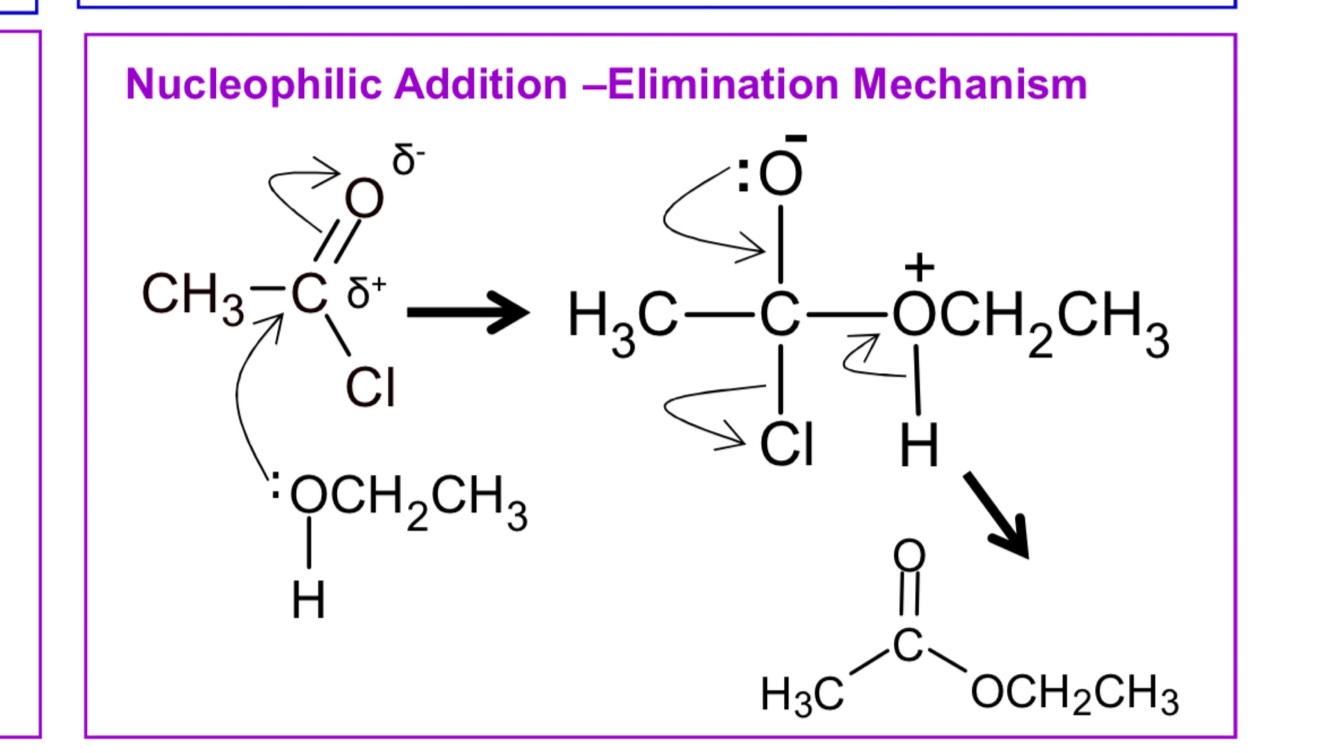
• • Name and outline the mechanism and conditions for acyl chloride / acid anhydride to ester - CH3CH2OH
• Nucleophilic addition elimination • Alcohol room temperature
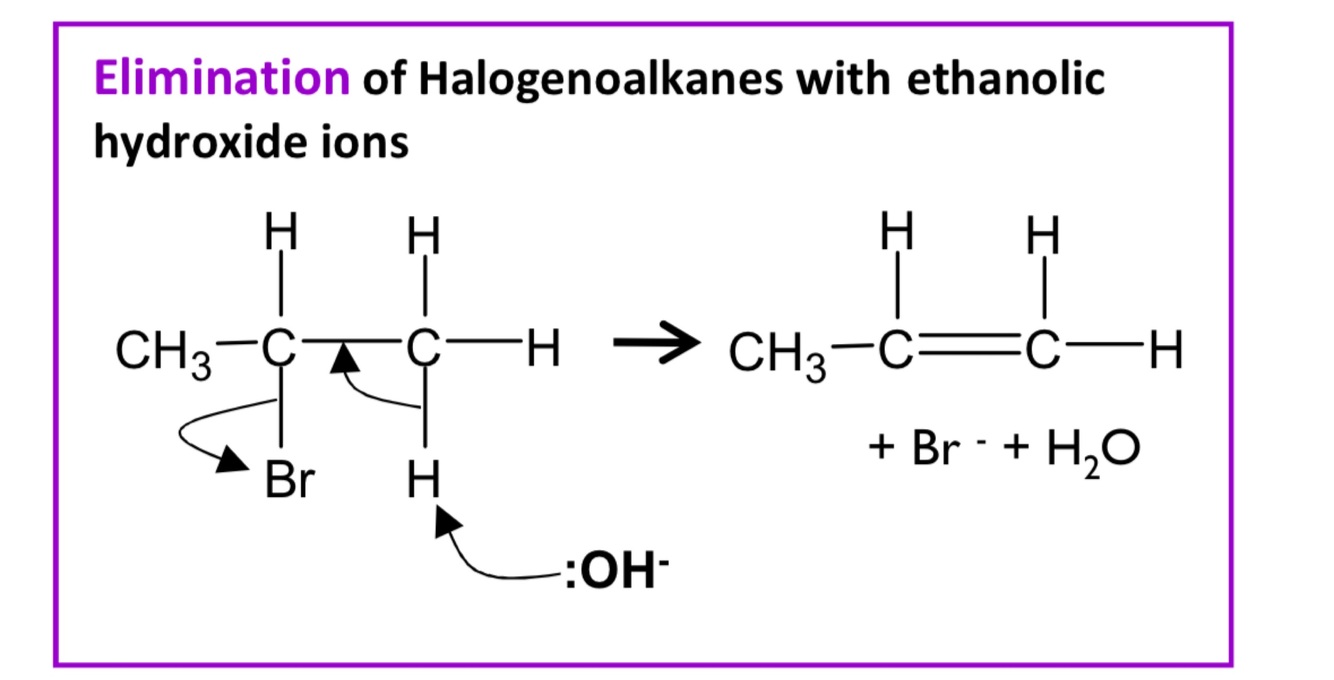
• What are the reagents and conditions for elimination of halogenoalkanes? What are the products?
• NaOH or KOH • Ethanolic solvent and heat under reflux • Products: alkene (+ H2O + Br-)
• Name and outline the mechanism for 2-bromopropane to propene
• Elimination
• What are the reagents and conditions for acid catalysed elimination?
• Reaction: alcohol -> alkene • Reagent: Concentrated H2SO4 or concentrated H3PO4 • Conditions: warm under reflux • Role of reagent: dehydrating agent/catalyst
• What does producing alkenes from alcohols provide?
• Producing alkenes from alcohols provides a possible route to polymers without using monomers derived from oil
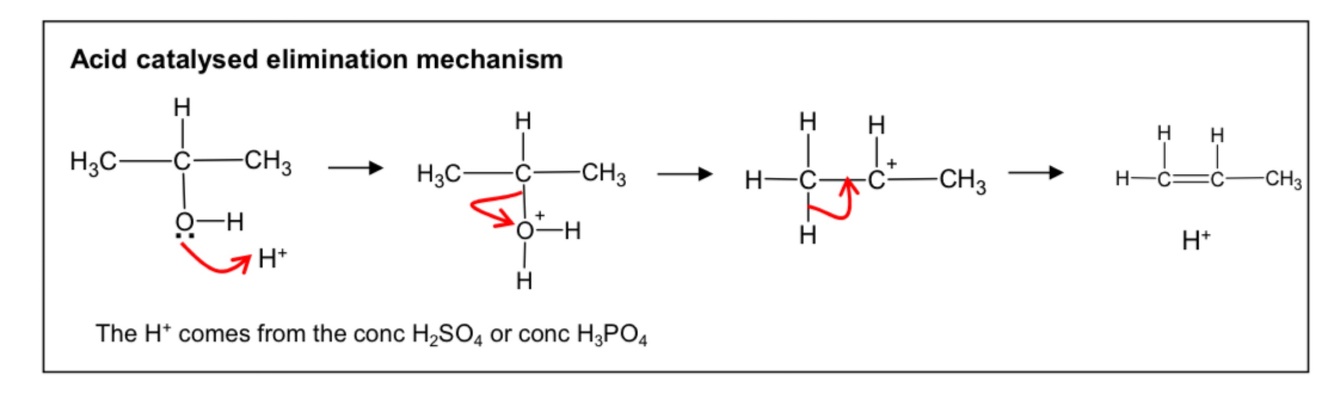
• Outline the acid catalysed elimination
• What are the reagents and conditions for acid catalysed elimination?
• Reaction: alcohol -> alkene • Reagent: concentrated H2SO4 or concentrated H3PO4 • Conditions: warm under reflux • Role of reagent: dehydrating agent/catalyst
• Outline the acid catalysed elimination of Propan-2-ol