Unit 3-Nuclear Chemistry
No description yet. This curated deck is ready for daily study.
Card preview (24)
Where does radioactive decay occur in an atom?
In the nucleus.
What types of radiation can unstable nuclei emit?
Alpha, beta, and gamma radiation.
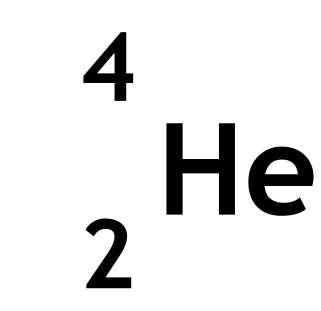
What is an alpha particle?
A helium nucleus containing 2 protons and 2 neutrons
How are alpha particles represented in nuclear equations?
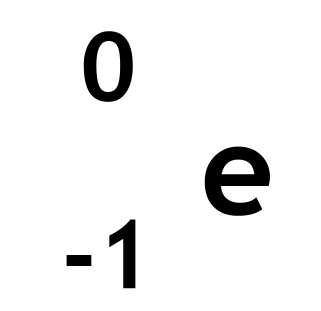
What is a beta particle?
A high‑energy electron ejected from the nucleus
How are beta particles represented in nuclear equations?
What is a gamma ray?
A high‑energy electromagnetic wave
What are the charges of alpha, beta and gamma?
Alpha-positive Beta-negative Gamma-no charge
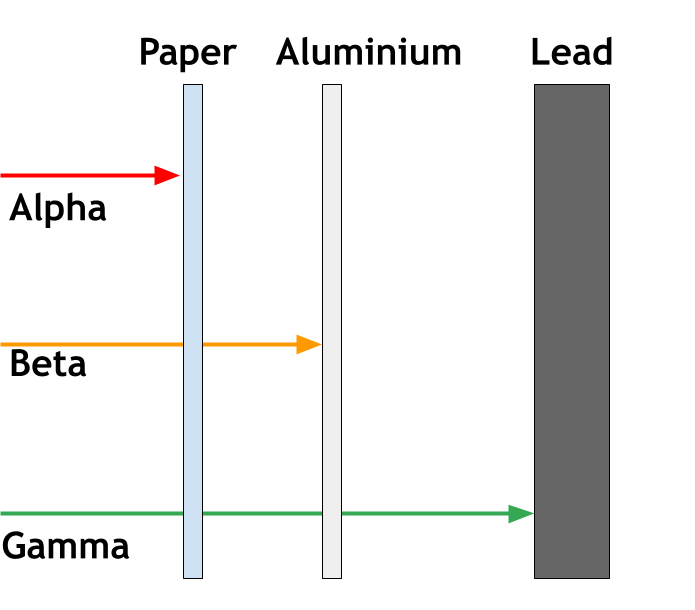
Which radiation is least penetrating?
Alpha (stopped by paper, a few cm in air).
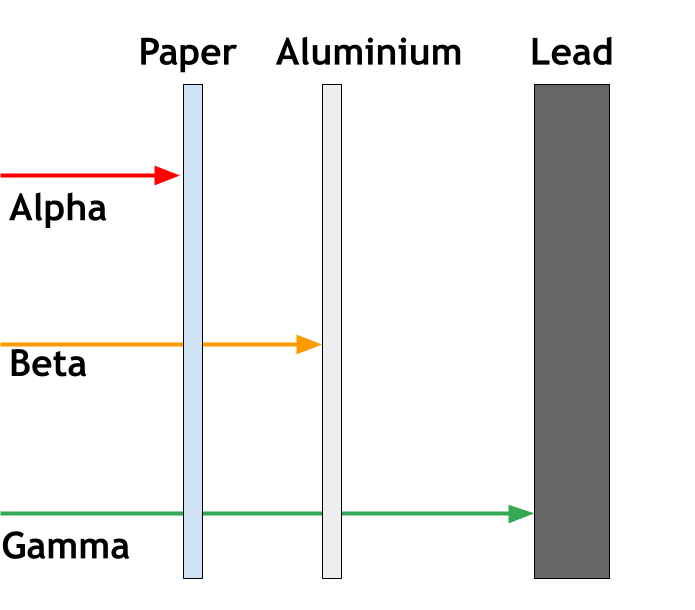
Which radiation is most penetrating?
Gamma (needs lead or concrete).
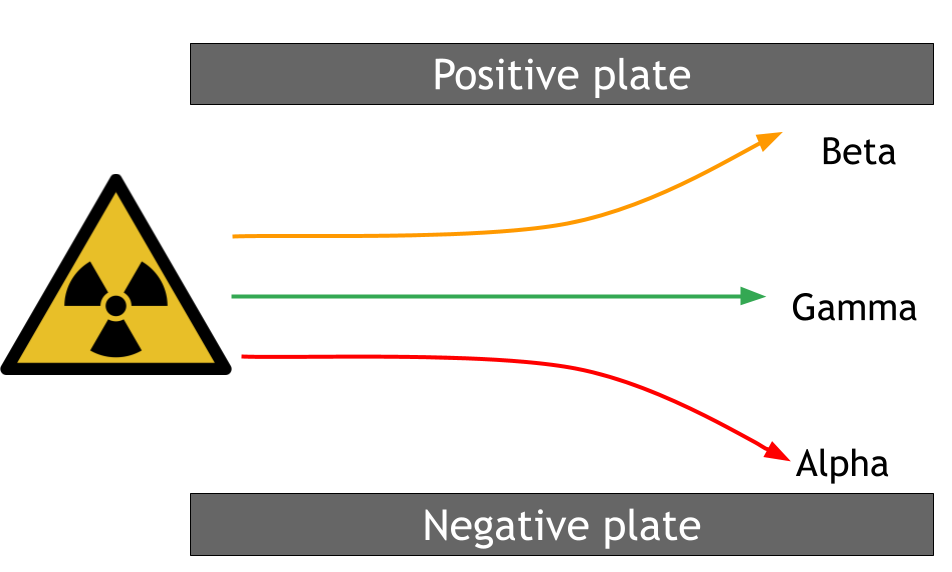
How do alpha, beta and gamma behave in an electric field?
Alpha → attracted to negative plate Beta → attracted to positive plate Gamma → not deflected
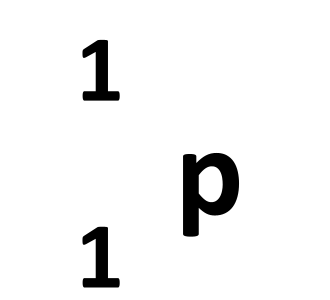
How is a proton represented in nuclear equations?
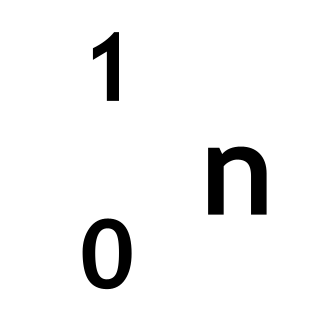
How is a neutron represented in nuclear equations?
What must be conserved in a nuclear equation?
Total atomic number and total mass number.
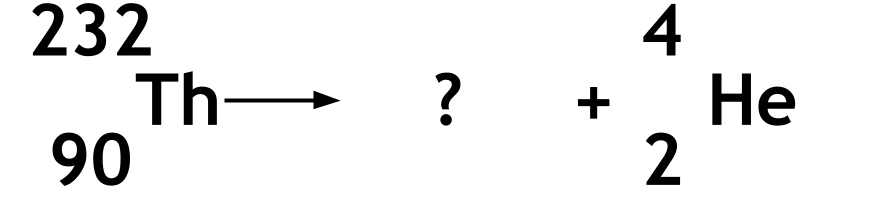
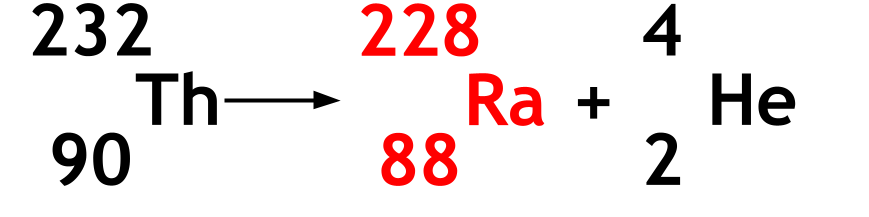
State the equation for when Thorium 232 loses an alpha particle.
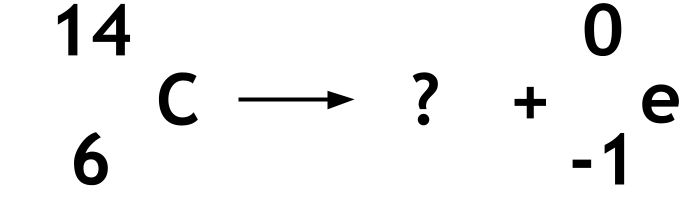
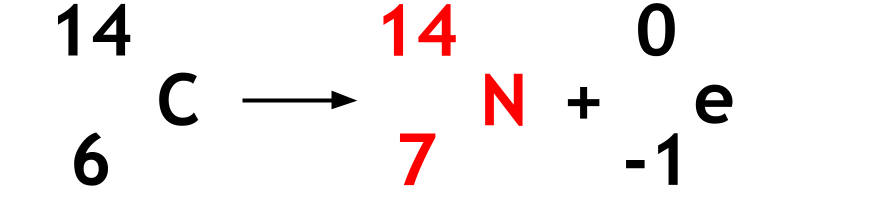
State the equation for when Carbon 14 loses a beta particle.
What is meant by half‑life?
The time taken for radioactivity to fall by half or The time for half the nuclei in a sample to decay.
Does half‑life change with temperature or pressure?
No. It is constant.
How can half-life be determined from a decay curve?
By finding the time taken for the activity to fall to half its initial value on the graph.
The mass of a radioisotope falls from 3.2 g to 0.2 g in 2 hours. What is the half‑life?
3.2 → 1.6 → 0.8 → 0.4 → 0.2 (4 half‑lives). 2 hours ÷ 4 = 0.5 hours (30 min).
A source has a half‑life of 8 days. What fraction remains after 16 days?
16 days = 2 half‑lives → ¼ remains
A sample has 1/16 of its activity left. If the half‑life is 3.7 years, what is its age?
1 → ½ → ¼ → ⅛ → ¹⁄₁₆ (4 half‑lives) 4 × 3.7 = 14.8 years
What factors determine whether a radioisotope is suitable for a use?
Type of radiation emitted and half‑life.
Why is technetium‑99m suitable for medical imaging?
Gamma rays escape the body for detection; short half‑life reduces exposure.