Designing and Interpreting Science Experiments
No description yet. This curated deck is ready for daily study.
Card preview (20)
Which of the following best describes the relationship between carbon-1212 and carbon-1414? Carbon-14 Dating Dr. Jonnes, an expert archeologist, was giving a presentation about his most recent dig site in Egypt. He showed pictures of mummies, seed samples, and papyrus scrolls and said they were between four and five thousand years old. As Levi listened to the presentation, he wondered how Dr. Jonnes knew for sure how old the samples were. He decided to ask his chemistry professor since they had recently had a lesson about how carbon makes up all living things. Levi and his professor then had the following conversation: Levi: “Professor, how did Dr. Jonnes know that the artifacts were between four and five thousand years old?” Professor: “That is a great question! They use a process called carbon-14 dating.” Levi: “Oh - we’ve learned about carbon in this class! Is it the same thing?” Professor:”It’s very similar. The carbon we have talked about is carbon-12. It has an atomic number of six and a mass number of 12. Remember that an element’s atomic number tells the number of protons in one atom and the number of protons is equal to the number of electrons. An element’s mass number tells the sum of the protons and neutrons. Carbon-14 has the same atomic number, but a different mass number. In carbon-14, the mass number is 14 instead of 12.” Levi: “How does carbon-14 dating work?” Professor:”Well, as we learned in our recent lesson, all living things are made of carbon. What we didn’t discuss is that there are different types of carbon. Almost all of the carbon that makes up living organisms is carbon-12, but there is also a very tiny amount amount of carbon-14. As long as a plant or animal is alive, it will have a fairly constant amount of carbon-14. This is because even though carbon-14 slowly decays over time, the living organism will also ingest more carbon-14 at about the same rate. Plants absorb carbon-14 during photosynthesis and animals absorb carbon-14 when they eat plants.” Levi: “But what happens when plants, animals, and people die?” Professor:“When living organisms die, they stop ingesting more carbon-14. Every 5,730 years, the amount of carbon-14 is cut in half as it slowly decays. Scientists can then measure the amount of carbon-14 left in an organism and use the half-life to approximate when it died.” Levi: “Ah, so that’s how Dr. Jonnes came up with that date! Thanks, Professor!” A isoelectronic – they are different elements or compounds with the same number of electrons B isomer – they are the same compound but the atoms are arranged differently C isomorphic – they are identical in form D isotopes – they are different forms of the same element
The correct answer is D. Explanation: If two elements are isotopes they have the same atomic number (have the same number of protons), but different atomic masses (have different numbers of neutrons). This is true with carbon-1212 and carbon-1414, where both contain 66 protons, but carbon-1212 has 66 neutrons and carbon-1414 has 88 neutrons.
A nurse is reviewing patients’ test results. He wants to schedule follow-up appointments with all patients with any test result that indicates a diabetic or pre-diabetic condition. Based on the patients’ test results, which patients need to come in for a follow-up appointment? A I, II, and III B I, II, and IV C I, III, and IV D II, III, and IV
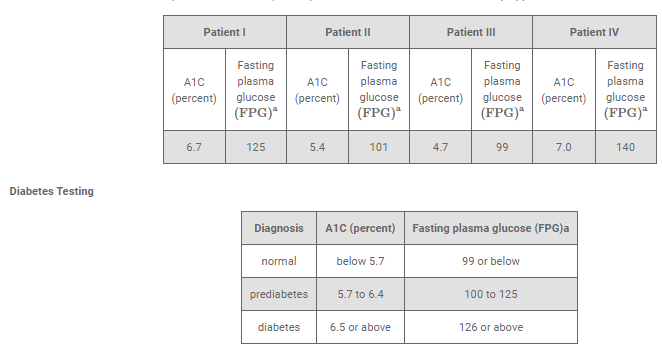
The correct answer is B. Explanation: Based on the data, the nurse should call patients I, II, and IV. These patients all have an A1C score of 5.7 or above and/or a fasting plasma glucose level of 100 or above. Only patient III’s results were both in the normal range.
What event led to the acceptance of AC power over DC power in the battle to set a standard for the United States and the world? The War of the Currents Starting in the late 1880s, Thomas Edison and Nikola Tesla were embroiled in a battle now known as the War of the Currents. Edison developed direct current – current that runs continually in a single direction, like in a battery or a fuel cell. During the early years of electricity, direct current (shorthanded as DC) was the standard in the US But there was one problem. Direct current is not easily converted to higher or lower voltages. Tesla believed that alternating current (or AC) was the solution to this problem. Alternating current reverses direction a certain number of times per second – 60 in the US – and can be converted to different voltages relatively easily using a transformer. Edison, not wanting to lose the royalties he was earning from his direct current patents, began a campaign to discredit alternating current. He spread misinformation saying that alternating current was more dangerous, even going so far as to publicly electrocute stray animals using alternating current to prove his point. The Chicago World’s Fair – also known as the World’s Columbian Exposition – took place in 1893, at the height of the Current War. General Electric bid to electrify the fair using Edison’s direct current for $554,000 but lost to George Westinghouse, who said he could power the fair for only $399,000 using Tesla’s alternating current. That same year, the Niagara Falls Power Company decided to award Westinghouse – who had licensed Tesla’s polyphase AC induction motor patent – the contract to generate power from Niagara Falls. Although some doubted that the falls could power all of Buffalo, New York, Tesla was convinced it could power not only Buffalo but also the entire Eastern United States. On Nov. 16, 1896, Buffalo was lit up by the alternating current from Niagara Falls. By this time General Electric had decided to jump on the alternating current train, too. It would appear that alternating current had all but obliterated direct current, but in recent years direct current has seen a bit of a renaissance. Today our electricity is still predominantly powered by alternating current, but computers, LEDs, solar cells and electric vehicles all run on DC power. And methods are now available for converting direct current to higher and lower voltages. Since direct current is more stable, companies are finding ways of using high voltage direct current (HVDC) to transport electricity long distances with less electricity loss. So it appears the War of the Currents may not be over yet. But instead of continuing in a heated AC vs. DC battle, it looks like the two currents will end up working parallel to each other in a sort of hybrid armistice. And none of that would be possible without the genius of both Tesla and Edison. Source: https://www.energy.gov/articles/war-currents-ac-vs-dc-power A the lighting of Buffalo, New York B the Chicago World’s Fair of 1893 C the War of Currents D the invention of the electric light bulb
The correct answer is B. Explanation: When George Westinghouse won the bid to supply electricity for the Chicago World’s Fair in 1893 it set the stage for Tesla’s AC power to overtake Edison’s DC power. The fact that Westinghouse was able to submit a bid to supply electricity to the World’s Fair at a significantly lower price was a good indicator of the advantages of AC power.
Why were scientists unable to develop detailed maps of the surface of Venus until the Magellan orbiter arrived in 1991? Venus Venus is a terrestrial planet and is sometimes called Earth’s “sister planet” because of their similar size, mass, proximity to the Sun, and bulk composition. It is radically different from Earth in other respects. It has the densest atmosphere of the four terrestrial planets, consisting of more than 96% carbon dioxide. The atmospheric pressure at the planet’s surface is 92 times that of Earth, or roughly the pressure found 900 m (3,000 ft) underwater on Earth. Venus is by far the hottest planet in the Solar System, with a mean surface temperature of 735 K (462 ℃; 863 ℉), even though Mercury is closer to the Sun. Venus is shrouded by an opaque layer of highly reflective clouds of sulfuric acid, preventing its surface from being seen from space in visible light. It may have had water oceans in the past, but these would have vaporized as the temperature rose due to a runaway greenhouse effect. The water has probably photodissociated, and the free hydrogen has been swept into interplanetary space by the solar wind because of the lack of a planetary magnetic field. Venus’s surface is a dry desert-scape interspersed with slab-like rocks and is periodically resurfaced by volcanism. As one of the brightest objects in the sky, Venus has been a major fixture in human culture for as long as records have existed. It has been made sacred to gods of many cultures, and has been a prime inspiration for writers and poets as the “morning star” and “evening star”. Venus was the first planet to have its motions plotted across the sky, as early as the second millennium BC. As the closest planet to Earth, Venus has been a prime target for early interplanetary exploration. It was the first planet beyond Earth visited by a spacecraft (Mariner 2 in 1962), and the first to be successfully landed on (by Venera 7 in 1970). Venus’s thick clouds render observation of its surface impossible in visible light, and the first detailed maps did not emerge until the arrival of the Magellan orbiter in 1991. Plans have been proposed for rovers or more complex missions, but they are hindered by Venus’s hostile surface conditions. Source: https://en.wikipedia.org/wiki/Venus A Venus’s thick clouds make observation of its surface impossible from Earth. B Venus is too close to the Sun to view from Earth. C Dust in our solar system hinders our view of Venus. D Venus is too far away from Earth to allow for a detailed view of its surface.
The correct answer is A. Explanation: Supernovas in the Milky Way Galaxy are difficult to see from Earth because they are blocked from view by dust particles. As stated in the passage, “Supernovas are often seen in other galaxies. But supernovas are difficult to see in our own Milky Way galaxy because dust blocks our view.”
According to the passage, what tool does NOAA use to measure air temperature, wind speed, barometric pressure, and water salinity? How Can Coral Reefs Be Protected? NOAA’s coral reef conservation efforts are carried out primarily through its Coral Reef Conservation Program (CRCP). Under this program, NOAA works with scientific, private, government, and nongovernmental organizations to achieve the goals of the United States’ Coral Reef Task Force (CRTF). Using high-resolution satellite imagery and Global Positioning Satellite (GPS) technology, NOAA has made detailed digital maps of reefs in Puerto Rico, the US Virgin Islands, the eight main Hawaiian Islands and the Northwestern Hawaiian Islands. Satellite technology is also used to detect harmful algal blooms that can smother reefs and to monitor elevated sea surface temperatures, which can cause coral bleaching. NOAA also monitors reefs using the Coral Reef Early Warning System (CREWS). This system consists of buoys deployed at reef sites that measure air temperature, wind speed and direction, barometric pressure, sea temperature, salinity, and tide levels. Every hour, these data are transmitted to scientists to help them understand conditions that may cause bleaching of coral reefs. In addition to the monitoring work conducted by satellites and buoys, NOAA conducts research, assessment, and restoration projects of coral reefs in marine reserves and among deep-sea coral banks. NOAA is also working to remove tons of marine debris from the Northwestern Hawaiian Islands and to restore damaged reefs. Monitoring, research, and restoration all are essential to safeguard coral reefs. However, to ultimately protect coral reefs, legal mechanisms may be necessary. One legal mechanism involves the establishment of marine protected areas (MPAs). Because MPAs have the added force of law behind them, a protected marine enclosure—such as a coral reef system—may stand a better chance of survival. Source: https://oceanservice.noaa.gov/education/tutorial_corals/coral11_protecting.html A GPS B satellite imagery C CREWS D CRTF
The correct answer is C. Explanation: According to the passage, “NOAA also monitors reefs using the Coral Reef Early Warning System (CREWS). This system consists of buoys deployed at reef sites that measure air temperature, wind speed and direction, barometric pressure, sea temperature, salinity, and tide levels.”
Which statement from the passage best supports the hypothesis that declining sea ice in northern Alaska will reduce the size of the region’s polar bear population? Disappearing Sea Ice Arctic summer sea ice is receding faster than previously projected and is expected to virtually disappear before mid-century. This is altering marine ecosystems and leading to greater ship access, offshore development opportunity, and increased community vulnerability to coastal erosion. Arctic sea ice extent and thickness have declined substantially, especially in late summer (September), when there is now only about half as much sea ice as at the beginning of the satellite record in 1979. As sea ice declines, it becomes thinner, with less ice build-up over multiple years, and therefore more vulnerable to further melting. Models that best match historical trends project northern waters that are virtually ice-free by late summer by the 2030s. Reductions in sea ice increase the amount of the sun’s energy that is absorbed by the ocean. This leads to a self-reinforcing climate cycle, because the warmer ocean melts more ice, leaving more dark open water that gains even more heat. In autumn and winter, there is a strong release of this extra ocean heat back to the atmosphere. This is a key driver of the observed increases in air temperature in the Arctic. Polar bears are one of the most sensitive Arctic marine mammals to climate warming because they spend most of their lives on sea ice. Declining sea ice in northern Alaska is associated with smaller bears, probably because of less successful hunting of seals, which are themselves ice-dependent and so are projected to decline with diminishing ice and snow cover. Although bears can give birth to cubs on sea ice, increasing numbers of female bears now come ashore in Alaska in the summer and fall and den on land. In Hudson Bay, Canada, the most studied population in the Arctic, sea ice is now absent for three weeks longer than just a few decades ago, resulting in less body fat, reduced survival of both the youngest and oldest bears, and a population now estimated to be in decline and projected to be in jeopardy. Similar polar bear population declines are projected for the Beaufort Sea region. Source: https://nca2014.globalchange.gov/report/regions/alaska A “Although bears can give birth to cubs on sea ice, increasing numbers of female bears now come ashore in Alaska in the summer and fall and den on land.” B “Arctic sea ice extent and thickness have declined substantially, especially in late summer (September), when there is now only about half as much sea ice as at the beginning of the satellite record in 1979.” C “Declining sea ice in northern Alaska is associated with smaller bears, probably because of less successful hunting of seals, which are themselves ice-dependent and so are projected to decline with diminishing ice and snow cover.” D “Polar bears are one of the most sensitive Arctic marine mammals to climate warming because they spend most of their lives on sea ice.”
The correct answer is C. Explanation: A. “Although bears can give birth to cubs on sea ice, increasing numbers of female bears now come ashore in Alaska in the summer and fall and den on land.” This statement explains one of the ways that melting sea ice is affecting the polar bear population, but it does not directly suggest that this change is reducing the polar bear population. B. “Arctic sea ice extent and thickness have declined substantially, especially in late summer (September), when there is now only about half as much sea ice as at the beginning of the satellite record in 1979.” This statement provides evidence that the amount of sea ice is declining but does not show how the declining sea ice may affect the polar bear population. C. “Declining sea ice in northern Alaska is associated with smaller bears, probably because of less successful hunting of seals, which are themselves ice-dependent and so are projected to decline with diminishing ice and snow cover.” This statement from the passage best supports the hypothesis that declining sea ice in northern Alaska will reduce the size of the region’s polar bear population. This statement explains that seal populations are also in decline due to the declining sea ice. Seals are an important food source for the polar bears. Therefore, if a reduction in sea ice leads to a reduction in the bears’ food supply, it follows that the number of bears that the ecosystem can support will also decline. D. “Polar bears are one of the most sensitive Arctic marine mammals to climate warming because they spend most of their lives on sea ice.” This statement does imply that declining sea ice may affect polar bear populations, but it does not support the hypothesis as well as the statement in answer choice C because it does not give any reason as to how or why the population may decline.
Many people believe that consuming caffeine gives them more energy. Jaden wants to know if this is true, so she has set up an experiment to test whether caffeine will make a person run faster. Jaden asked ten friends to participate in her experiment. She asked everyone to drink only water and not eat any food the morning of the experiment. She had everyone meet at the park at 8:00 am. She fed all ten people the same food for breakfast and gave five people 12 ounces of orange juice to drink, and the other five people 12 ounces of coffee with sugar to drink. After 30 minutes, she had each person run 100 meters, and she recorded the time it took each person to complete the run. Which of the following changes to her experimental design is the best way to improve the reliability of her data? A All ten participants should run the 100 meters before and after consuming caffeine, to compare the time it takes them to run with or without caffeine. B Jaden should have the participants run only 50 meters, rather than 100 meters. C Jaden should wait for a full hour after the participants eat breakfast, rather than only 30 minutes, before they begin to run. D The five participants who drink coffee should be given coffee with no added sugar, instead of coffee with sugar.
The correct answer is A. Explanation: A. All ten participants should run the 100 meters before and after consuming caffeine, to compare the time it takes them to run with or without caffeine. This is the best way to improve the experimental design. In this way, Jaden can compare the time it takes each person to run the 100 meters either with or without caffeine. Since each person may have a very different fitness level and running speed, the data will be more reliable when comparing each person’s speed with caffeine or without caffeine, than by comparing two groups of people against one another without knowing their normal running speeds. B. Jaden should have the participants run only 50 meters, rather than 100 meters. Either distance is okay, as long as all participants run the same distance. C. Jaden should wait for a full hour after the participants eat breakfast, rather than only 30 minutes, before they begin to run. Either 30 minutes or one hour is equally acceptable, as long as all participants are tested at the same time interval after either consuming or not consuming caffeine. D. The five participants who drink coffee should be given coffee with no added sugar, instead of coffee with sugar added. Giving them coffee with sugar is a better experimental plan because the other participants were given orange juice to drink, and orange juice also contains sugar.
Which one of the following is most likely the result of a top-down cascade? Trophic Cascade Trophic cascades occur when predators in a food web alter the behavior of their prey, thereby releasing the next lower trophic level from predation. For example, if the abundance of large piscivorous fish is increased in a lake, the abundance of their prey, smaller fish that eat zooplankton, should decrease. The resulting increase in zooplankton should, in turn, cause the biomass of its prey, phytoplankton, to decrease. The trophic cascade is an ecological concept which has stimulated new research in many areas of ecology. For example, it can be important for understanding the knock-on effects of removing top predators from food webs, as humans have done in many places through hunting and fishing. A top-down cascade is a trophic cascade where the food chain or food web is disrupted by the removal of a top predator, or a third or fourth level consumer. On the other hand, a bottom-up cascade occurs when a primary producer, or primary consumer is removed. Source: https://en.wikipedia.org/wiki/Trophic_cascade A the appearance of predators near cities B the decline of small fish populations C the decrease in rabbit populations D the increase in deer populations
The correct answer is D. Explanation: In the final paragraph of the passage, it states that “A top-down cascade is a trophic cascade where the food chain or food web is disrupted by the removal of a top predator, or a third or fourth level consumer.” Earlier on in the passage, it also notes how humans can cause trophic cascades “through hunting and fishing.” One example would be the removal of top predators, such as wolves and bears. Without these predators, low-level consumers, such as deer, do not have many remaining threats, allowing their populations to increase in size. Although the passage also mentions fishing, the decrease in small fish populations would be a result of bottom-up cascade or over-fishing; removing their top predators would instead boost the population of small fish.
When energy is released during a chemical reaction, it can often be felt in the form of heat. A scientist claims that the reaction shown in graph B will give off heat during the reaction. Determine which piece of evidence from the diagram best supports or refutes the scientist’s claim: There are two general shapes of potential energy diagrams based on whether a reaction is endothermic or exothermic. If energy is absorbed during the reaction, then it is called an endothermic reaction and the potential energy of the products will be greater than the potential energy of the reactants. If energy is released during the reaction, then it is called an exothermic reaction and the potential energy of the products will be less than the potential energy of the reactants. An example of each of these types of reactions are shown in graph A and graph B. A The reaction will give off heat because the potential energy of the products is higher than the potential energy of the reactants. B The reaction will give off heat because the potential energy of the products is lower than the potential energy of the reactants. C The reaction will not give off heat because the potential energy of the products is higher than the potential energy of the reactants. D The reaction will not give off heat because the potential energy of the products is lower than the potential energy of the reactants.
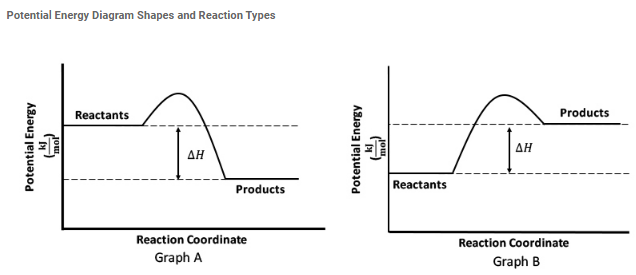
The correct answer is C. Explanation: In graph B, the potential energy of the products is greater than the potential energy of the reactants. This reaction is endothermic and will, therefore, not give off heat during the reaction.
The passage states that state of the art research on coral reefs involves direct observation by divers. Which of the following is the most likely next step to improve research? Coral Reef Ecosystems Coral reef ecosystems play a vital role in maintaining Earth’s marine biodiversity and are valuable economically and culturally. Reefs protect shorelines from storms, provide food for millions of people, and create both jobs and revenue in the tourism industry. The bad news: reefs are in trouble. Rising water temperatures linked to climate change threaten the health and function of these fragile ecosystems, triggering events such as coral bleaching. Overfishing of key fish and invertebrate species and overharvesting of corals disrupt the natural systems, introducing invasive species and resulting in coral disease. Researchers aren’t sure exactly how bad the status of Earth’s coral reefs is because very little of the world’s reef area has been scientifically studied. Most coral reef measurements to date have been made by labor-intensive diving expeditions, which can sample only one very limited site at a time. Many reefs have never been surveyed at all. Eric Hochberg, associate scientist at the Bermuda Institute of Ocean Sciences and CORAL project Principal Investigator says, “Right now, the state of the art for collecting coral reef data is scuba diving with a tape measure. It’s analogous to looking at a few trees and then trying to say what the forest is doing.” Source: https://science.nasa.gov/news-articles/a-new-view-of-coral-reefs A Have international committees study the problems. B Use citizen scientists to collect information. C Use drifters to gather information. D Use satellites to monitor the coral reefs.
The correct answer is D. Explanation: Using satellites to monitor the coral reefs would most likely be the best way to improve research on coral reef ecosystems. Satellites can be used to measure sea surface temperature, as well as monitor large sections of the planet at the same time. Use of citizen scientists is the current method of researching coral reefs, so this would not result in an improvement. Scientists and others who care about the coral reefs monitor individual reef systems. Use of drifters is incorrect. Drifters cannot be used to monitor coral reefs. They are devices that scientists drop into the ocean, which drift with the currents. Drifters are usually used for monitoring current patterns across ocean gyres. Having international committees study the problem would not directly result in a significant improvement over the current method of monitoring samples of individual reef systems.
Calcium phosphate is an important mineral that strengthens bones and teeth. What is the most likely outcome for an individual who does NOT receive enough calcium in his or her diet? The Human Skeletal System Humans are vertebrates, animals having a vertebral column or backbone. They rely on a sturdy internal frame that is centered on a prominent spine. The human skeletal system consists of bones, cartilage, ligaments and tendons and accounts for about 20 percent of the body weight. The living bones in our bodies use oxygen and give off waste products in metabolism. They contain active tissues that consume nutrients, require a blood supply and change shape or remodel in response to variations in mechanical stress. Bones provide a rigid framework, known as the skeleton, that support and protect the soft organs of the body. The skeleton supports the body against the pull of gravity. The large bones of the lower limbs support the trunk when standing. The skeleton also protects the soft body parts. The fused bones of the cranium surround the brain to make it less vulnerable to injury. Vertebrae surround and protect the spinal cord and bones of the rib cage help protect the heart and lungs of the thorax. Bones work together with muscles as simple mechanical lever systems to produce body movement. Bones contain more calcium than any other organ. The intercellular matrix of bone contains large amounts of calcium salts, the most important being calcium phosphate. When blood calcium levels decrease below normal, calcium is released from the bones so that there will be an adequate supply for metabolic needs. When blood calcium levels are increased, the excess calcium is stored in the bone matrix. The dynamic process of releasing and storing calcium goes on almost continuously. Hematopoiesis, the formation of blood cells, mostly takes place in the red marrow of the bones. In infants, red marrow is found in the bone cavities. With age, it is largely replaced by yellow marrow for fat storage. In adults, red marrow is limited to the spongy bone in the skull, ribs, sternum, clavicles, vertebrae and pelvis. Red marrow functions in the formation of red blood cells, white blood cells and blood platelets. Source: https://training.seer.cancer.gov/anatomy/skeletal/ A Bone mass will increase. B Fat will be stored in yellow bone marrow. C Bones will weaken as calcium is released from bones into the bloodstream. D Bones will strengthen as calcium is stored in the bone matrix.
The correct answer is C. Explanation: As described in the passage, bones are important for storing minerals, including calcium. When blood calcium levels drop, due to inadequate calcium in the diet, calcium is released from bones into the blood so that the blood can supply the body’s tissues with calcium needed for metabolic functions. If this calcium is not replenished, the bone mass will decrease and the bones will gradually become weak and brittle. The fourth paragraph of the passage states, “Bones contain more calcium than any other organ. The intercellular matrix of bone contains large amounts of calcium salts, the most important being calcium phosphate. When blood calcium levels decrease below normal, calcium is released from the bones so that there will be an adequate supply for metabolic needs. When blood calcium levels are increased, the excess calcium is stored in the bone matrix. The dynamic process of releasing and storing calcium goes on almost continuously.”
A renewable energy source is either formed or replaced naturally within a short period of time. What can be said about US energy consumption over the last 200 years? A The United States has always used a balance of renewable and nonrenewable energy sources over the last 200 years. B The United States has only used renewable energy sources in its 200-year history. C The United States has shifted from primarily using nonrenewable energy sources to renewable energy sources over the last 200 years. D The United States has shifted from primarily using renewable energy sources to nonrenewable energy sources over the last 200 years.
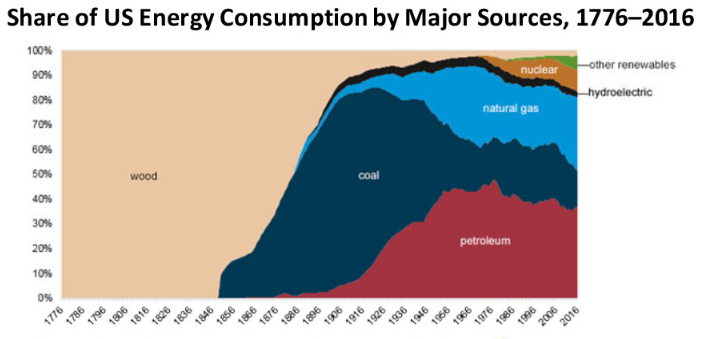
The correct answer is D. Explanation: From 1776 to 1846, wood was the only energy source used in the United States. This is a renewable resource. From 1846 to 2016, the energy consumed in the United States shifted from using only renewable resources (wood) to using primarily nonrenewable resources (coal, petroleum, and natural gas).
Ms. Ngygun’s astronomy class has been studying the sun. They have set up a telescope to safely observe sunspots by looking at the shadows they cast. One of her students wants to observe the changes of the sunspots over the next week. Which data collection method would provide the student with the most data at the most affordable cost? A Use a digital video camera to continually record the changing shadows and create a time-lapse video with data for the week. B Use a phone camera to take a picture of the shadows on Monday, Wednesday, and Friday and create a slideshow of the pictures. C Trace the shadows at the same time each day on thin tracing paper and overlap the pages to see the changes. D Trace the shadows at the same time on the first and last day of the week on thin tracing paper and overlap the pages to see the changes.
The correct answer is C. Explanation: All of the answer choices would give the student some data, but answer choices A and C would give the student more data than choices B and D. In both answer choices A and C, the student would be gathering data daily. Using a digital video camera would give the student the most data, but she is concerned about affordability. Tracing paper is much more affordable than a digital video camera. Thus, the student’s best option for data collection is to trace the shadows at the same time each day on thin tracing paper and overlap the pages to see the changes.
Which of the following could be considered an independent variable in this experiment? Ant Activity Levels and Temperature Three scientists investigated the effects of various temperatures on the above-ground activity of ants. They first monitored activity and identified the ants’ temperature tolerance in the laboratory by determining the minimum and maximum temperatures at which the ants were at all active (10∘C and 50∘C, respectively). They used special tracking equipment to determine the average walking speed of the ants, which was considered to determine the “normal activity level.” Other factors, such as humidity, light, and terrain, were kept constant. The results of the scientists’ investigation are summarized in the table below: A the above-ground humidity B the above-ground temperature C the activity level of the ants D the average walking speed of the ants
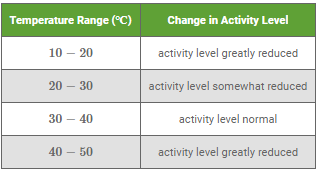
The correct answer is B. Explanation: An independent variable is a variable that is changed, controlled, or manipulated by the researcher in an experiment to create two or more comparison groups. A dependent variable is a variable that changes in response to the independent variable(s) in an experiment. In this experiment, the researchers change/control the above-ground temperature.
Which of the following is the most likely reason that a scientist would use a cladogram rather than a phylogenetic tree? Phylogenetic Trees and Cladograms A phylogenetic tree or evolutionary tree is a branching diagram or “tree” showing the inferred evolutionary relationships among various biological species. These relationships are based upon similarities and differences in their physical or genetic characteristics. The species joined together in the tree are implied to have descended from a common ancestor, the original species from which the newer species adapted or evolved. Originally, scientists only grouped species by physical appearance. With advances in modern science techniques, genetic similarities and differences are now included in phylogenetic trees. Phylogenic trees are difficult to create, as they often list physical and genetic characteristics that have changed over time. Additionally, the branches on phylogenetic trees have to be drawn to scale, since the length of the branches represents time. A longer branch represents that the evolutionary change took place over a longer period of time than a shorter branch. Because phylogenetic trees are so difficult to create, scientists often use cladograms (Figure A) to show relationships instead. It is similar to an evolutionary tree, but it does not mention specific traits nor do the lengths of the branches matter. A cladogram uses lines that branch off in different directions ending at a clade, a group of organisms with a last common ancestor. There are many shapes of cladograms but they all have lines that branch off from other lines. The lines can be traced back to where they branch off. These branching off points represent a hypothetical ancestor which can be inferred to exhibit the traits shared among the terminal species that come after. This hypothetical ancestor might provide clues about the order of evolution of various features and adaptations. Any adaptation or characteristic of a species that is not exhibited in the common ancestor is call a derived character. Source: https://en.wikipedia.org/wiki/Phylogenetic_tree and https://en.wikipedia.org/wiki/Cladogram Image Source: https://commons.wikimedia.org/wiki/File:Tuatara_cladogram.svg A The cladogram is more detailed than a phylogenetic tree. B The cladogram is more accurate than a phylogenetic tree. C The cladogram is a scientific standard where as the phylogenetic tree is not. D The cladogram is easier to create than a phylogenetic tree.
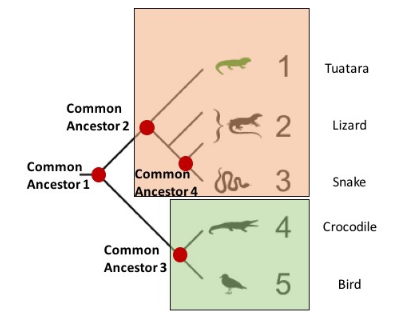
The correct answer is D. Explanation: A cladogram is easier to create than a phylogenetic tree. As stated in the passage, “Because phylogenetic trees are so difficult to create, scientists often use cladograms to show relationships instead. It is similar to an evolutionary tree, but it does not mention specific traits nor do the lengths of the branches matter.”
What might be a logical explanation for why columnar jointing patterns occur in cooled lava flows? Columnar Jointing Mafic eruptions (and some intermediate eruptions), on the other hand, produce lava flows; the one shown in the figure is thick enough (about 10 m in total) to have cooled in a columnar jointing pattern. The development of columnar jointing in basalt, here seen from the top looking down. As the rock cools it shrinks, and because it is very homogenous it shrinks in a systematic way. When the rock breaks it does so with approximately 120˚ angles between the fracture planes. The resulting columns tend to be 6-sided but 5- and 7-sided columns also form. A The cooled lava follows the same pattern as the geometrically shaped crystals it overlays. B Microorganisms burrow through the lava in extremely regular patterns. C The thickness of the cooled rock is great enough to produce large cracks from its own weight. D The chemical makeup of the rock is extremely homogeneous so it shrinks in a systematic way.
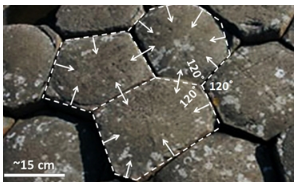
The correct answer is D. Explanation: The thickness of cooled rock does contribute to its breakage but does not account for the extremely regular pattern observed in columnar jointing. Likewise, there is no logical reason that microorganisms would burrow in regular patterns down the full depth of the rock, over and over, or that the rock is overlaying crystals (and would mimic their shape). It is logical, however, that a homogeneous makeup on a microscopic level would lead to overall patterns in the rock structure and subsequent breakages as well.
What is the most likely cause of the deterioration of the statue? What Is the Difference between Weathering and Erosion? Weathering is the process of decomposing, breaking up, or changing the color of rocks. Weathering may be caused by the action of water, air, chemicals, plants, or animals. Chemical weathering involves chemical changes in the minerals of the rock, or on the surface of the rock, that make the rock change its shape or color. Carbon dioxide, oxygen, water, and acids may all cause chemical weathering. Mechanical weathering is the process of breaking a large rock into smaller pieces without changing the minerals in the rock. Mechanical weathering may be caused by frost, ice, plant roots, running water, or heat from the sun. Once the small pieces of rocks are changed or broken apart by weathering, they may start to be moved by wind, water, or ice. When the smaller rock pieces (now pebbles, sand or soil) are moved by these natural forces, it is called erosion. So, if a rock is changed or broken but stays where it is, it is called weathering. If the pieces of weathered rock are moved away, it is called erosion. Source: http://www.doe.virginia.gov/instruction/gifted_ed/project_promise/science_curriculum/grade_two/handouts/earth_science/weathering_erosion_pictures.pdf A biological weathering B chemical weathering C erosion D mechanical weathering

The correct answer is B. Explanation: The deterioration of the statue is a result of the action of acid rain. This is a form of chemical weathering. The passage states, “Chemical weathering involves chemical changes in the minerals of the rock, or on the surface of the rock, that make the rock change its shape or color. Carbon dioxide, oxygen, water, and acids may all cause chemical weathering.” Biological weathering is when living organisms help to change or break down rocks. The picture does not show evidence of any roots, so it does not appear to be biological weathering. The passage states, “When the smaller rock pieces (now pebbles, sand or soil) are moved by these natural forces, it is called erosion.” Erosion is when pieces of rocks have been moved. This statue’s deterioration was not caused by movement of rock. Mechanical weathering is “the process of breaking a large rock into smaller pieces.” The statue was not broken into smaller pieces.
Georgia wants to design an investigation to demonstrate the first principle of Cell Theory. Which of the following best describes what Georgia should consider when choosing organisms to use in her investigation? Cell Theory In biology, cell theory is the historic scientific theory, now universally accepted, that living organisms are made up of cells. Cells are the basic unit of structure in all organisms and also the basic unit of reproduction. The three principles of the cell theory are as described below: All living organisms are composed of one or more cells. The cell is the basic unit of structure and organization in all living organisms. All living cells arise from pre-existing cells by division. Source: https://en.wikipedia.org/wiki/Cell_theory A Georgia should consider using only single-celled organisms in her study. B Georgia should consider using only multi-celled organisms in her study. C Georgia should consider using single-celled and multi-celled organisms in her study. D Georgia should consider using viruses in her study.
The correct answer is C. Explanation: The first principle of Cell Theory states that “all living organisms are composed of one or more cells.” In designing an investigation of this principle, Georgia should incorporate both single-celled and multi-celled organisms into her study. Viruses should not be included in her study, as they are not living organisms and they are not made of cells.
A scientist found a cell in her laboratory. She works with all types of cells, so she does not know if it is a germ cell or a somatic cell (a non-germ cell). Which piece of equipment would the scientist use in her investigation to determine the type of cell she found? Mitosis and Meiosis Mitosis and meiosis are both forms of nuclear division in eukaryotic cells. Mitosis is a single nuclear division of a non-germ cell (somatic cell) that results in two nuclei partitioned into two new cells. The nuclei resulting from a mitotic division are genetically identical to the original nucleus, with the same number of sets of chromosomes. In most plants and all animal species, it is typically diploid cells that undergo mitosis to form new diploid cells. Diploid cells contain two sets of chromosomes, or two of each type of chromosome. In contrast, meiosis consists of two nuclear divisions of germ cells resulting in four nuclei that are partitioned into four new haploid cells. The nuclei resulting from meiosis are not genetically identical and they contain only one chromosome set instead of two. Source: http://cnx.org/contents/185cbf87-c72e-48f5-b51e-f14f21b5eabd@10.117 A The scientist should use a Bunsen burner in her investigation design. B The scientist should use a microscope in her investigation design. C The scientist should use a ruler in her investigation design. D The scientist should use a triple beam balance in her investigation design.
The correct answer is B. Explanation: The easiest way to determine if the cell is a germ cell or somatic cell is to observe the cell under a microscope. If the cell is a germ cell, she should be able to see meiosis occurring. If the cell is a somatic cell (non-germ cell), she should be able to see mitosis occurring. Remember that mitosis and meiosis only occur when the cell is in the process of dividing. Therefore, the scientist might have to wait until the cell is in the division phase to be able to determine if it is a somatic cell or a germ cell.
Which statement from the passage best supports Young’s hypothesis that light is composed of waves? Thomas Young’s Wave Theory of Light Thomas Young was an English physician, and was known as a person of great knowledge on many subjects. Young made notable scientific contributions to the fields of vision, light, solid mechanics, energy, physiology, language, musical harmony, and Egyptology. In Young’s own judgment, his most important achievement was to establish the wave theory of light. To do so, he had to overcome the century-old view, expressed by Isaac Newton, that light is a particle. In the early-19th century Young put forth a number of reasons supporting the wave theory of light, and he developed two demonstrations to support this viewpoint. With the ripple tank, he demonstrated the idea of interference in the context of water waves. With Young’s interference experiment or double-slit experiment, he demonstrated interference in the context of light as a wave. The double-slit experiment was first performed by Thomas Young in 1801. He believed it demonstrated that the wave theory of light was correct, and his experiment is sometimes referred to as Young’s experiment or Young’s slits. “The experiments I am about to relate … may be repeated with great ease, whenever the sun shines, and without any other apparatus than is at hand to every one”, is how Thomas Young, speaking in 1803 to the Royal Society of London, began his description of the historic experiment. His talk was published in the following year’s Philosophical Transactions and was destined to become a classic, still reprinted and read today. In a paper published in 1804, Young described an experiment in which he placed a narrow card (approximately 1/30th inch) in a beam of light from a single opening in a window and observed the fringes of color in the shadow and to the sides of the card. He observed that placing another card before or after the narrow strip so as to prevent light from the beam from striking one of its edges caused the fringes to disappear. This supported the contention that light is composed of waves. He later gave credit to Grimaldi for first observing the fringes in the shadow of an object placed in a beam of light. Within ten years, much of Young’s work was reproduced and then extended by Fresnel. Source: https://en.wikipedia.org/wiki/Thomas_Young_(scientist) A “He observed that placing another card before or after the narrow strip so as to prevent light from the beam from striking one of its edges caused the fringes to disappear.” B “In the early-19th century Young put forth a number of reasons supporting the wave theory of light, and he developed two demonstrations to support this viewpoint.” C “’The experiments I am about to relate … may be repeated with great ease, whenever the sun shines, and without any other apparatus than is at hand to every one.’” D “Young described an experiment in which he placed a narrow card (approximately 1/30th inch) in a beam of light from a single opening in a window and observed the fringes of color in the shadow and to the sides of the card.”
The correct answer is A. Explanation: “He observed that placing another card before or after the narrow strip so as to prevent light from the beam from striking one of its edges caused the fringes to disappear. This supported the contention that light is composed of waves.” All of the other statements describe various aspects of how he did his experiments to demonstrate the wave theory of light. But only statement A describes results from one of his experiments that supported his hypothesis.