Synthesis & chemistry of epoxides
No description yet. This curated deck is ready for daily study.
Card preview (22)
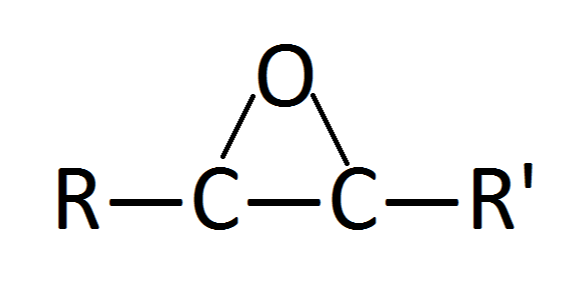
What does an Epoxide look like
type of heterocycle, which is highly strained and reactive
Strained rings can only be made by methods which are….
fully irreversible (otherwise the molecule can come back to linear)
How can you make an expoxide through sₙ¹ reaction
• React an alcohol with a good LG with a base to deprotonate • Then LP on oxygen will attack δ⁺ carbon, causing the C-Br bond to break

How can you form an epoxide through the Weitz-Scheffer reaction using hydrogen perioixde as an oxidising agent (Z= carbonyl)
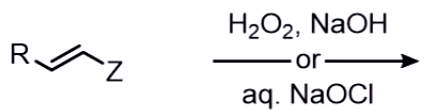
• Sodium hydroxide will deprotonate the hydrogen peroxide • Hydrogen peroxide anion will attack the δ⁺ C=C, causing E- to transfer to the adjacent carbon and C=O to break • LP comes back down off oxgen, E- from adjacent C=C attack the other oxygen, causing the O-O bond to break
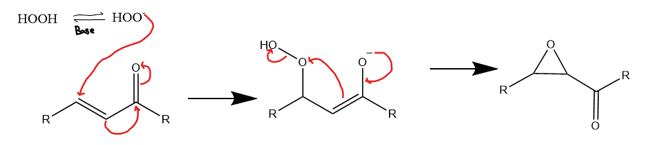
What is the driving force for this reaction to form the epoxide?

Because there is a negative charge in the intermediate, so there is a strong driving force to form a neutral species (hence why OH is a leaving group which is very usual)
The same Weitz-scheffer reaction can be done instead with NaOCl How does the reaction occur?
• ClO- anion attack the δ⁺ C=C, which causes electron density to move onto the adjacent carbon, causing the C=O bond to break • E- comes back down from the oxygen reforming the C=O, and electron density on the adjacent carbon, attacks the other oxygen • Causing the O-Cl bond to break
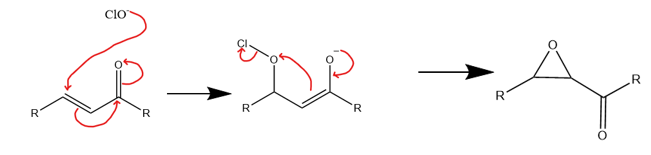
In the Weitz-Scheffer reaction, both the HOO- and the ClO- are…
Nucleophilic oxidants Hence will attack the electron deficient alkene (Electron-neutral or -rich alkenes are unreactive)
What is a way to make epoxides with electron rich alkenes?
Through using electrophilic oxidants (e.g. peracids like mCPBA)
How do you make an epoxide from an electron rich alkene and a peracid

• E- from the C=C bond attack the OH of the mCPBA • This causes the O-O bond to break and C=O bond to form • Causes the other C=O to break, and E- attack terminal H on mCPBA, breaking the O-H • The LP on of the oxygen attacks the other end of the C=C • (the reaction is concerted = bond breaking and forming shown in the transition state all occur at once)
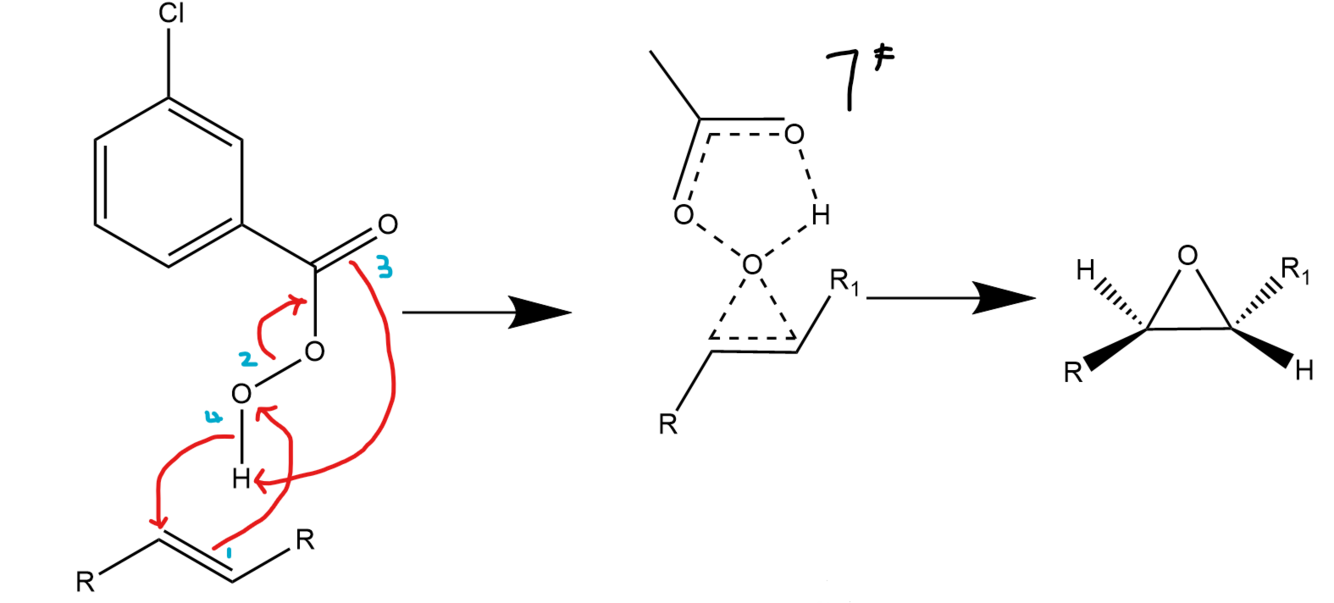
What is important spectrospecific implication of Alkene + peracid synthesis of Epoxides?
The alkene geometry is retained in the product Hence if we have an E-double bond, we will form a trans-epoxide
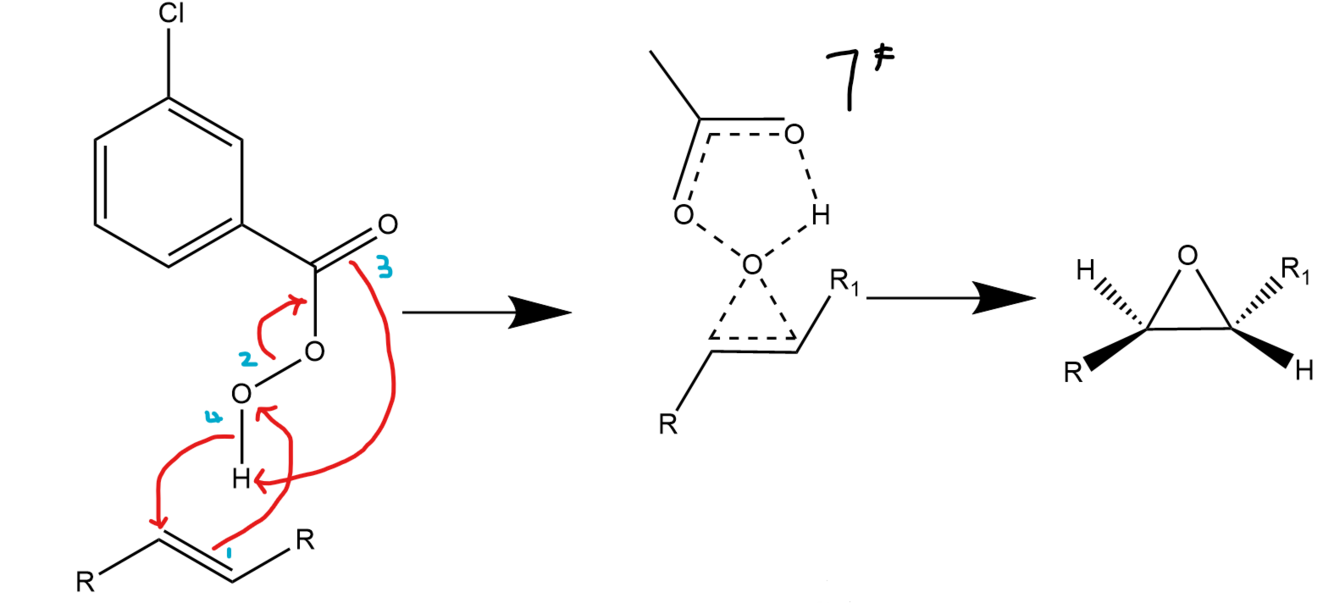
What type of strain do epoxides have?
Baeyer & Pitzer strain
What is the C-O bonds like in epoxides?
• C-O bonds are weak due to their high p-orbitals character • C-O bonds are polarised due to electronegativity differences
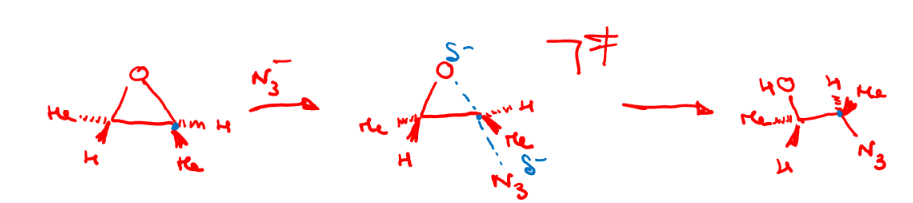
If you react a epoxides with NaN₃, what do you form
ortho hydroxyl azide
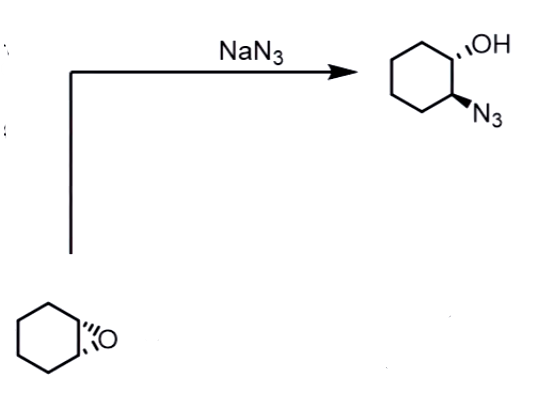
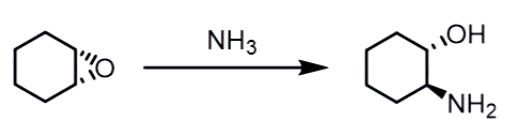
If you react an epoxide with NH₃, what do you form?
ortho hydroxyl amide
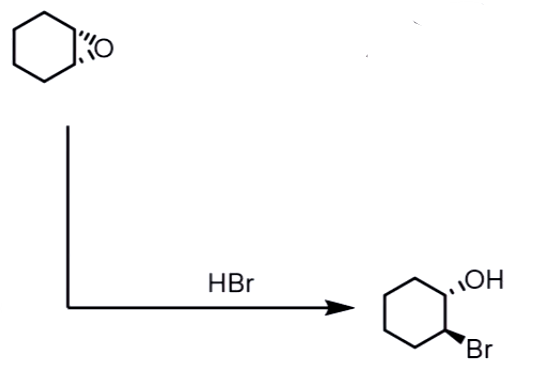
If you react an epoxide with HBr, what do you form?
Ortho hydroxyl bromide
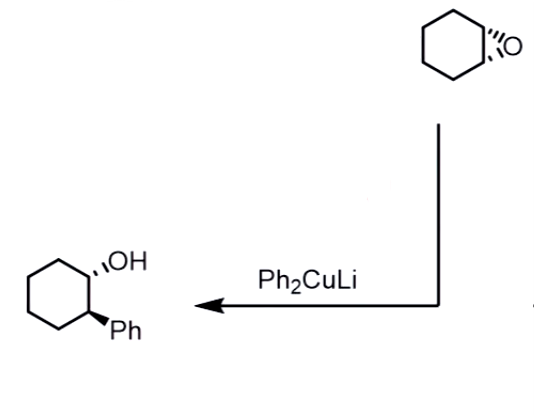
If you react an epoxide with Ph₂CuLi, what do you form
Ortho hydroxy phenyl
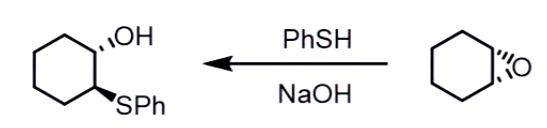
If you react an epoxide with PhSH and NaOH, what do you form?
If you react an epoxide with NaOMe/MeOH OR MeOH/H₂SO₄
ortho hydroxy methoxide
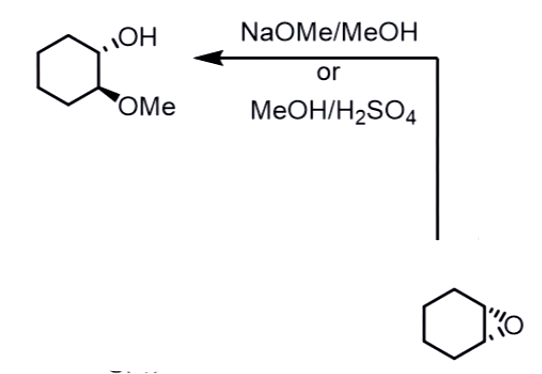
What is the mechanism for breaking epoxides under basic conditions?
• sₙ² mechanism • Proceeds via attack at the least hindered site • Generally requires a relativel reactive nucleophile • Work up with an acid to form a hydroxyl group

What is the mechanism for breaking epoxides under acidic conditions?
• sₙ² mechanism with sₙ¹-like character • Proceeds via attack at the site better able to support developing +ve charge • Doesn’t require a reactive nucleophile • Note = sterochemistry is maintained

The regioselectivity may be controlled by a choice of acidic or basic condition? Explain this in terms of added a methoxy group to an epoxide?
• Using either basic or acidic condition can affect with the OMe group is added

Epoxide opening follows an sₙ²-type mechanism and is therefore accompanied by …….. of sterochemistry at the reacting centre
Inversion