P1 Questions
No description yet. This curated deck is ready for daily study.
Card preview (14)
• This data book value of enthalpy of combustion for butanone (-2430 kJ mol) refers to the formation of carbon dioxide gas and water in the gaseous state. How would this value differ if it referred to the formation of water in the liquid state? Explain your answer.
• Difference: more negative or more exothermic • Explanation: heat / energy released when water vapour condenses. Heat / energy required to vaporise water
• A 50.0 g sample of water was used in this experiment. Explain how you could measure out this mass of water without using a balance.
• Water has a known density of 1.0 g cm-3 • Therefore, a volume of 50.0cm3 could be measured out
• Another type of hand-warmer uses sodium thiosulfate. Sodium thiosulfate is very soluble in water at 80 °C but is much less soluble at room temperature. When a hot, concentrated solution of sodium thiosulfate is cooled it does not immediately crystallise. The sodium thiosulfate stays dissolved as a stable ‘super-saturated’ solution until crystallisation is triggered. Heat energy is then released when the sodium thiosulfate crystallises. This type of hand-warmer is re-usable. Suggest one environmental advantage that a sodium thiosulfate hand-warmer has over the other two types.
• Conserves resources • Fewer disposal problems • Less use of landfill / fewer waste products
• Another type of hand-warmer uses sodium thiosulfate. Sodium thiosulfate is very soluble in water at 80 °C but is much less soluble at room temperature. When a hot, concentrated solution of sodium thiosulfate is cooled it does not immediately crystallise. The sodium thiosulfate stays dissolved as a stable ‘super-saturated’ solution until crystallisation is triggered. Heat energy is then released when the sodium thiosulfate crystallises. This type of hand-warmer is re-usable. Describe the two steps that you would take to make the sodium thiosulfate hand-warmer ready for re-use.
• Step 1: Heat to / or above 80 degrees C to allow thiosulfate to redissolve • Step 2 : Allow to cool before using again
• A group of students devised an experiment which they believed would enable them to investigate the strength of the intermolecular forces between ethyl ethanoate molecules (CH, COOCH,CH.) and trichloromethane molecules (CHC1) They mixed exactly 0.10 mol of each of the two liquids in a copper calorimeter and recorded the following results. The starting temperature of both liquids was the same. The students deduced that the heat change was due only to the formation of intermolecular forces between ethyl ethanoate molecules and trichloromethane molecules. Ignoring all experimental errors, give one reason why the students may have made an incorrect deduction.
• No account has been taken of the intermolecular forces initially in the two liquids OR each liquid has its own intermolecular forces in operation before mixing • The liquids may react
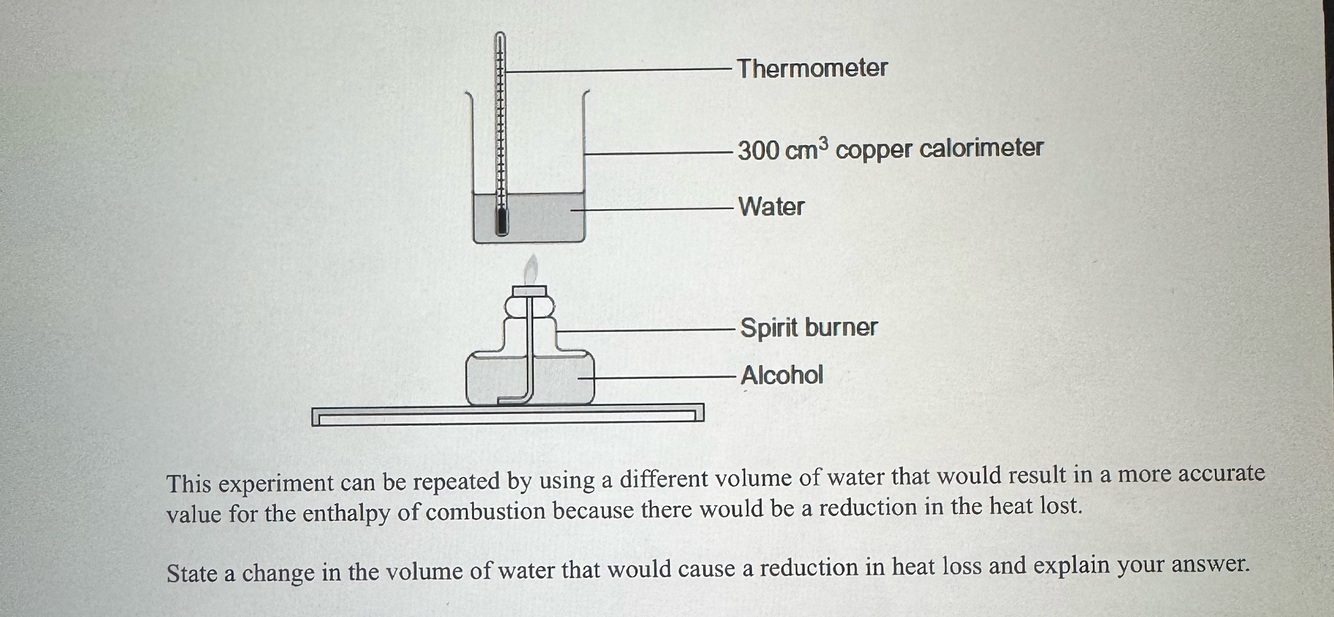
• Increase in volume • Because there would be a smaller increase in temperature above room temperature • Or there would be increased contact between calorimeter and water
• The student considered using a glass beaker on a tripod and gauze instead of the clamped copper calorimeter. Suggest two disadvantages of using a glass beaker on a tripod and gauze.
• Glass is a poorer conductor than copper • Tripod and gauze would reduce heat transfer • Tripod and gauze would have a fixed height above the flame
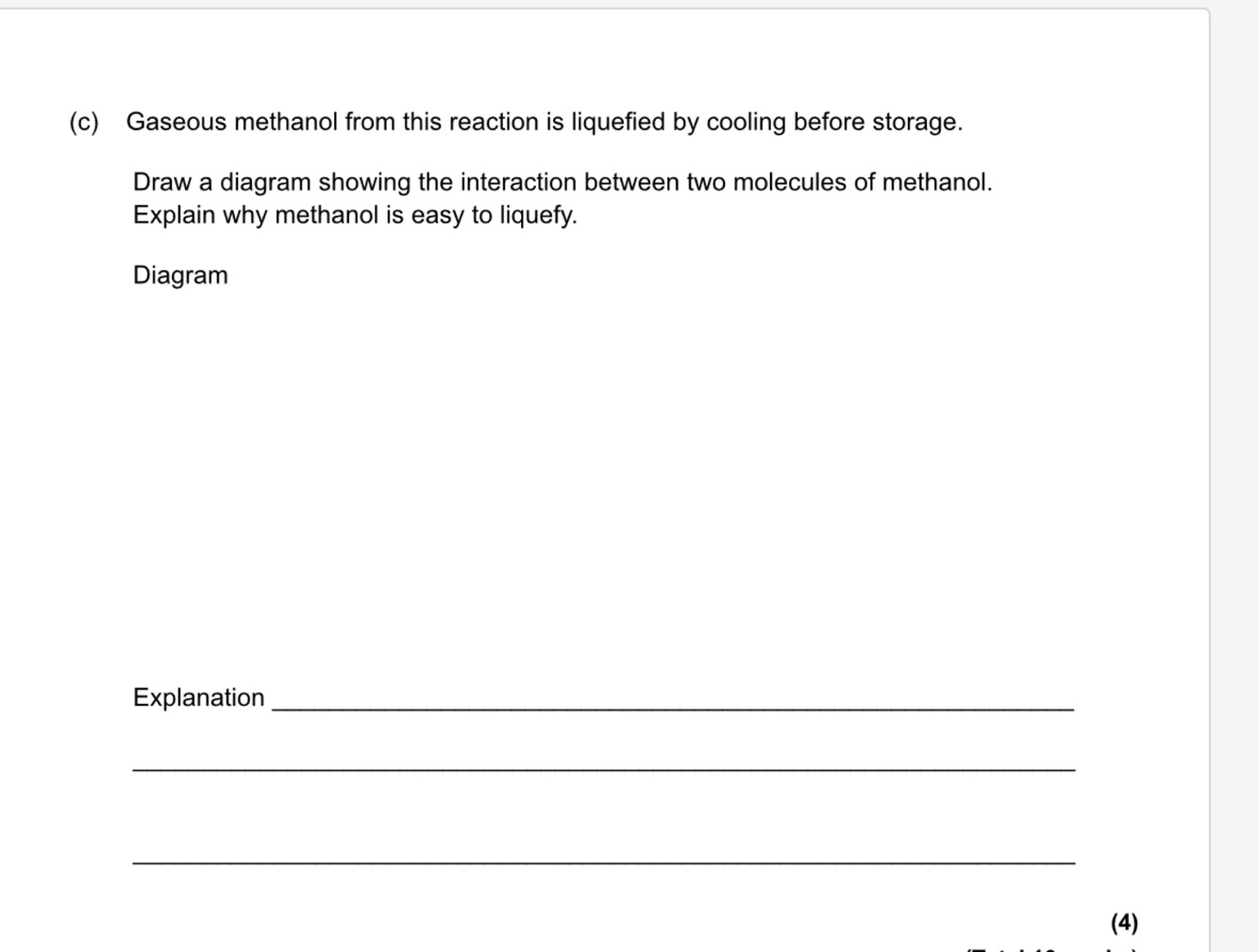
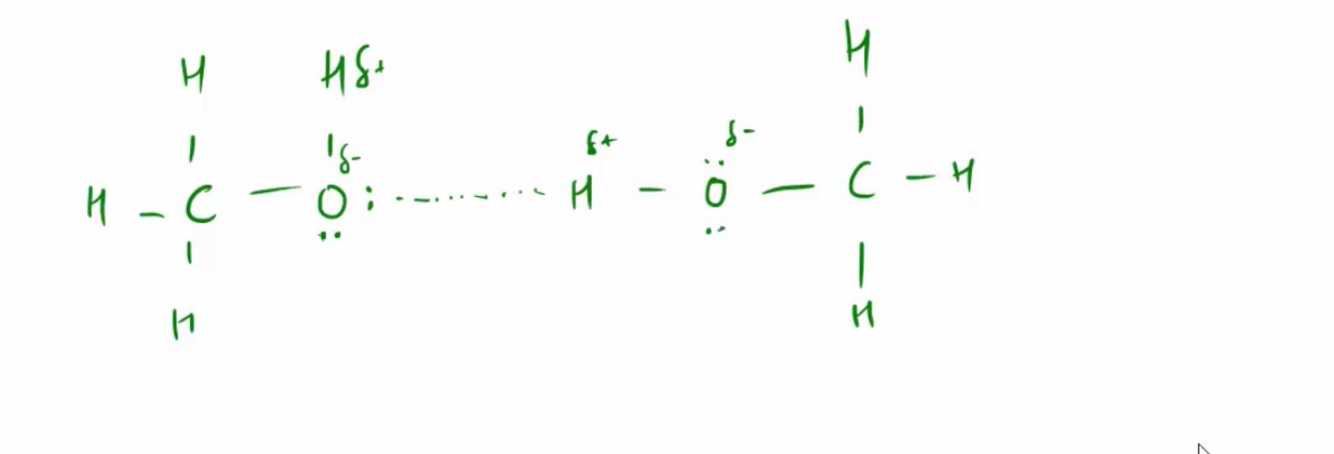
• Hydrogen bonding is a strong enough force to hold methanol molecules together in a liquid
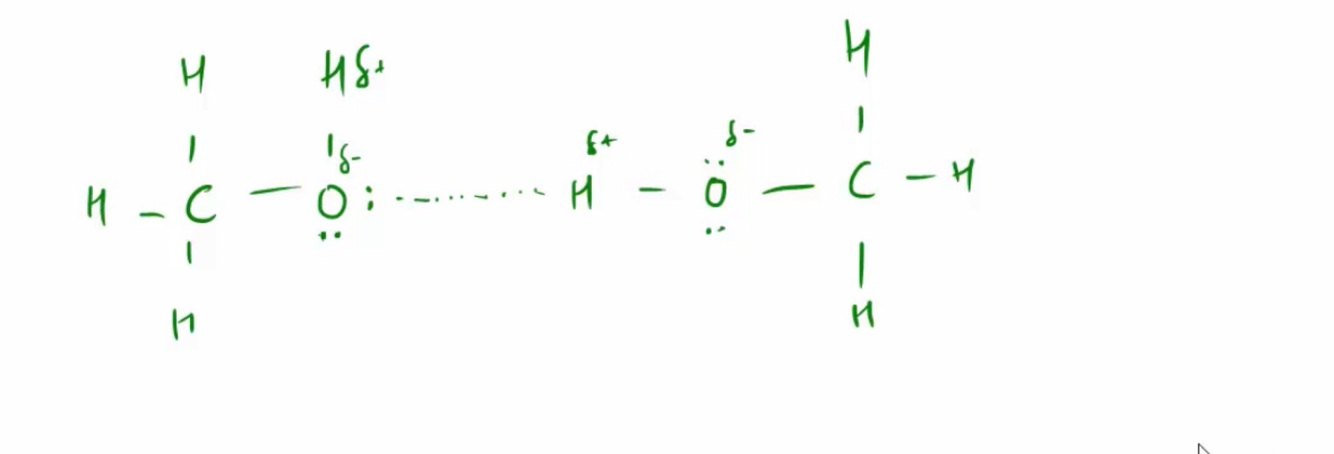
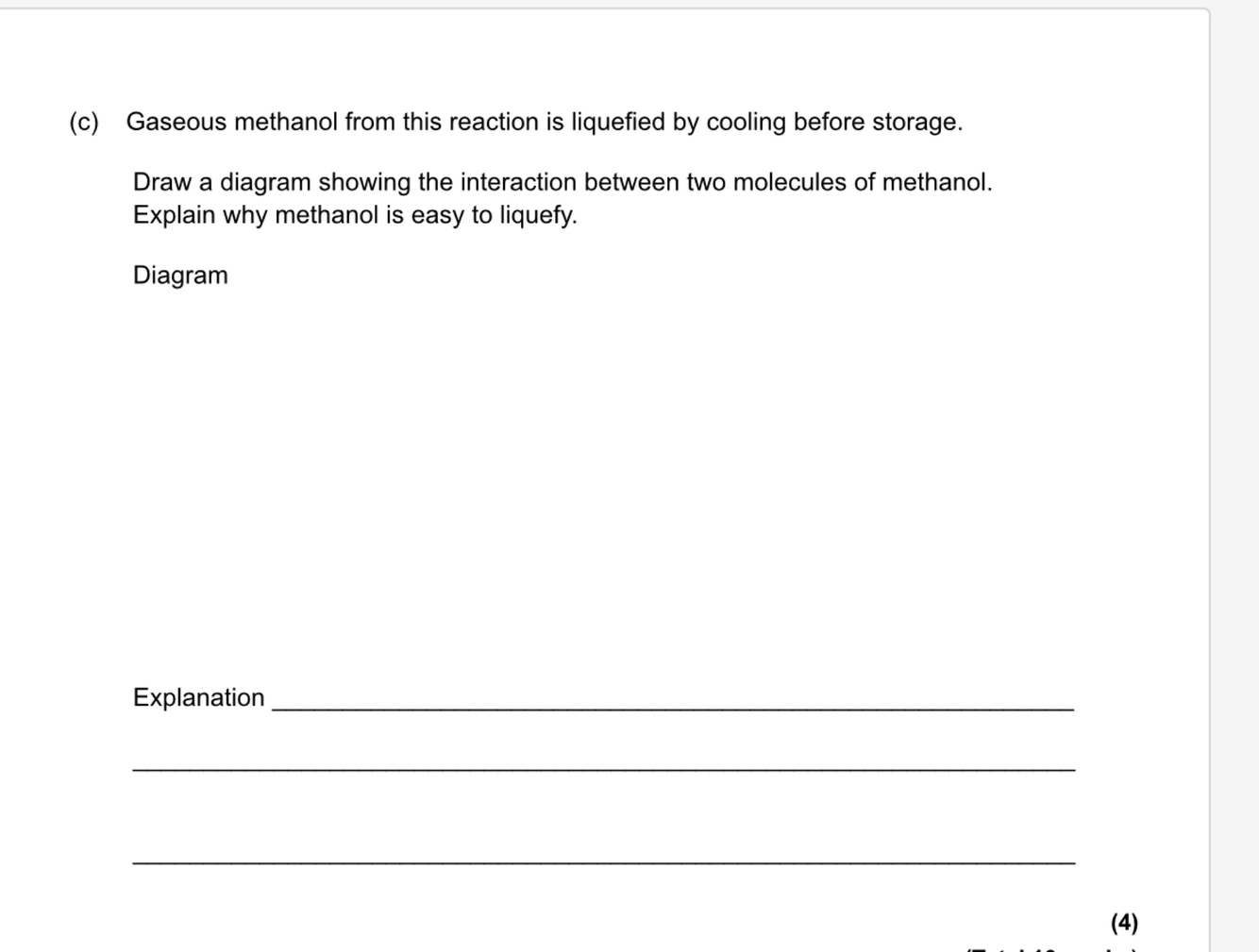
• Hydrogen bonding is a strong enough force to hold methanol molecules together in a liquid
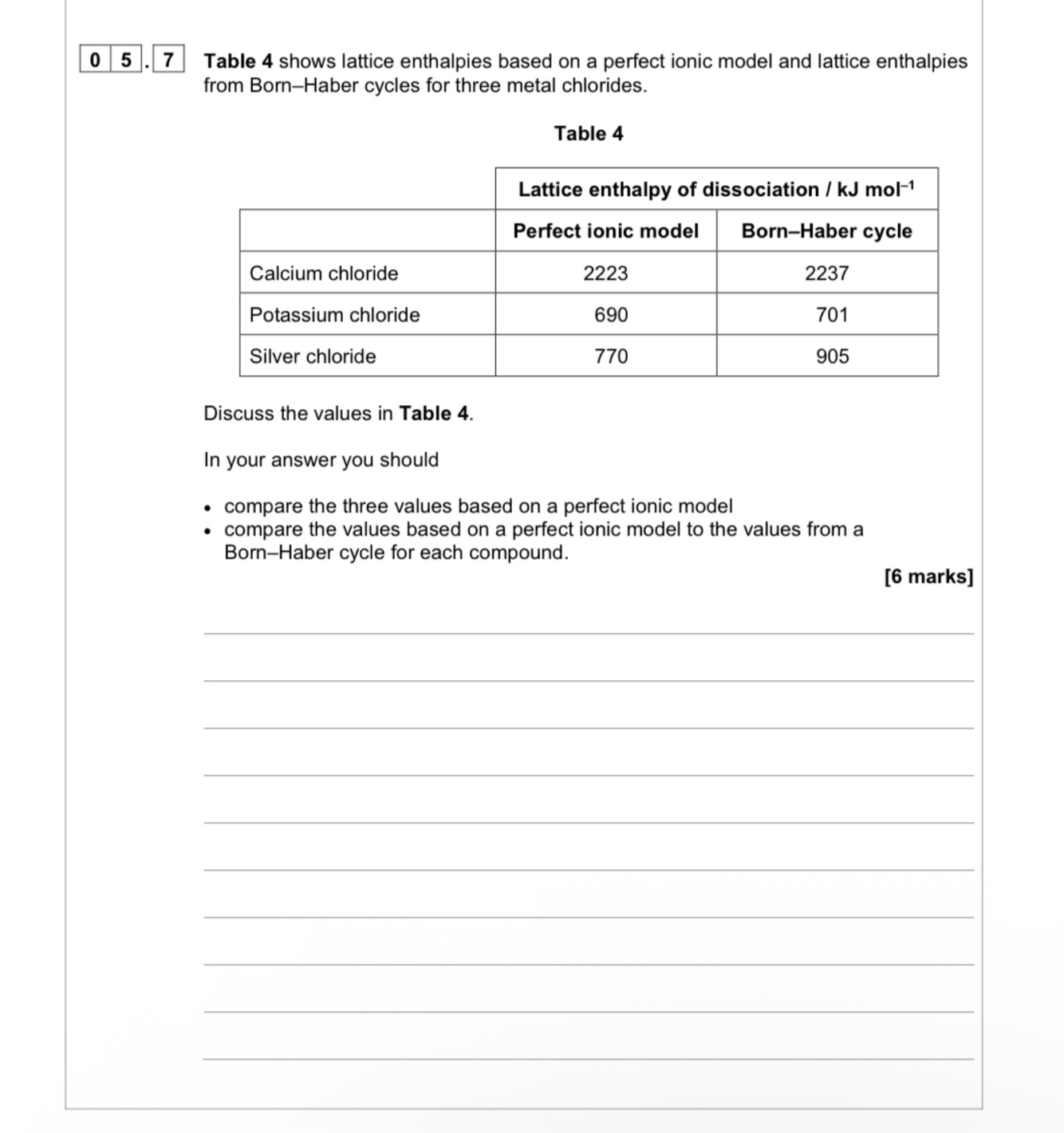
• Comparing perfect ionic model values: CaCl2 > AgCl > KCl • Electrostatix forces of attraction are strongest between ions in CaCl2 and weakest between oppositely charged ions in KCl • CaCl2 has stronger forces of attraction between oppositely charged ions as Ca2+ ions are more highly charged than Ag+ and K+ and smaller, so Ca2+ ions have higher charge density and can form stronger attractions to Cl- ions • CaCl2 and KCl both have similar values from the perfect ionic model and the Born-Haber values • Therefore, CaCl2 and KCl are almost perfectly ionic with very little covalent character. Their ions are perfectly spherical • For AgCl the values are different showing that AgCl has some covalent character, this shows that Ag+ is able to polarise Cl- ions distorting the ion
• Explain why the equilibrium yield of hydrogen is unchanged if a catalyst is used in the reaction
• A catalyst speeds up the rate of the forward and backward reaction by the same amount
• Explain why the equilibrium yield of hydrogen is unchanged if a catalyst is used in the reaction
• A catalyst speeds up the rate of the forward and backward reaction by the same amount