Chemical Energetics
No description yet. This curated deck is ready for daily study.
Card preview (24)
What do particles need to collide with in order for a substance to react
Correct orientation Sufficient energy
What does H mean
Enthalpy Heat energy
What does ΔH mean
Enthalpy change Amount of energy released or absorbed during a reaction
What does Ea mean
Activation energy Minimum amount of energy colliding particles must have to react
Activated complex
High energy state a reaction goes through in order to change reactants into products
Describe an effective collision
Reactants have the sufficient activation energy, become an activated complex, form products
2 chemical energetics reactions examples
Exothermic and endothermic
Exothermic reaction
When energy is transferred to the surroundings so the temperature of the surroundings increase
Endothermic reactions
When energy is absorbed from the surroundings so the temperature of the surroundings decrease
Examples of Exothermic reactions
Combustion Oxidation Neutralisation reactions
Examples of endothermic reactions (3)
Thermal decomposition Photosynthesis Cold packs for sportinjuries
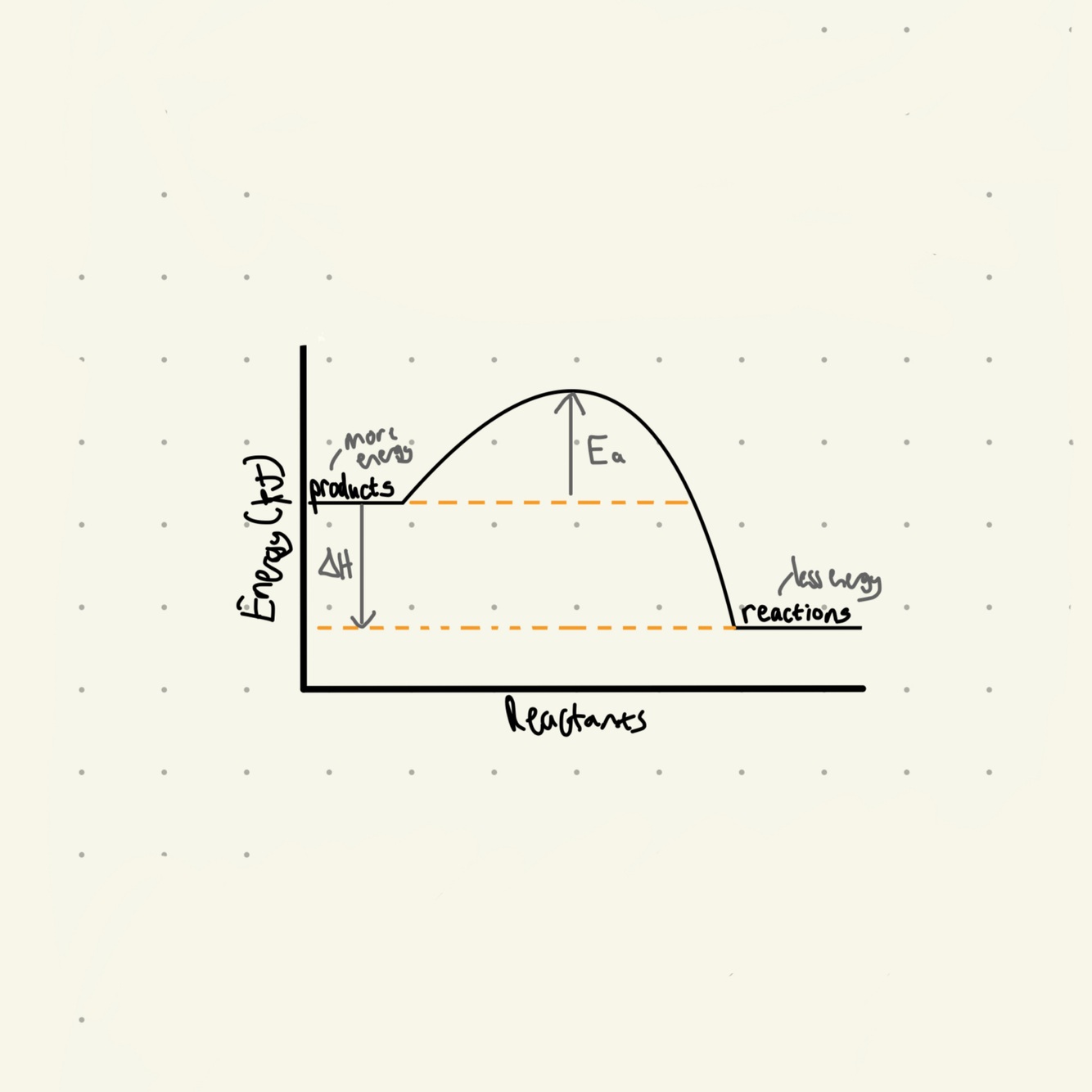
Characteristics of Exothermic reactions (3)
ΔH is negative Products have less energy than reactants Energy is released into solution, causing it to warm
Draw an Exothermic energy profile/level diagram
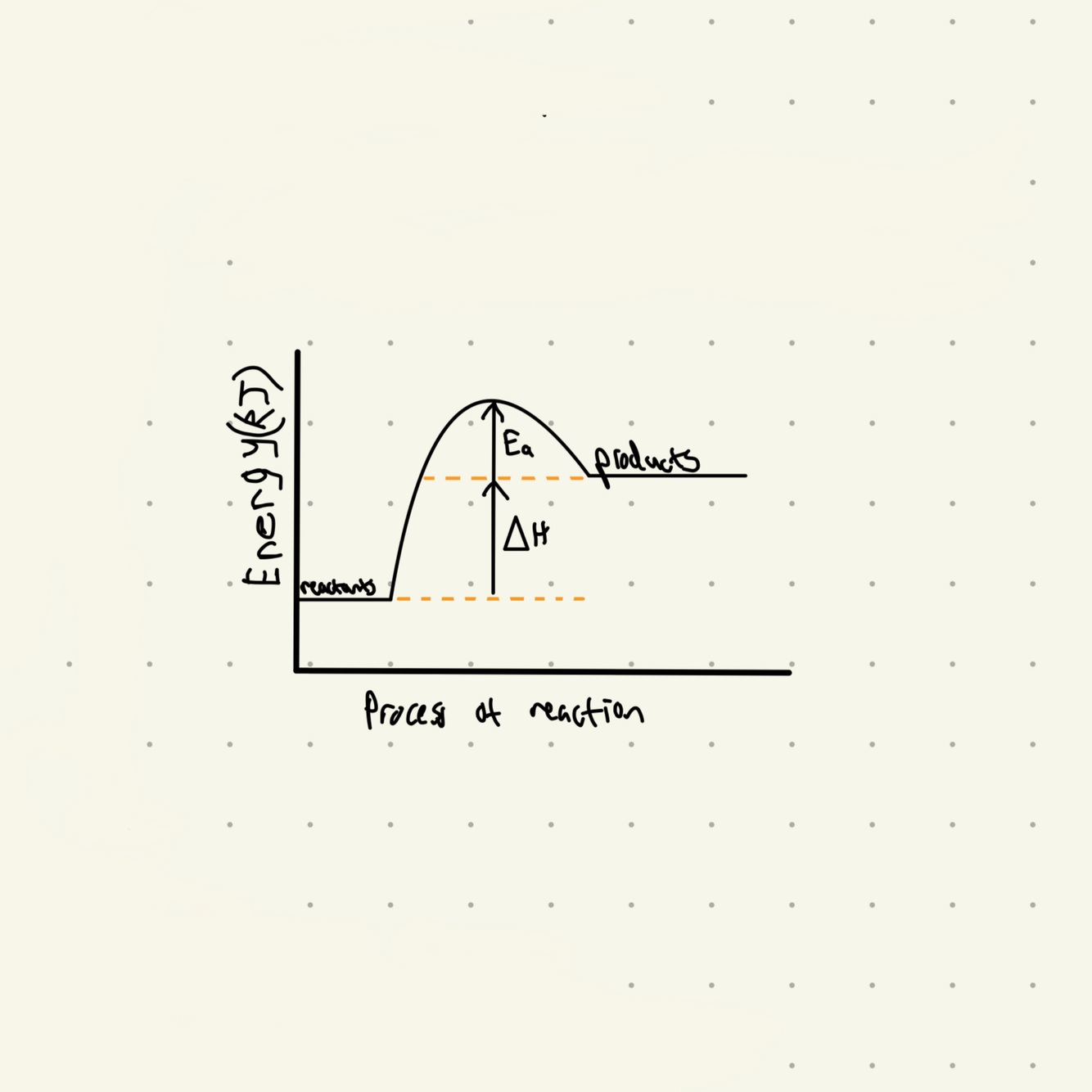
Characteristics of endothermic reactions (3)
ΔH is positive Products have more energy than reactants Energy is absorbed from solution (gets cooler)
Draw an endothermic energy profile
Draw a practical used to depict exo and endo thermic reactions
Describe an Exothermic reaction in terms of bonds
Energy needed to break bonds is less than the energy produced when new bonds are made
Describe an endothermic reaction in terms of bonds
The energy needed to break bonds is more than the energy released when new bonds are made
What is the bond energy rule
Bond breaking = Endothermic Bond making = Exothermic
How do you calculate the change in Enthalpy and what is the unit
Bond energy of reactants - Bond energy of products kJ/mol
What is room temperature
25 degrees Celsius
Does the solution get warmer or cooler in an endothermic reaction and why
Cooler, because energy is absorbed from the solution
Does the solution get warmer or cooler in an exothermic reaction and why
Energy is released into the solution so the solution gets warmer
Equilibrium definition
State achieved when the forward and reverse reactions occur at the same rate and the concentration of the reactants and products stay constant