HL Chapter 8 - Endocrine system
No description yet. This curated deck is ready for daily study.
Card preview (20)
endocrine system overview (3)
• The endocrine system is a complex network of glands and organs. • It uses hormones to control and coordinate your body’s metabolism, energy level, reproduction, growth and development, and response to injury, stress, and mood. • Hormones are secreted by endocrine glands to regulate and coordinate a range of bodily functions.
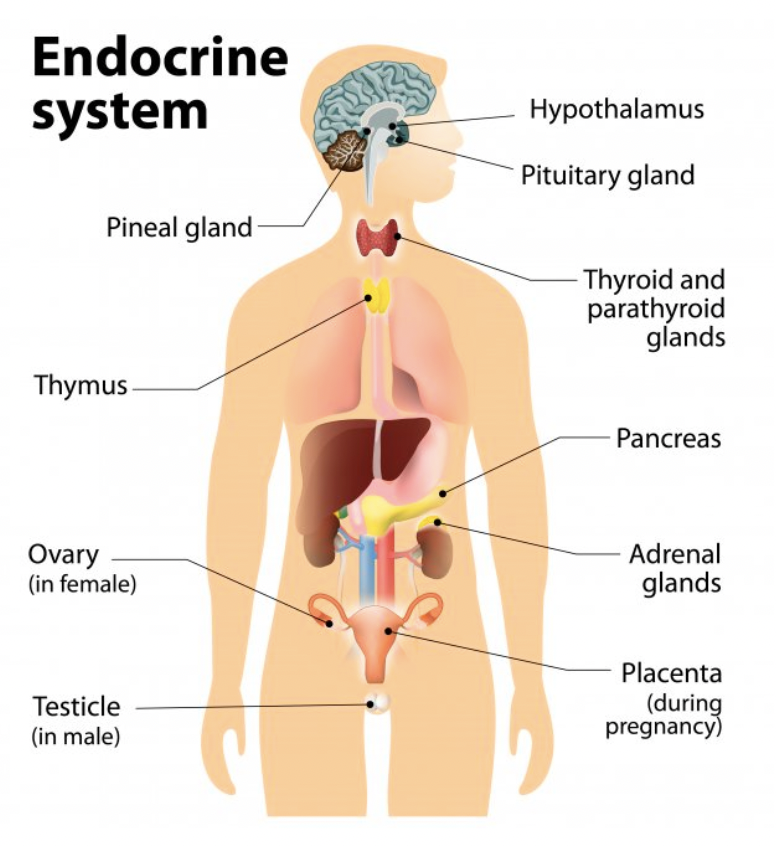
structure of the endocrine system
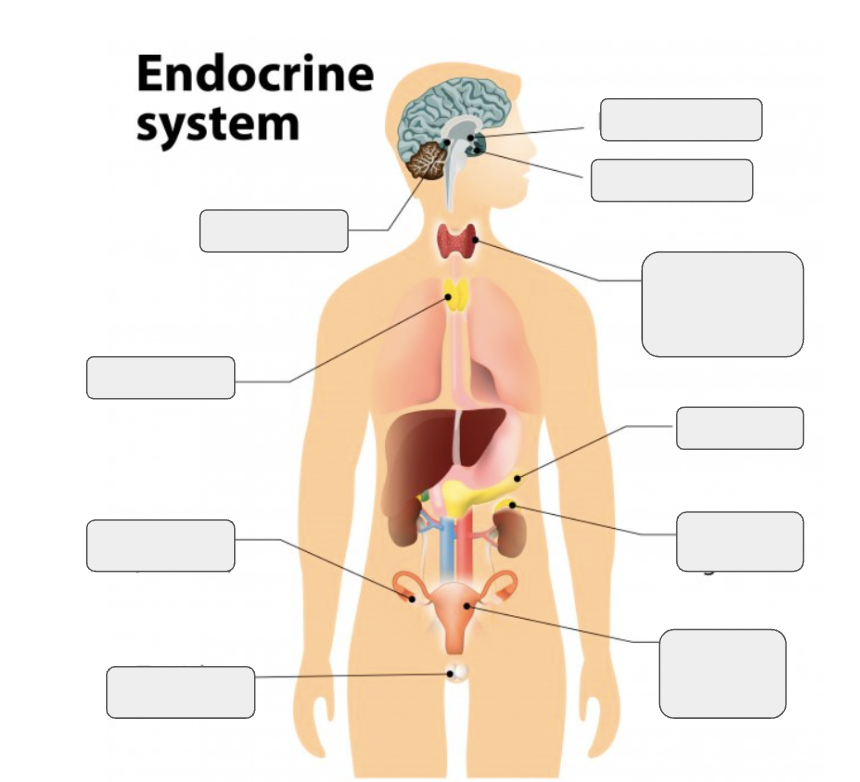
• Hypothalamus - diencephalon of the brain • Pituitary gland - inferior to the brain • Pineal gland - midbrain • Thyroid gland - anterior of throat, inferior to larynx • Adrenal glands - attached to the superior of kidneys • Pancreas - inferior and posterior to stomach • Ovaries and testes
hormones overviews + types
Overview: * Release of most hormones occurs in short bursts, although some are secreted over longer periods of time in order to stimulate permanent changes to the body. * Hormones affect only specific target cells by (chemically) binding to specific receptors. Types: 1. circulating hormones 2. local hormones
circulating hormones (3)
• Another word for circulating is endocrine • Circulating hormones travel around the body in the bloodstream • Produced by one organ and act on another
local hormones- 4
Another word for local is paracrine Act on cells nearby to where they are made Do not enter the bloodstream Usually quick in action
how are circulating hormones regulated- 4
• through negative feedback loops three different ways: 1. chemical changes - insulin 2. nerve impulse - adrenaline 3. other hormones - growth hormone
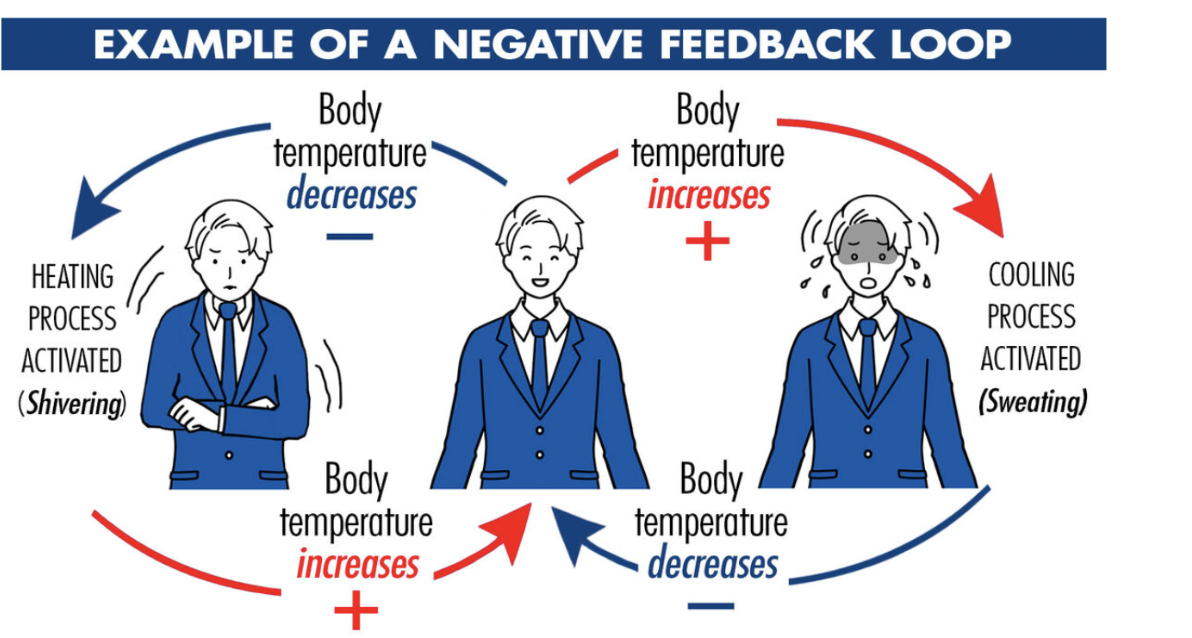
what are negative feedback loops (4)
A physiological regulation system that works to return the body to its normal internal state, homeostasis. Because of the response, the body returns to normal and the response is turned off. steps: 1. a stimulus elicits the release of a substance 2. once the substance reaches a certain level, it sends a signal that stops further release of the substance
regulation of blood glucose chemical responses (3), steps (5)
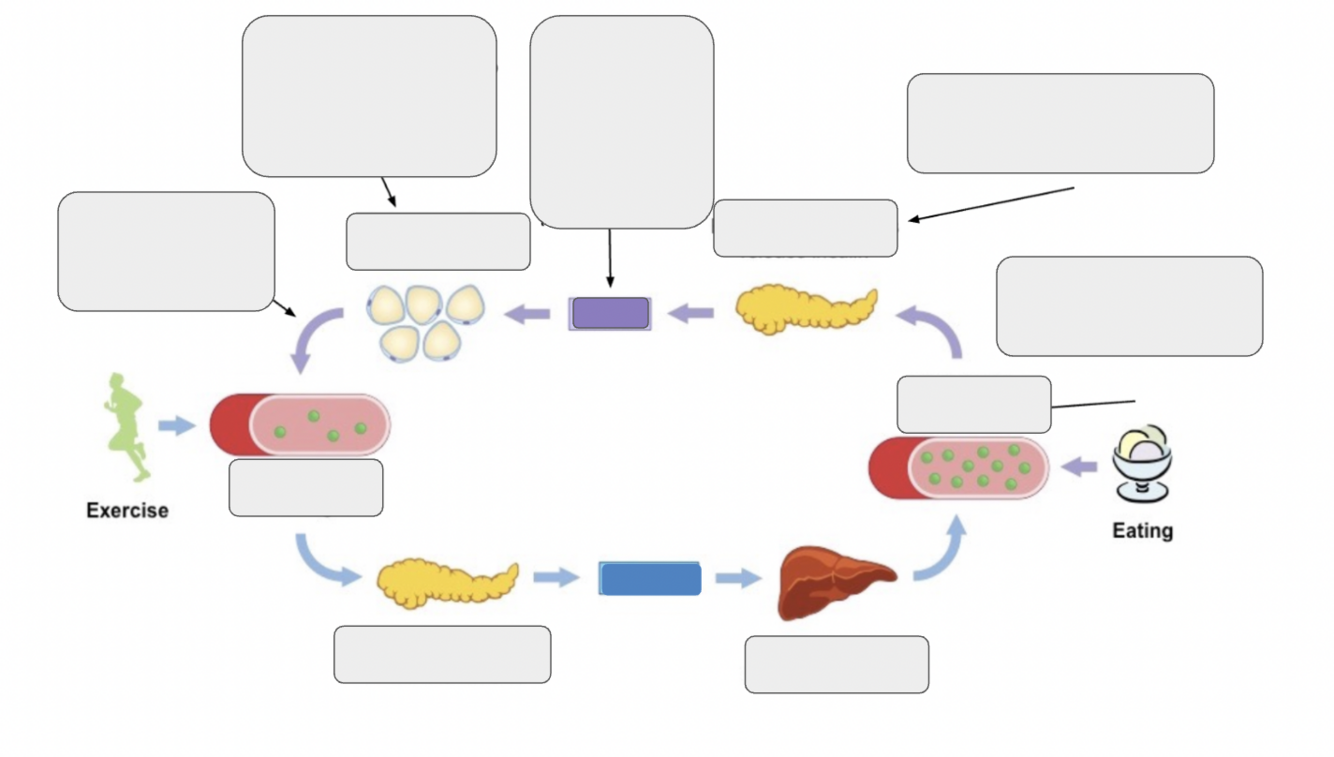
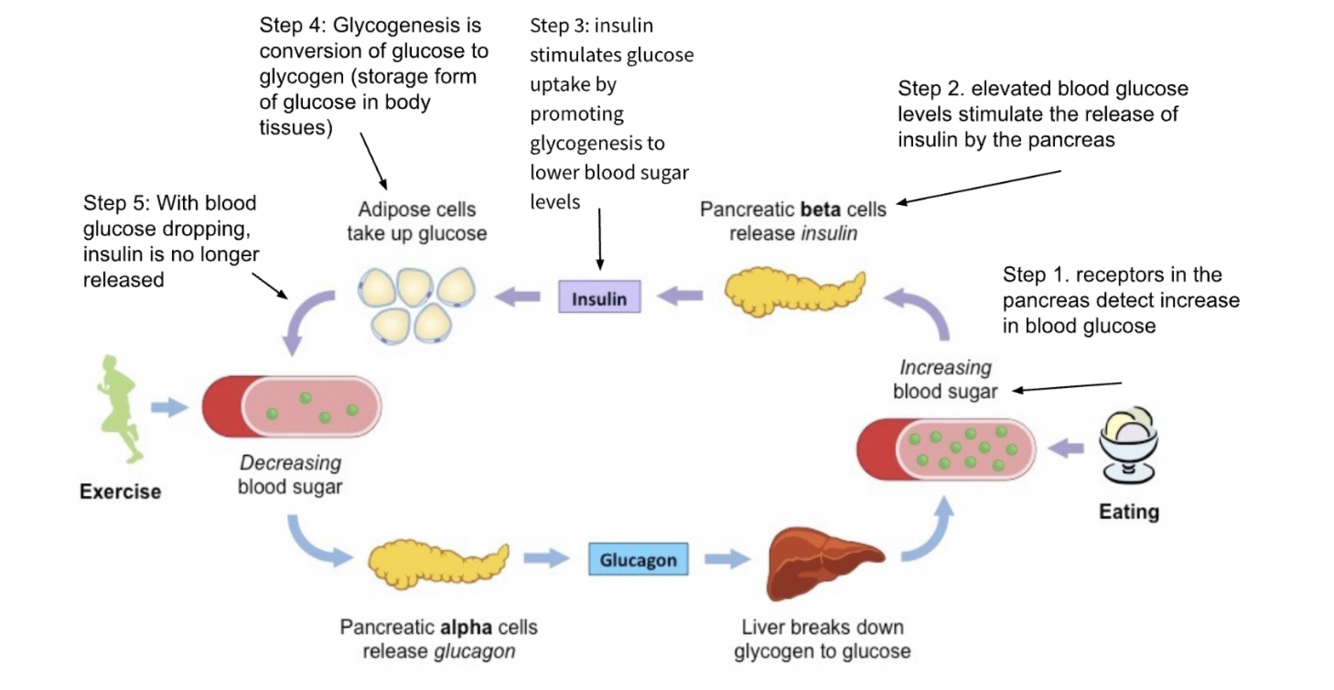
CHEMICAL RESPONSES * Insulin is released in response to elevated blood sugar levels. * Glucagon is released in response to low blood sugar. * Both are hormones released by the pancreas. steps: step 1: receptors in the pancreas detect increase in blood glucose step 2: elevated blood glucose levels stimulate the release of insulin by the pancreas step 3: insulin stimulates glucose uptake by promoting glycogenisis to lower blood sugar levels step 4: glycogenesis is conversion of glucose to glycogen (Storage form of glucose in the body tissue) step 5: with blood glucose dropping, insulin is no longer released END
impacting factors of the insulin process
• Insulin can be injected (among other methods) if the pancreas is unable to synthesize the hormone like in Type 1 Diabetes. • Stress reduces our bodies ability to create insulin.
glucagon regulation process
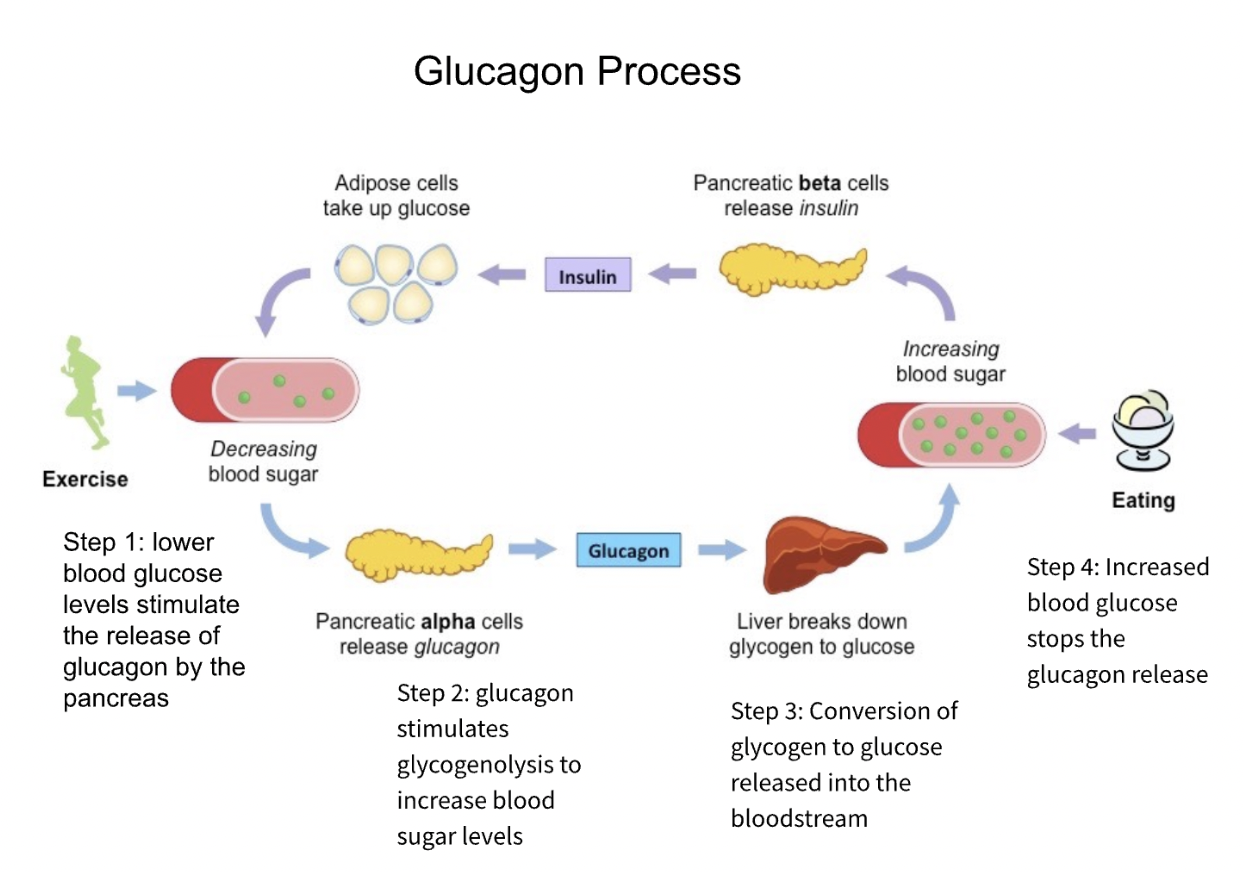
step 1: lower blood glucose levels stimulate the release of glucagon by the pancreas step 2: glucagon stimulates glycogenolysis to increase blood sugar levels step 3: conversion of glycogen to glucose released into the bloodstream steo 4: increased blood glucose stops the glucagon release
regulation of adrenaline- 4
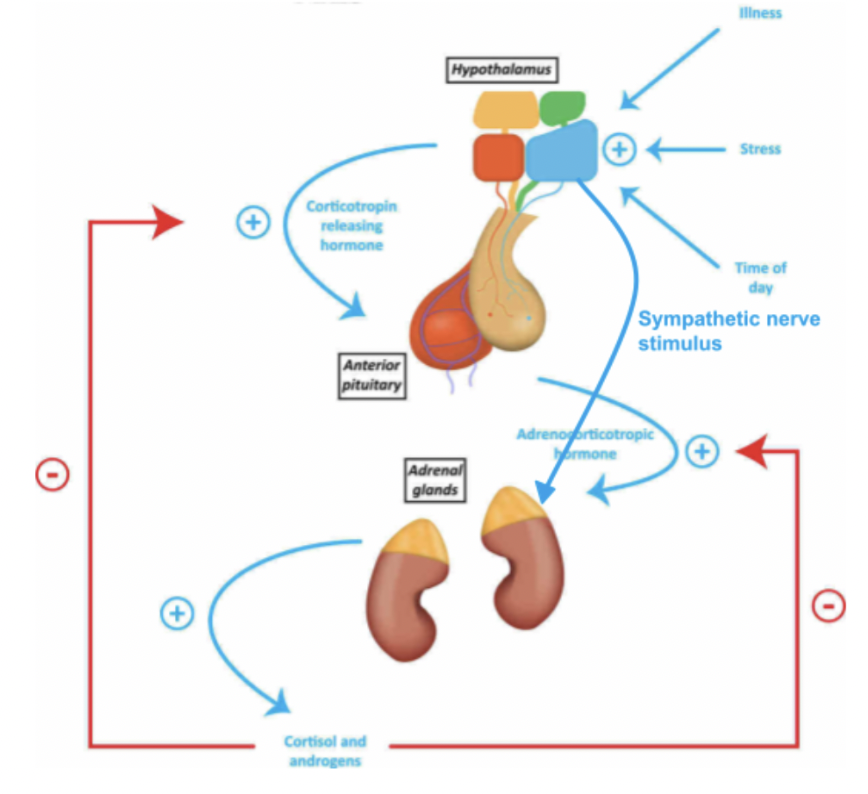
• Produced by the adrenal gland • The adrenal gland is stimulated/regulated by nervous impulses and negative feedback. • Fight or flight response. • stress/anxiety/fear anger can promote adrenaline release
steps of how adrenaline is increased steps (7) + physiological response (5)
• Hypothalamus in the brain triggers the pituitary gland via a hormone AND directly stimulates the sympathetic nervous system • Pituitary gland releases a different hormone (ACT) into the bloodstream • ACT travels down to the adrenal gland of the kidneys • Sympathetic nervous systems directly stimulates the adrenal gland • Adrenal gland produces Adrenaline • Adrenaline enters the bloodstream • Circulates to target cells appropriate physiological response: * heart rate increase * blood pressure increase * increased sweating * bronchodilation * promotes glycogenolysis All of these increase our bodies ability for intense movement / exercise / activity
steps of decreasing adrenaline - 4
can be managed by activity level * Reducing activity reduces the release * Physical activity can use up already released adrenaline (go for a walk/exercise when anxious) can be managed by relaxation techniques (eg meditation)
what is homeostasis - 3
Homeostasis is the tendency for an organism or cell to maintain a constant internal environment within tolerance limits • Most homeostatic responses involve an effect that is antagonistic to the detected stimulus (negative feedback) • Homeostatic mechanisms operate via a feedback loop that may involve either the nervous or endocrine systems (or both)
how is internal equillibrium maintained (5)
by adjusting physiological processes including: * Body temperature (normally between 36 – 38ºC) * Carbon dioxide concentration (normally 35 – 45 mmHg) * Blood pH (normally between 7.35 – 7.45) * Blood glucose levels (normally 75 – 95 mg/dL) * Water balance (varies depending on individual body size)
homeostatic mechanisms operate + types (3)
• Homeostatic mechanisms operate via a feedback loop that may involve either the nervous or endocrine systems (or both) types: 1. growth hormone 2. temp regulation 3. water regulation
growth hormone trigger-1, process-2, response-1, negative feedback-2
Trigger: sleep, stress, exercise and puberty Process: * growth hormone releasing hormone is a neurohormone released from the hypothalamus which directly influences the pituitary gland * Pituitary gland releases growth hormone to regulate growth; Response: * Stimulate linear growth, protein synthesis, bone formation and immune system amongst others Negative Feedback * somatostatin, released by hypothalamus, inhibits the pituitary gland from releasing GH; * High levels of GH causes somatostatin to be released
water regulation trigger-1, process-2, response-2, negative feedback-1
Trigger: Low water concentration in blood - too viscous, too little water, too salty Process: * Hypothalamus stimulates the pituitary gland via nerve impulse and neurohormone * Pituitary gland releases antidiuretic hormone (ADH) Response: * ADH works on the kidneys to increase the water reabsorption from the blood decreasing urine production * Increases the number of aquaporins in the kidney Negative Feedback: * Increased water volume in blood trigger hypothalamus to stop stimulating pituitary
temp regulation trigger-1, process-3, response-3, negative feedback-1
Trigger: Cold body temperature Process * Hypothalamus releases thyrotropin-releasing hormone * This triggers the pituitary gland to release thyroid stimulating hormone * Thyroid stimulating hormone acts on the thyroid to release Thyroxine Response: * primary role: increases the basal metabolic rate (amount of energy the body uses at rest) by stimulating carbohydrate and lipid metabolism * An effect is the production of heat – hence thyroxin increases body temperature Negative Feedback: Raising the body temperature causes the hypothalamus to stop releasing TRH
Process of homeostasis: 7
• The hypothalamus and the pituitary gland are together responsible for homeostasis via feedback loops • The body has many sensors that monitor internal conditions • When internal conditions start to move towards the limits of safe levels the sensors send information to the brain • The hypothalamus is the part of the brain that controls the pituitary gland. –>Hormone control –>Nervous Control • Pituitary Gland releases a hormone to adjust internal conditions to maintain homeostasis