3. Energetics
No description yet. This curated deck is ready for daily study.
Card preview (15)
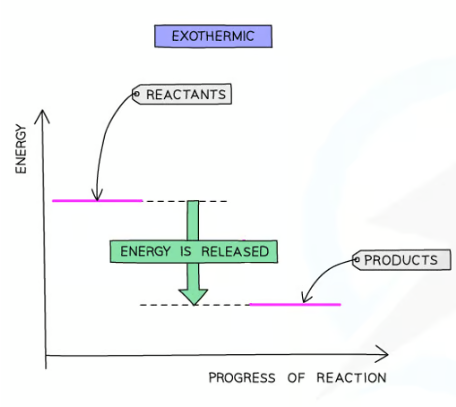
What is an exothermic reaction?
A chemical reaction in which heat energy is released to the surroundings.
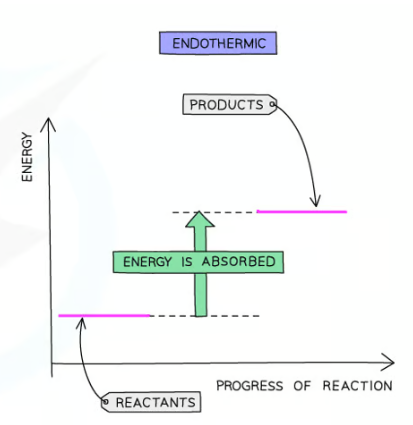
What is an endothermic reaction?
A chemical reaction in which heat energy is absorbed from the surroundings.
Do neutralisation reactions absorb or release energy?
They always release energy (exothermic).
Do displacement reactions absorb or release energy?
They can either absorb energy (endothermic) or release energy (exothermic).
Do combustion reactions absorb or release energy?
They always release energy (exothermic).
Energy level diagram for an exothermic reaction.
Energy level diagram for an endothermic reaction.
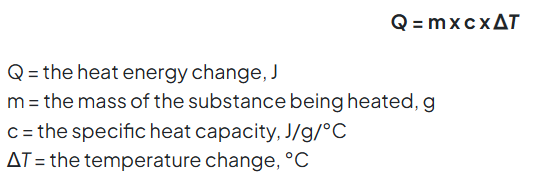
State the formula used to calculate the heat energy change from a measured temperature change.
State how to calculate the molar enthalpy change (ΔH) from the heat energy change, Q.
The units are kJ / mol

Is bond-breaking endothermic or exothermic?
Bond-breaking is endothermic because energy is absorbed to break bonds.
Is bond-making endothermic or exothermic?
Bond-making is exothermic because energy is released when new bonds form.
What happens to energy in an exothermic reaction?
• Energy released when new bonds form > energy absorbed to break bonds • Reactants have more energy than products → ΔH is negative
What happens to energy in an endothermic reaction?
• Energy absorbed to break bonds > energy released when new bonds form • Products have more energy than reactants → ΔH is positive
Why is a polystyrene cup used in temperature change experiments?
• Polystyrene is a good insulator • Reduces heat lost to surroundings
What is the reason of stirring in heat loss experiments.
Spreads the heat energy evenly throughout the solution.