Biological Molecules
暂无描述。系统推荐的高质量记忆内容,适合每天坚持背诵学习。
卡片预览 (24 张)
what are biological molecules
essential molecules: carbohydrates, proteins, lipids, and nucleic acids
what is a monomer
a building block, the part that make up substances
what is a polymer
molecules made from a large number of monomers joined together
chemical elements in carbohydrates
C H O
chemical elements in proteins
C H O N (2 amino acids contain Sulfur)
chemical elements in lipids
C H O
what are reducing sugars in carbohydrates (include examples)
• reducing sugars are soluble • they include monosaccharides (glucose, fructose, galactose) and disaccharides (maltose, lactose, sucrose)
what is maltose made of
two glucose monomers joined together
what is lactose made of
a glucose and a galactose joined together
what is sucrose made of
a glucose and a fructose joined together
examples of carbohydrate polymers
• starch • glycogen • cellulose
starch
• glucose polymer only found in plants • acts as storage for carbohydrates
glycogen
• glucose polymer only found in animals • acts as energy store for liver and muscle
cellulose
• makes up plant cell walls • humans cannot digest cellulose as we do not have the enzymes to break it down • cellulose forms dietary fibre
what are proteins
long chains of amino acids
what are enzymes made of
enzymes are made of proteins
what is a polypeptide chain
a short chain of amino acids
how many amino acids are there
20
function of proteins
• muscle building • immune system health • enzyme building • gene building.
what are lipids (include examples)
fats and oils (butter, oil, cholesterol)
what are the monomers of lipids
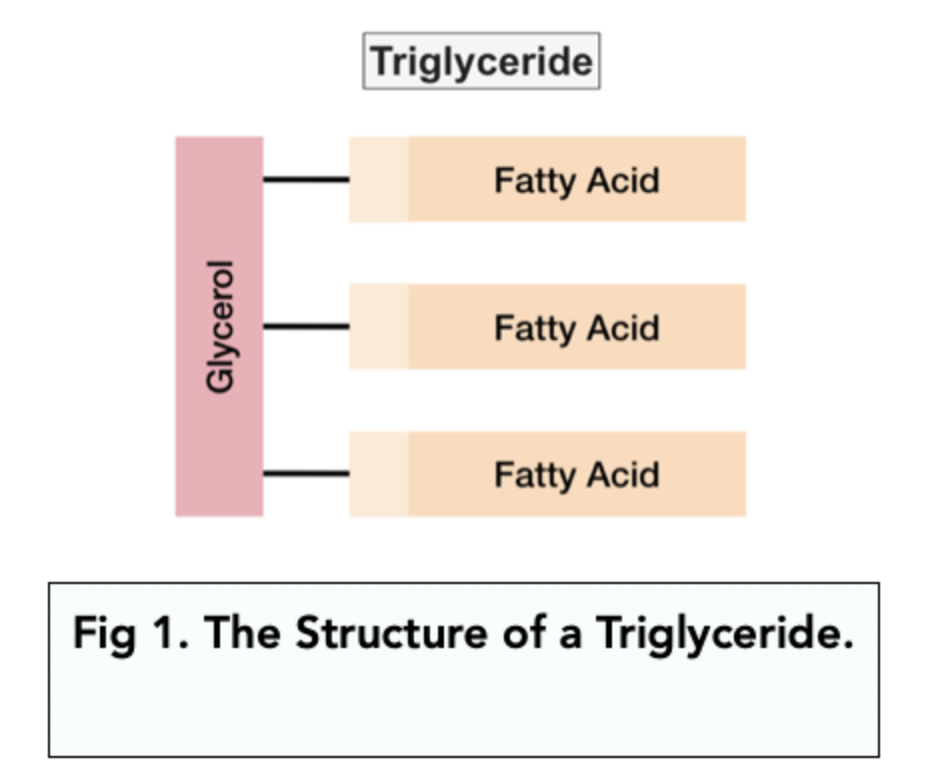
a triglyceride (made of 1x glycerol and 3x fatty acids)
importance of lipids
• good insulators (keep us warm) • good source of long-lasting energy • can be good to store energy as well after carbohydrates are used up • lipids make up cell membranes • protect organs from damage
unsaturated vs saturated lipids
unsaturated = has a double bond in fatty acids saturated = has no double bonds in fatty acids
structure of a cell membrane made of lipids
forms a phospholipid bilayer made of a hydrophobic tail (fatty acid) and hydrophilic head (glycerol and phosphate)