Reversible Reactions and Equilibria
No description yet. This curated deck is ready for daily study.
Card preview (13)
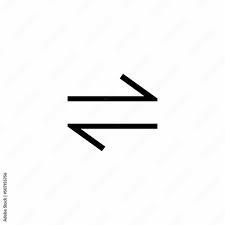
What is a reversible reaction and what are they denoted by?
• A reaction where the product molecules react with eachother or decompose to form the reactants • Therefore there is a forward and a backwards/reverse reaction • It is denoted by the symbol below
What is the thermal decomposition of ammonium chloride and how is it reversible?
• When heated, ammonium chloride will decompose to produce ammonia and hydrochloric acid • However, as the gases cool down the hydrochloric acid and ammonia recombine to form solid ammonium chloride again - therefore this reaction is reversible • NH₄Cl (s) ⇌ NH₃ (g) + HCl (g)
What is the dehydration of copper(II) sulfate and how is it reversible?
• Copper(II) sulfate will crystallise to form the salt copper(II) sulfate pentahydrate (CuSO₄.5H₂O) • When heated, the salt will become dehydrated and lose its water in an endothermic reaction • However, water can be added again where in an exothermic reaction, the dehydrated copper(II) sulfate will become hydrated again • This is easily observed by the crystals changing colour from blue to white and vice versa This occurs in a similar way with other hydrated salts
What is meant by a reversible reaction being in equilibrium?
• When the rate of the forwards reaction equals the rate of the backwards reaction • Assuming conditions stay constant, so will the amounts and concentrations of reactants and products • It only only occurs in a closed system as none of the participating chemical species are able to leave the reaction vessel
Why is the equilibrium of a reaction referred to as dynamic?
The forwards and backwards reactions are constantly occuring - they just equal each other in rate
What is the process of a reaction reaching dynamic equilibrium?
• At first, the rate of the forwards reaction will be the highest as only the reactants are present • However, as the reaction proceeds the concentration of reactants will decrease and the concentration of products will increase • Assuming the reaction is occuring in a closed system, eventually the rate of the forward reaction will equal the rate of the backward reaction and the concentrations of the reactants and products will become equal
What happens to the position of dynamic equilibrium when conditions are changed?
• The system automatically moves to oppose the change • Therefore the position of dynamic equilibrium will shift in the direction which favours the reaction that will counter this change
Why does a catalyst not change the position of dynamic equilibrium?
• It will speed up the rate of the forwards and backwards reactions • Therefore, while dynamic equilibrium will be achieved faster, the rate of the forwards and backwards reactions will remain equal as will the concentrations of reactants and products
What is the effect on a reversible reaction in dynamic equilibrium when temperature is increased?
• Equilibrium will move in the endothermic direction • This means that the rate of reaction of the endothermic reaction will increase • Therefore the concentration of the products of the endothermic reaction will increase and the concentration of the reactants of the endothermic reaction will decrease • The temperature will decrease and return to normal again The resultant changes in the concentrations of reactants/products can often be visually observed
What is the effect on a reversible reaction in dynamic equilibrium when temperature is decreased?
• Equilibrium will move in the exothermic direction • This means that the rate of reaction of the exothermic reaction will increase • Therefore the concentration of the products of the exothermic reaction will increase and the concentration of the reactants of the exothermic reaction will decrease • The temperature will increase and return to normal again
Which direction does dynamic equilibrium shift in the reaction: ICl + Cl₂ ⇌ ICl₃ when temperature is increased? The backwards reaction is endothermic and the forwards reaction is exothermic
• Dynamic equilibrium will shift to the left (endothermic direction) as the backwards reaction is endothermic • Therefore the concentration of iodide monochloride and chlorine will increase and the concentration of iodide trichloride will decrease • This will reduce the temperature back to normal
What is the effect on a reversible reaction in dynamic equilibrium when pressure is increased? When referring to a reversible reaction where the products and reactants are in the gaseous state
• Equilibrium will move in the direction of the reaction that produces fewer moles of gas • Therefore the concentration of the products of this reaction will increase and the concentration of the reactants of this reaction will decrease • The pressure will decrease and return to normal again • In this reaction: 2NO₂ ⇌ N₂O₄ when pressure increases, the forwards reaction will be favoured as fewer moles of gas are produced (so equilibrium shifts to the right)
What is the effect on a reversible reaction in dynamic equilibrium when pressure is decreased? When referring to a reversible reaction where the products and reactants are in the gaseous state
• Equilibrium will move in the direction of the reaction that produces more moles of gas • Therefore the concentration of the products of this reaction will increase and the concentration of the reactants of this reaction will decrease • The pressure will increase and return to normal again • In this reaction: 2NO₂ ⇌ N₂O₄ when pressure decreases, the backwards reaction will be favoured as more moles of gas are produced (so equilibrium shifts to the left)