PMMA - polymethylmethacrylate
No description yet. This curated deck is ready for daily study.
Card preview (17)
why may dentures not fit the first time?
production * initial impression is not accurate * curing process of acrylic * may need chairside refinements usage * fractures - handling and masticatory forces * uncomfortable * becomes warped * surfaces suffers wear * fits patient only for a short period
what are the ideal properties of PMMA? 6
• dimensionally accurate and stable in use (fit and retention) • high softening temperature (Tg - doesn’t distort when cleaning/drinking hot liquids) • unaffected by oral fluids over time • low density to aid retention • colour/translucency to match natural tissues • non-toxic and non-irritant
what are the ideal mechanical properties of PMMA?
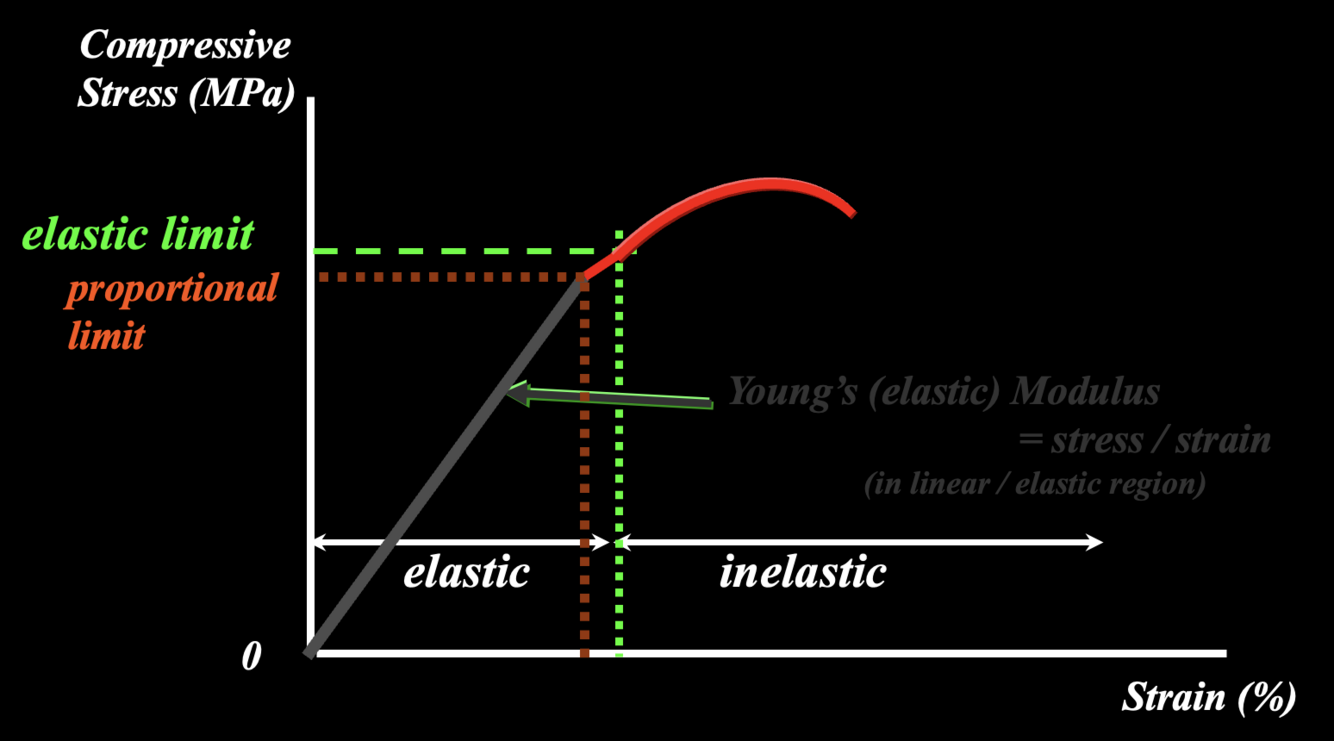
• high young’s (elastic) modulus - rigid (large stress produces small strain) • high proportional limit / elastic limit - only large stresses will cause permanent damage
what are the ideal thermal properties of PMMA?
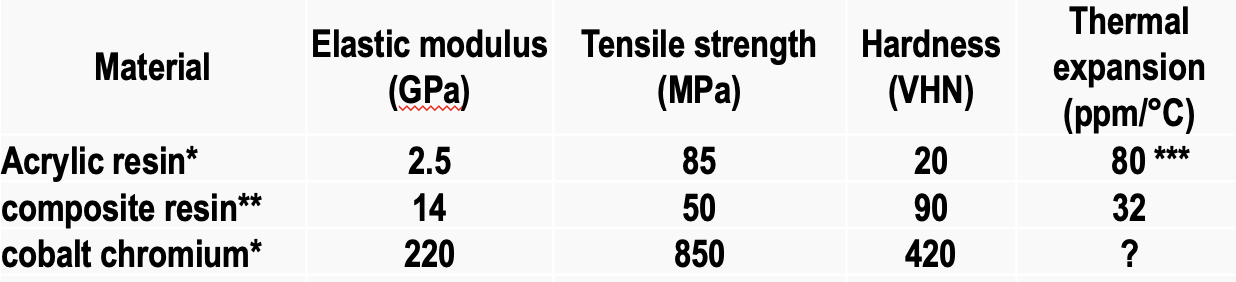
• thermal expansion should match the thermal expansion of the artificial tooth • avoid internal stresses on cooling during manufacture • high thermal conductivity to mucosa to avoid scalding of throat and mucosa
describe how PMMA is produced and the steps
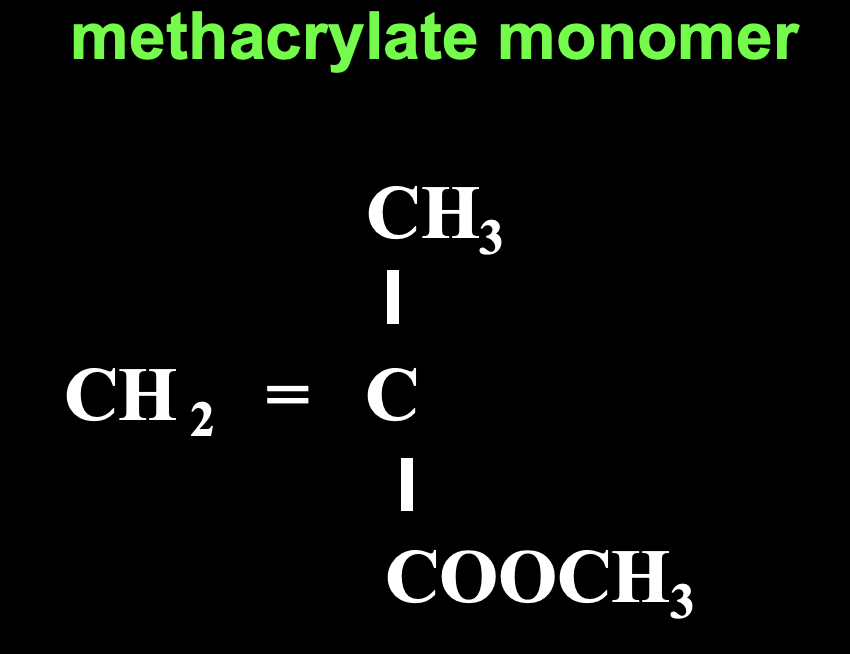
free radical additional polymerisation * activation - heat >72degres or self cured to give free radicals * initiation - free radicals break C=C bond in monomer and transfer free radicals * propagation - growth of polymer chain * termination - end of polymerisation
what are the components of heat cured acrylic?
powder * initiator - benzoyl peroxide * PMMA particles * plasticiser * pigments * co-polymers liquids * methacrylate monomer * inhibitor - hydroquinone * co-polymers
why would you use powder/liquid PMMA?
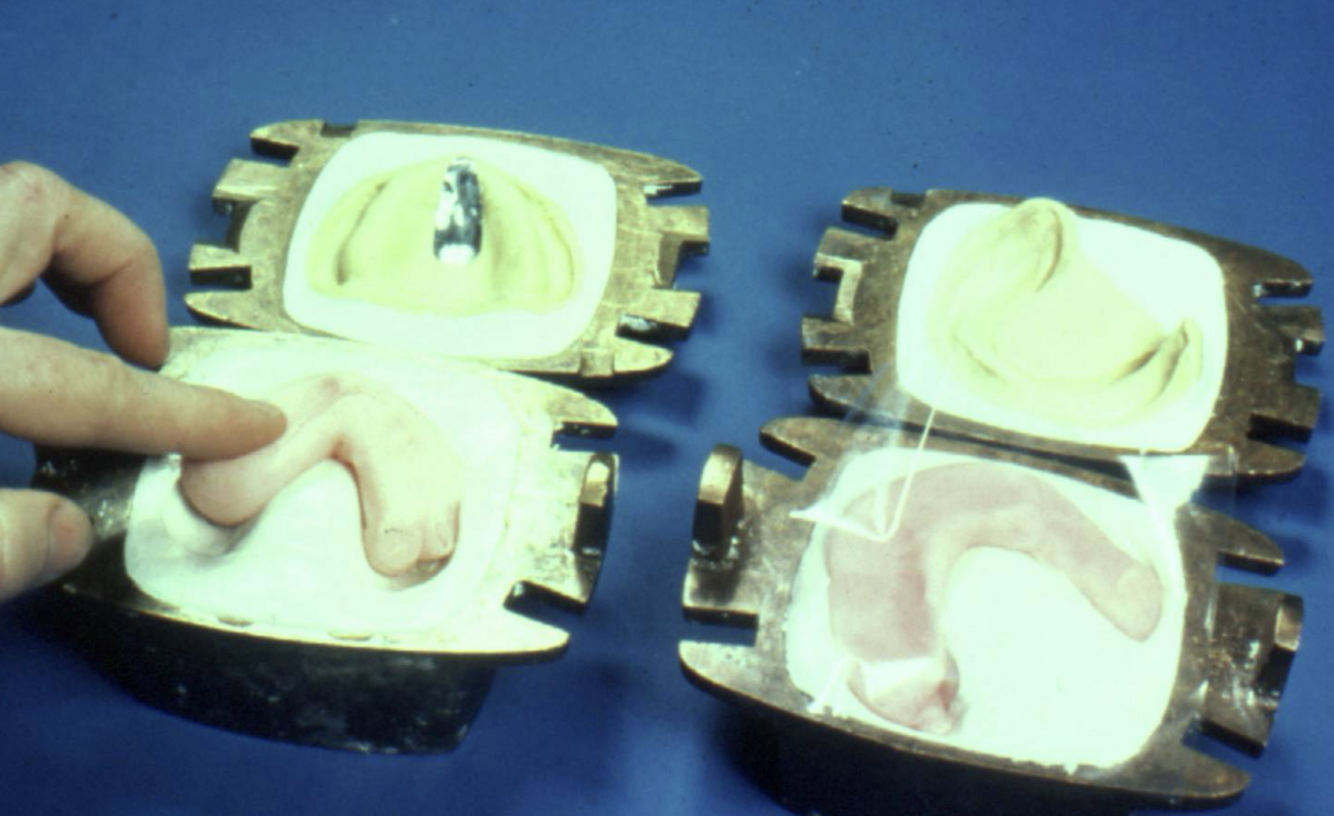
• produces a dough like material than can be handled/mixed easily and customised • reduced heat of reaction • minimise polymerisation shrinkage
what are the three heating schedules for PMMA?
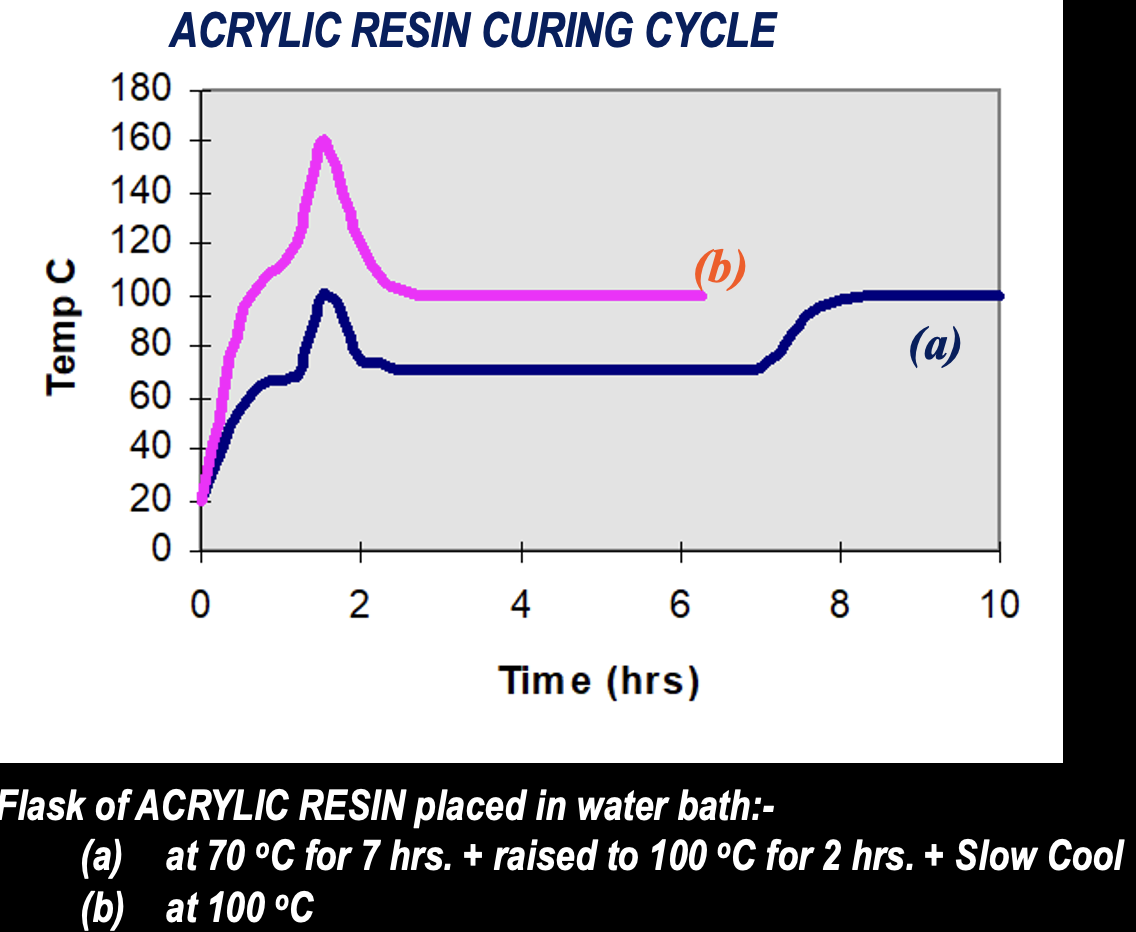
• 7 hours to 70 degrees + 2 hours to 100 degrees + slow cool • 72 degrees for at least 16 hours • 20-20-20 reverse curing (place flask in boiling water, remove heat for 20mins, heat to 70degrees for 20mins, heat to 100degrees for 20mins) polymerisation exotherm at 2 hours
how shoudl acrylic be cooled?
• should be cooled slowly to allow relief • if cooled too quickly, can lead to internal stresses in acrylic • mould material and PMMA have different thermal expansion coefficients so contract at different rates when cooling
what can happen if PMMA is cooled too quickly? (internal stress)
• decreased compressive and tensile strength • decreased fatigue strength (low level repeated stresses over a long time can cause fracturing) • warping e.g. during finishing • minor repairs later on are problematic
what factors are related to internal stresses?
• thermal expansion • cooling rate • shape and size e.g. notches • curing pressure • curing cycle
what are some problems with curing?
• under cured - free monomers are irritants and low molecular weight = poor mechanical properties • fast curing - possibel gaseous porosity
what are some problems with incorrect powder/monomer ratios?
• **too much **monomer = contraction porosity • too little monomer = granularity
how does porosity affect PMMA?
• decreases strength • affects appearance • rough sensation to tongue • absorbs saliva - poor hygiene
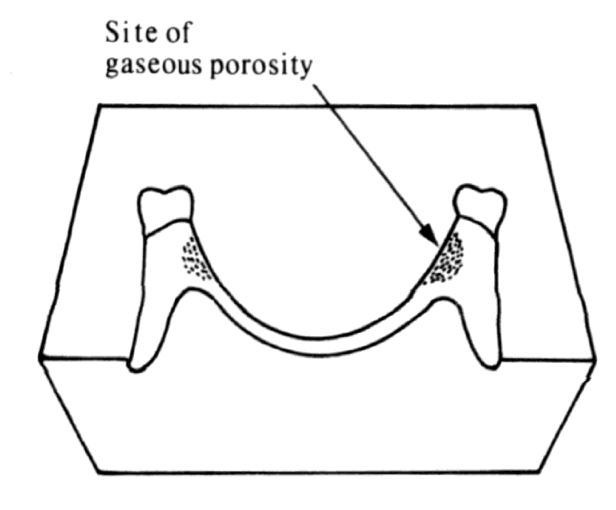
how does gaseous porosity form in PMMA? how would you prevent this?
• develops during the heat curing stage • monomer boiling at 100degrees and produced bubbles to the PMMA surface especially in bulkier parts • cure slowly to prevent (curing is exothermic)
what are the causes of contraction porosity?
• too much monomer • insufficient excess material • insufficient clamp pressure • where PMMA is not sufficiently packed
what are the properties of PMMA?
• non-toxic :) • non-irritant :) • unaffected by oral fluids :) • good colour/translucency :) • thermal expansion = artificial tooth :/ • low thermal conductivity :( • poor mechanical properties :( • low density but increased bulk to improve mechanical properties offsets this :/ • high softening temperature (75degrees) :) • dimensionally accurate and stable in use :) mechanical properties