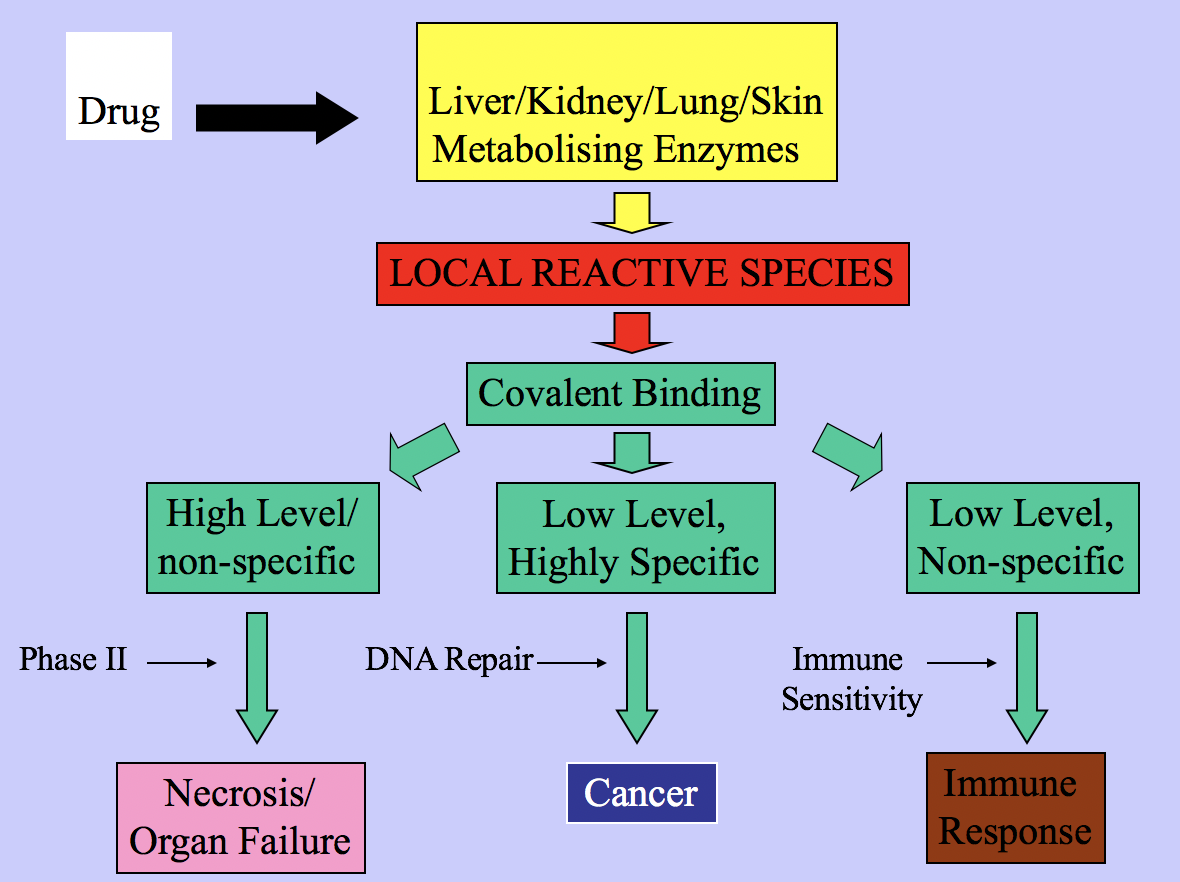
Toxicity related to drug metabolism
暂无描述。系统推荐的高质量记忆内容,适合每天坚持背诵学习。
卡片预览 (23 张)
Adverse reactions to drug administration
• Type A= reversible adverse responses • Type A1= linked to the pharmacological effect- opiate drowsiness /RD • Type A2= effects unrelated to drug action- anti-depressant (bruxism) • Type B= irreversible, toxic response • Type B1- direct necrotic injury- paracetamol • Type B2- immune-mediated toxicity • Type B3- cancer
Type B1 NECROSIS
• Toxicity: defined as irreversible change in cellular structure leading to change in cellular function • Usually overdosage (paracetamol) • Necrotic injury can result from oxidation to reactive species (troglitazone) • Necrotic injury can result from causes outside of drug metabolism (Tacrine)
Paracetamol
• 70,000 0verdoses • Only 300-500 deaths • About 50% cleared by glucuronide and 45% sulphate • 5% cleared to an N-acetyl, p-benzoquinoeimine(NAPQI) • No toxicity at therapeutic doses 4g max/day
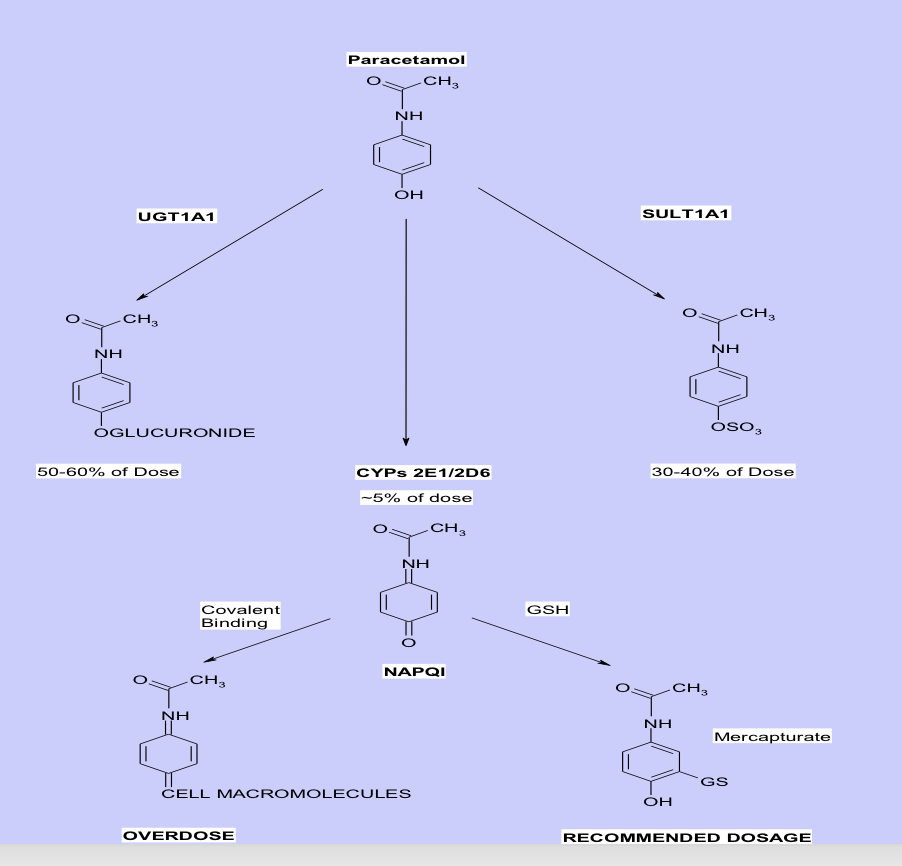
Paracetamol overdose
• Regarded as >12g (150mg/kg) in adults • NAPQI produced in same proportion but greater quantities • Hepatic GSH ‘quenches’ the toxicity • GSH levels gradually fall
Paracetamol toxicity
• Phase I- 0-24hr, ok but feeling a bit rough, vomiting • Phase II- 24-48 hrs, pain in abdomen, HR rises, BP falls, transaminases rise to 30-50 times normal • Phase III- 48-72 hrs, jaundice, GIT bleeding, pain, organ failure and death
Paracetamol: recue therapy- patient risk groups
• Alcoholics • Malnourished • HIV+ • Those taking inducers
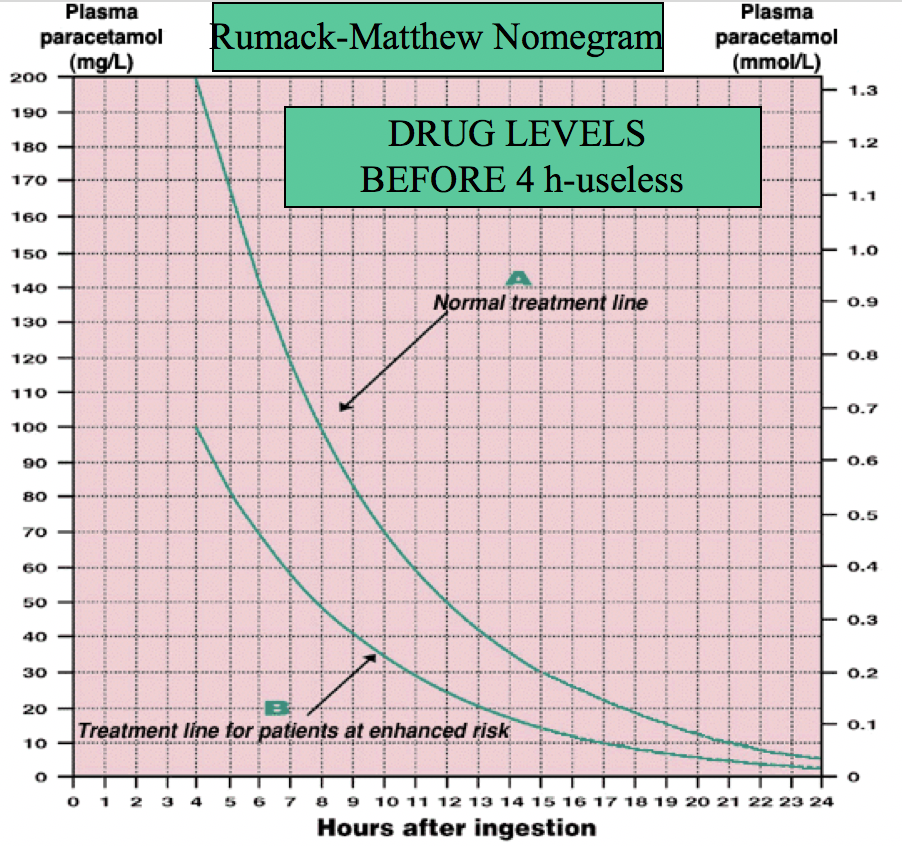
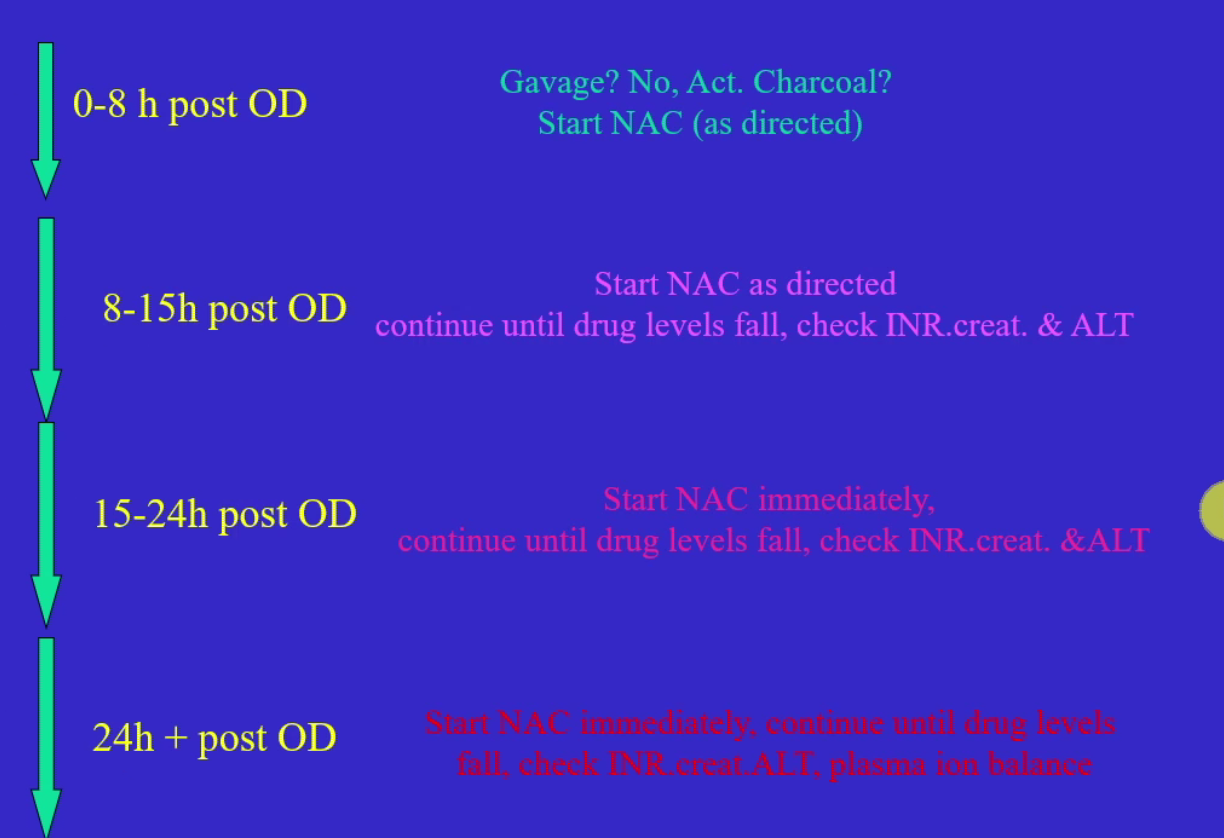
Paracetamol: rescue therapy timeline
Type B2 Immune related drug toxicity
• The immune system should detect non-self anywhere in the biological system • Inate an appropriate response • Retain a memory of its response for next time • Immune system should theoretically NOT react to small molecular targets (1500 D- virus not that small)
Type B2
• Drugs which provoke an immune response- often confused with infection so give them antibiotics • Anticonvulsant syndrome- difficult to rescue them • Symptoms- rashes, fever, hepatitis/failure) • Blood dyscrasias- immune system attacks blood cells (red or white) • Haemolytic anaemia (NSAIDS, penicillins, cephalosporins) • Aplastic anaemia- (Destruction of bone marrow by the immune system)- caused by chloramphenicol, chlorpromazine, anti-neoplastic agents • Cutaneous toxicity- sulphonamides • Hepatotoxicity (DILI drug-induced liver injury)- statins, halothane, INH, phenytoin • Agranulocytosis- clozapine, sulphones, chlorpromazine, anti-thyroid agent
Common features
• Syndromes occur at least 6 maybe 10 weeks after therapy begins (change in therapy) • Progression is very rapid and disseminated • Fever, rashes, hepatotoxicity • Treatment-steroids • Re-challenges effect occurs within days or hours • The structurally unrelated drug must be used to maintain therapy
How do drugs trigger an immune response
• Two theories on immune function • Stranger hypothesis • Danger hypothesis
Stranger hypothesis
• Immune system reacts to non-self • LPS, bacterial/viral proteins and DNA • Anything that is not human • PROBLEM: does not account for the destruction of cancer cells and the rejection of organs • We have used this to destroy tumour- take out T cell, modify it to destroy the cancer cells - the stranger hypothesis is not quite enough
Danger hypothesis
• Immune system ‘listens’- • Detects certain trigger molecules associated with danger (infection or abnormality) • Such as uric acid, some interlukins, cytokines, HSPs, HMGB1 • Enough trigger molecules are detected response is initiated *
Basic immune function
• The immune system looks for antigens inside and outside cells • Processes them: two-signals needed (maybe a third) • Initiates/does not initiate a response • Immune reaction does/doesn’t occur
Immune response Intracellular detection (1)
• Intracellular Ag detection => • TAP loads protein fragments on MHC-1 => • MHC-I moves to cell surface and displays Ag => • CD-8 killer T cells detect Ag => • T-cells destroys the cell
Extracellular Ag detection (2)
• Extracellular Ag detection => • APCs detect and engulf Ag => • MHC-II binds and displays Ag • =>Ag presented to CD-4 + T cells with co-stimulaiton • =>APC instructed to form Ag-directed Abs • =>Ag presented to C-4 Tcells without Co-stimulation • No immune response, T cells may undergo apoptosis
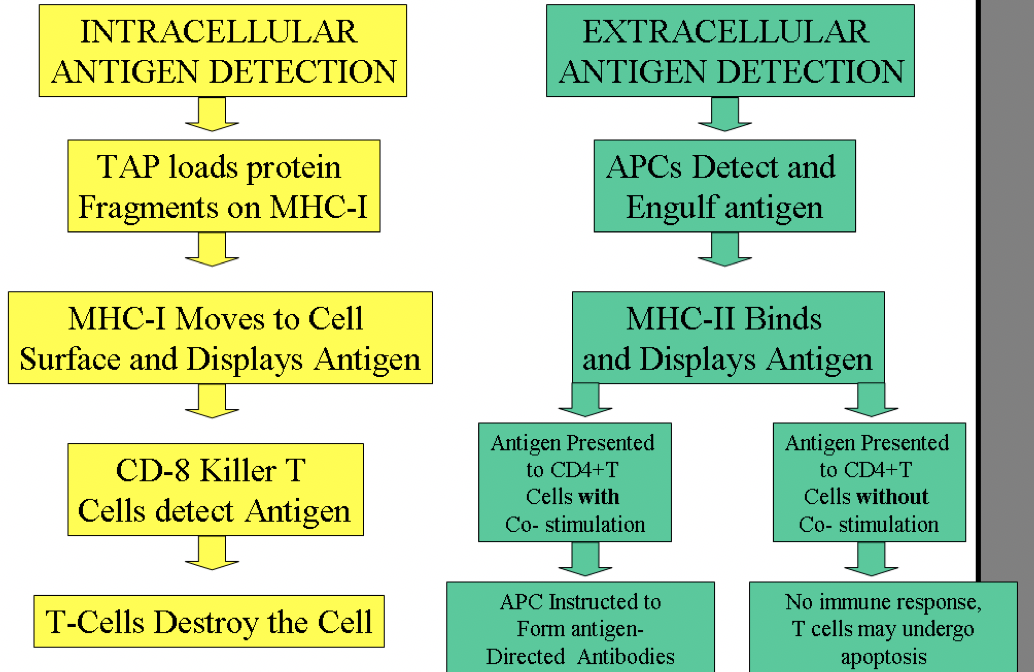
How do drug toxins initiate a response 3 ideas
• Hapten hypothesis • Pharmacological interaction hypothesis • Danger signal hypothesis
Hapten hypothesis
• Immune response to low molecular weight agents in certain circumstances • Haptens: Reactive species which bind to macromolecules • The immune system responds to the hapten/macromolecule combination • The immune system doesn’t respond to hapten alone • Particularly with spontaneous drugs such as penicillins
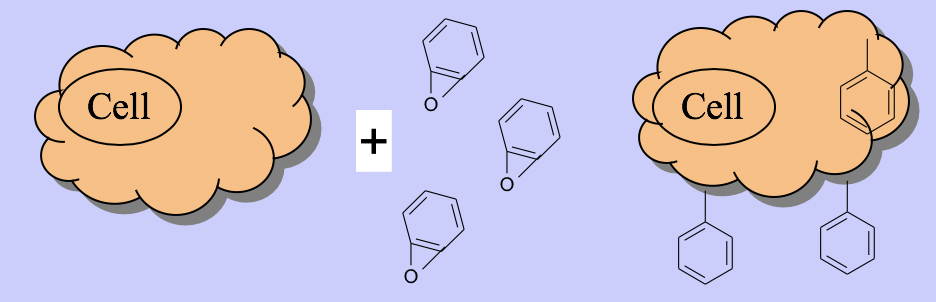
Pharmacological interaction hypothesis
• Some immune responses are so fast that Ag presentation could not have occurred • Drug/Metabolite binds directly to MHC molecules and triggers effects • Covalent binding is not required • Does not explain how sensitization occurred • Same effects are Ag presenting virus epitope
Danger signal hypothesis
• Immune system reveives chemical and protein signals (may or may not include metabolites and haptens) • Drug/Metabolite may stimulate appearance of danger signal molecules
Immune tolerance to drugs
• Why to some individuals develop drug allergies • Immune sensitivities to danger signals • Cellular repair-slow repair pre-disposes to immune reaction
Type B3- cancer
• Drugs rarely implicated in cancer (except for anti-neoplastic) • Some reactive species formed by CYPs and reductive pathways can damage to DNA unless phase II detoxified • DNA either repaired or retained as damaged • Malignancy can result, sometimes 20-50 years later • Main problems: smoking, dietary agents (aflatoxins), occupational exposure, obesity- a permanent level of immune upregulation, Genetic- thiol levels
Adverse reactions to drugs map