History of Life on Earth
No description yet. This curated deck is ready for daily study.
Card preview (24)
The Origin of Cellular Life (possibly)
The first simple cells may have chemically evolved through a four-stage proccess: • Abiotic synthesis of small organic monomers • Polymerisation of monomers into proteins, nucleic acids, etc • Appearance of self-replicating polymers (proteins, polynucleic acids, etc) • Packaging of organic molecules into probionts (aggregates of orgmols that display some k associated with life - homeostasis, metabolism)
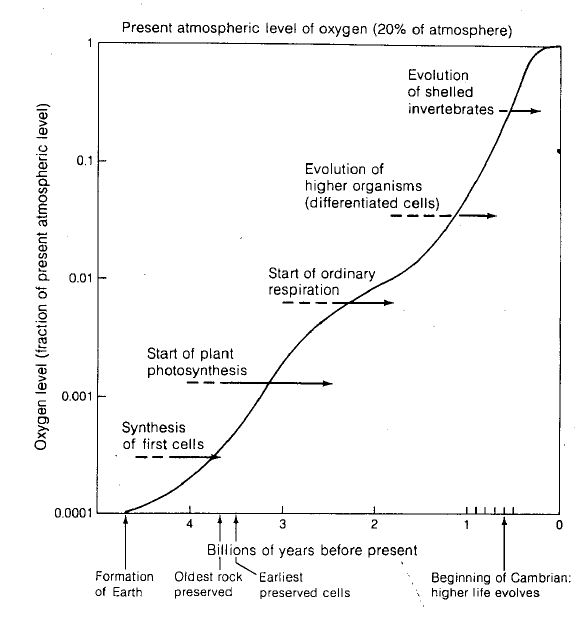
The Origin of Oxygen
Earth’s oxygen is produced by photosynthesis (!), originally started by green-blue bacteria (cyanobacteria) Animal life (requires atmospheric O2) didn’t come into existence until 600 Ma
The Earliest Organisms
The first organisms were anaerobic prokaryotes Some organisms evolved the ability to use the sun’s energy Photosynthesis increases the atmospheric concentration of O2 In response to this “oxygen crisis” aerobic respiration evolved some organisms obtained membrane-enclosed organelles (endosymbiosis hypothesis)
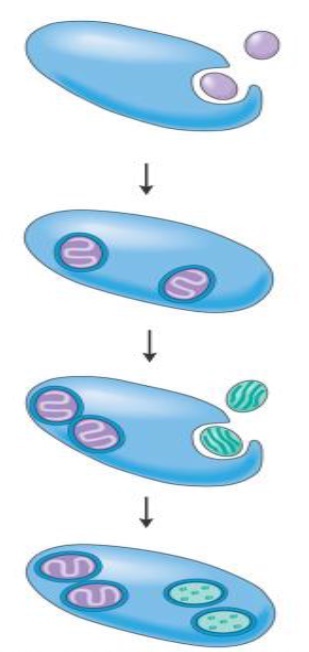
The Endosymbiosis Hypothesis
You know the drill. “The ancestors of chloroplasts may have resembled Chlorella, a green, photosynthetic algae that lives symbiotically within the cytoplasma of Paramecium
The Earliest Multicellular Organisms
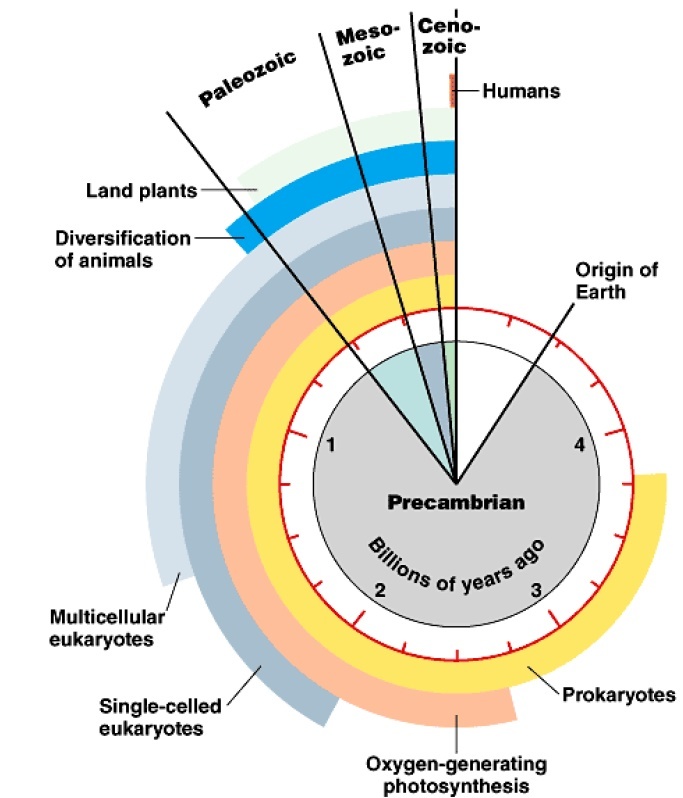
The first organisms to become multicellular were algae, while higher organisms with differentiated cells evolved more than 1 Ba Animal diversity arose in the precambrian era (<600 Ma) - original animals were primarily aquatic shelled invertebrates Life invaded the land in the Cambrian era (500 Ma) O2 levels reached ~current in the Devonian (400 Ma) Land animals date back to 350 Ma (still Devonian)
Major Events in Evolutionary History “The Evolutionary Clock”
What are Animals?
Animals are multicellular, heterotrophic eukaryotes with tissues that develop from embryonic layers. Their cells lack walls. Muscle and nervous tissue are unique to animals 1.3 million animal species have been identified The common ancestor of living animals (may have) lived between 675 and 875 Ma It may have resembled modern choanoflagellates - protists
The Phylogenetic Tree
The classifications of the phylogenetic tree are mainly based on: embryology, morphology, homology criteria and molecular genetics
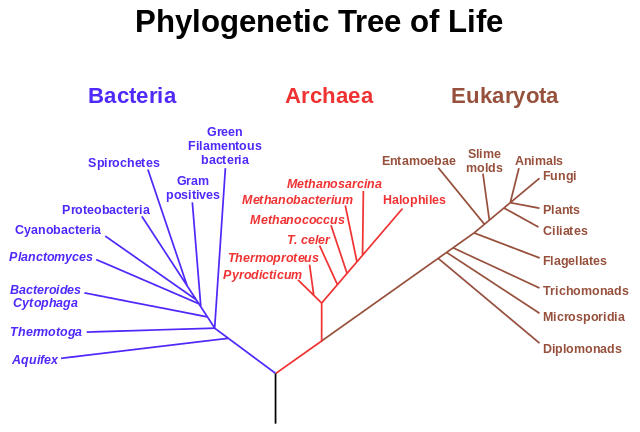
The Eukaryotic Tree (eugh)
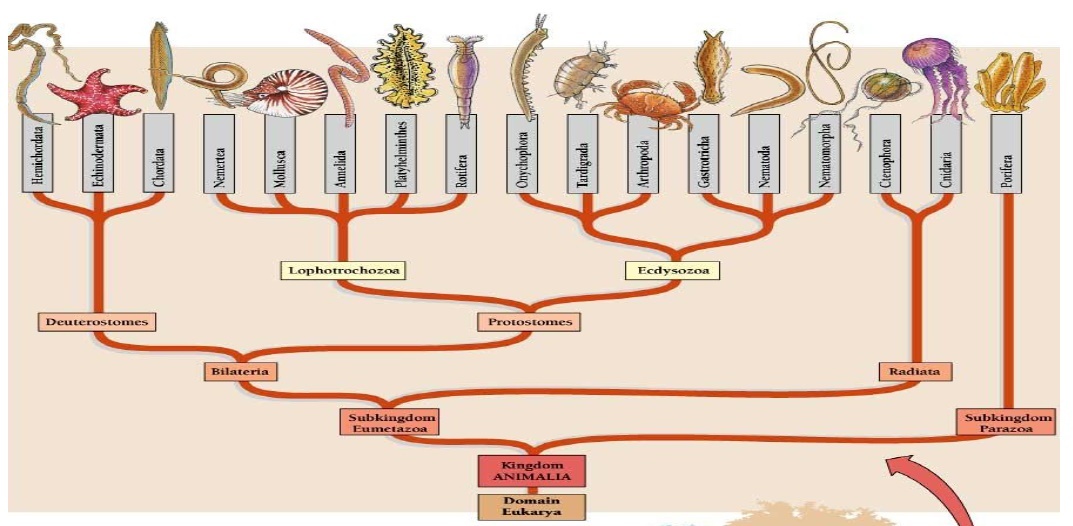
Phylum Parazoa Order Porifera
Porifera (Sponges) are the only order belonging to Parazoa: No symmetry or organisation Sessile Little cell specialisation, no organs No nerves Cells in three layers - water pulled through pores by flagellated cells, filter-fed hemaphoriditic Contemporarily divided into Silicea and Calcarea
Symmetry of Form
Bilateral: 1 line of symmetry axes: dorsal/ventral; left/right; anterior/posterior cephalisation: development of a head Radial: infinite lines of symmetry
Development of Tissues
Tissues: collections of specialised cells isolated from other tissues by membranous layers During development 2 or 3 germ layers give rise to the tissues and organs of the embryo
Germ Layers
Ectoderm (surface) (Mesoderm) Endoderm (innermost) Diploblastic animals: ecto & endo only Triploblastic: all 3
Radiata (unranked taxa)
Includes 2 phyla: Cnidaria: Hydrozoa (hydroids) Schyphozoa (jellyfish) Anthozoa (corals, sea anenomes) Cubozoans (jellyfish like) Ctenophora (comb jellies)
Coelomates
Subtaxa of Bilateria Acoelomates (no body cavity): Only Platihelmines or body cavity: Pseudocoelomates (cavity not enclosed by mesoderm): rotifers and nematodes Coelomates: everything else
Cnidaria
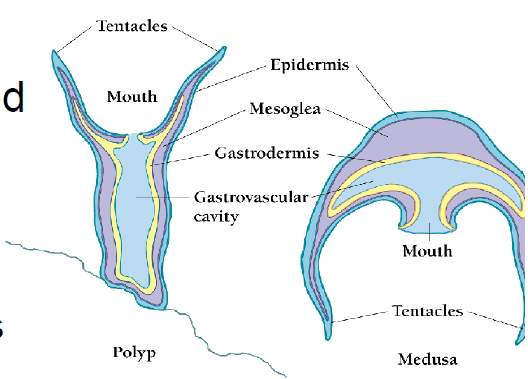
2 layers of tissue, no organs Single mouth-like cavity to a central digestive cavity Tentacles (cnidocytes) with stinging cells (nematocysts) capture cells Simple muscle and nerve cells Polyps are cylindrical / Medusae are bell-shaped
Ctenophores
Comb jellies have bands of cilia for propulsion Hermaphrodites: shed sperm and eggs into the open sea
Bilateria (unranked taxa)
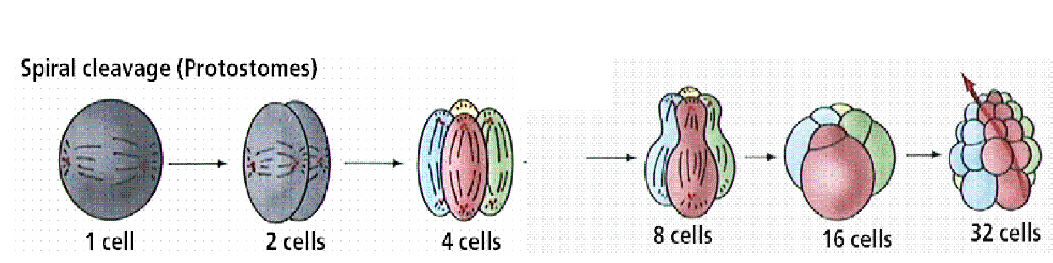
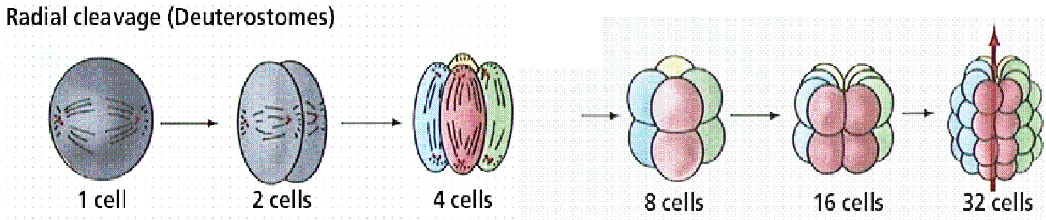
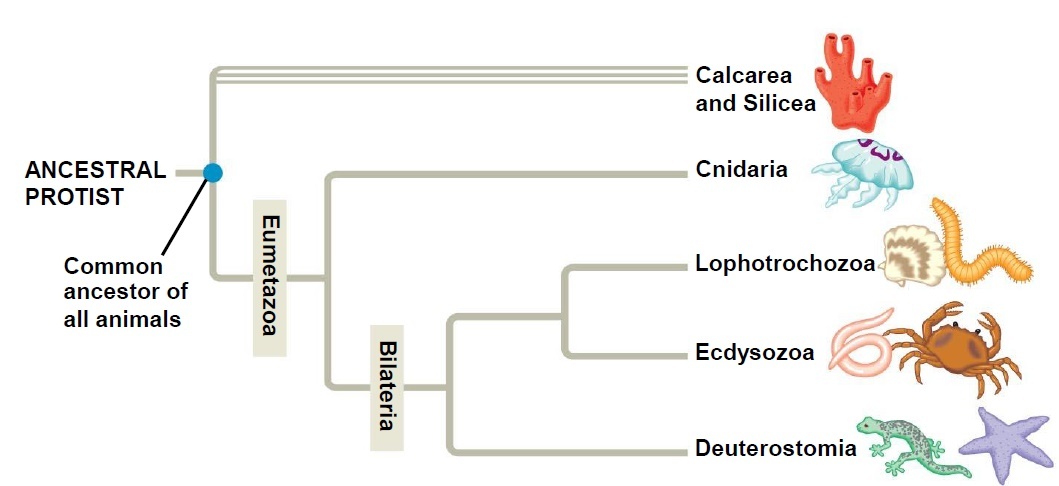
Divided into: Protostoma (spiral cleavage) and Deuterostoma (radial cleavage)
Protostomes
“first mouth” - develop mouth-first bilaterially symmetrical, 3 germ layers, organ-level organisation, tube within a tube body plan & a true coelom (main body cavity)
Deuterostomes
Radial cleavage, forms a blastophore than eventually becomes an anus Indeterminate cleavage: cells specialise late, meaning if they are removed from blastula it can form a complete new larva, and the remaining cells can compensate
The Problem of Phylogeny
The phylogenetic tree is under constant debate, especially with the rise of molecular genetics Recent molgen studies suggest deuterostomes and protosomes should instead be divided into: Deuterostomia, Ecdysozoa and Lophotrochozoa
What is a Phyla?
Consists of a group of animals sharing a common body plan Each member can be derived from a common ancestor with certain diagnostic features. e.g: molluscs: radula, mantle, foot Important to distinguish between homology and analogy
Clade Lophotrochozoa
Wide range of animal body forms includes: flatworms, rotifers, ectoprocts, brachiopods, molluscs, and annelids
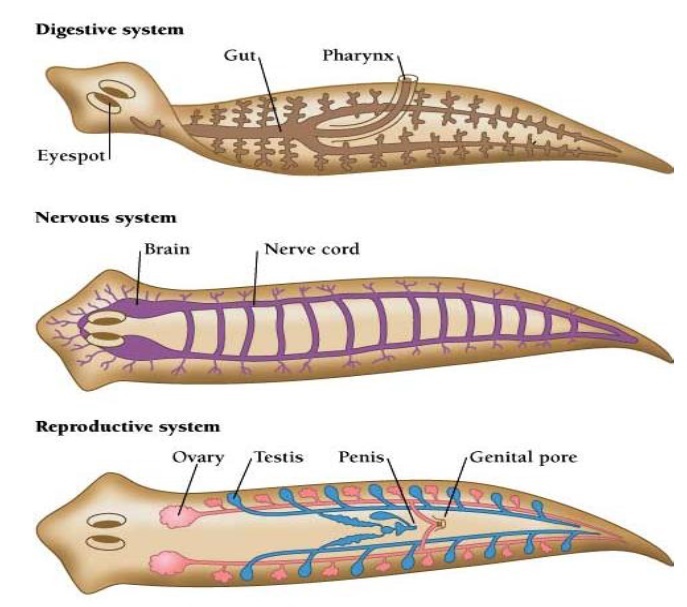
Phylum Platyhelminthes
Includes: Turbelleria: mostly freeliving flatworms Monogenea: marine and freshwater parasites Trematoda: flukes Cestoda: tapeworms