Ch18 Rates of Reactions
No description yet. This curated deck is ready for daily study.
Card preview (17)
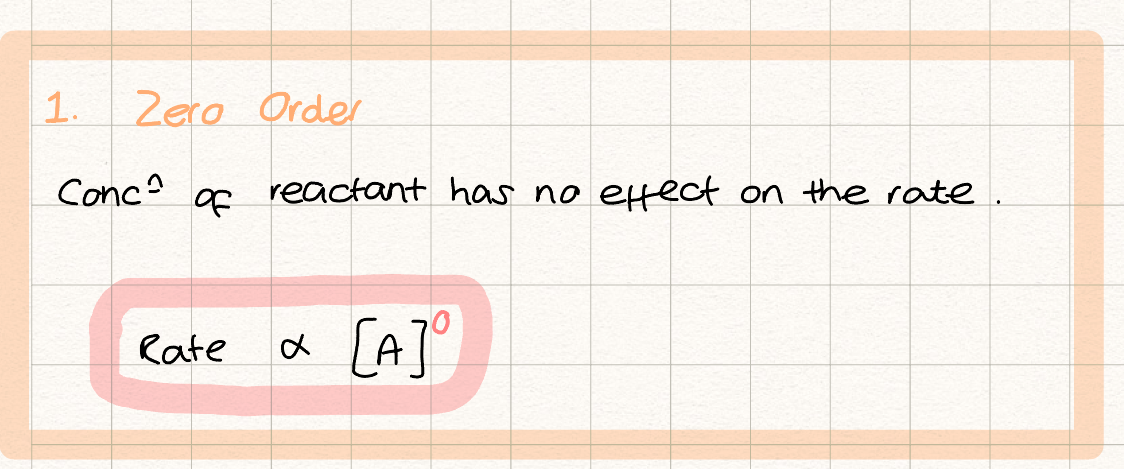
What does zero order of reaction mean?
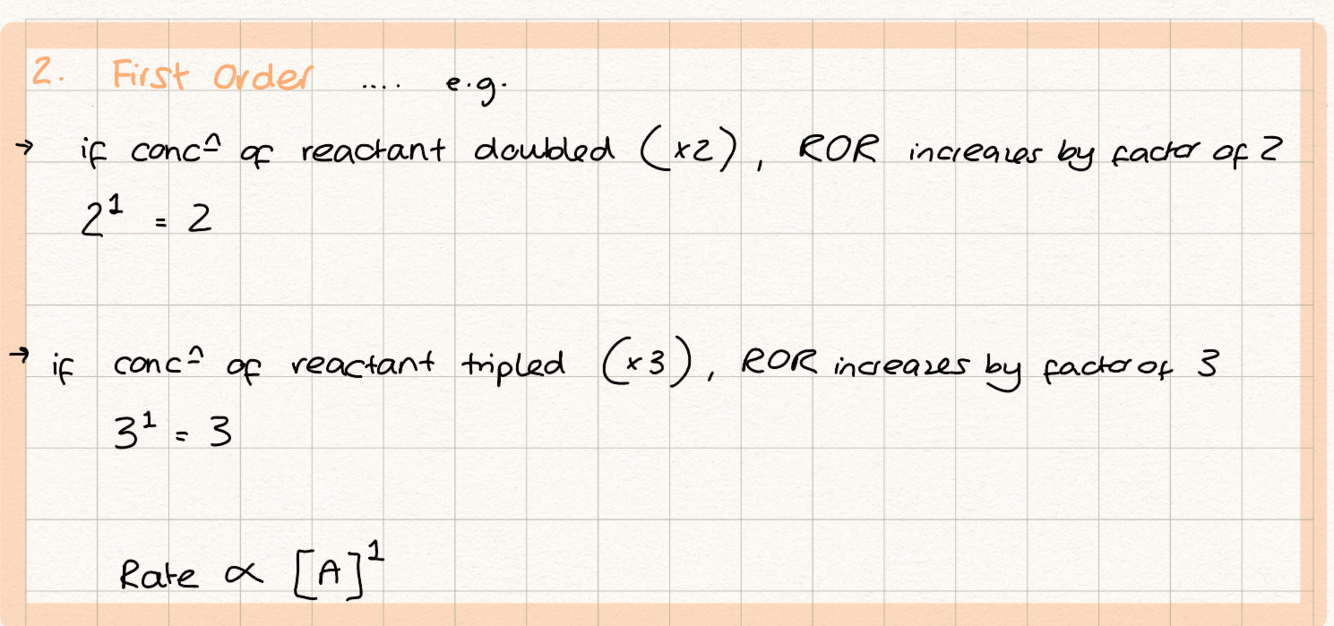
What does first order of reaction mean?
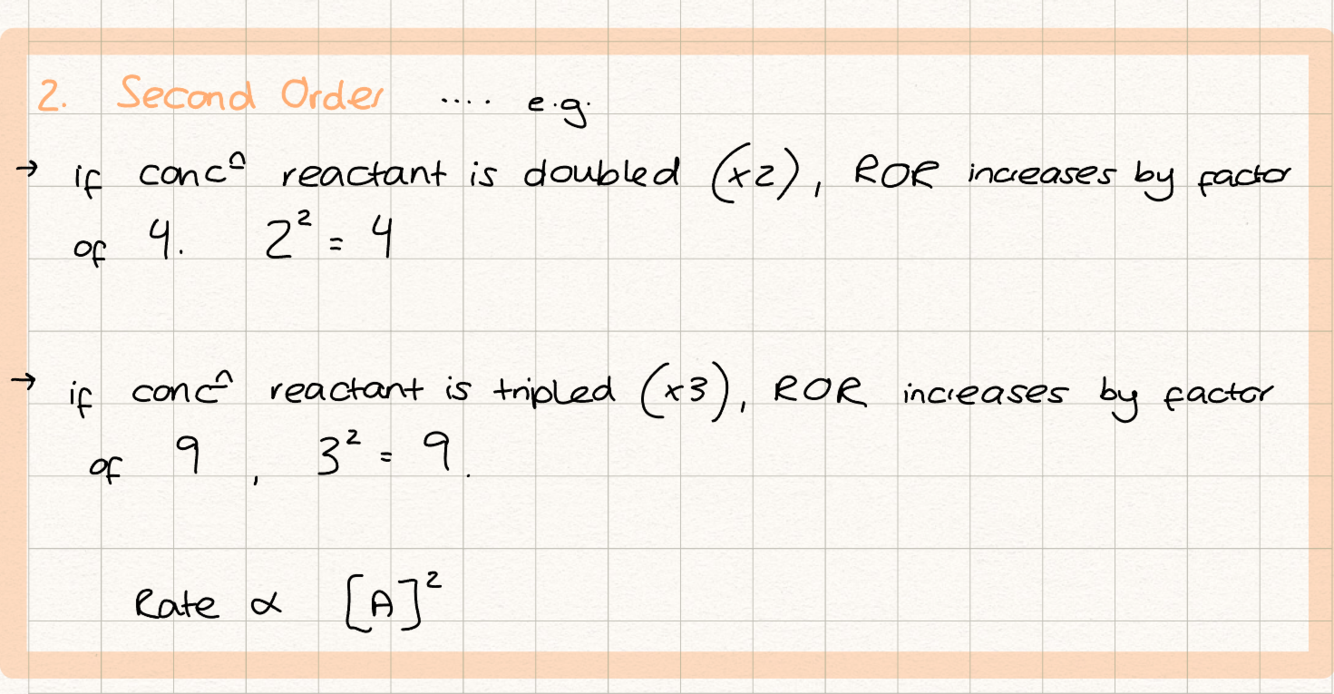
What does second order of reaction mean?
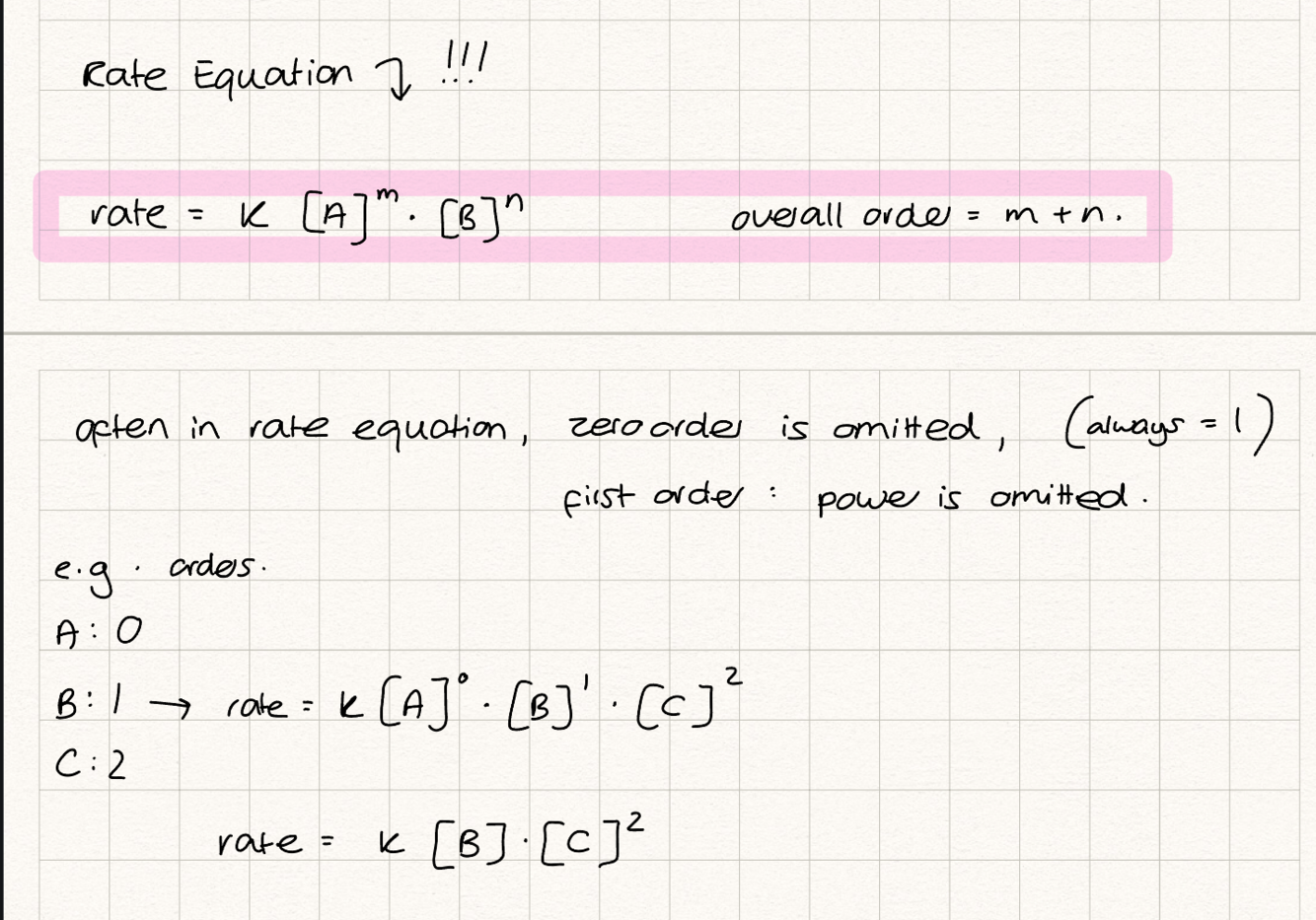
What is the rate equation?
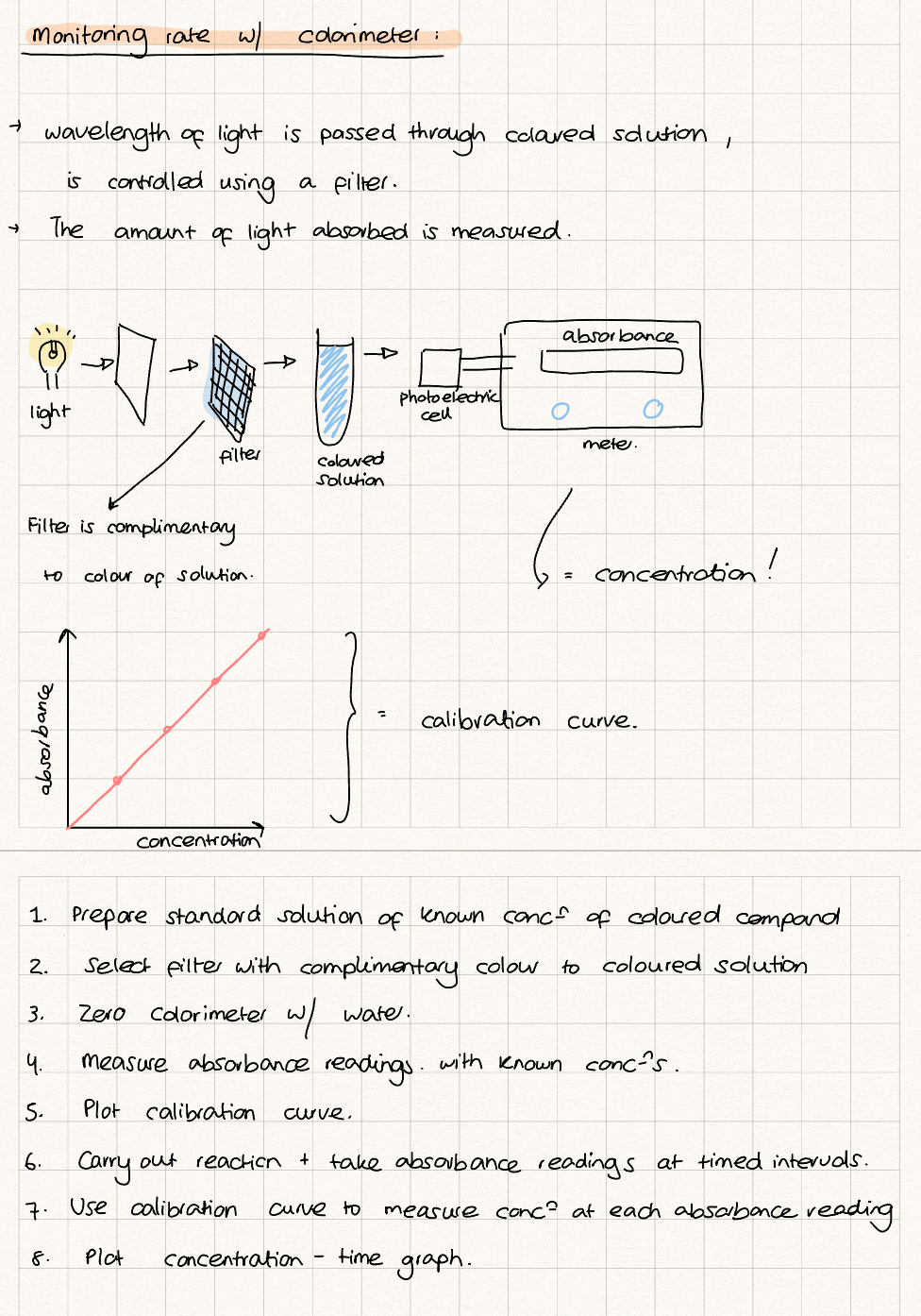
Explain how a colorimeter can be used to create a concn-time graph:
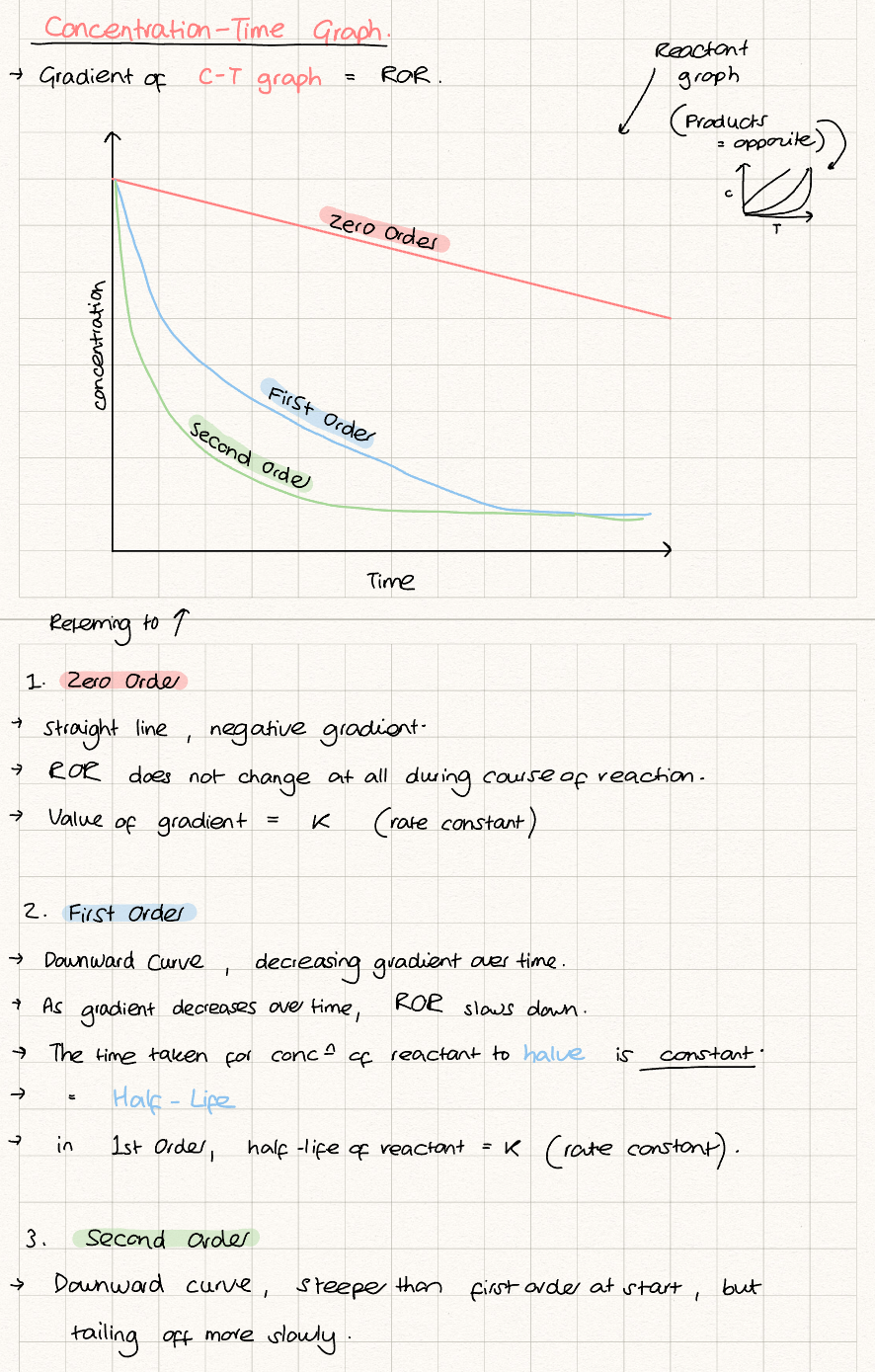
In a concentration-time graph, how would the line be plotted for: * zero order * first order * second order For each, give an explanation of how the rate is affected.
What is half-life?
• Half life = t 1/2 • = time taken for 1/2 reactant to be used up • first order reactions have constant half life • = exponential decay • first order relationship can be confirmed on C-T graph by measuring successive half-lives • If t 1/2 = same, reaction is first order with respect the reactant.
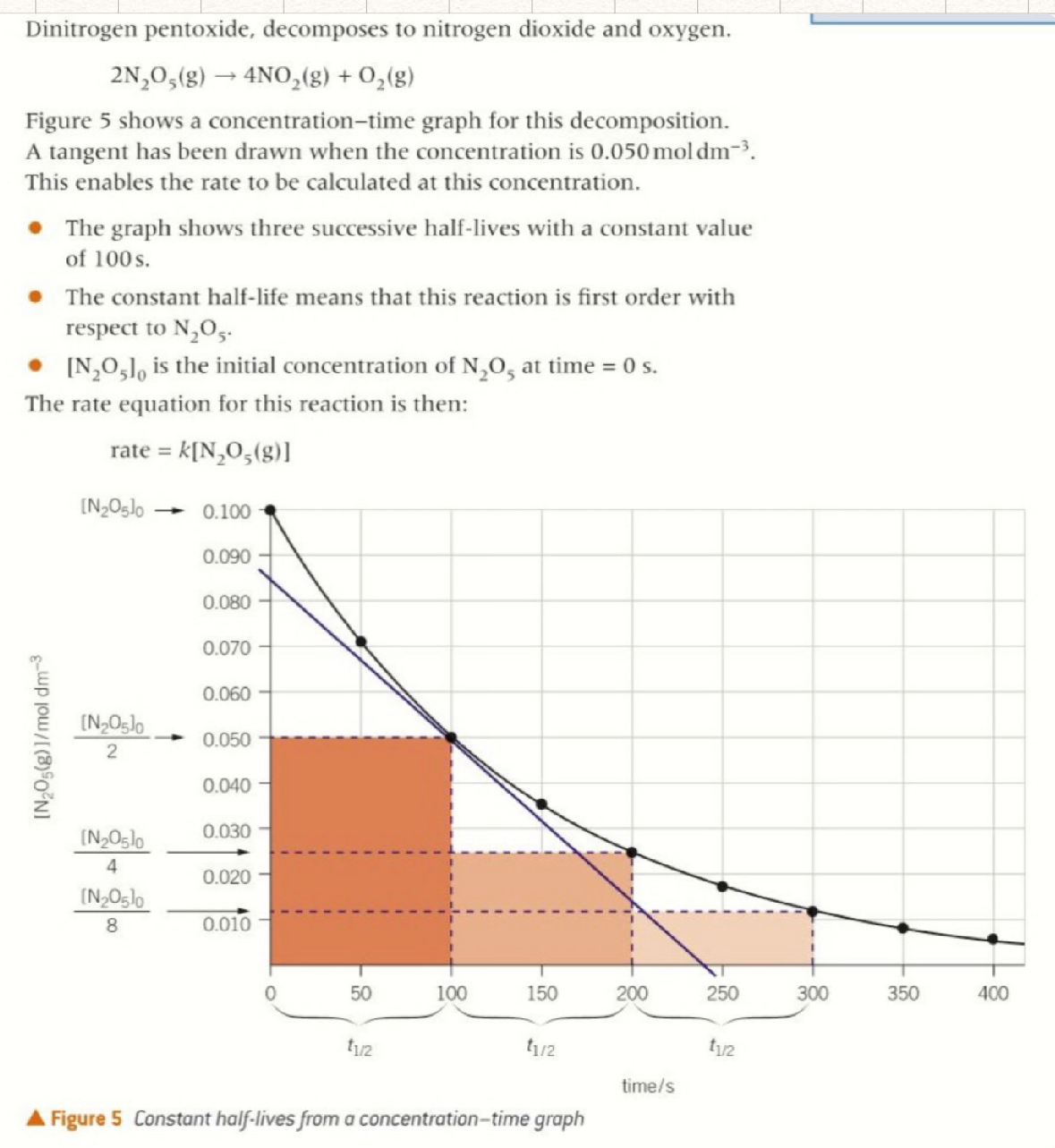
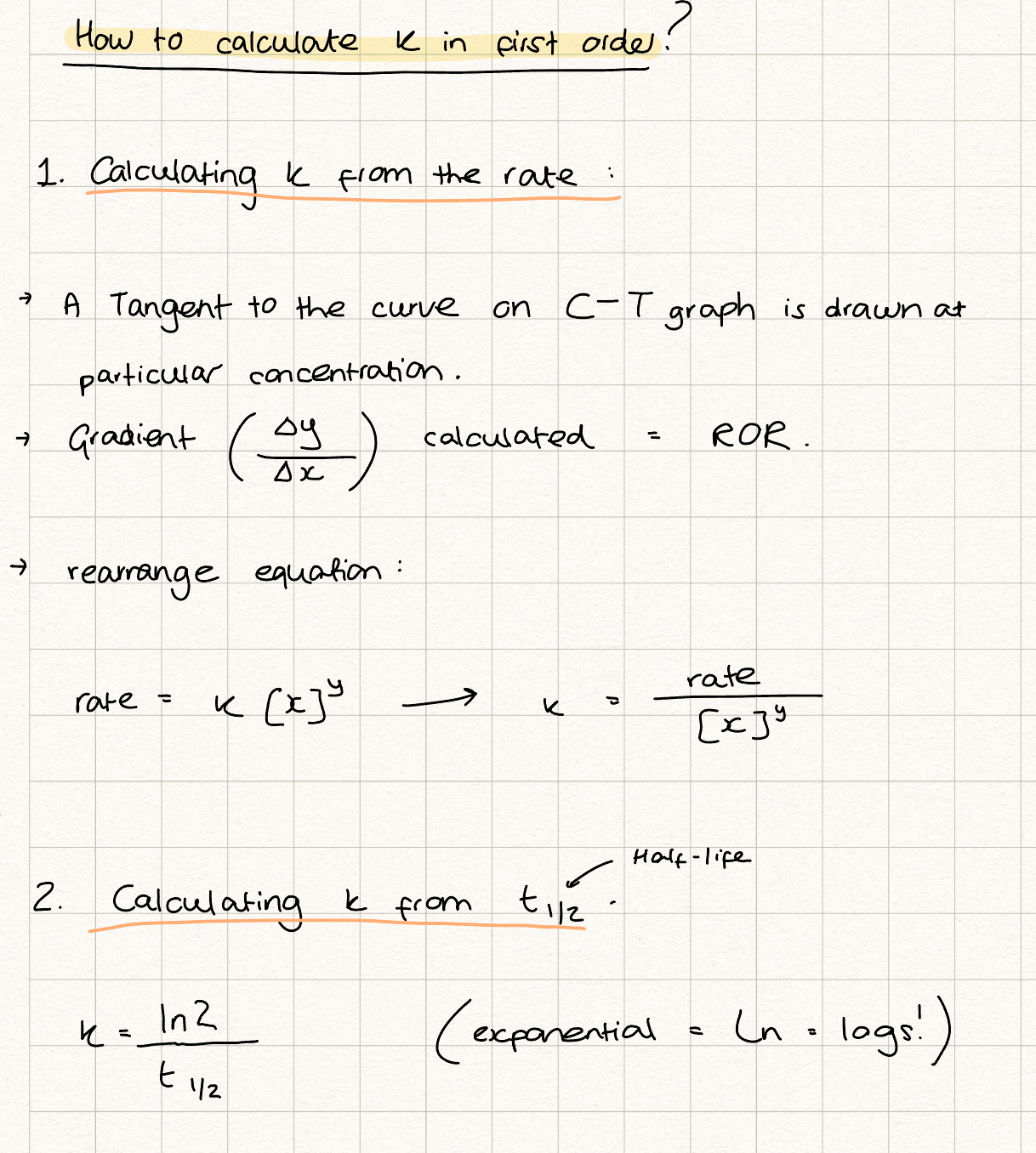
How can k be calculated in a first order reaction from: * rate on C-T graph * from t 1/2
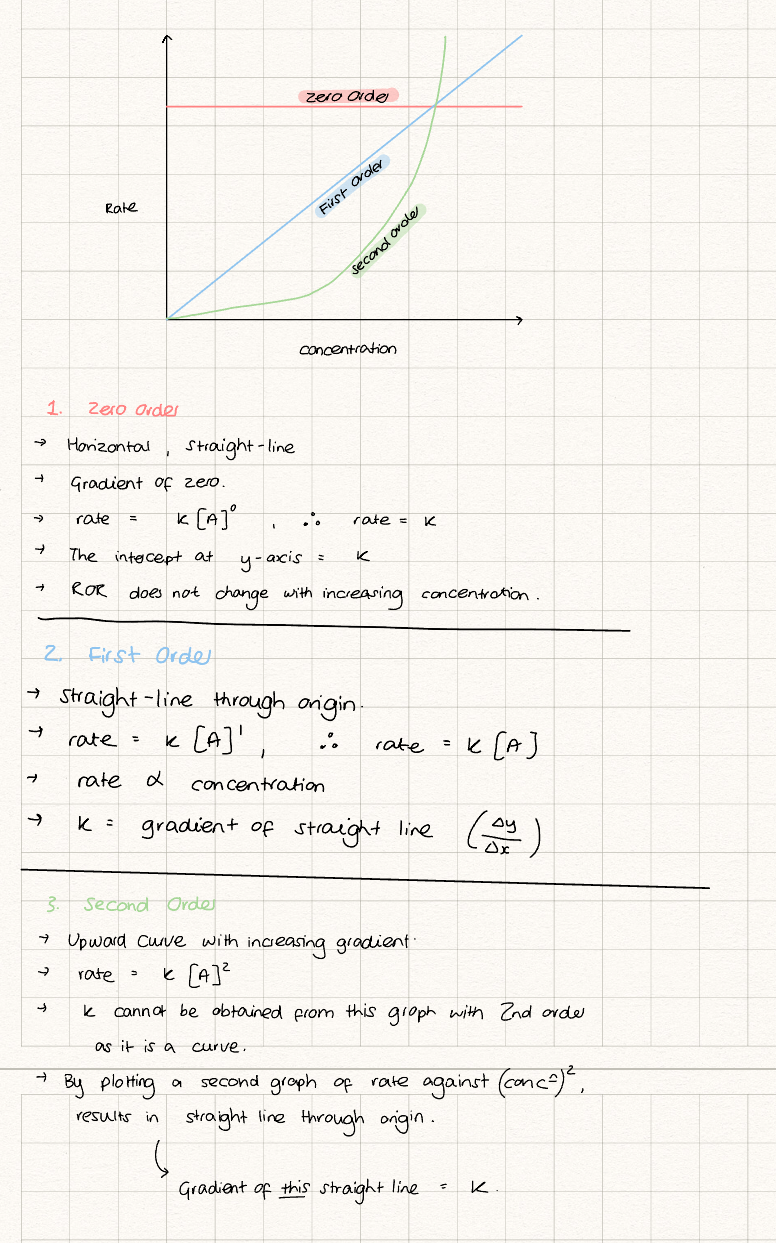
Describe the profile for zero, first and second order for a rate concentration graph:
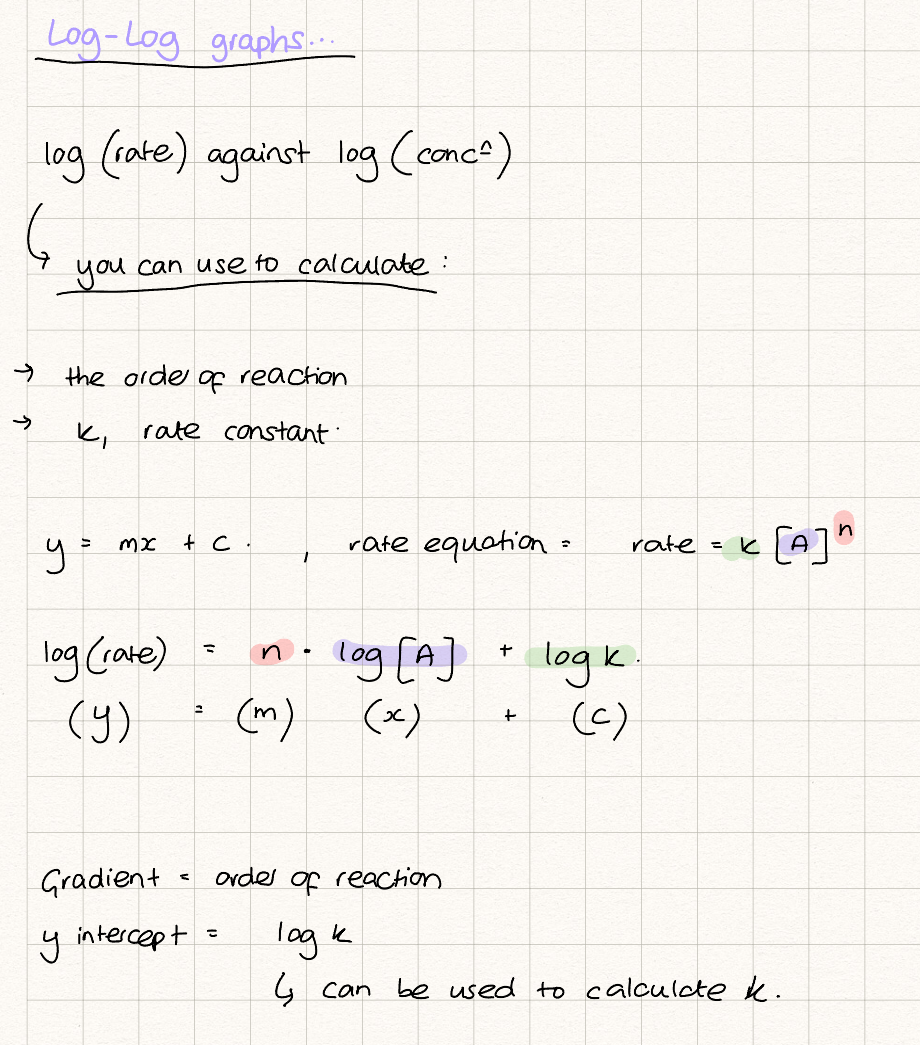
What are log-log graphs useful for? (how is the rate equation used)
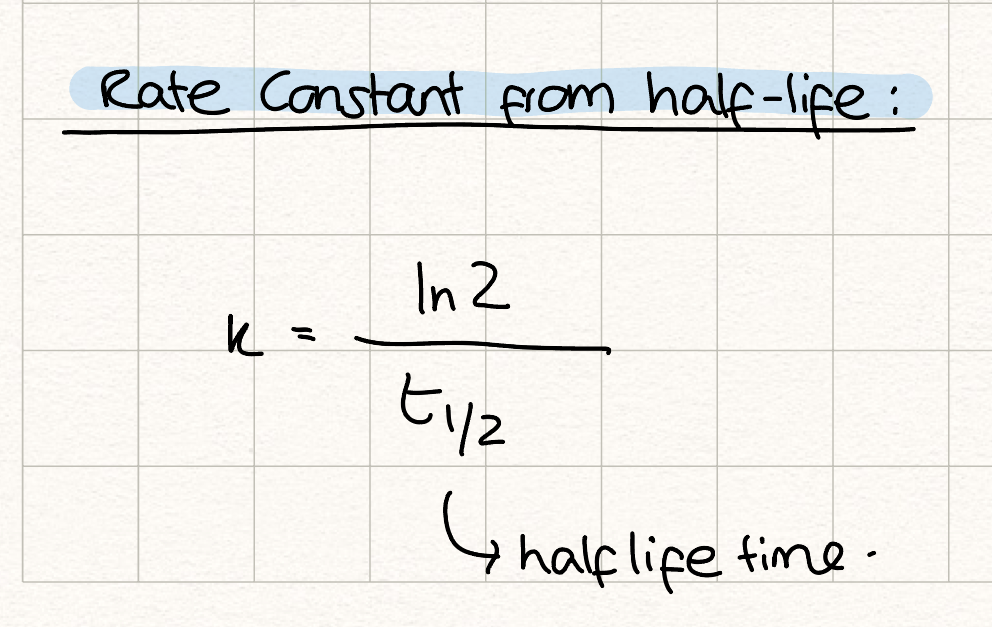
How can k, the rate constant, be calculated using half-life data?
How is initial rate calculated using a graph:
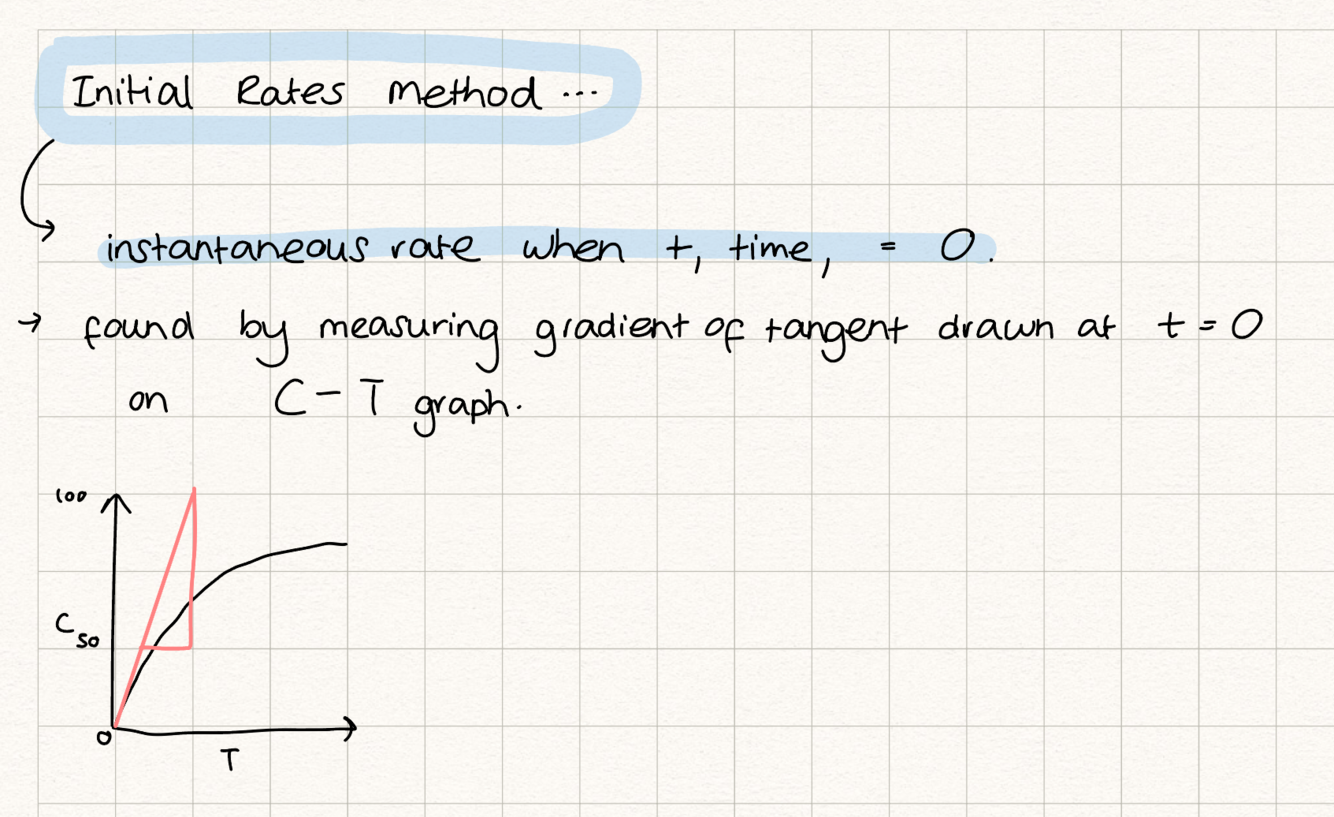
READ OVER IODINE CLOCK NOTES
How is the rate determining step known?
• Balance the equation to give relative amounts/ molar ratio • RDS = steps in multi-step reaction will take place at different rates, slowest step = RDS • Rate equation only includes reacting species in RDS, orders in rate equation match no. species in RDS • Rate equation only shows reactant involved in slow RDS. Any species not involved is zero order (and therefore only involved in fast rate step) • Any species not appearing in the equation must be made in step one and used in step 2 (cancelled out) • If both equations are put together (and reoccurring products on both sides of arrow are cancelled from both sides), then it should add up to show the original equation in the same molar ratio.
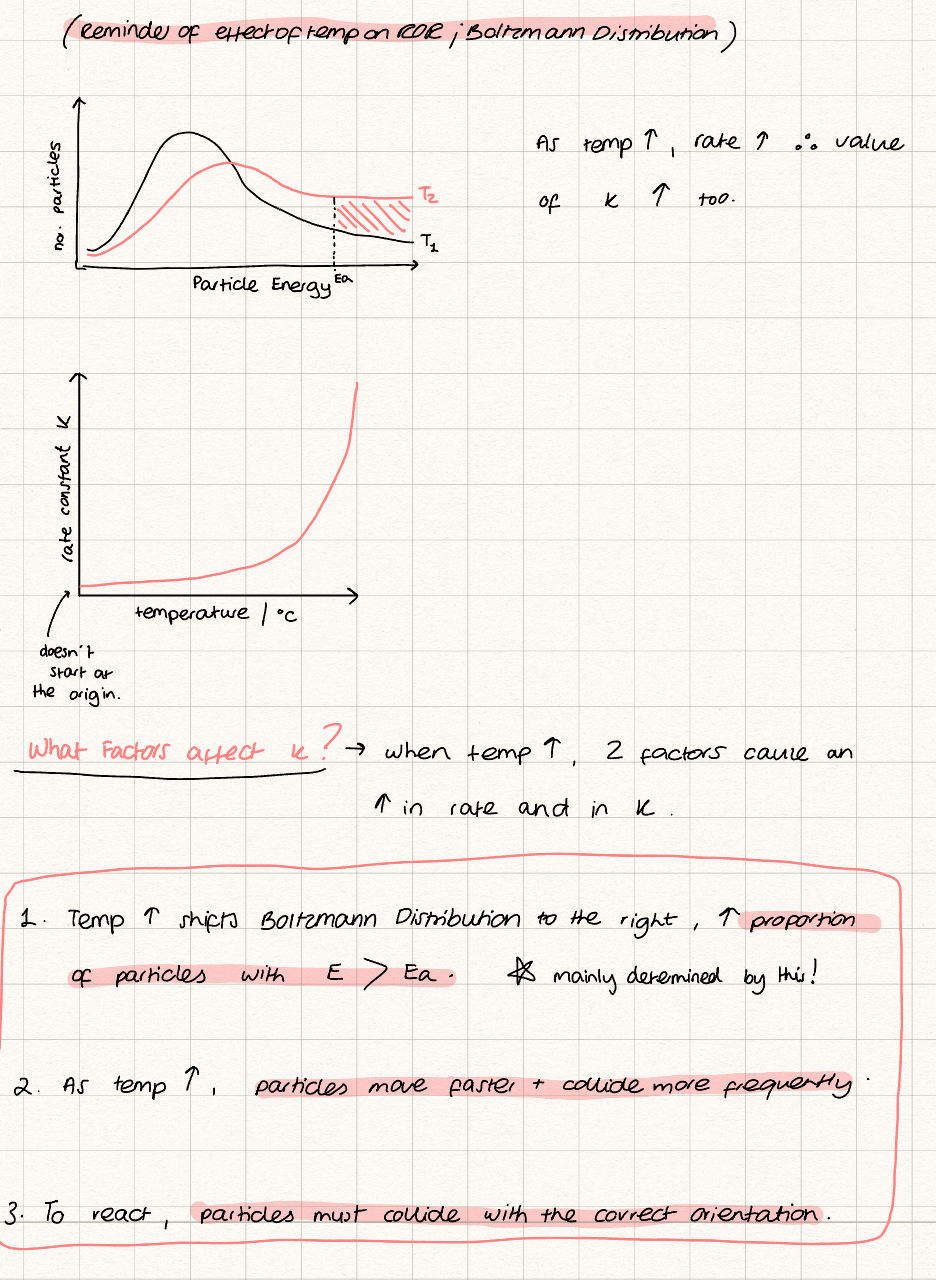
How does temperature affect ROR (use Boltzmann)
What is the arrhenius equation, what does the exponential factor mean, what does A the pre-exponential term mean, what are the units for each term in the equation:
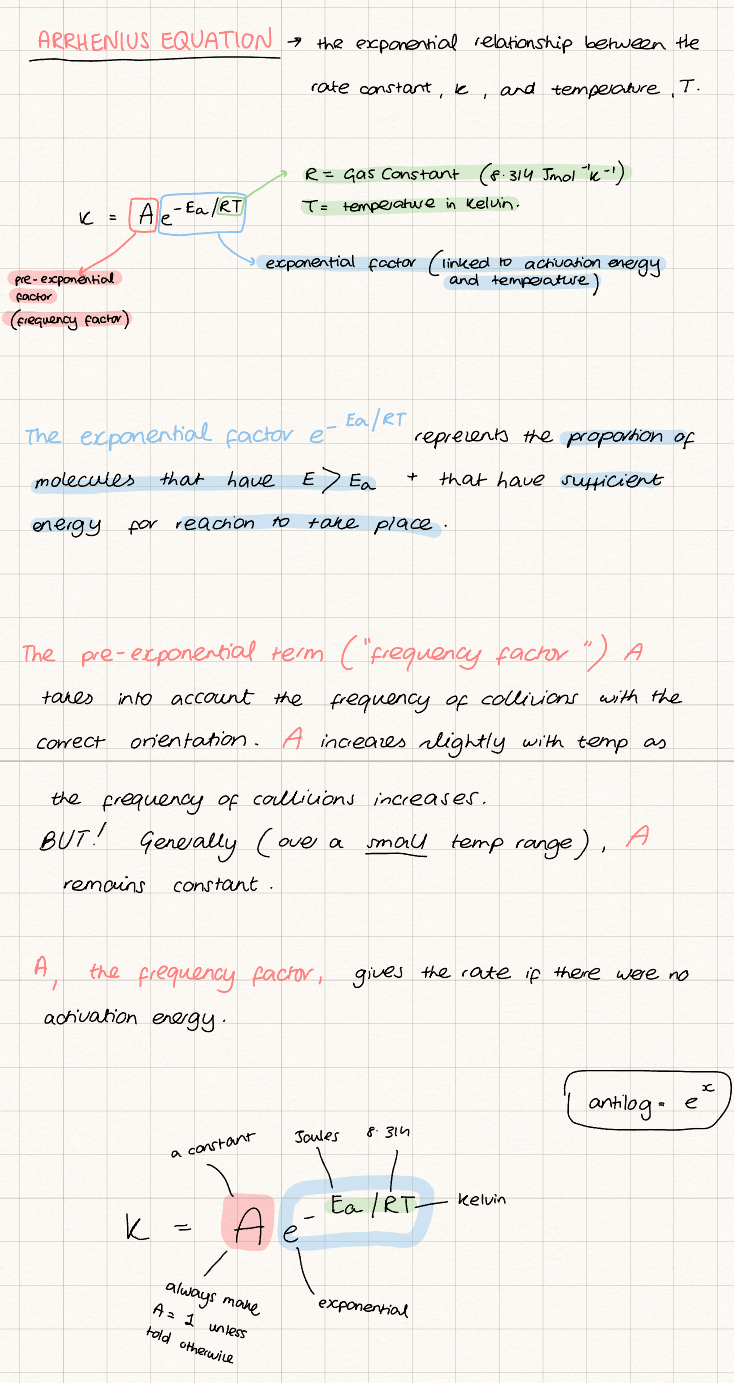
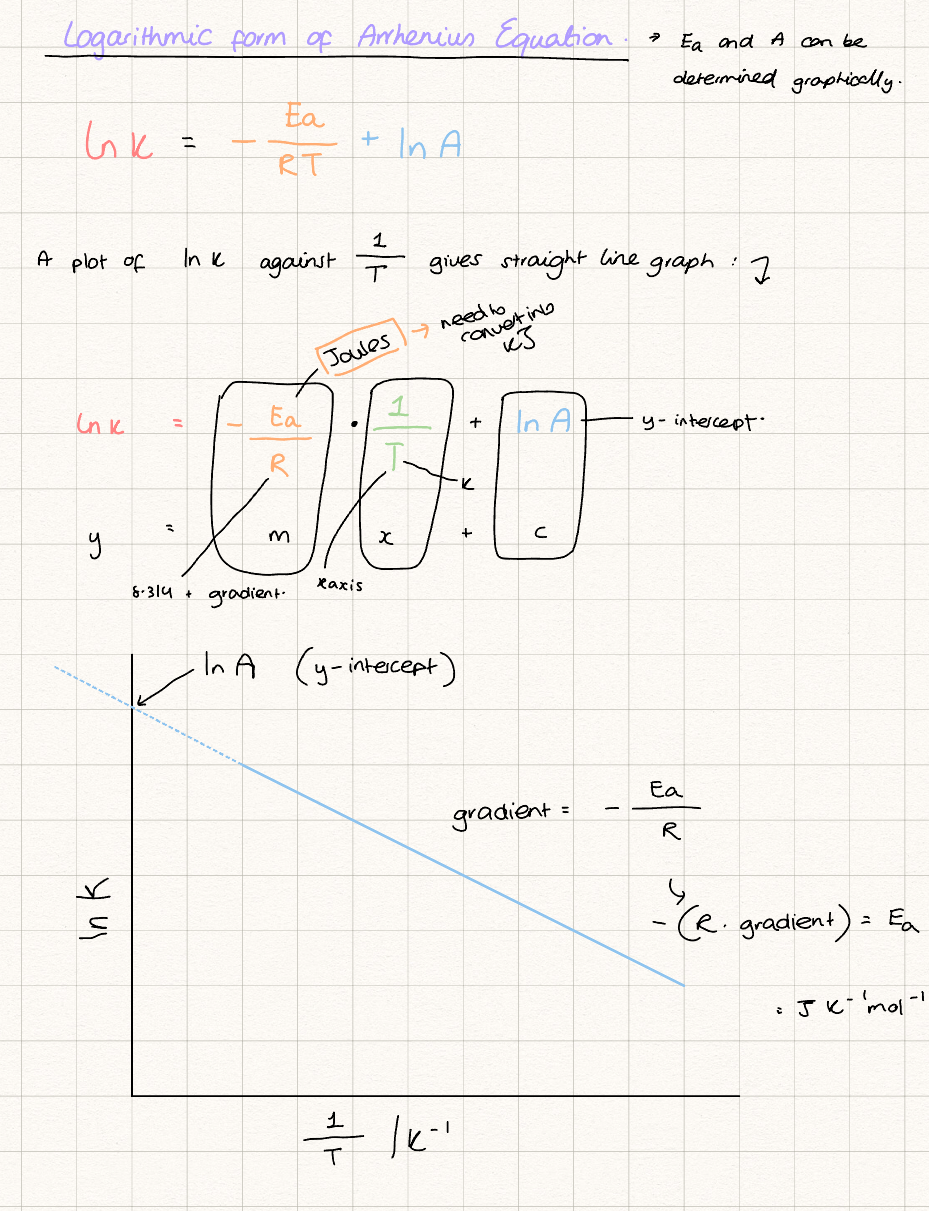
Logarithmic form of Arrhenius Equation: