C6 Rates
No description yet. This curated deck is ready for daily study.
Card preview (24)
how do you calculate the rate of reaction?
amount of product produced ÷ time taken
how do you find the reaction rate from graph?
gradient
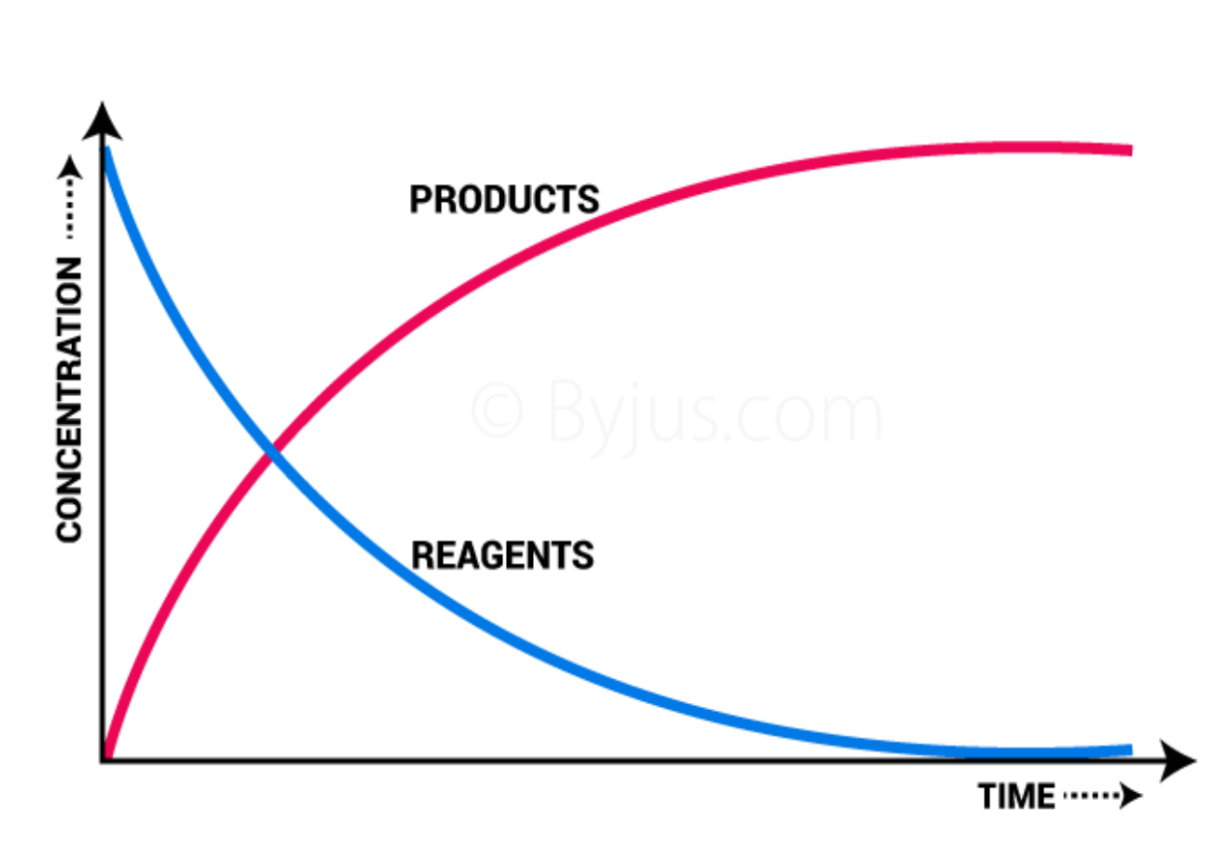
describe and explain how a graph of reaction rate would look like (3)
• steepest gradient = fast: high concentration of reactants/abundance of particles → more frequent + successful collision • less steep gradient = slow down: reactants getting used up → less collision • flat gradient = stops: all reactants used up
We can measure the rate of a reaction by measuring…?
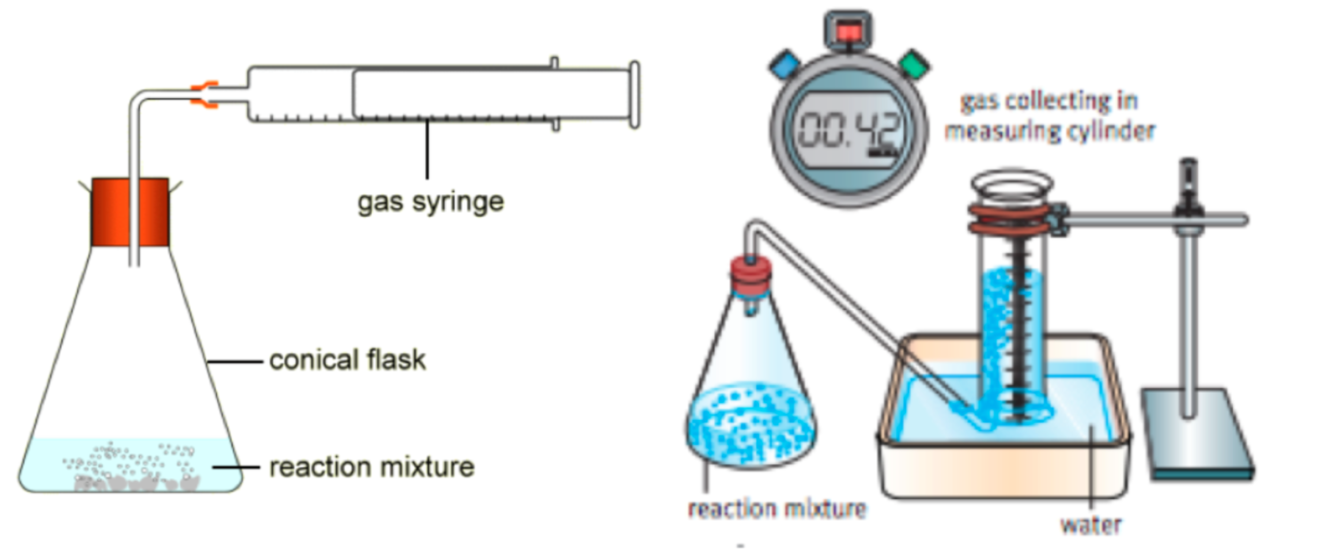
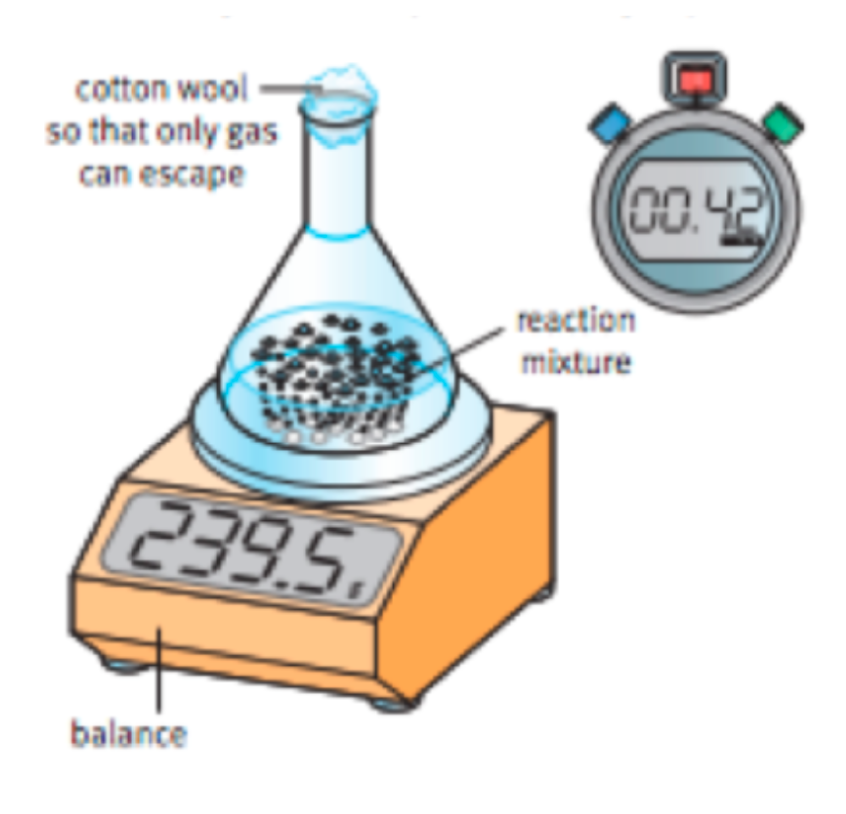
• LOSS OF MASS in certain time (gas escapes) • collect + measure GAS PRODUCT in certain time • TIME how long for solution to turn cloudy
how do you collect + measure GAS PRODUCT? use a labeled diagrams to explain (there are two ways)
how do you measure LOSS OF MASS? use a labeled diagram to explain
what conditions (in terms of PARTICLES) are needed for a reaction to take place?
particles COLLIDE + have ENOUGH ACTIVATION ENERGY
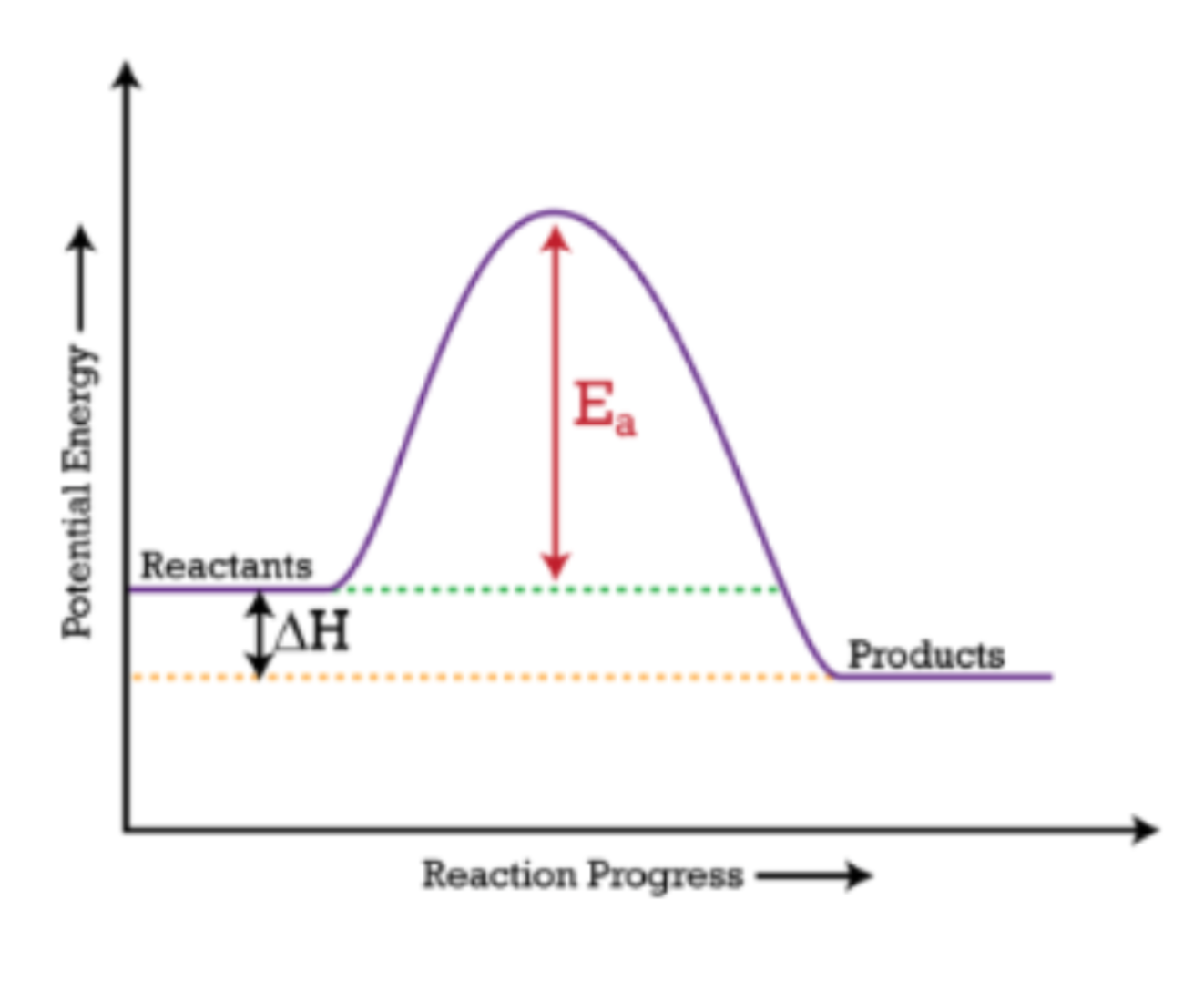
how do you make a reaction FASTER? (4)
TEMP. → move faster + more energy → more frequent + successful collision CONCENTRATION → more particles → more frequent collision → more chance for successful collision CATALYST → lower Ea → more particles have enough Ea → more successful collision SA more particle exposed → more frequent collisions → more chance for successful collision
what do CATALYSTS do?
lower Ea → rxn can occur at lower temp → speed up rxn
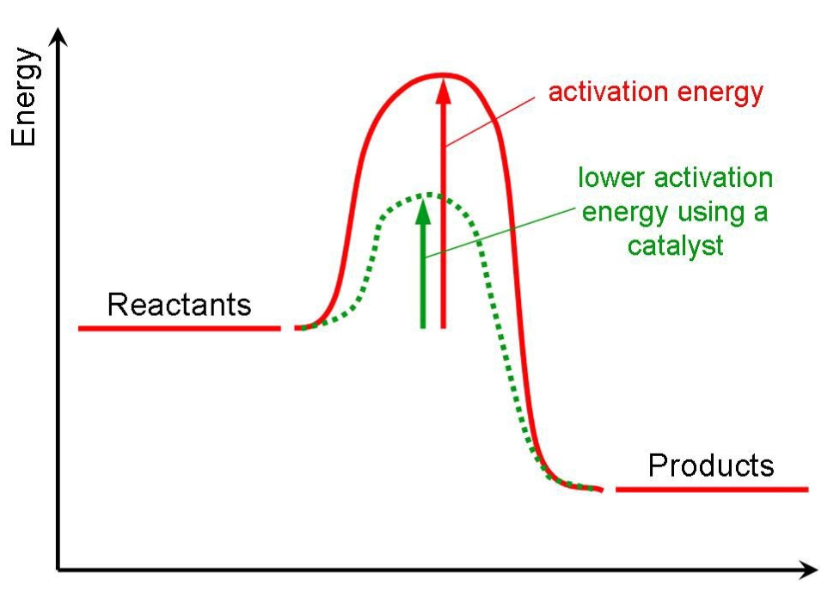
do catalysts get used up?
no
what are the environmental benefits of using catalysts?
• saves energy (lower Ea) * reduces CO2 output
composition of air
78% N2 21% O2 1% CO2, argon, water vapor…
what are some common AIR POLLUTANTS? what are their SOURCES and EFFECTS?
CO • incomplete combustion of fossil fuel • poisonous, displaces O2 in blood NO • very hot environment (eg. car engines) • acid rain SO2 • combustion of fossil fuels that contain sulfur (eg. coal, oil, gas) • acid rain
how do you reduce SO2 emission?
• low sulfur petrol * desulfurization by CaO
how do you reduce CO and NO emission from car exhaust?
catalytic converters • CO + O₂ → CO₂ • NO + CO → N₂ + CO₂
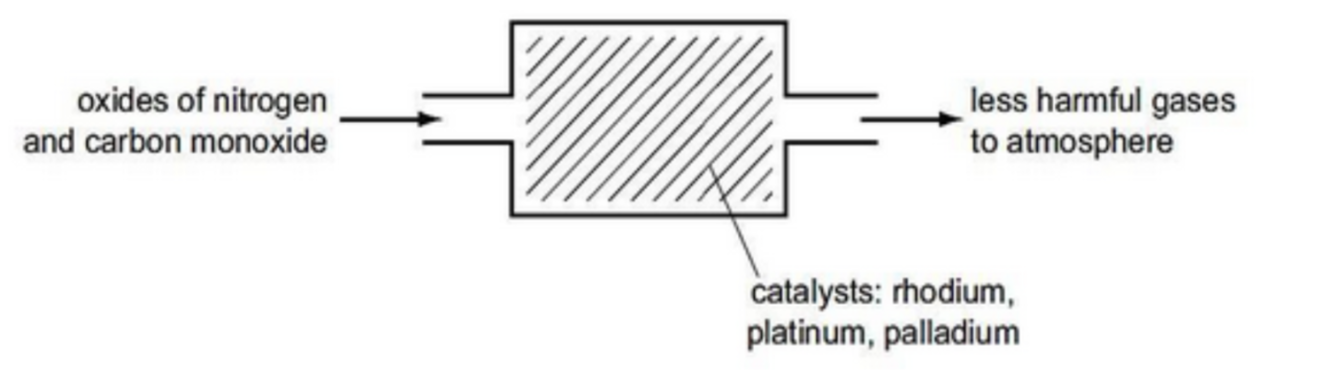
why do catalysts in catalytic converters need to be replaced if they aren’t used up?
transition metals in converter react with lead → prevents contact of exhaust with converter
what are NITROGEN fertilizers for?
protein → growth
what are POTASSIUM fertilizers for?
photosynthesis → growth
why is ammonia important in agriculture?
NH4NO3 fertilizer
how does HABER PROCESS yield ammonia? • equation • conditions for optimum yield • where to get reactants
3H₂ + N₂ → 2NH₃ (balanced equation shows 3:1 ratio) conditions: 400-450˚C, 200 atm, iron catalyst reactants: N2 from air H2 from natural gas (eg.methane)
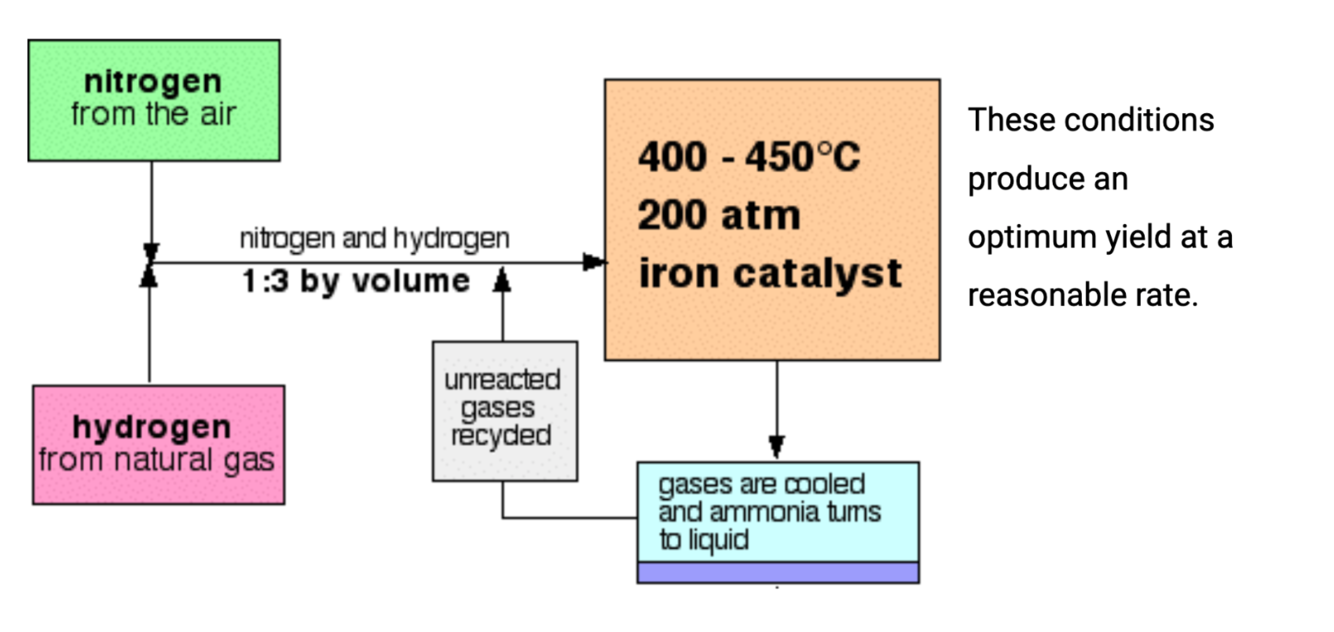
HABER PROCESS: why does lower temp give a higher yield of ammonia? what is the drawback of low temp?
+ exothermic rxn → equilibrium towards RHS - low temp means slower rate of rxn
HABER PROCESS: why does higher pressure give a higher yield of ammonia? what is the drawback of high pressure?
+ equilibrium towards RHS (fewer moles) - expensive
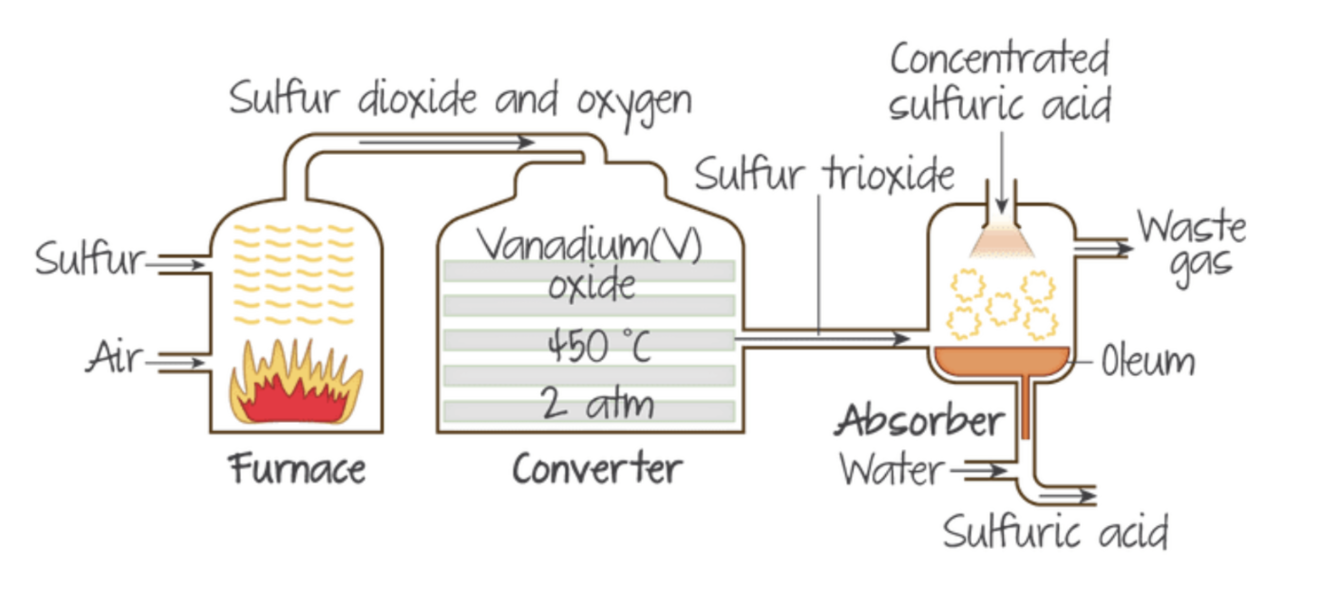
what does the CONTACT PROCESS do?
sulfur (S) → sulfuric acid (H2SO4) in the presence of catalyst
what are the 4 steps of CONTACT PROCESS? describe + equation
Sulfur is burnt in oxygen S + O₂ → SO₂ Sulfur dioxide passes over catalyst (V₂O₅) in air SO₂ + O₂ → SO₃ Sulfur trioxide dissolved in concentrated sulfuric acid SO₃ + H₂SO₄ → H₂S₂O₇ (oleum) Water added to oleum to make concentrated sulfuric acid H₂S₂O₇ + H₂O → H₂SO₄