5.1 RATES,EQUILIBRIUM & PH
No description yet. This curated deck is ready for daily study.
Card preview (24)
Define rate of reaction
• Change in concentration of a reactant or product per unit time
Define order
• The power to which the concentration of a reactant is raised to in the rate equation
What does rate constant, K link?
• Links rate of reaction with concentration of reactions raised to their orders
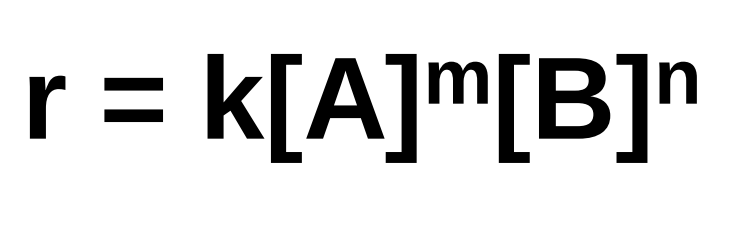
State the rate equation
Define overall order
• The sum of the individual orders in the rate equation
Define half life (of a reactant)
• the time taken for the concentration of a reactant to reduce by half
Define rate-determining step
• the slowest step of a multi-step reaction that determines the rate at which the overall reaction proceeds
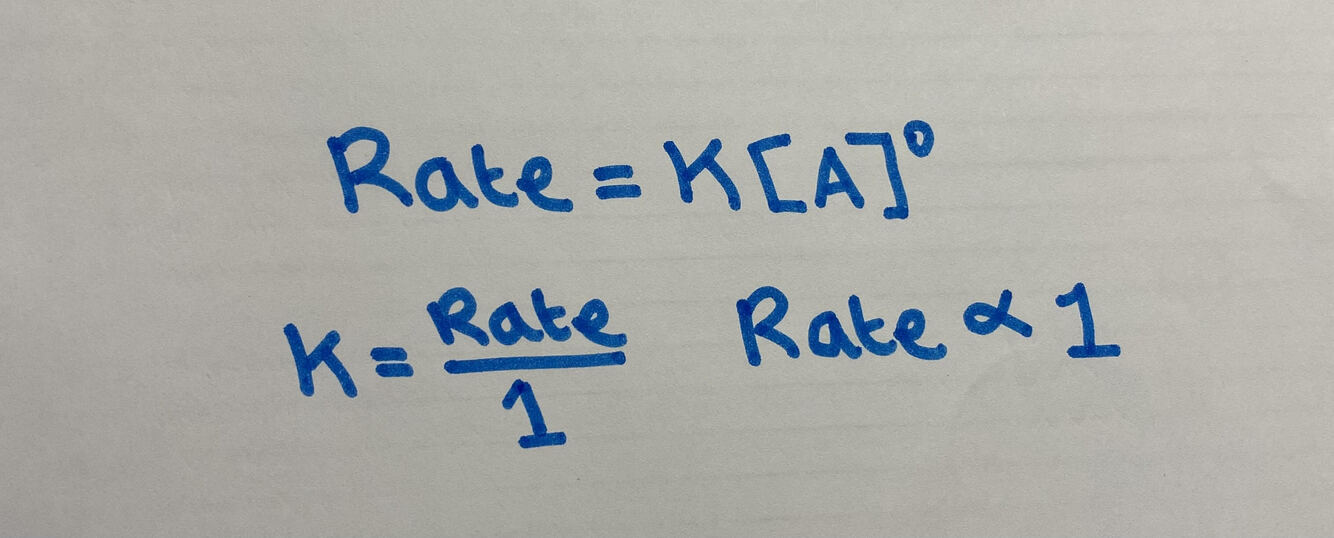
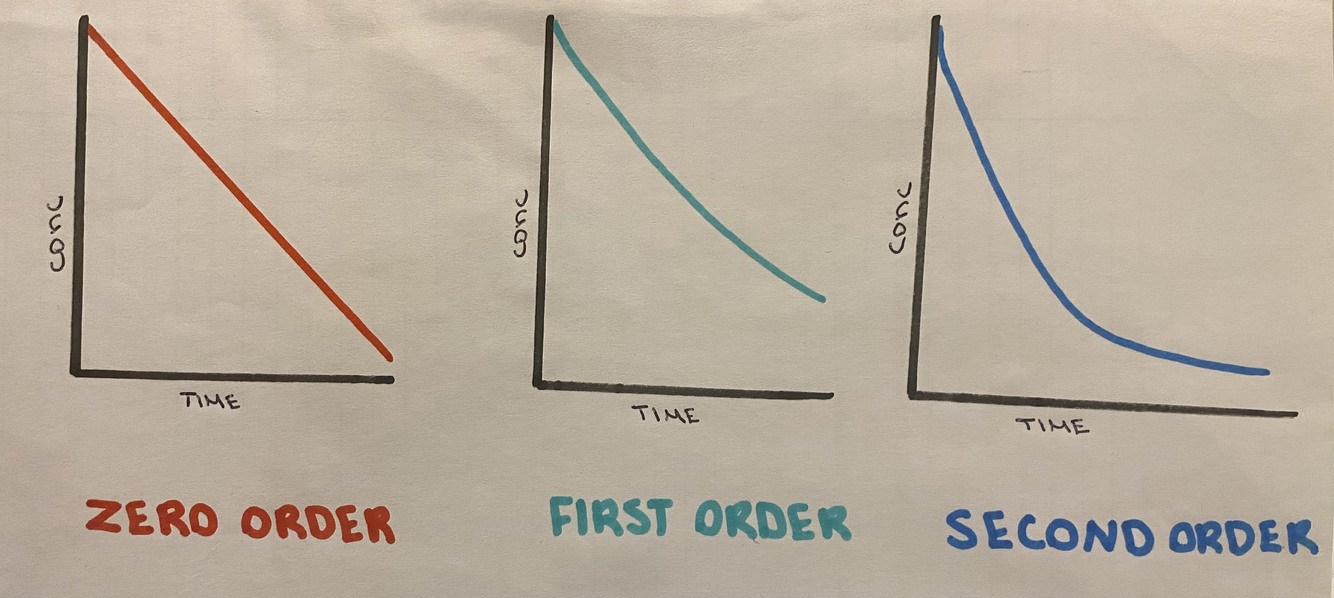
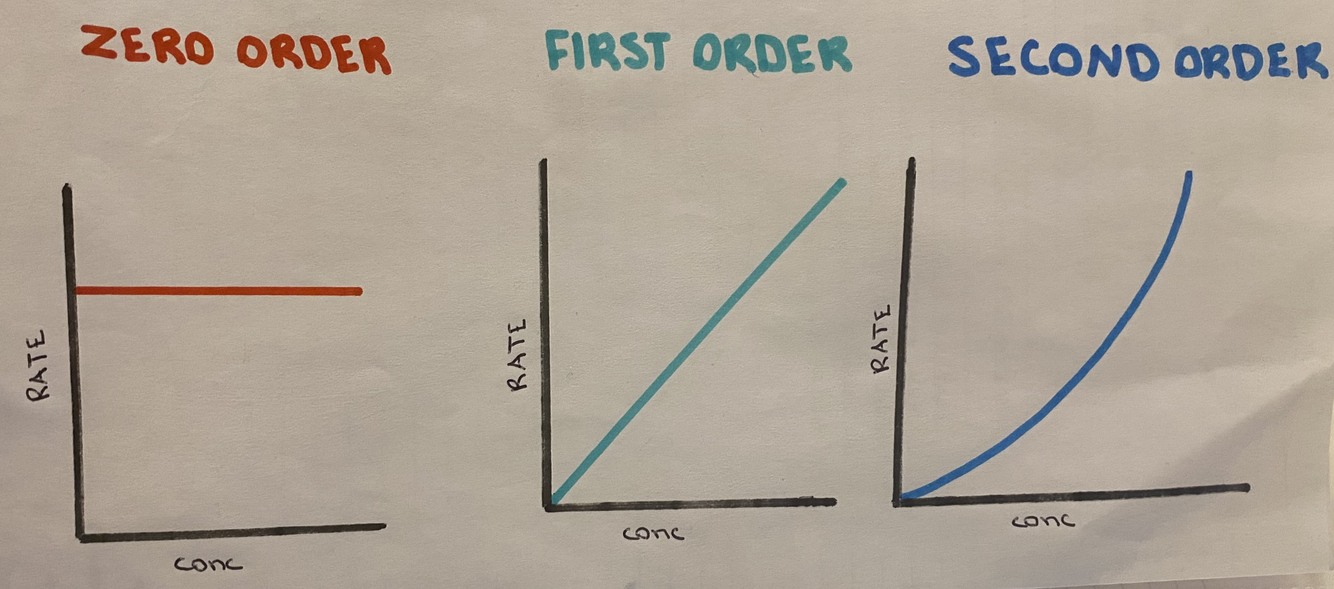
What is meant by a reactant in zero order?
• The rate is unaffected by changing concentration of that reactant
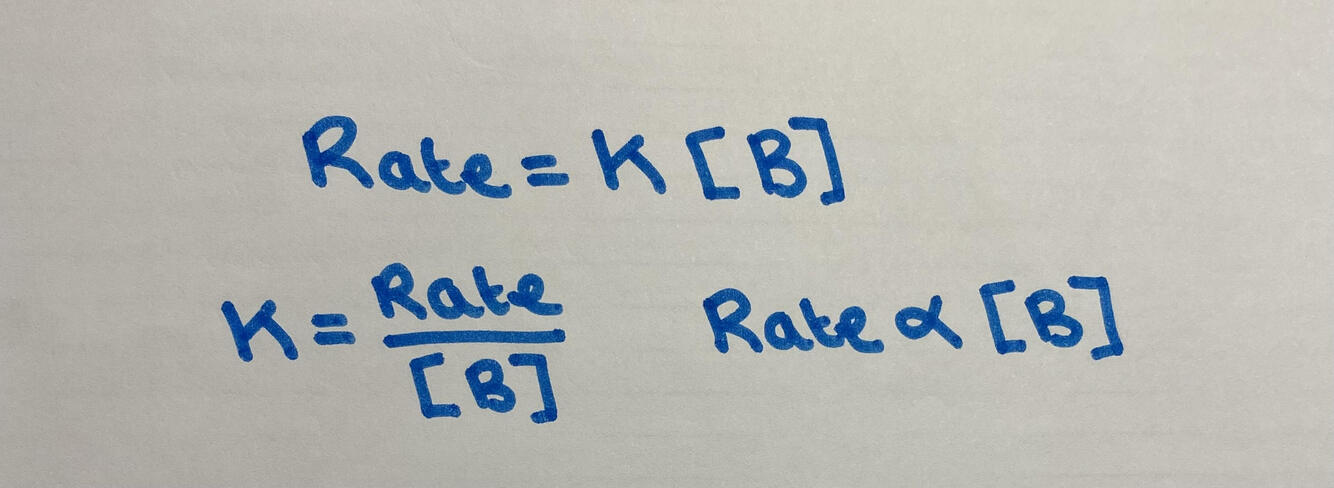
What is meant by a reactant in first order?
• The rate is directly proportional to the concentration of that reactant
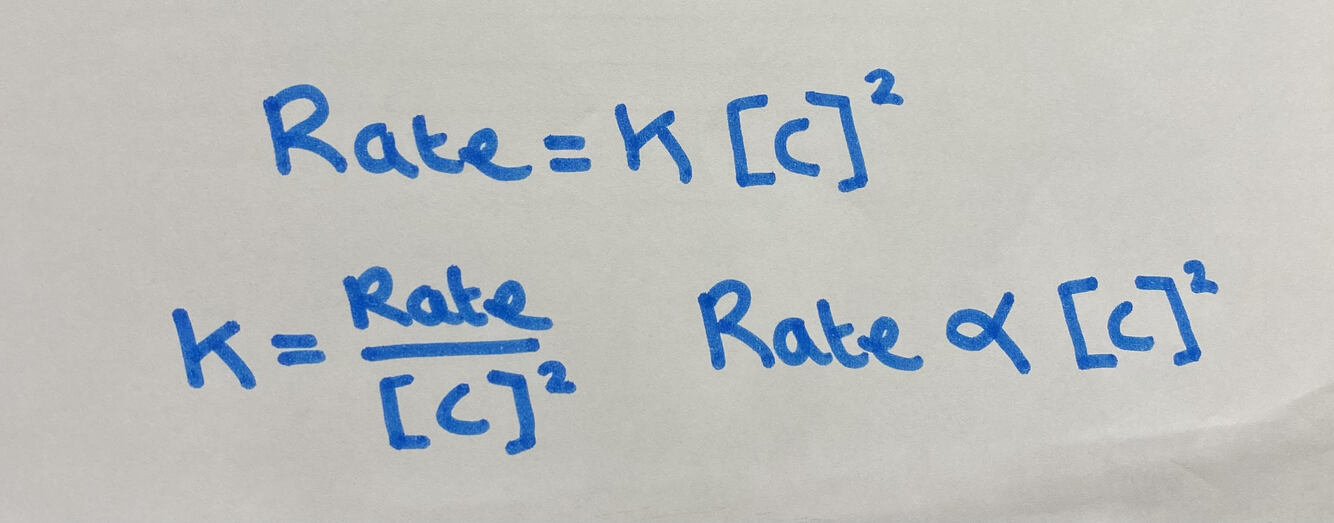
What is meant by a reactant in second order?
• The rate is equal to the change in concentration squared of that reactant
State which reactant order does NOT appear in the rate equation
• Zero order reactants
Draw all the orders on a concentration-time graph
Draw all the orders on a rate-concentration graph
State how the rate of reaction would be determined from a concentration-time graph that produces a curved line of best fit
• A tangent to the curve at given point • Find the gradient using Δconc/time taken (=Δy/Δx)
Define half-life
• The time taken for the concentration of a reactant to reduce by half
State and explain which type of rate graph we identify the half life for
• Concentration-time graphs of FIRST ORDER reactants • Because the half life is independant of concentrations so each half life is the same length
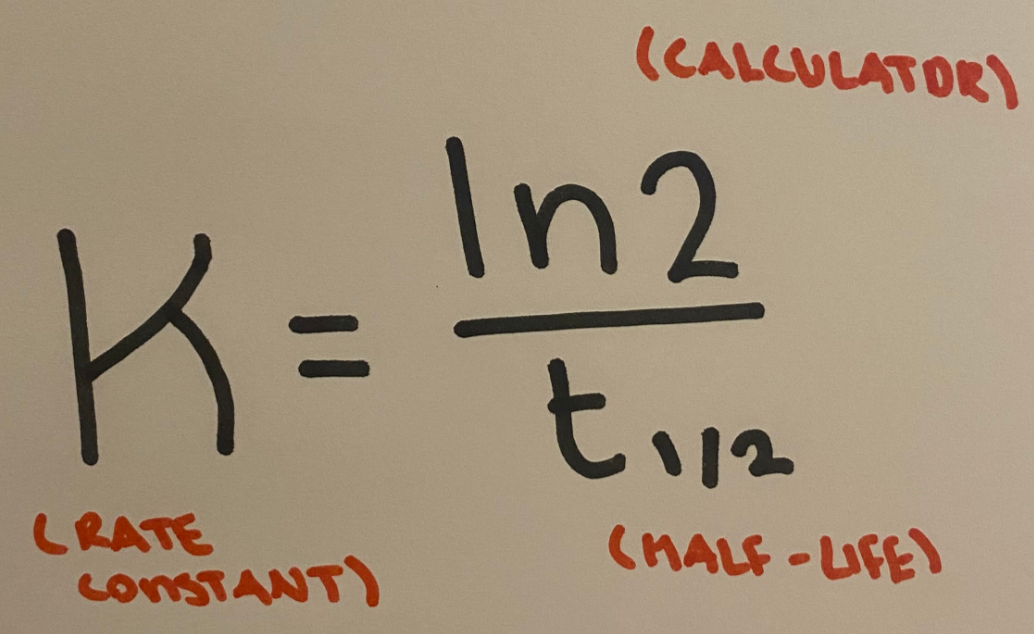
State the equation that links half-life with rate constant K
State how to work out initial rate from a concentration-time graph
• Draw a tangent at t=0 and work out the gradient (Δy/Δx)
State the relationship between reactants in the rate-determining step and the reactants in the rate equation
• Only and all of the reactants that appear in the rate equation must be in the rate-determining (slow) step (im unsure if this is right, look at ur notes, hivi)
State the arrhenius equation
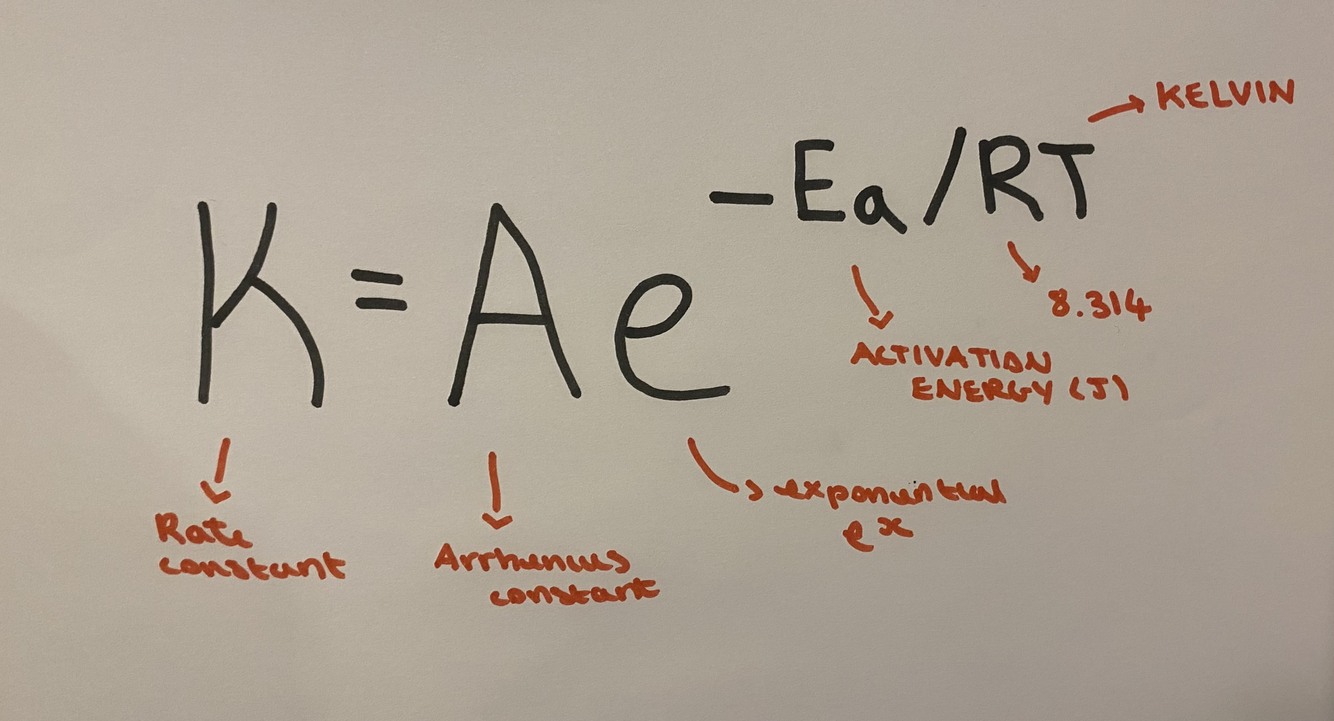
State what the arrhenius equation links
• Links activation energy and temperature to the rate constant K
State the reason for use of a colourimeter
• Monitors visual colour changes
Define continuos monitoring
• Taking measurements of rates at specific intervals to measure the change in quantity of a substance
Explain the effect of temperature of the rate constant and hence, the rate of reaction
• As temperature increases, more KE given to particles • Thus, more frequent successful collisions with sufficient energy to exceed activation energy • This increases the value of the rate constant and therefore also the rate of reaction