Chapter 10: Elimination Reactions
No description yet. This curated deck is ready for daily study.
Card preview (24)
What is the mechanism for this reaction?

E2 elimination reaction Base extracts H+ atom from Beta carbon and the C-H bond breaks to form a new double bond. Leaving group also departs to accommodate the formation of the new double bond.
The rate of E2 elimination reactions are dependent on what?
Concentrations of the base and substrate
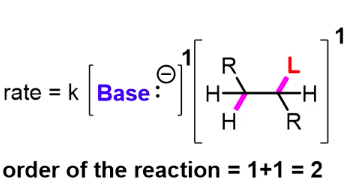
What is an alpha carbon?
Carbon directly attached to a leaving group
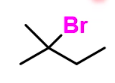
What is a beta hydrogen atom?
hydrogen atoms attached to carbon atoms directly adjacent to the alpha carbon (the double bond will form between the alpha carbon and beta hydrogen)
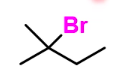
What is a regiochemical outcome?
Important for E2 reactions The region of the molecule the reaction takes place (where the double bond forms)

What is the favored regiochemical outcome?
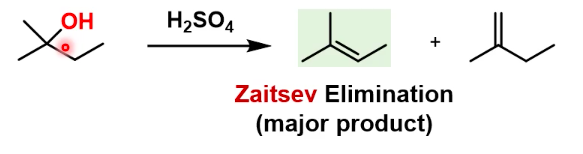
The more substituted alkene (Zaitsev) because they are more stable
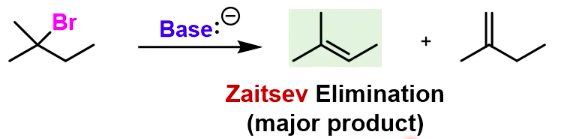
What is the minor or less substituted alkene called?
Hoffman
When would a less substituted alkene be favored in an E2 reaction?
when a sterically hindered base is used (bulky)
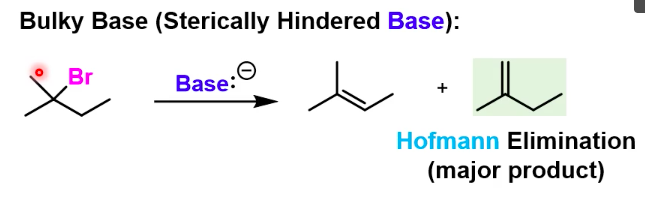
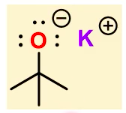
Sterically hindered (bulky) base Will favor a less substituted alkene
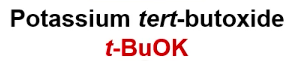
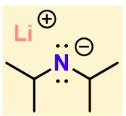
Sterically hindered (bulky) base Will favor a less substituted alkene

What is a stereochemical outcome?
Important for E2 elimination reactions that have two identical beta positions The formation of the double bond will produce that same result so regiochemistry is not the issue here
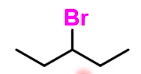
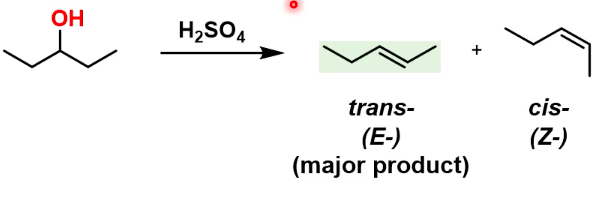
What stereoisomer is favored and will be the major product in elimination reactions?
Trans (more stable than Cis)
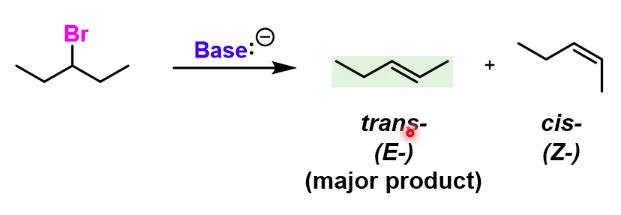
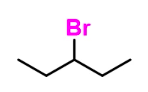
When is an E2 reaction said to be stereoselective?
When the substrate has two identical beta positions
When is an E2 reaction said to be stereospecific?
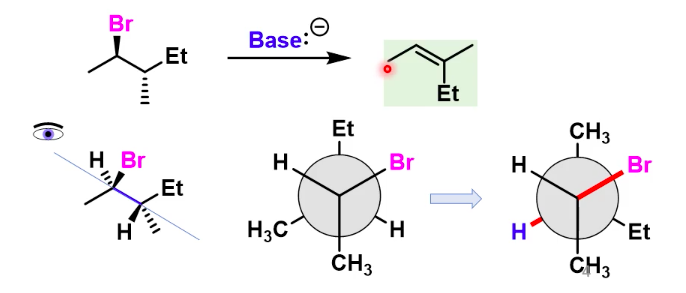
When the beta position only contains one proton The LG and beta proton must be antiperiplanar
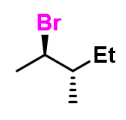
How do you know if the LG and beta H are antiperiplanar?
Draw newman projection and rotate the molecule
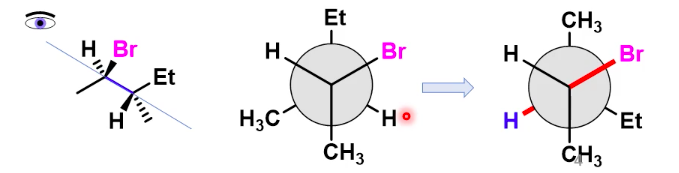
What is happening in this reaction?
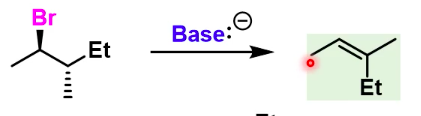
E2 reaction that is stereospecific because there is only one major beta proton so only one product is formed. The LG and beta H were antiperiplanar prior to being eliminated, giving us the product shown
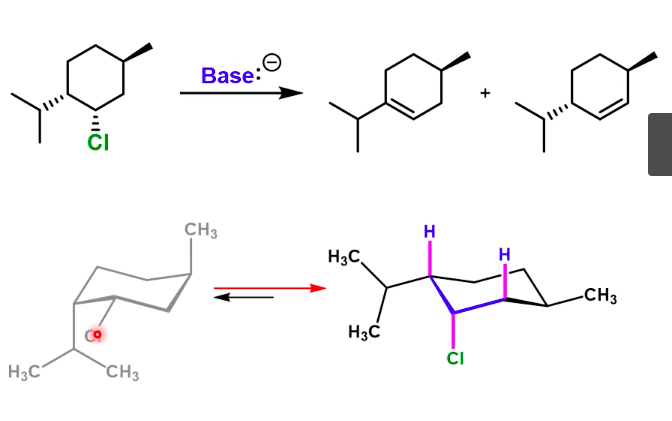
How to determine major products with a cyclohexane Need to look for antiperiplanar arrangement of LG and beta H atoms in the chair conformations
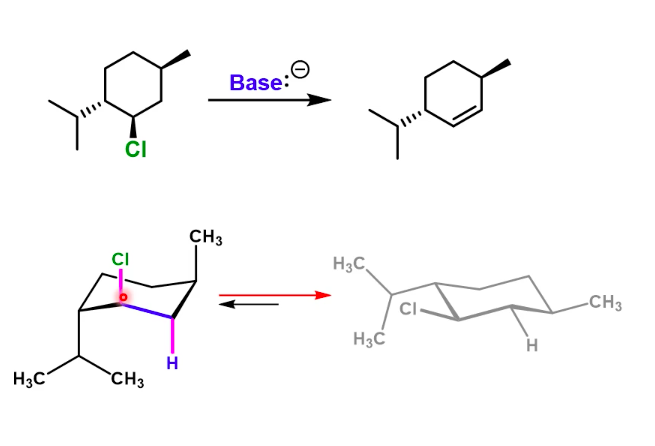
Notice that the only antiperiplanar arrangement of LG and beta H atom is in the less favored chair conformation. This means the reaction will be very slow.
What is the mechanism for this reaction?
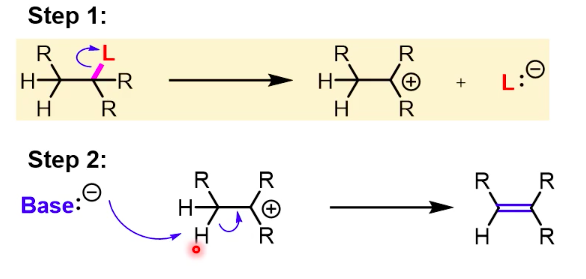
E1 elimination reaction The LG departs forming a carbocation Base extracts H+ from beta carbon and the C-H bond breaks to form a new double bond
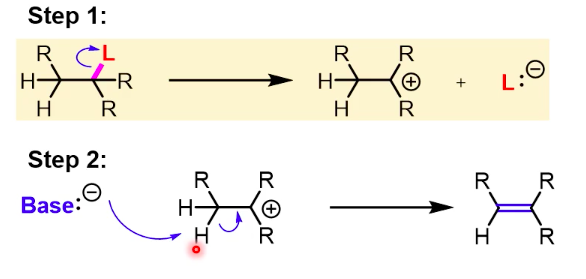
What determines the rate of E1 reactions?
The concentration of substrate Increasing the concentration of the base will not effect the rate of E1 reactions
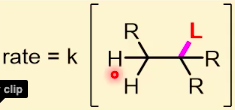
What is slower E1 or E2 reactions?
E1
What regiochemical outcome is favored in elimination reactions?
The more substituted alkene (Zaitsev)
What is the favored stereochemical outcome in elimination reactions?
Trans/E isomer
How do you determine if a reaction will be substitution, elimination, or both? Will they be SN1, SN2, E1, E2, or a combination of both?
Look at the function of the reagent Strong or weak nucleophile? Strong or weak base? The substrate will also matter (primary, secondary, or tertiary)