Ch19 Equilibrium
No description yet. This curated deck is ready for daily study.
Card preview (19)
What factors must be true for a chemical system to be in dynamic equilibrium?
• if the concn of R + P remain constant • rates of forward + reverse reactions are equal • it needs to be a closed system
What is Le Chatelier’s Principle:
Le Chatelier’s Principle states…….: When a system in dynamic equilibrium is subjected to external change, the position of equilibrium will shift to minimise effect of that change.
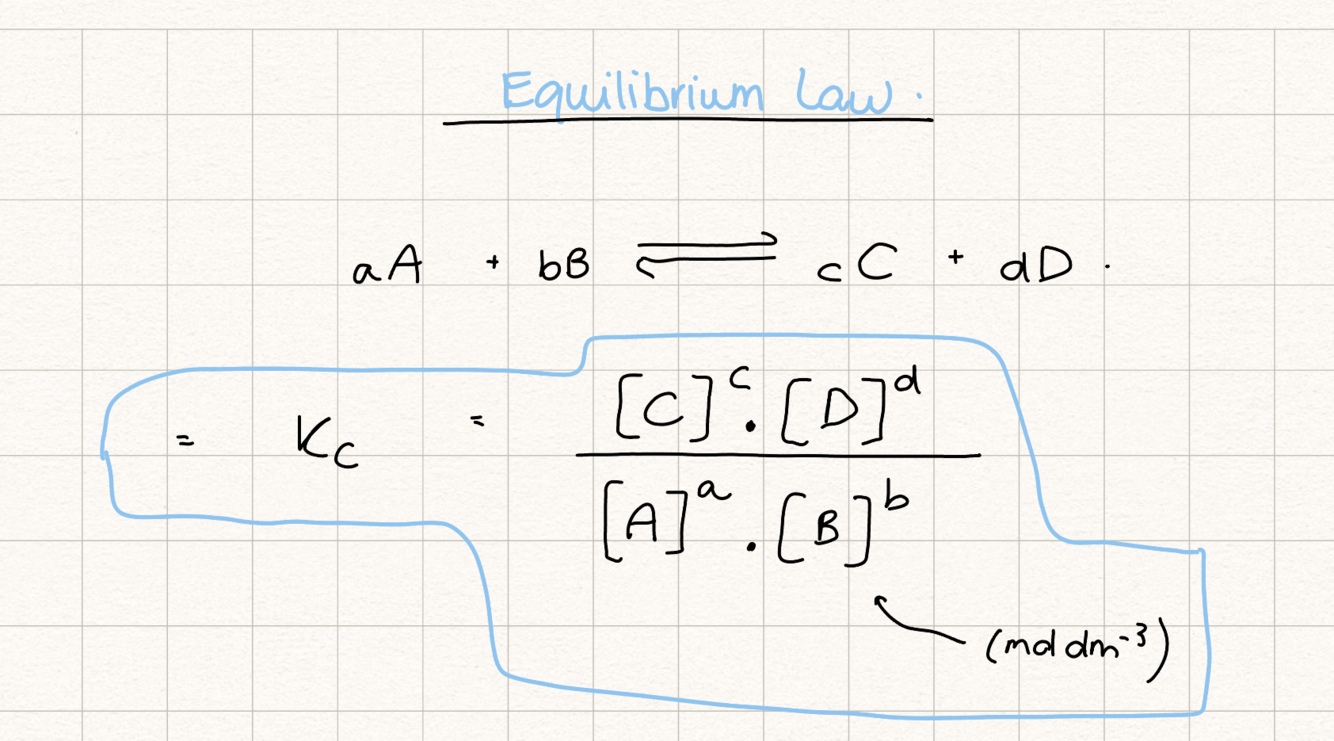
What is the general Kc equation:
What is a homogenous equilibrium:
Homogenous eqm = all species in same physical state Kc expression contains concn of all species
What is a heterogenous equilibrium:
Heterogenous eqm = species in different physical states Kc expression only contains species in (g) or (aq) as concentrations of (s) and (l) are constant.
What do the different Kc values represent?
• Kc > 1 = product favoured eqm • Kc < 1 reactant favoured eqm
What is the rule for units in Kc calculations?
Positive indices come before negative indices
RICE TABLES SHEET
What is the Kp constant used for?
• reactions only involving gases • partial pressure is used instead of concn in eqm expression • partial pressure is proportional to concn
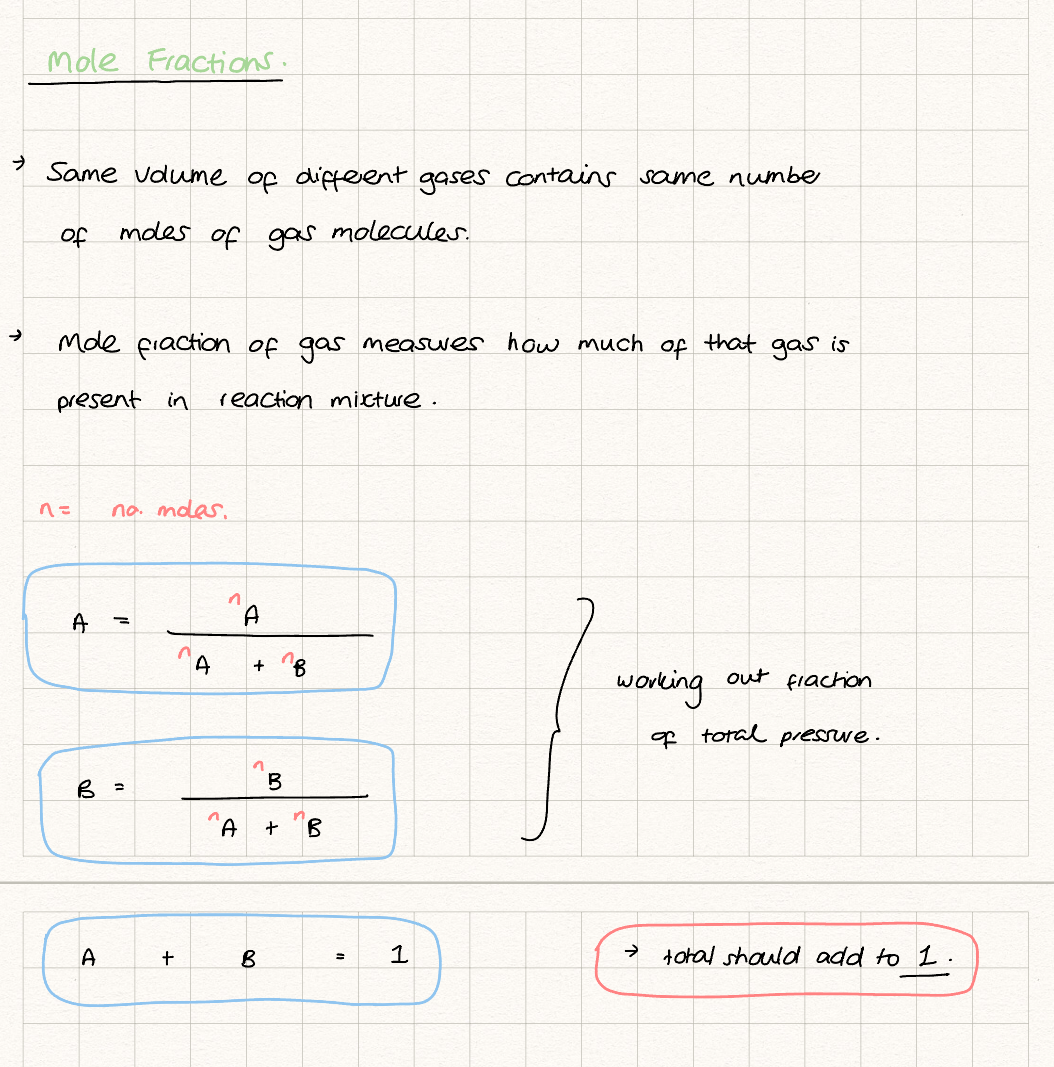
Explain how to calculate mole fractions:
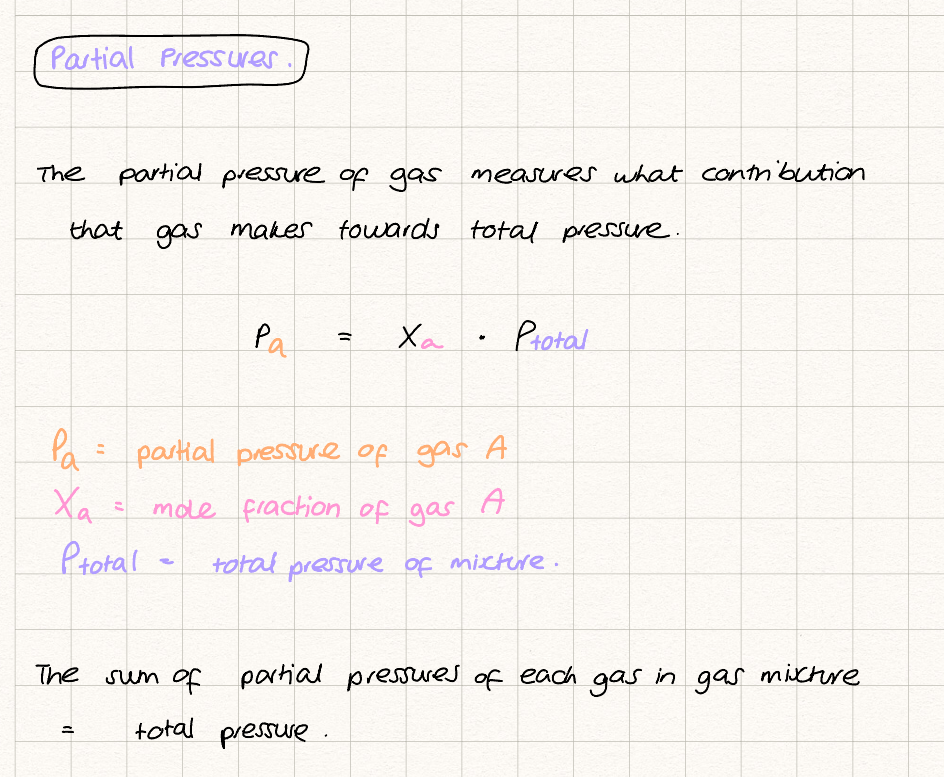
Explain how to calculate partial pressure:
What three factors does Le Chatlier propose affect eqm?
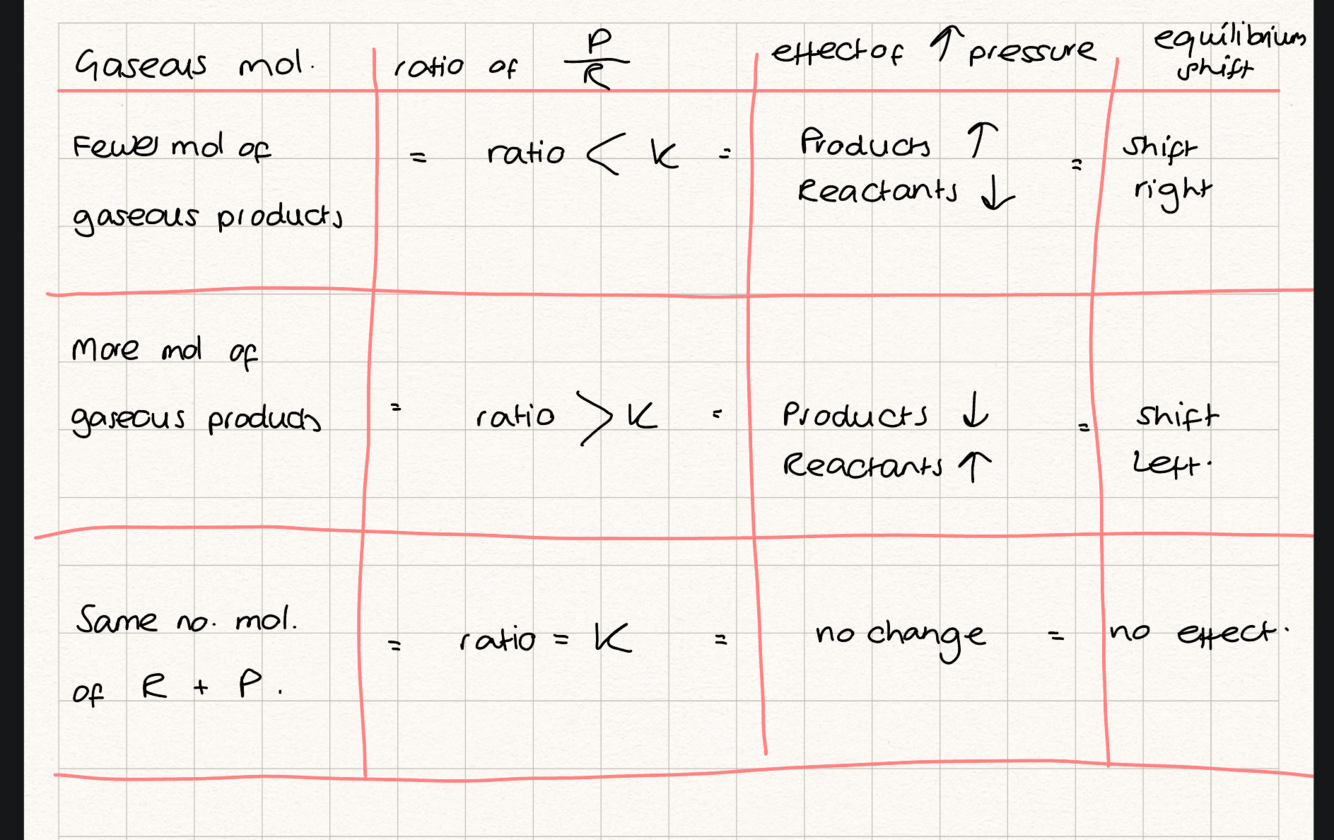
• If concn of species increase, eqm shifts in direction that reduces concn • If pressure increases, eqm position shifts towards side with gaseous moles • If temp increases, eqm position shifts in endothermic direction • If temp decreases, eqm shifts in exothermic direction
What do these values of k mean for the position of eqm: * K = 1 * K = 100 * K = 1x10⁻²
• K = 1- indicates eqm halfway between R +P • K = 100 - indicates eqm well in favour of P • K = 1x10⁻² - indicates eqm well in favour of R
What happens to k at constant temp but other factors changing (conc, pressure, catalyst) and what happens to k if temp changes,
• At constant temp, k is constant, does NOT change despite changes to concn, pressure, prescence of catalyst • If temp is changed, k does change value.
Explain how temp affects value of k when the forward reaction is: * exothermic * endothermic
Forward reaction = exothermic * k decreases with increase in temp * increase in temp decreases eqm yield of products * position is shifted towards products Forward reaction = endothermic * k increases with temp increase * increase in temp increase eqm yield of products * shifts eqm towards products
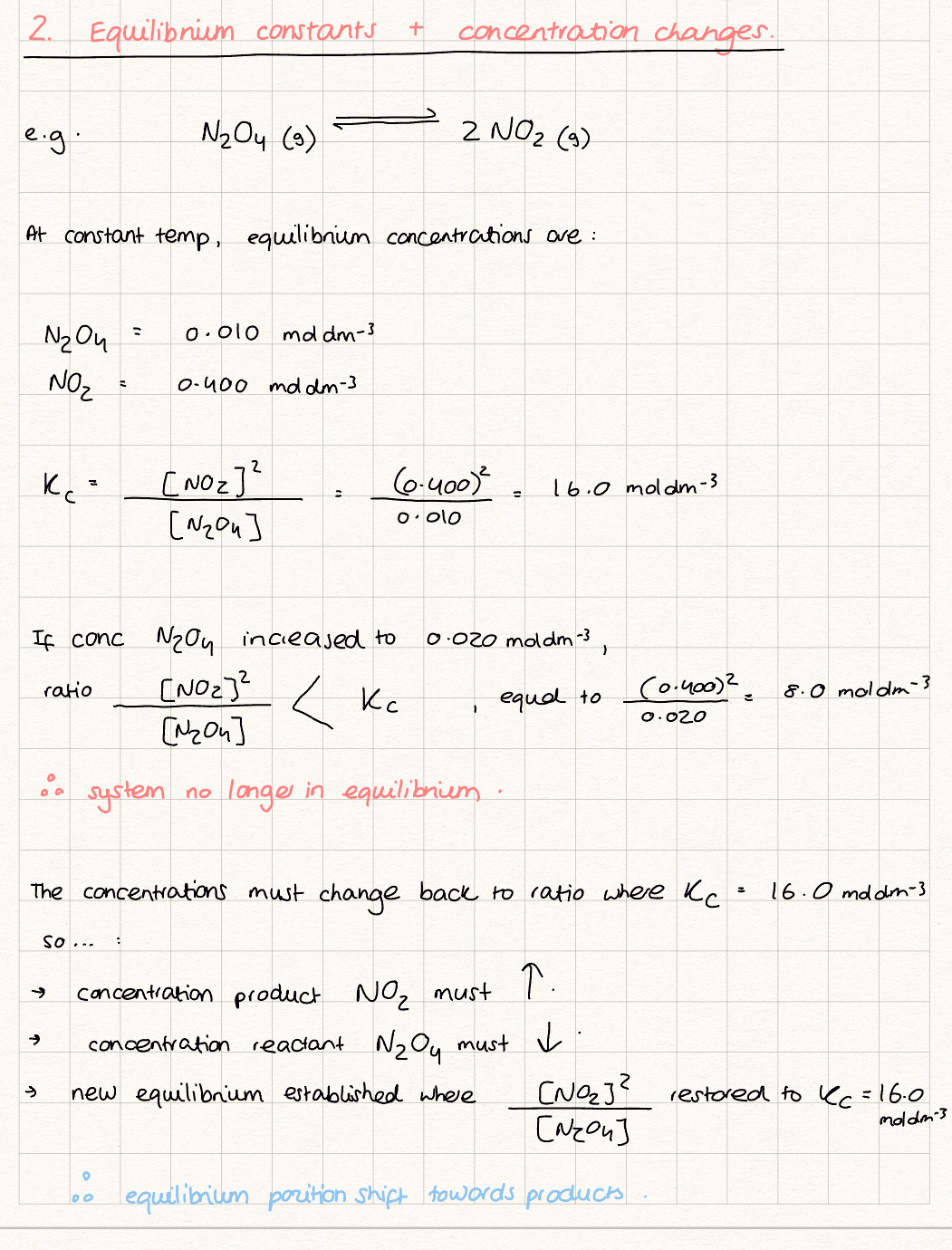
How does a change in concentration affect the value of Kc
How does a change in pressure affect Kp constant:
How does a catalyst affect eqm constants (Kc, Kp)
• eqm constants Kc and Kp are unaffected by presence of catalyst • Catalysts affect rate of chemical reactions, not position of eqm • catalysts speed up both forward and reverse reactions equally • eqm is reached quicker, but eqm position NOT changed.