LO 5.2 - Macro and Micro elements
No description yet. This curated deck is ready for daily study.
Card preview (24)
Name some 9 Macronutrients. Macro and Micro Elements
Macronutrients * Nitrogen (N) * Phosphorus (P) * Potassium (K) * Calcium (Ca) * Magnesium (Mg) * Sulfur (S) * Carbon (C) * Hydrogen (H) * Oxygen (O) Macro and Micro Elements
Question What are some properties of Nitrogen? Nitrogen
• Part of chlorophyll molecule • Essential for growth of roots and above-ground parts, gives foliage a strong green colour. • Toxicity of N is rare, but when levels are excessive crops can be a darker green than normal, excessively leafy and slow to mature. • Sources of nitrogen include organic fertilisers and products such as urea and calcium ammonium nitrate. Nitrogen
Question What are some deficiency symptoms of Nitrogen? Nitrogen
• Plants deficient in nitrogen smaller, spindly stems, pale or yellowish leaves (chlorosis). Nitrogen
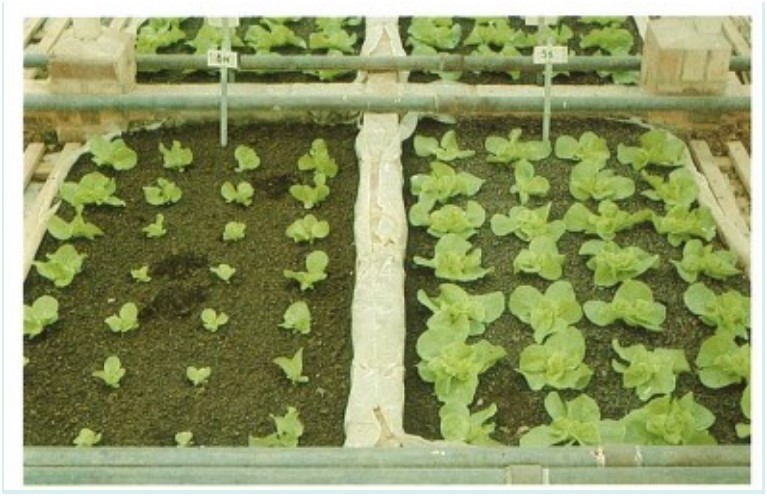
Info Graphic Nitrogen deficiency (lettuce) Symptoms: restricted growth, ‘heart’ not developed, leaves pale. Nitrogen
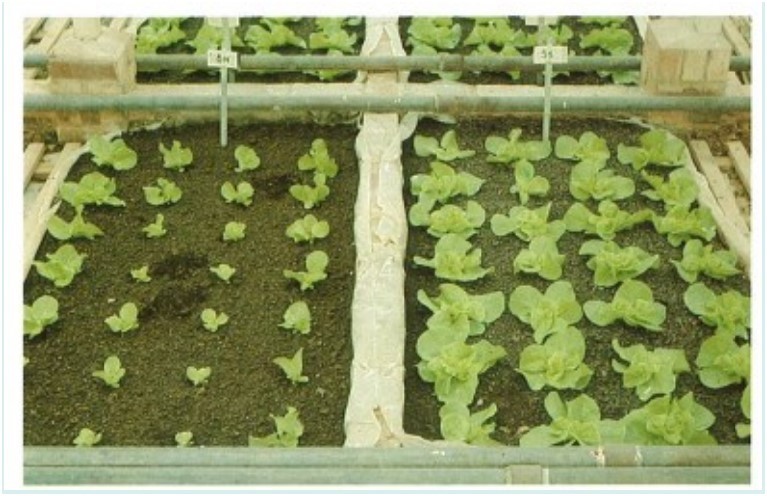
Plant analysis: * 2.2% N on left (deficient). * 4.8% N on right (normal) Normal range 3.5% to 5.5%N. Nitrogen
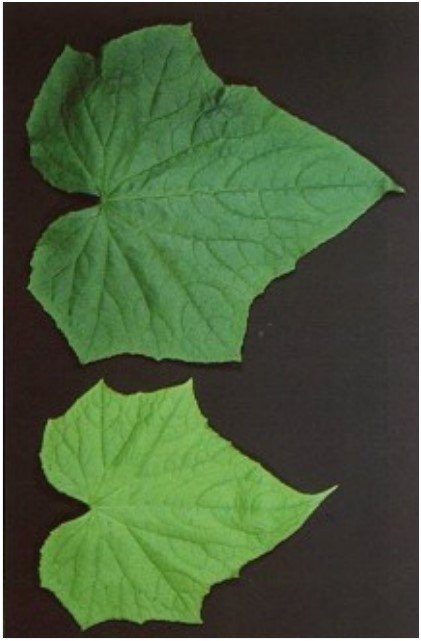
Info Graphic Nitrogen deficiency (cucumber) Restricted growth, fewer fruits, fruits short and pale green. leaves small and yellow-green, older leaves yellow and die prematurely. Nitrogen
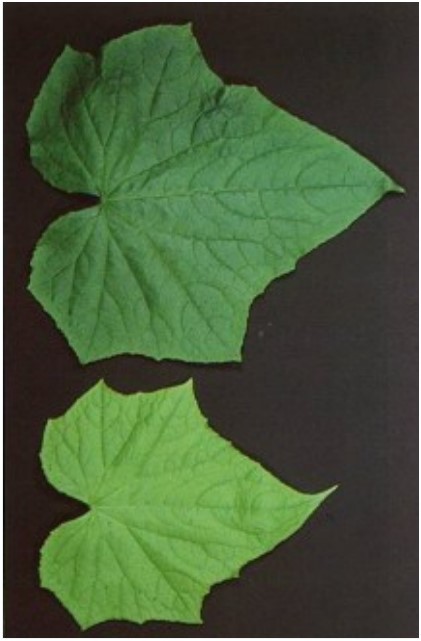
Plant analysis: * 2% N on lower leaf (deficient) * 5% N on top leaf (normal) Normal range 3.5% to 5.5%N. Nitrogen
Question Why is Phosphorus (P) required in plants? Phosphorus (P)
• Phosphorus (P) is required in plants for cell metabolism. • Necessary for root development. Seedlings and young plants have a high (P) requirement. Phosphorus (P)
Question What are some symptoms of phosphorus (P) deficiency in plants. Phosphorus (P)
• Plants that are deficient in phosphorus (P) have restricted growth and fruit production. • Some plants have a purplish discolouration on their leaves. Phosphorus (P)
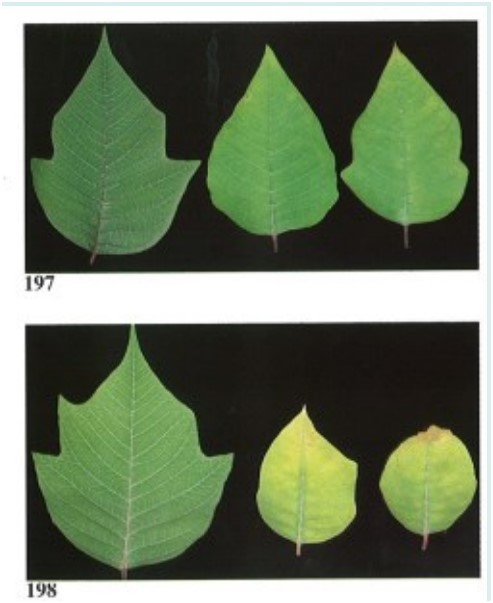
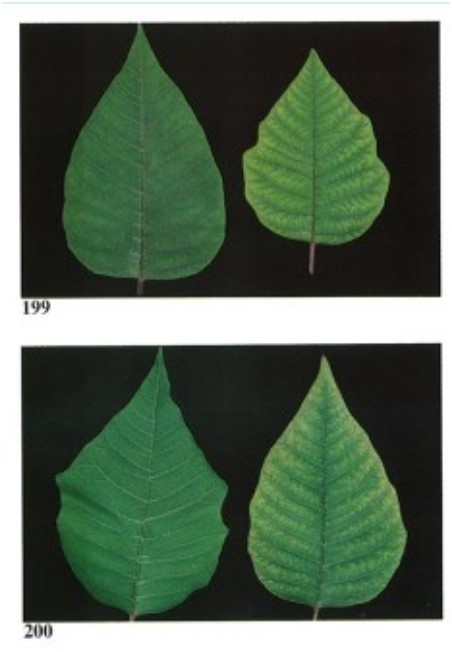
Info Graphic Phosphorus (P) deficiency (Poinsettia) * Top picture: shows loss of colour in leaves. * Bottom picture: With severe deficiency leaves become very small and yellow and tips become brown. Phosphorus (P)
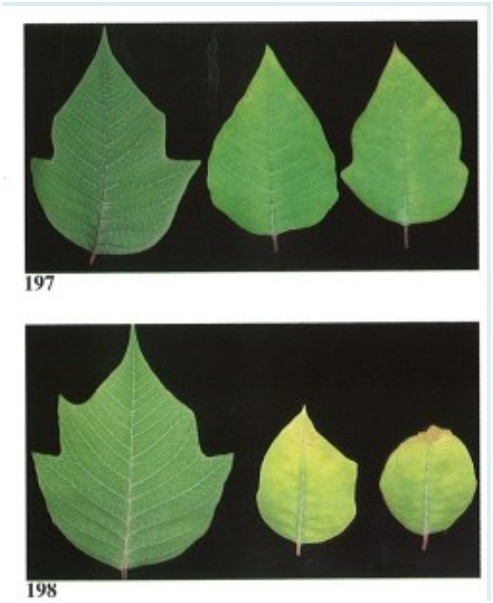
• Deficient leaves: 0.04% P • Normal leaves 0.49% P • Normal range 0.35% to 0.75% Phosphorus (P)
Question What are some sources of Phosphorus (P)? Phosphorus (P)
• Phosphorus (P) occurs in soils in organic and inorganic forms. • Organic (P) originates from plant and animal residues. • Inorganic (P) exists as rock phosphate. • Much of the (P) in a soil is in an unavailable form. It is released gradually from the breakdown of soil minerals and from organic matter. • Excess phosphorus can show up as zinc or iron deficiency symptoms – chlorosis, leaf distortion. Phosphorus (P)
Question Why is Potassium (K) required in plants? Potasium (K)
• Important for enzyme activity in plants. • Gives some drought, disease and frost tolerance to plants. • Enhances flower colour and taste/texture of many fruits and vegetables. Potasium (K)
Question Potassium (K) is mobile in plants. What does this mean? Potasium (K)
Potassium (K) is mobile in plants, so deficiency symptoms are seen in the older leaves first. * (Plants will always try to supply nutrients to their youngest leaves first, so mobile elements such as N, P and K will be moved to the younger leaves.) Potasium (K)
Question What are some symptoms of Potassium (K) deficiency? Potasium (K)
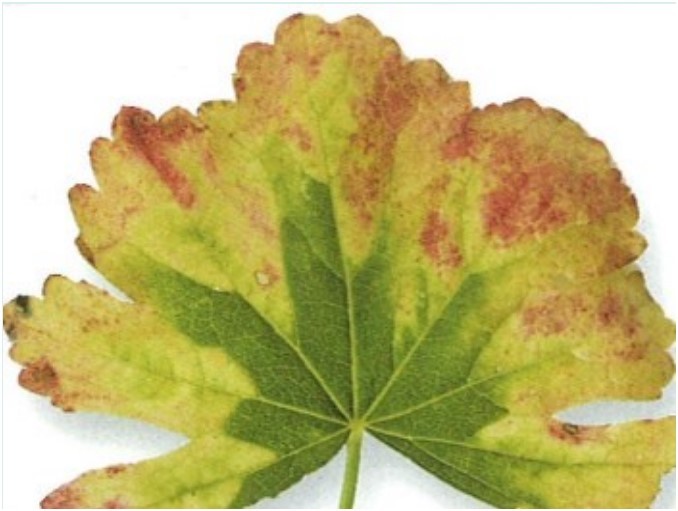
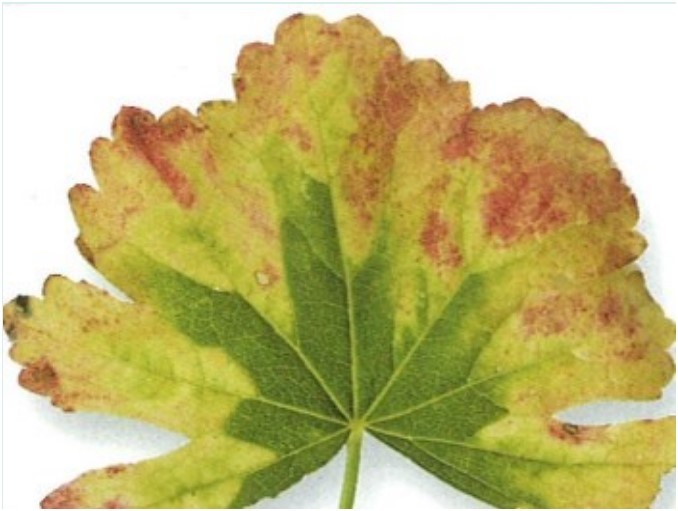
Potassium (K) deficiencies. * Leaf mottling * Pale leaf margins later becoming ‘scorched’ * Tendency to wilt (K balances the effects of N by ‘hardening up’ growth) * Reduced growth Excess potassium can induce nitrogen deficiency symptoms. Potasium (K)
Info Graphic Potassium (K) deficiency (Poinsettia) * Top picture shows margins and interveinal areas are yellow. * Bottom picture shows reddish-brown spots developing between the veins and near the margins. Potasium (K)
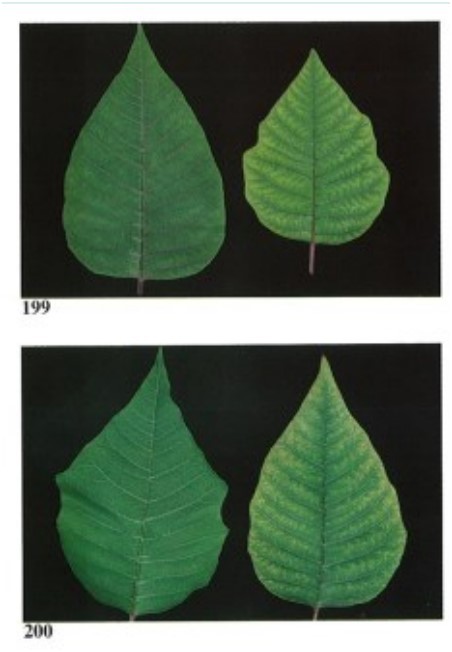
Affected leaves: 0.6% K Normal leaves 4.5% K Normal range 2.5% – 5% K Potasium (K)
Info Graphic Potassium (K) deficiency (Pelargonium) Potasium (K)
‘Scorching’ of leaf margins Potasium (K)
Question What are some sources of Potassium (K)? Potasium (K)
Almost all soil Potassium (K) comes from inorganic sources – for example mica which occurs in igneous and metamorphic rock. The Potassium (K) is released slowly by weathering. * Young volcanic soils are usually high in Potassium (K). * Only small amounts of Potassium (K) are found in organic matter. * Potassium (K) fertilisers include sulfate of potash and potassium chloride. Potasium (K)
Question Why is Calcium (Ca) required in plants? Calcium (Ca)
• Important part of plant cell walls. • Has a role in cell division. • Regulates transport of other nutrients in the plant. Calcium (Ca)
Question Calcium deficiency in soils is relatively rare as it is present in many minerals that dissolve easily to forms available to plants. What are some symptoms of Calcium (Ca) deficiency? Deficiency may arise in very sandy soils or highly leached acid soils. Calcium (Ca)
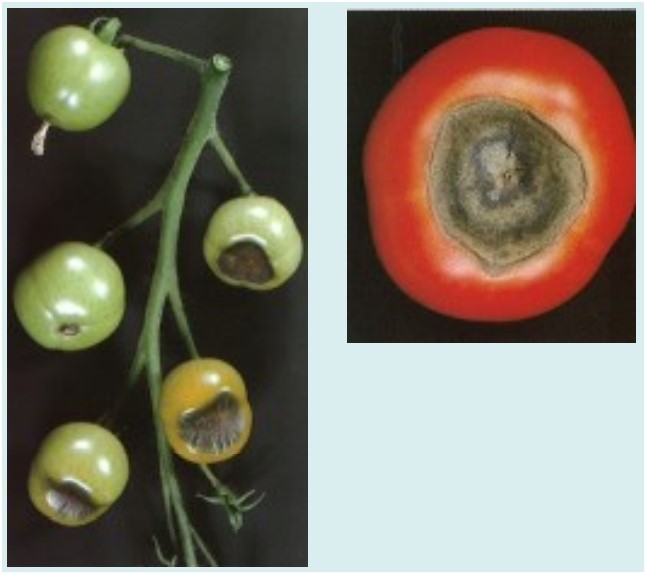
• Symptoms include pale leaf margins followed by necrosis (death of tissue). • Symptoms tend to show in growing tips as Calcium (Ca) is relatively immobile in plants. • Disorders such as blossom end rot in tomatoes and tip burn in lettuce and brassicas are caused by Calcium (Ca) deficiency. Calcium (Ca)
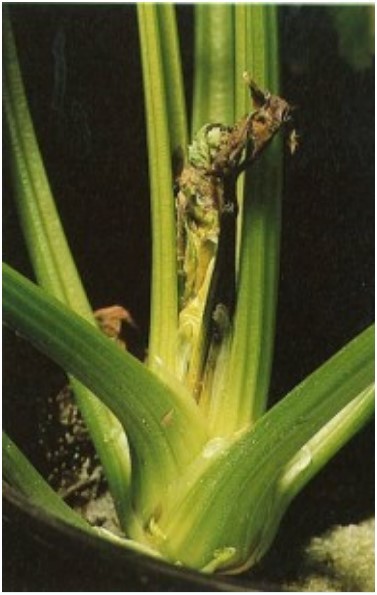
Info Graphic Calcium (Ca) deficiency (celery) * ‘Blackheart’ – the death of the growing point - in 13 week old plant that has received no Calcium (Ca) for one month. Calcium (Ca)
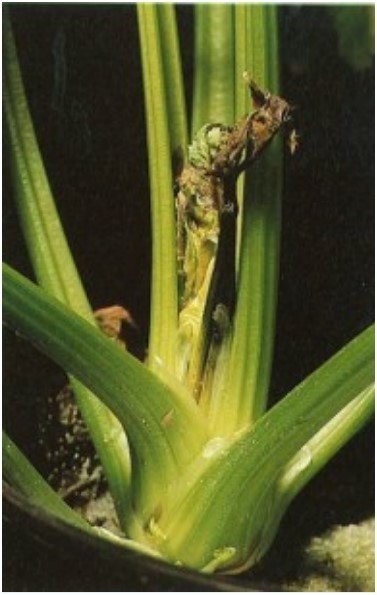
• Leaves from affected plant contained 0.22% Calcium (Ca). • Normal plant contained 0.92% Calcium (Ca). Calcium (Ca)
Info Graphic Calcium (Ca) deficiency (tomato) * Blossom end rot Calcium (Ca)
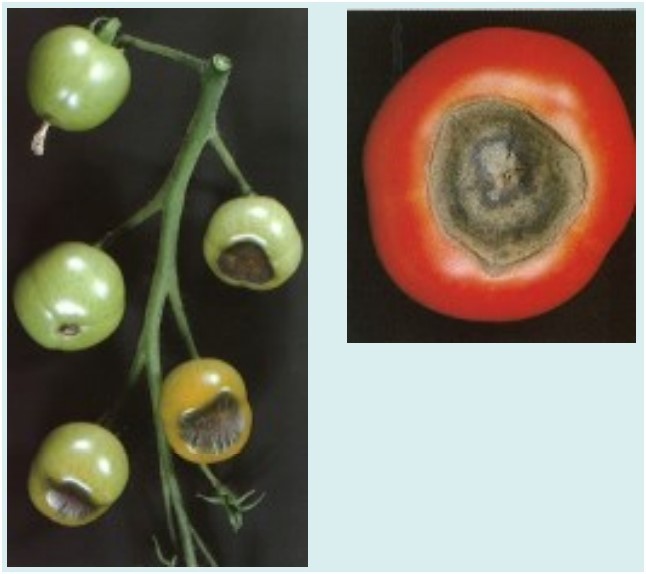
• Affected fruit contains less than 0.08% Calcium (Ca). • Normal fruit contains 0.12 to 0.25% Calcium (Ca). Calcium (Ca)
Question Why is Magnesium (Mg) required in plants? Magnesium (Mg)
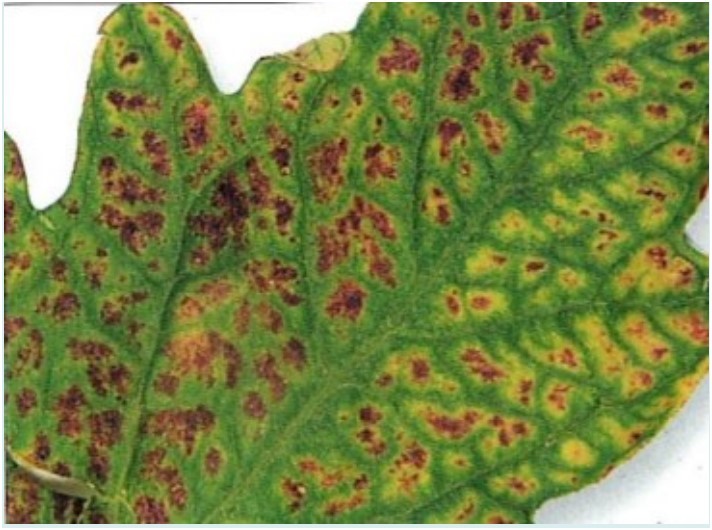
• Reduced growth, as the efficiency of photosynthesis is reduced. • Constituent of chlorophyll, important in protein synthesis. • Magnesium (Mg) is mobile in plants, so deficiency will show in older leaves first. • Interveinal chlorosis (yellowing between the veins, sometimes becoming brown and ‘scorched’). • Found in Epsom salts and Dolomitic limestone. Magnesium (Mg)
Info Graphic Magnesium (Mg) deficiency (tomato) Magnesium (Mg)
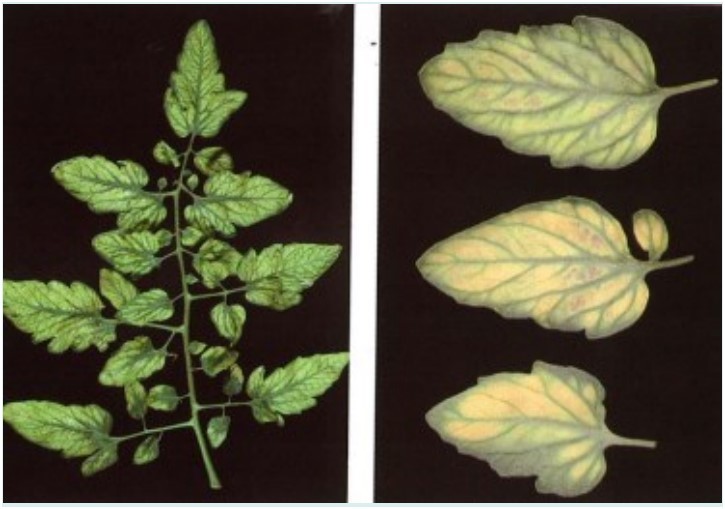
• Excess magnesium can interfere with calcium uptake, causing necrotic spots in older leaves and browning of small veins in older leaves. Magnesium (Mg)
Question What is important about Sulfur (S) in plants? Sulfur (S)
• Sulfur is important in the production of proteins. • It is also involved in enzyme activity. Sulfur (S)
Question Sulfur (S) deficiency is rare. What are some symptoms of it? Sulfur (S)
• Symptoms include yellow or yellow-green leaves and stunted growth. • Can be confused with nitrogen deficiency symptoms. Sulfur (S)
Question Sulfur (S) deficiency is rare. What are some symptoms of it? Sulfur (S)
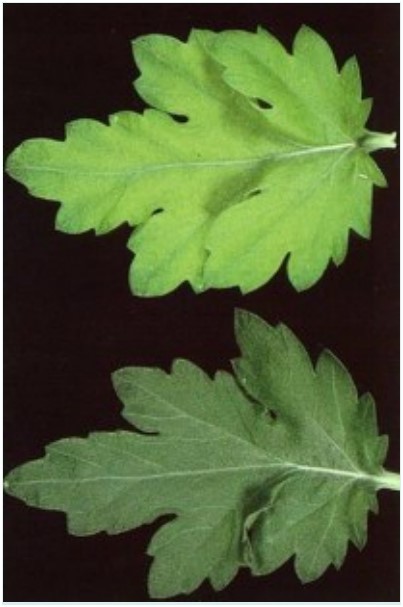
• Symptoms include yellow or yellow-green leaves and stunted growth. • Can be confused with nitrogen deficiency symptoms. Yellow-green leaf in top is deficient in Sulfur. Sulfur (S) deficiency (Chrysanthemum) Sulfur (S)