Chapter 7: Aldehydes and Ketones II: Enolates
No description yet. This curated deck is ready for daily study.
Card preview (24)
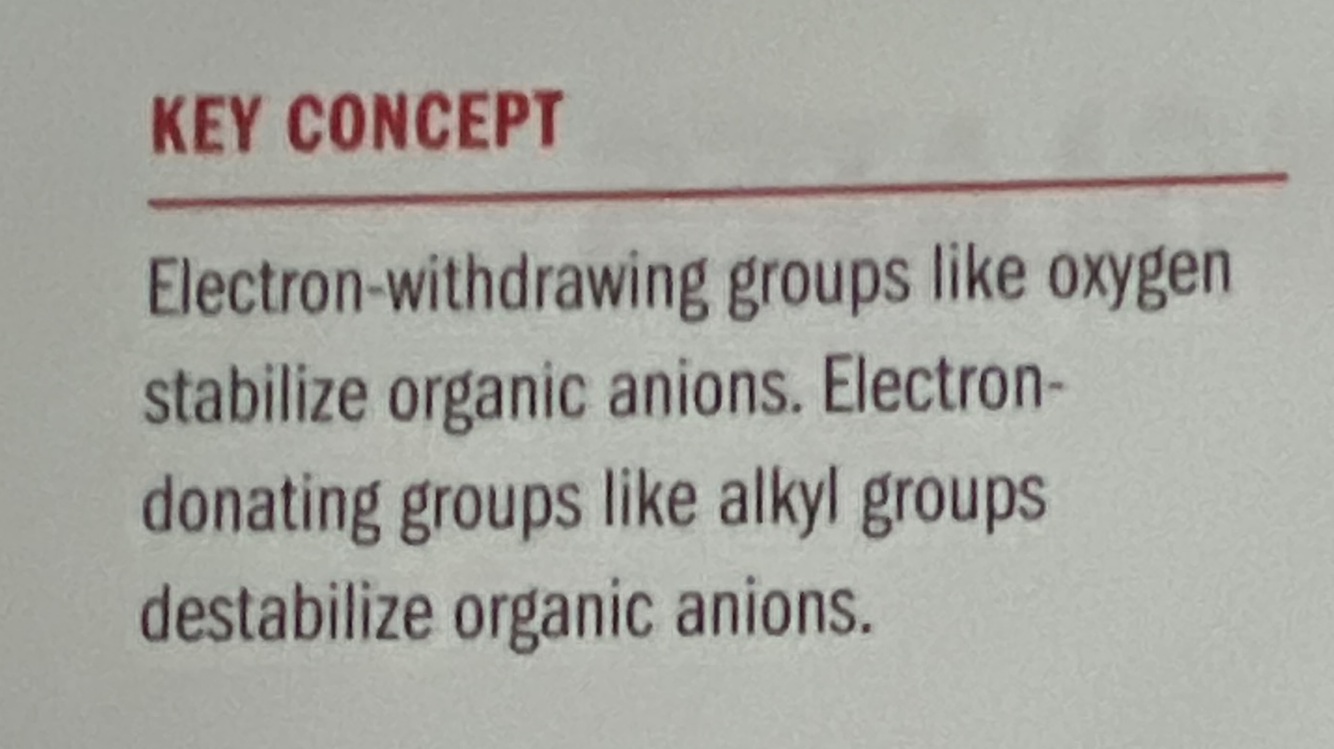
Describe the stability of organic anions regarding oxygen and alkyl groups.
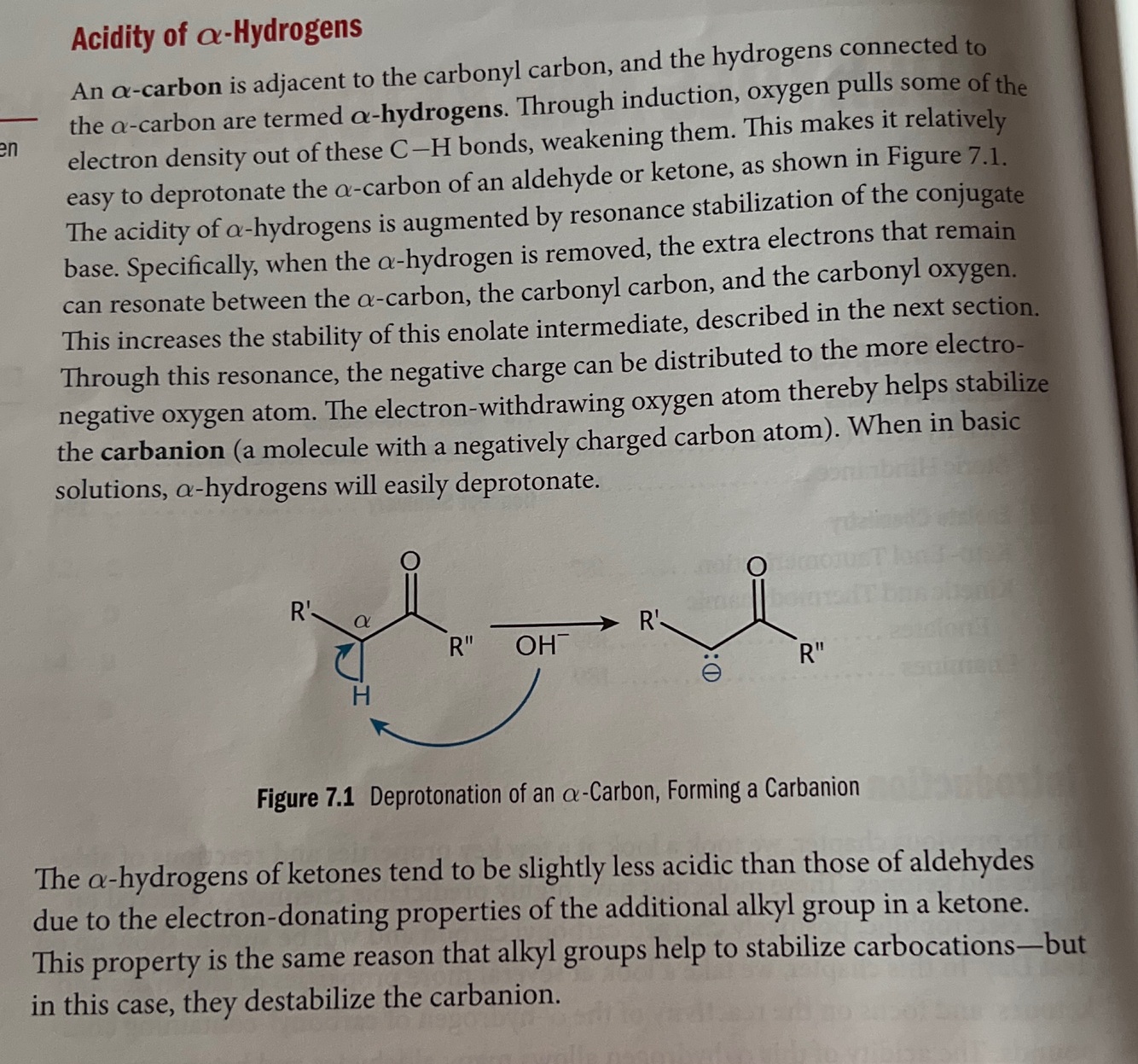
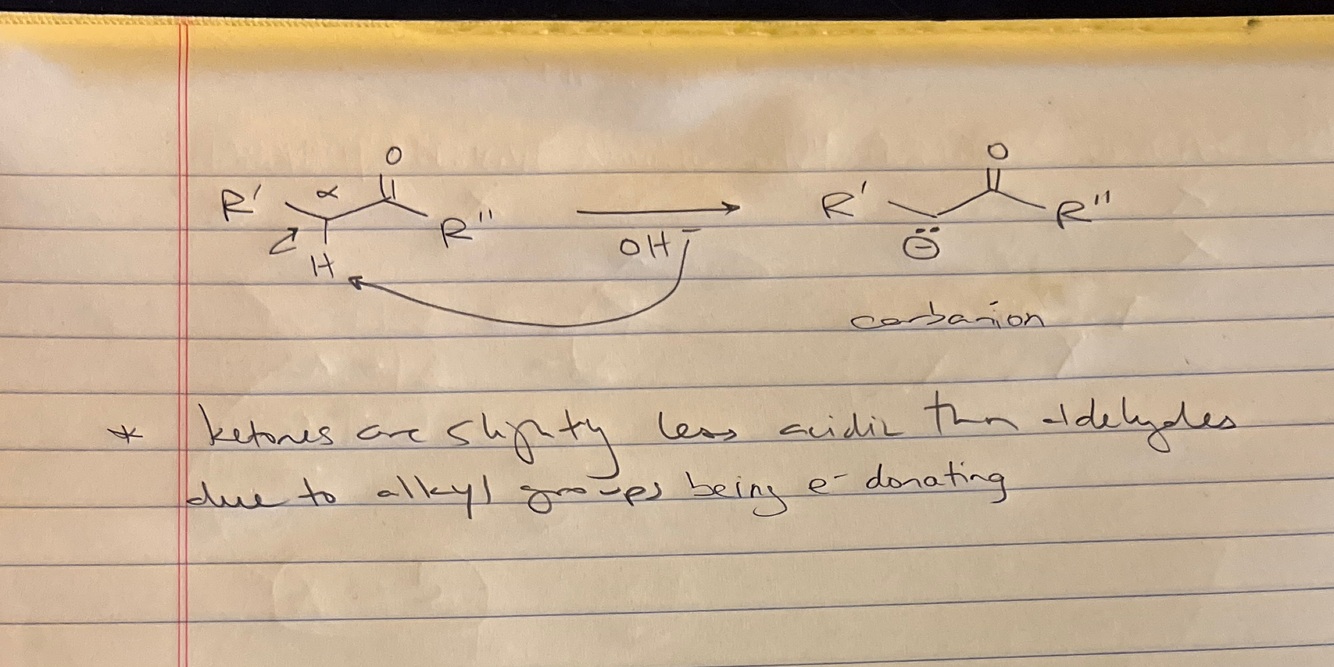
What is the alpha carbon? Alpha hydrogen? How does it play into the reactivity of aldehydes and ketones? What is a carbanion?
Are the alpha hydrogen of aldehydes more or less acidic than ketones?
Alpha hydrogens of aldehydes are more acidic than ketones. Ketones contain alkyl groups that are electron donating properties. The alkyl group destabilize carbanions and stabilize carbocations.
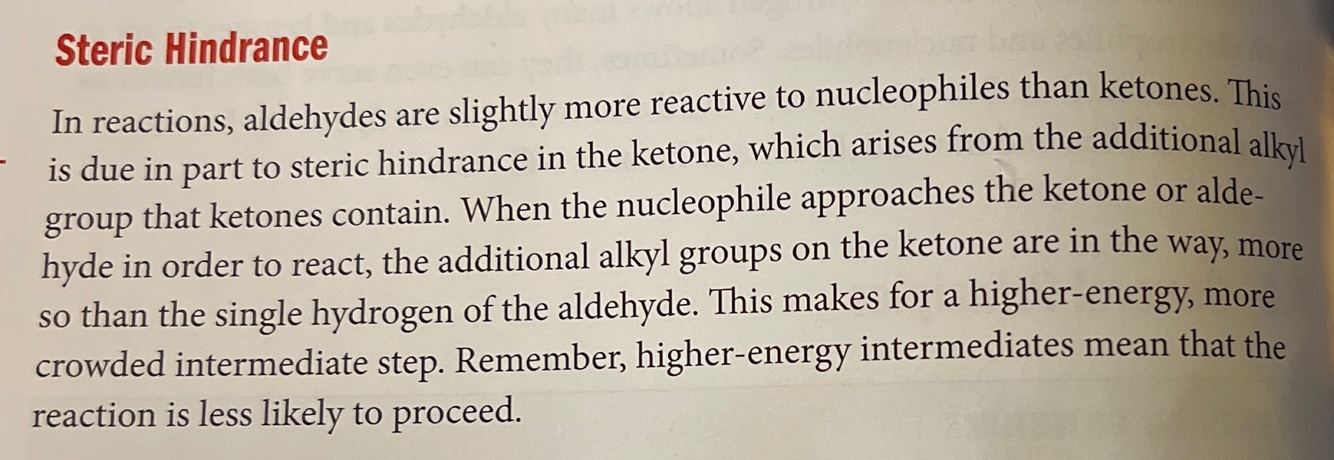
Are aldehydes more reactive than ketones? Why?
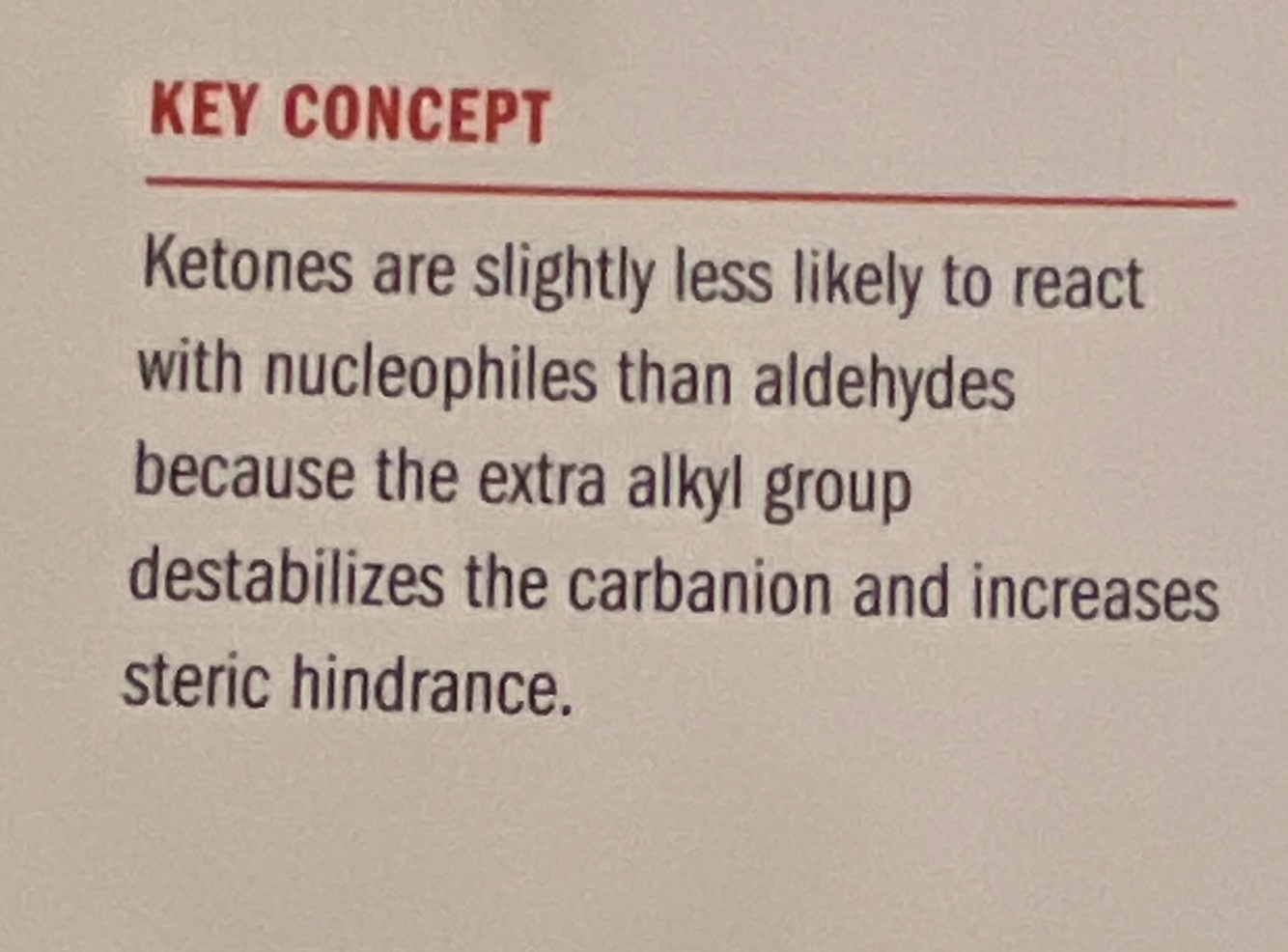
Aldehydes are more reactive to nucleophiles than ketones due to having less steric hindrance. The alkyl groups of ketones are in the way of the nucleophile more than the hydrogen of an aldehyde. Ketones make for a higher energy, more crowded intermediate step. Higher energy intermediates mean that the reaction is less likely to proceed.
Why are ketones less likely to react than aldehydes?
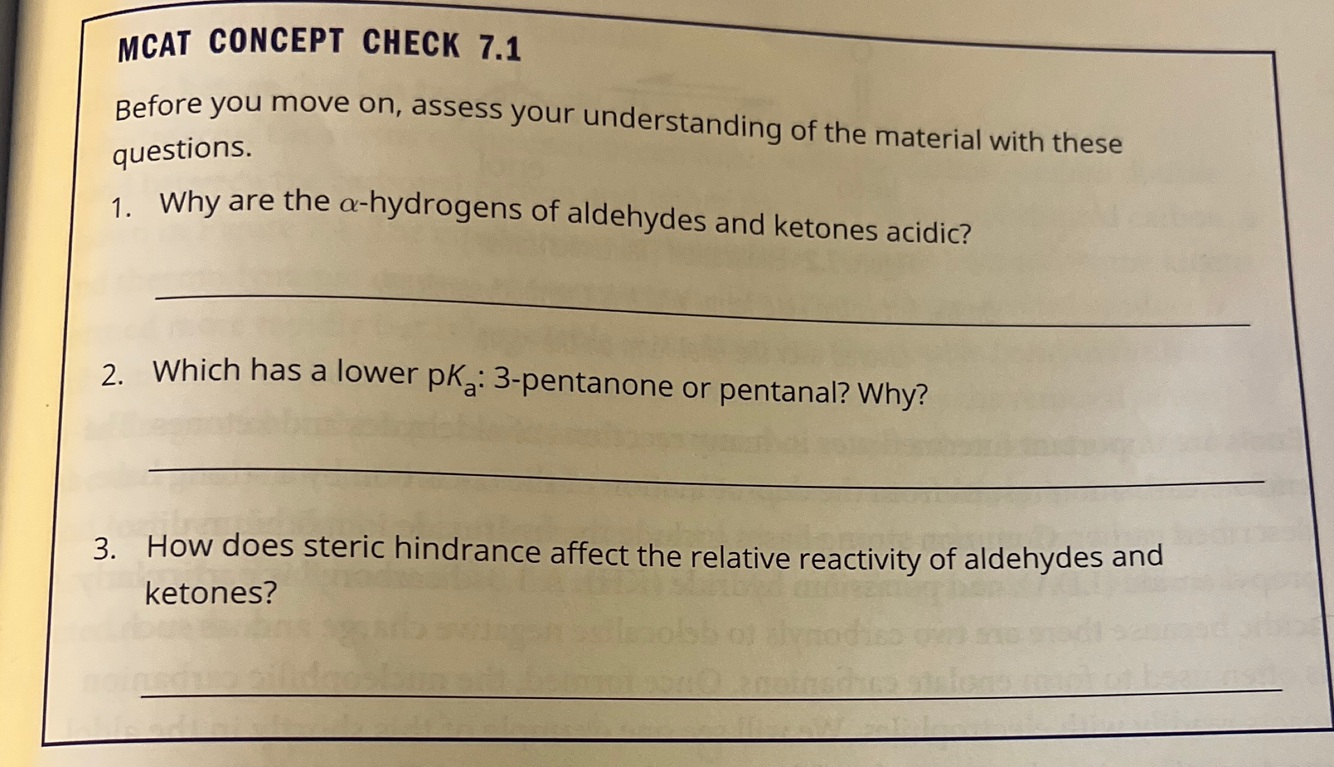
Concept check 7.1
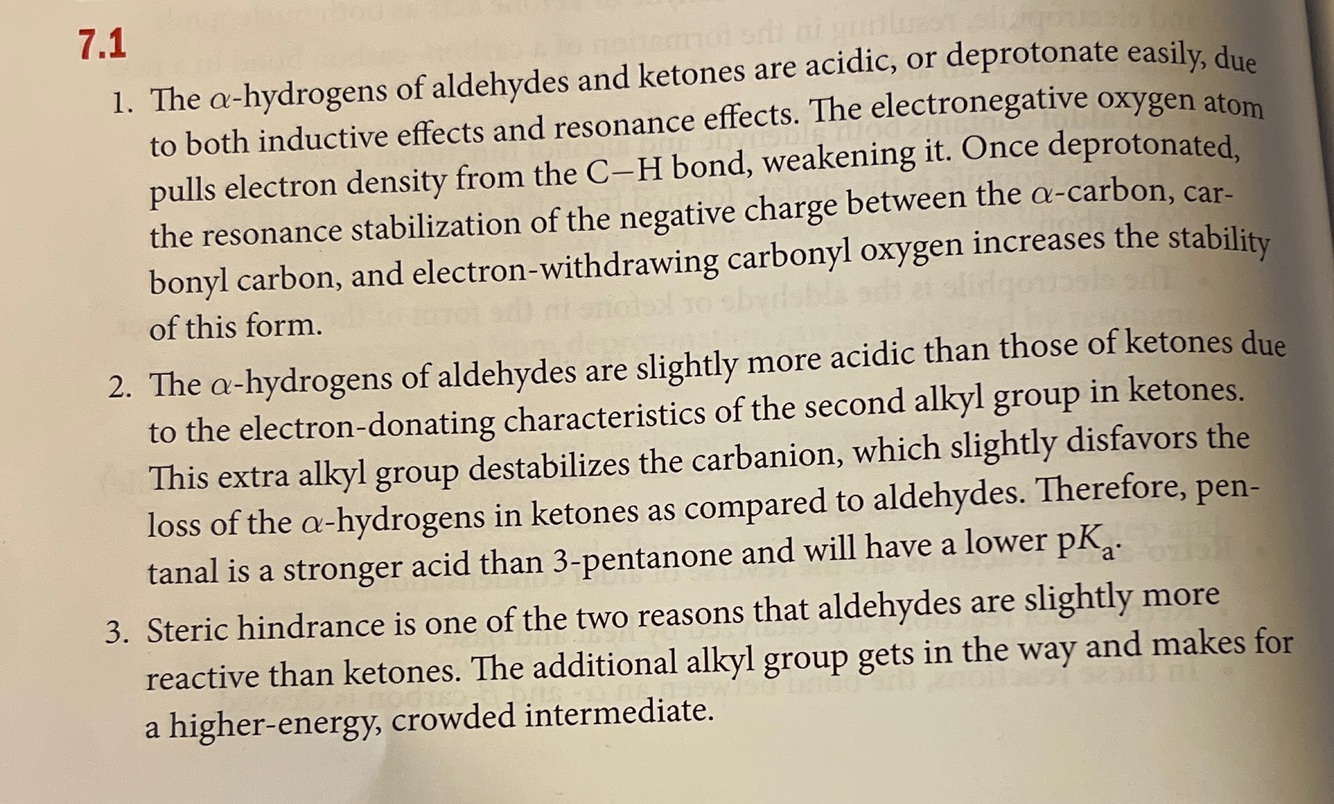
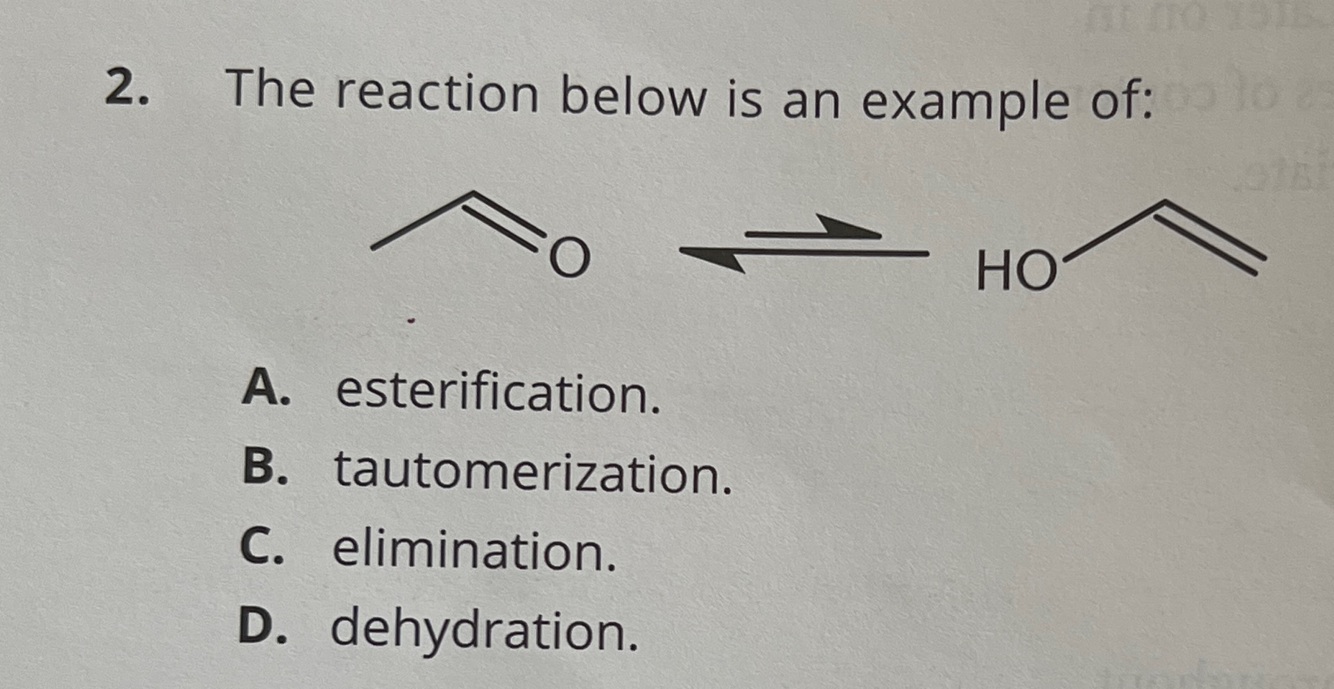
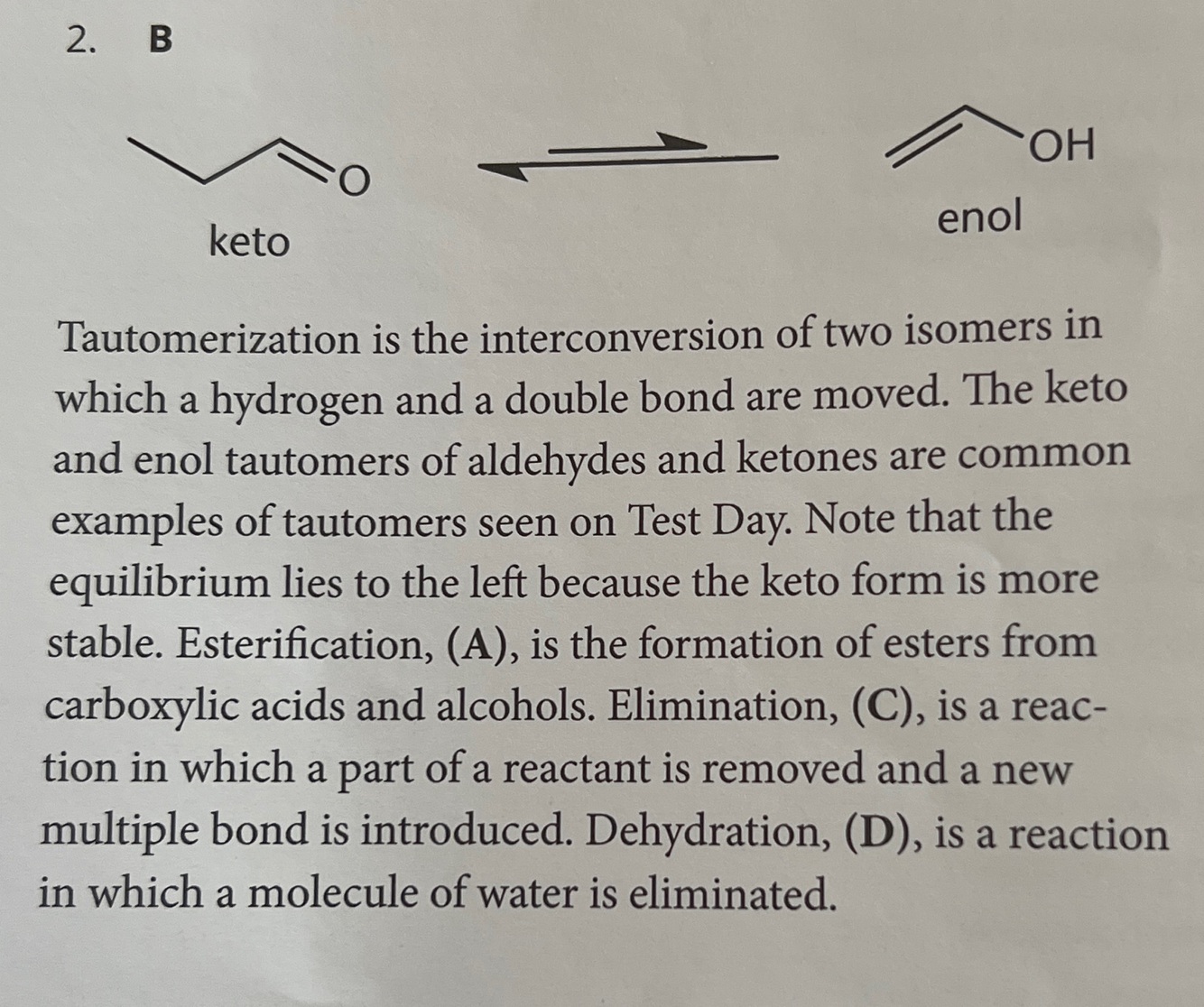
Draw acetone and it’s enol state Are these resonance structures?
They are not resonance structures because they differ in their connectivity.
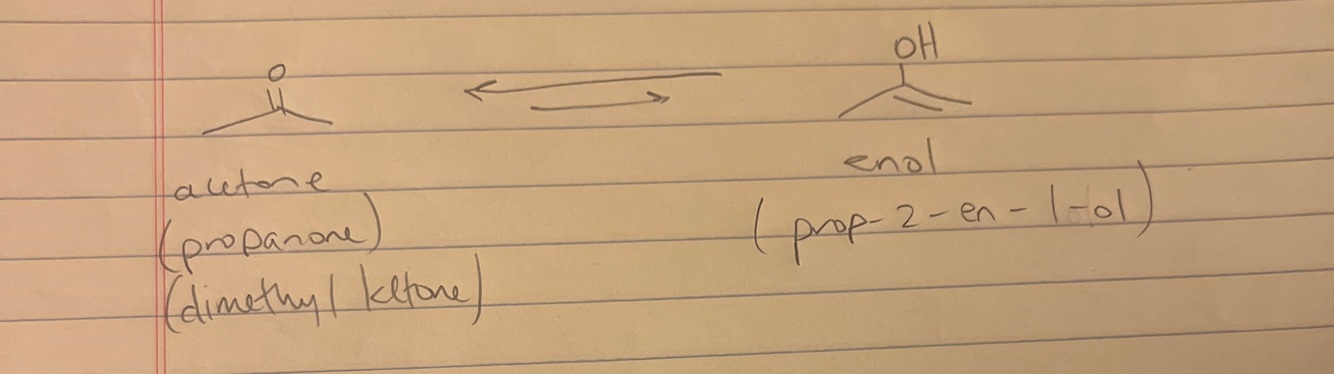
Why is keto enol tautomerization important?
Enols are important because the enolate carbanion, formed by the deprotonation of the alpha carbon by a strong base, reacts readily with electrophiles.
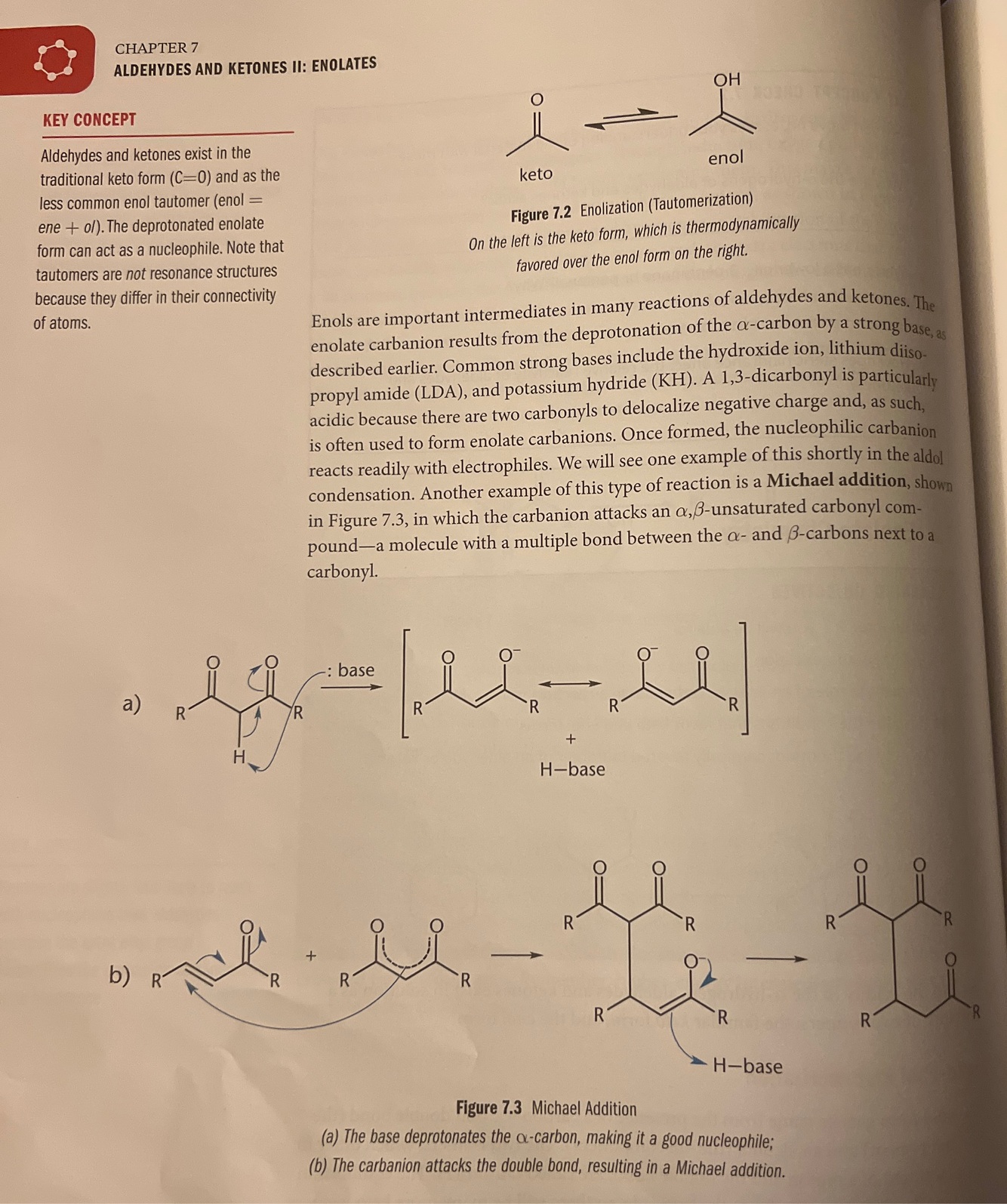
What is the Michael addition? Draw it.
Notice that a 1,3-dicarbonyl is particularly acidic because there are two carbonyls to delocalize negative charge and is often used to form enolate carbanions. Once formed, the nucleophilic carbanion reacts readily with electrophiles. Michael reaction: the carbanion attacks an alpha,beta-unsaturated carbonyl compound, a molecule with a motile bunt between the alpha and beta carbons next to the carbonyl.
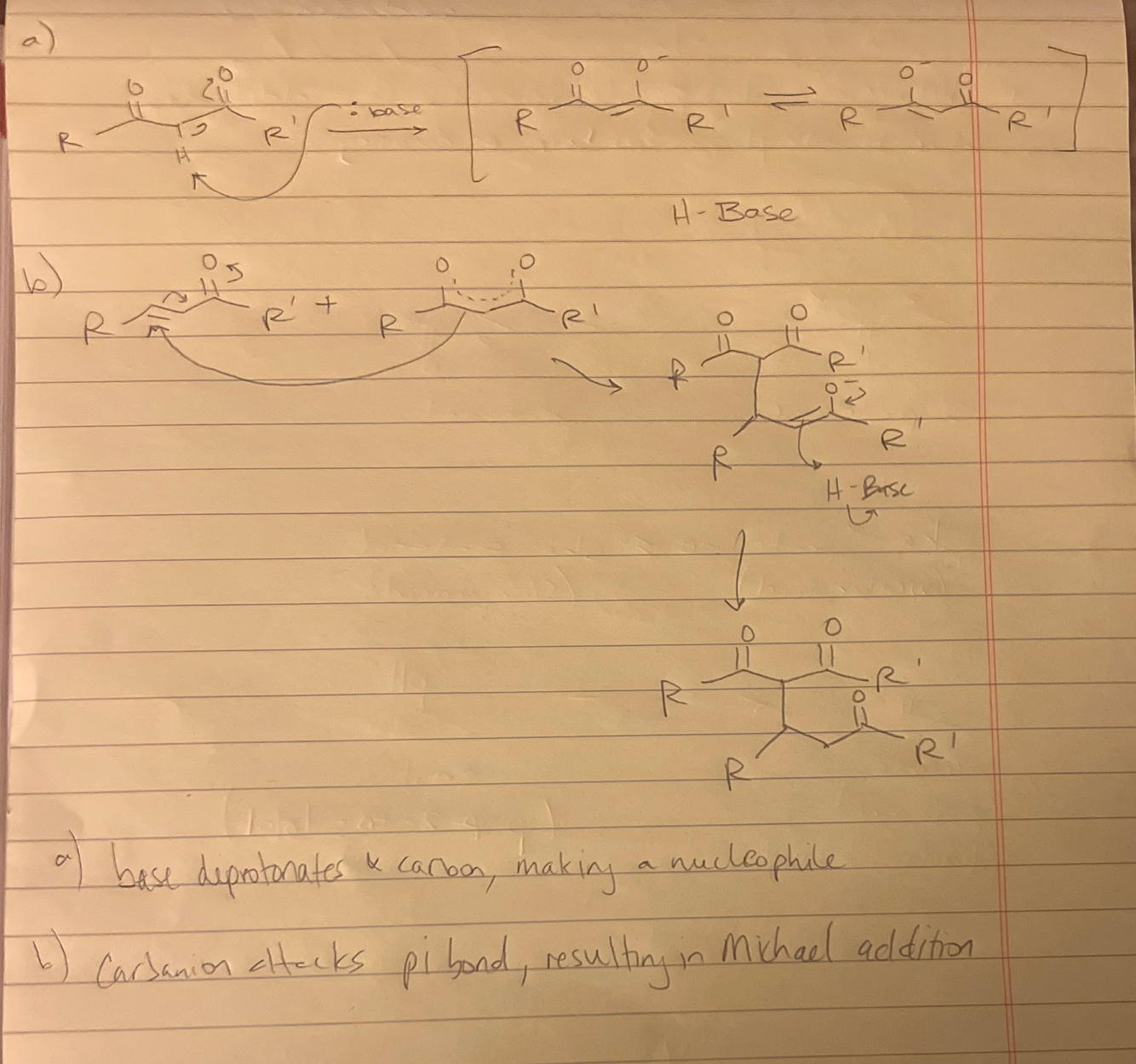
Draw Michael addition
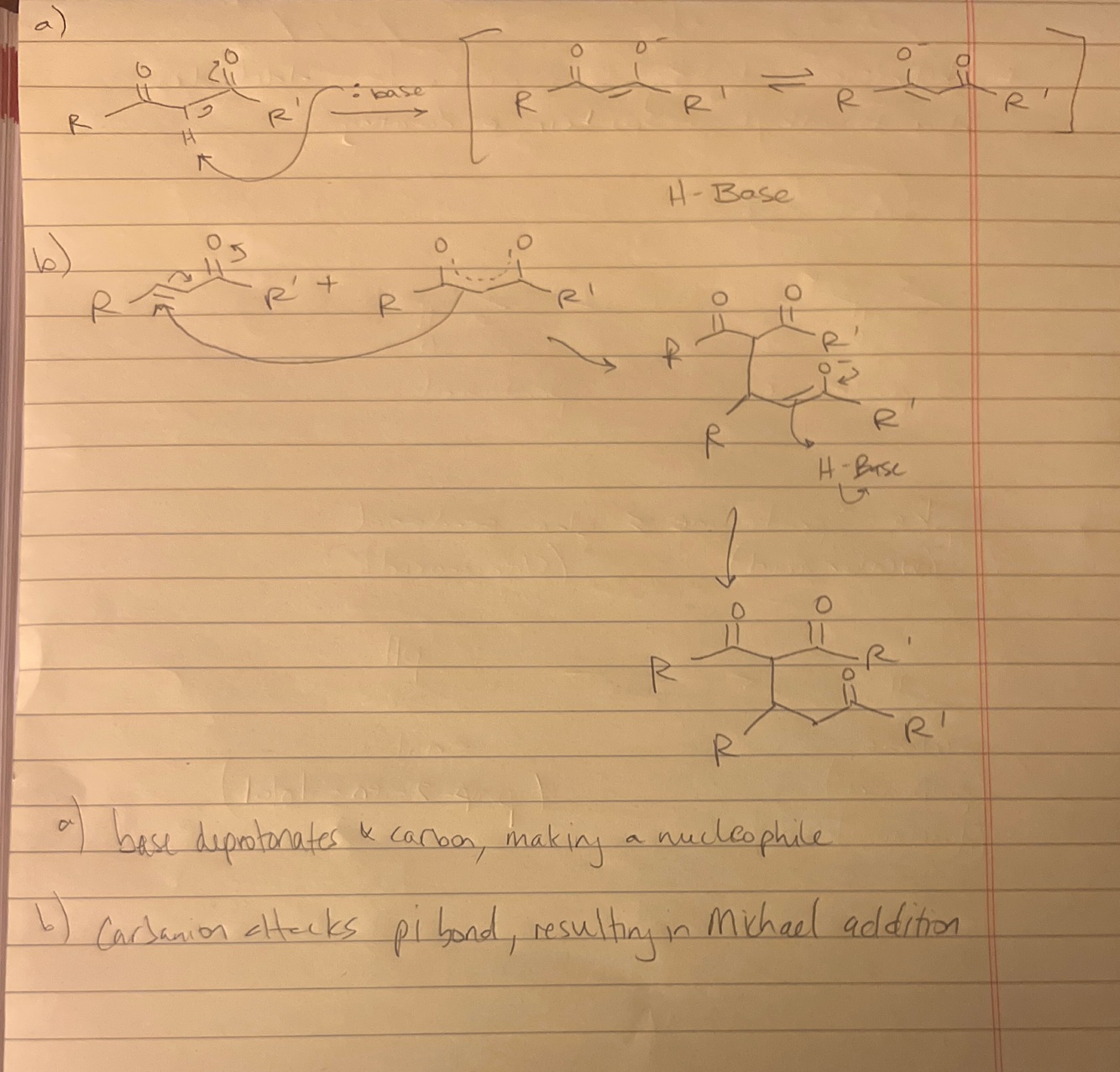
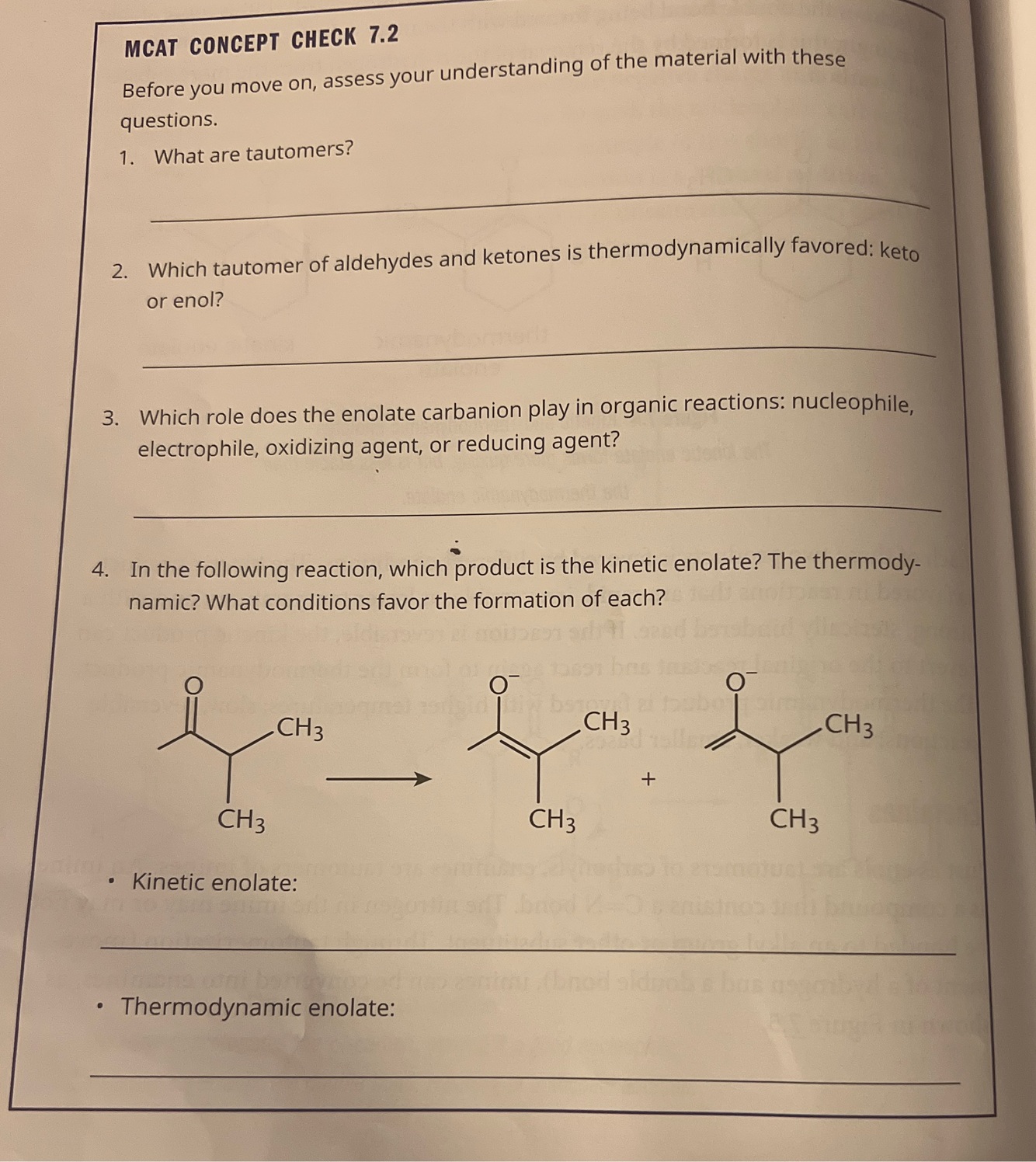
Describe the kinetic and thermodynamic enolate products.
Given a ketone with two alkyl groups, each of which may have an alpha hydrogen. Two forms of the enolate can form: a thermodynamic enolate and a kinetic enolate. The kinetic is formed more rapidly but is less stable, having a double bond on the less substituted alpha carbon. Each is favored by different conditions: Kinetic is favored in reactions that are rapid, irreversible, lower temp, and strong statically hindered base. Thermodynamic is favored with hyper temperatures, slow, reversible reactions; and weak, smaller bases.
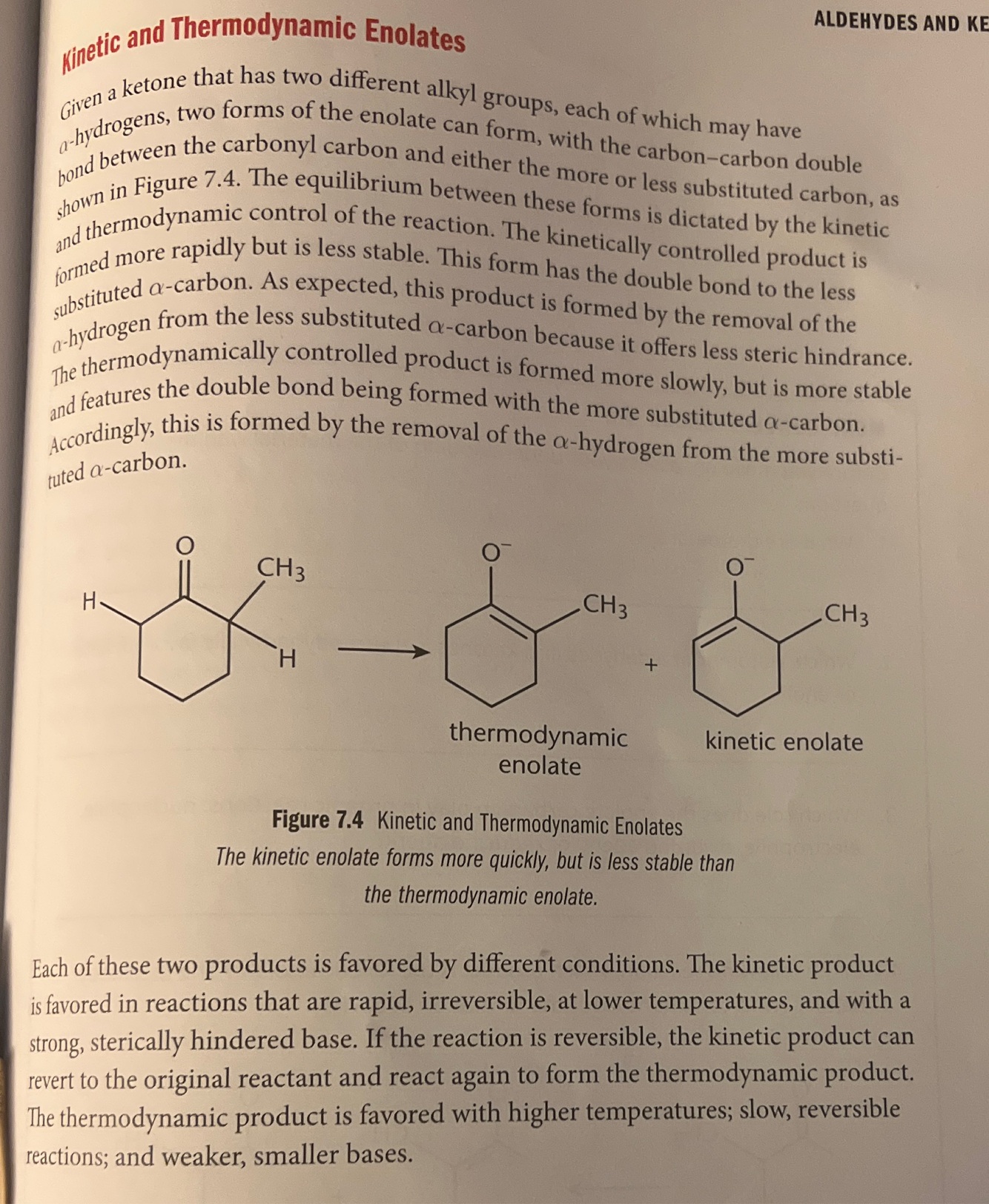
Draw the thermodynamic and kinetic enolate formed from o-methylcyclohexanone (2-methylcyclohexanone)
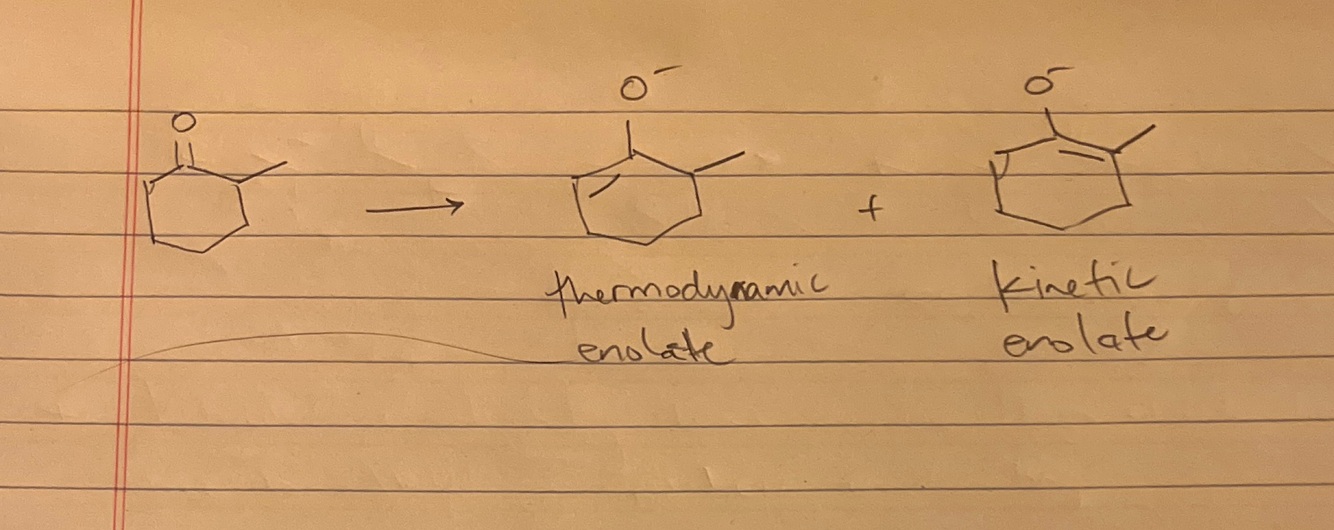
What is an imine? Draw the formation of an imine.
Imine is a compound that contains C double bonded to N.

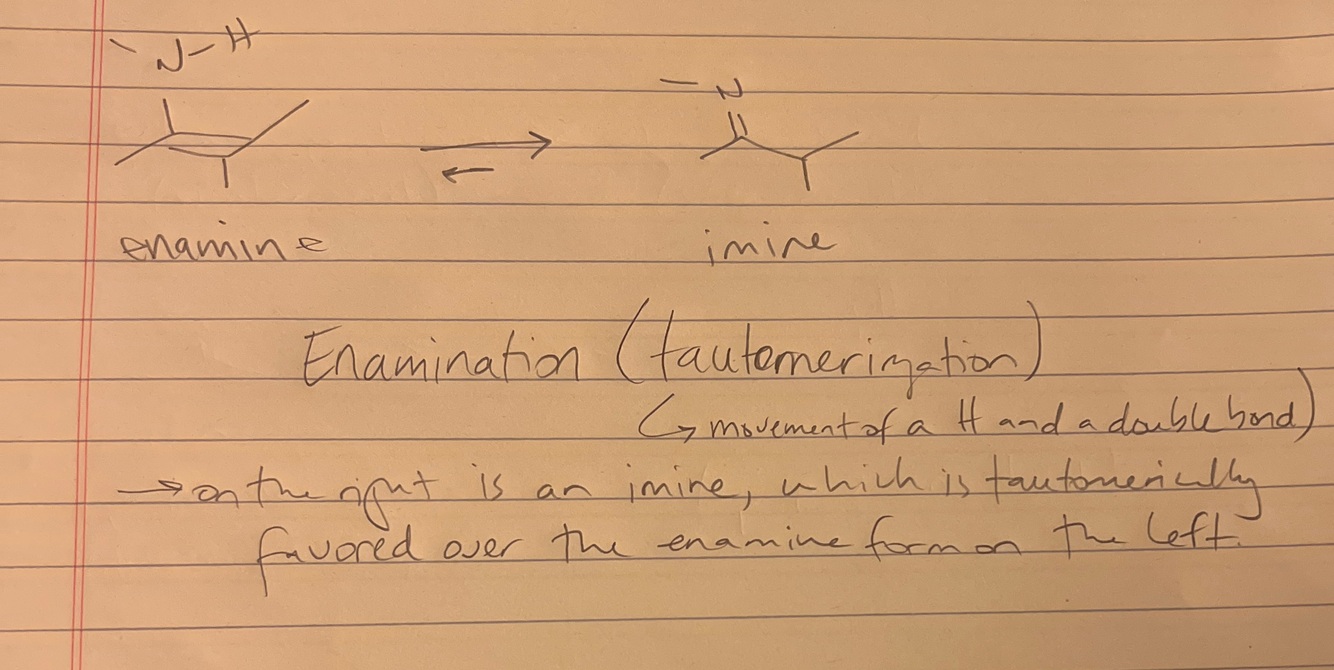
Enols are tautomers of carbonyls. Enemies are tautomers of imines. Draw imine/enamine tautomerization
Concept check 7.2
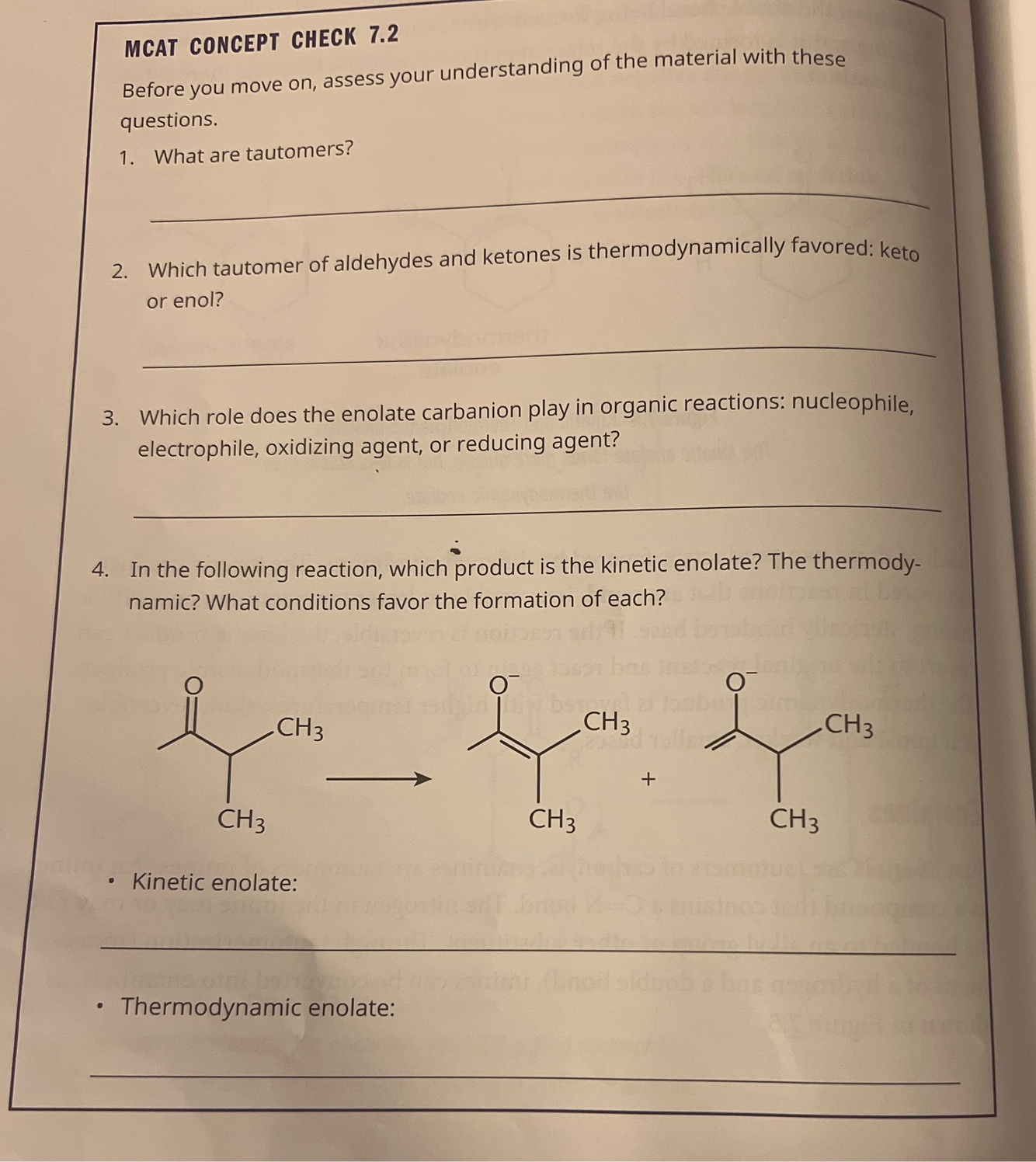
Concept check 7.2
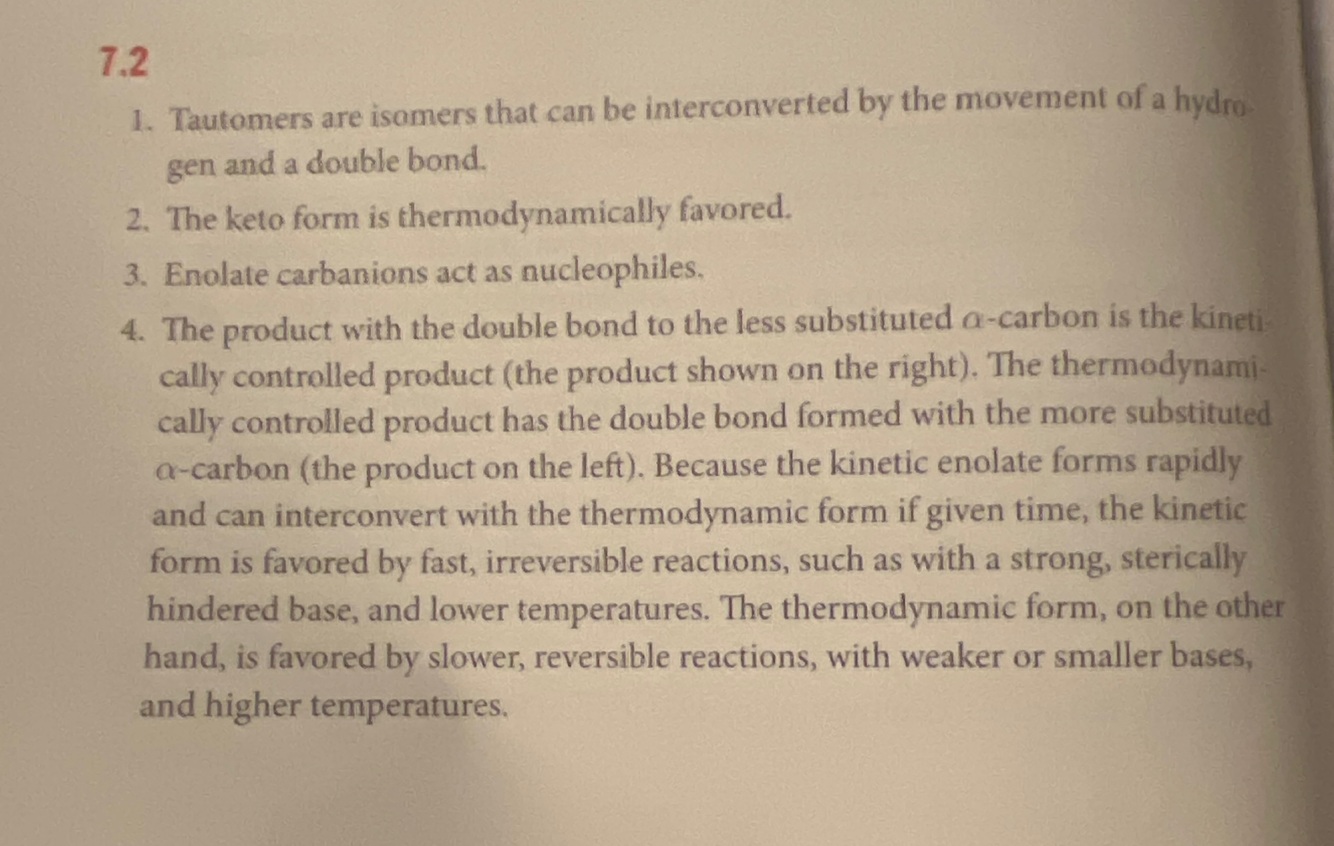
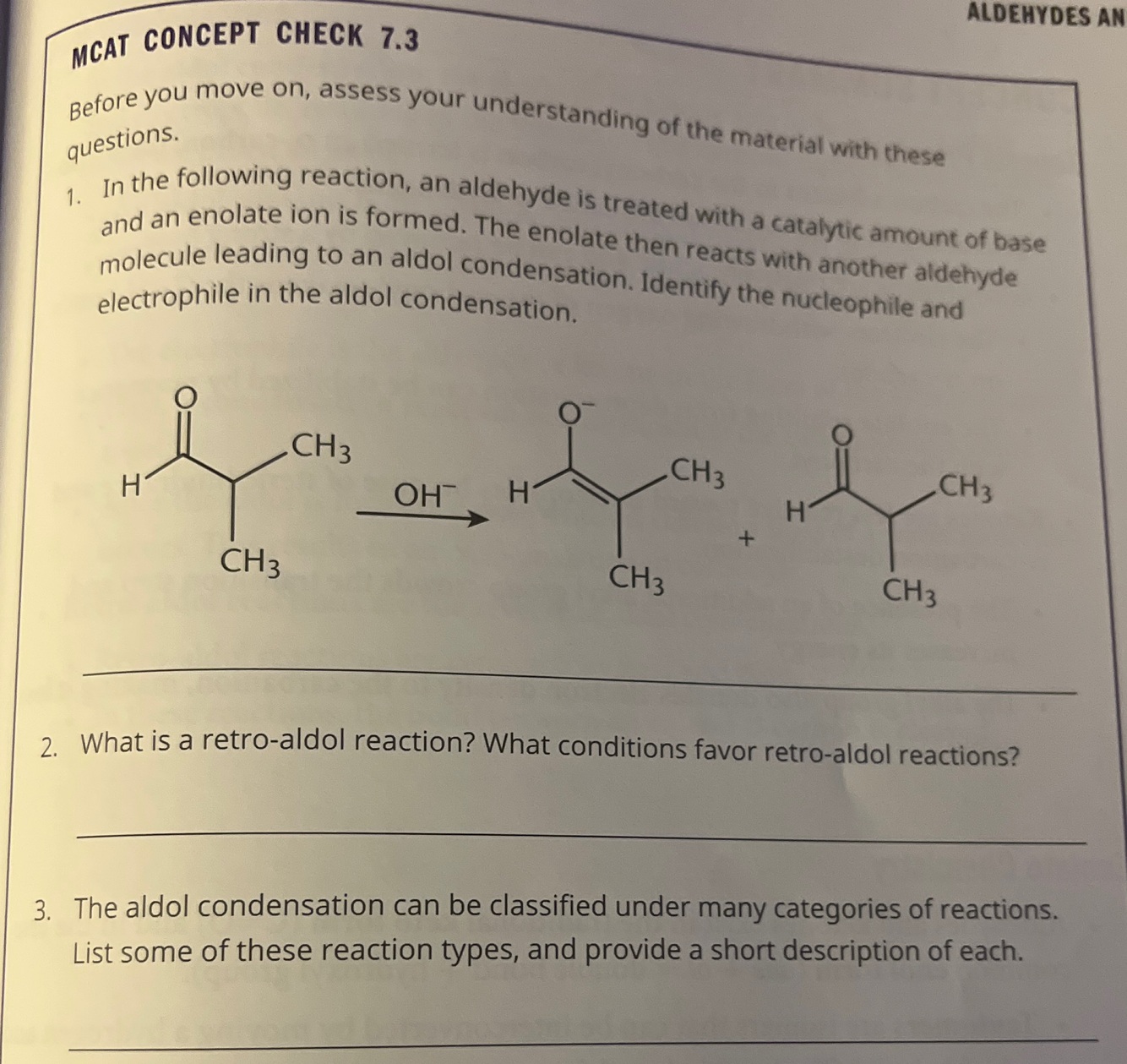
What is aldol condensation?
Aldehyde or ketone acts both as electrophile (in keto form) and nucleophile (in enolate form), resulting in a carbon-carbon bond. Key here is that the carbonyl containing compound acts as both a nucleophile and an electrophile.
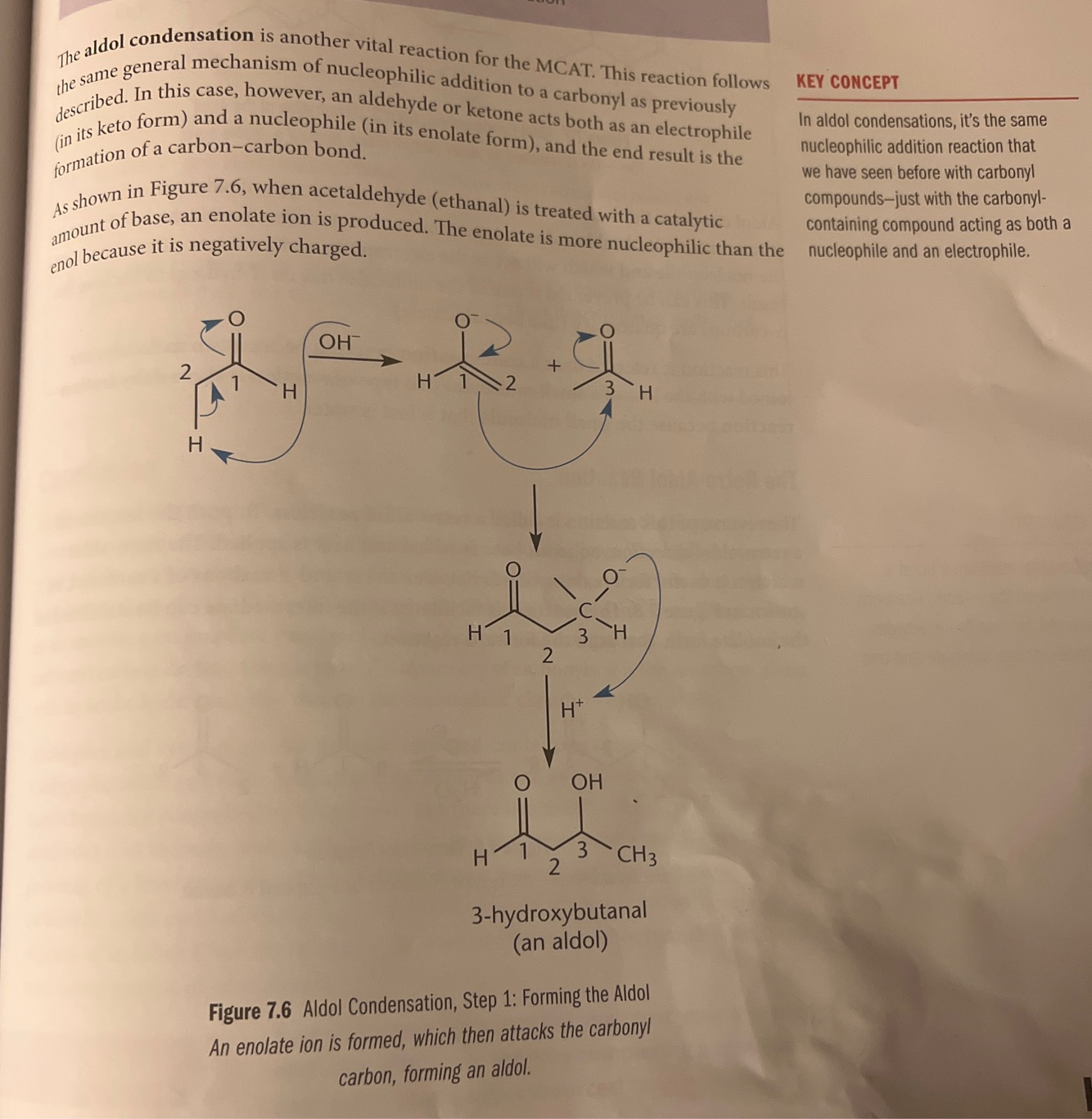
Draw the aldol condensation of acetaldehyde.
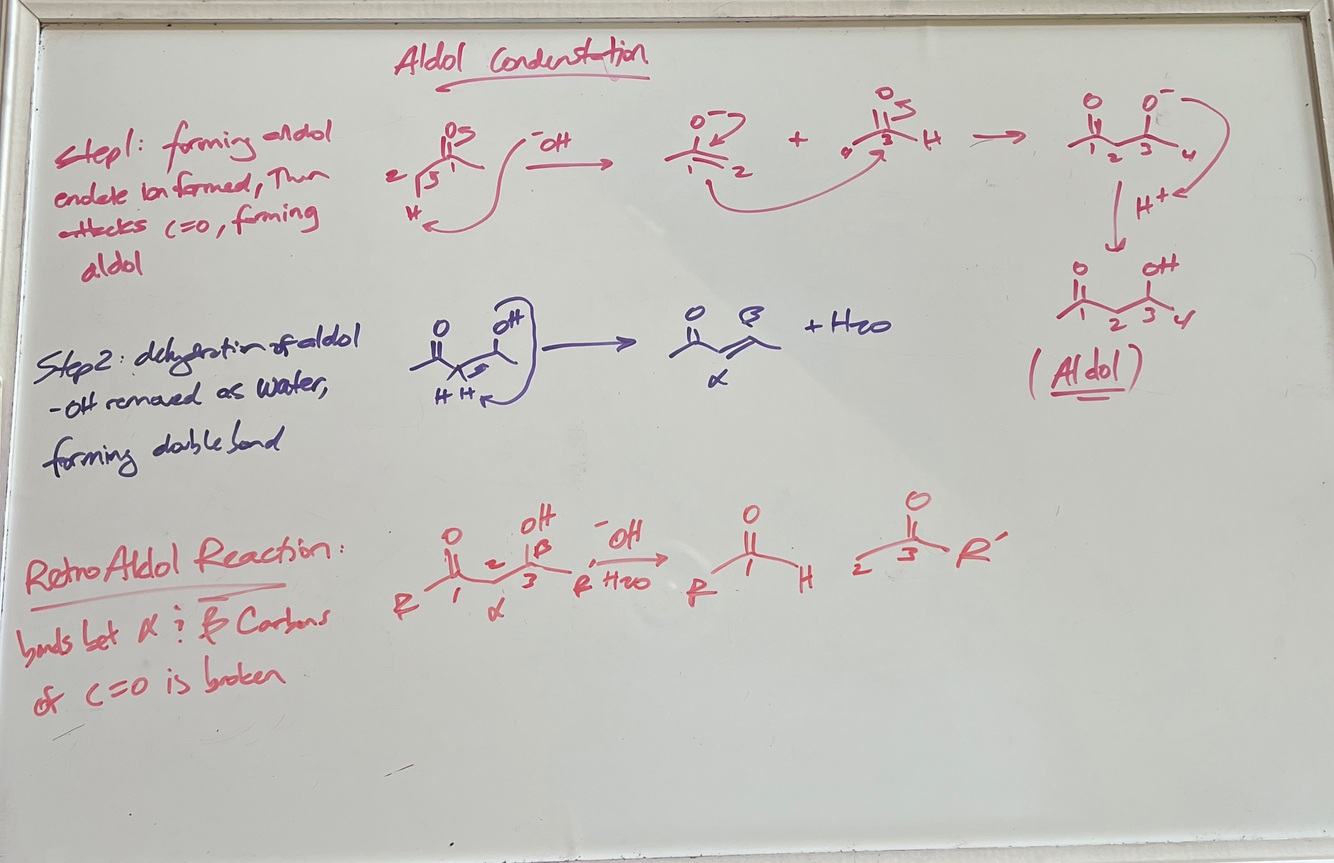
Step 2 of an aldol condensation
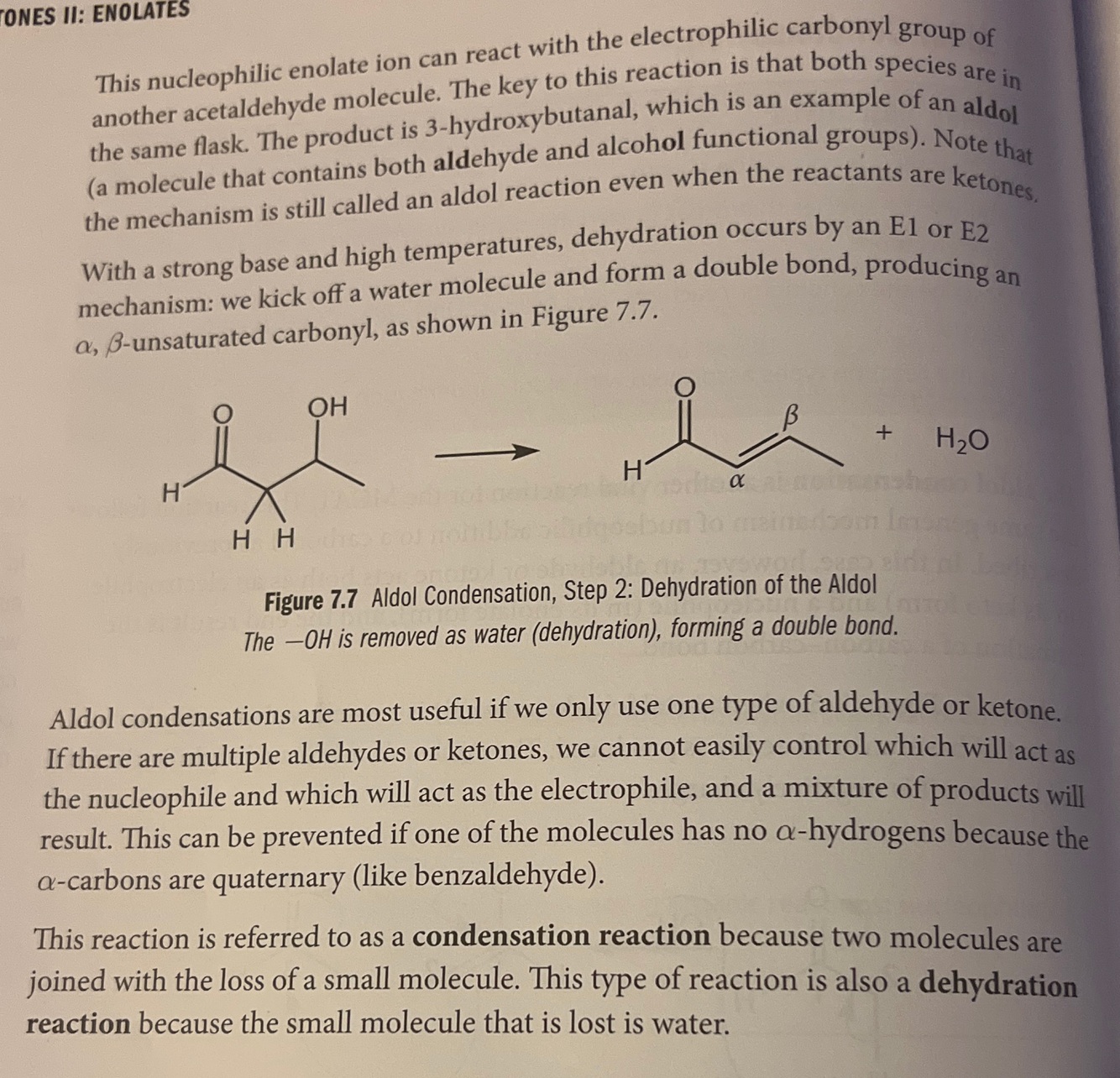
What is a retro aldol reaction?
The reverse of an aldol condensation. Addition of a strong base and heat will break a bond between alpha and beta carbons of a carbonyl, forming two aldehydes, two ketones, or one aldehyde and one ketone.
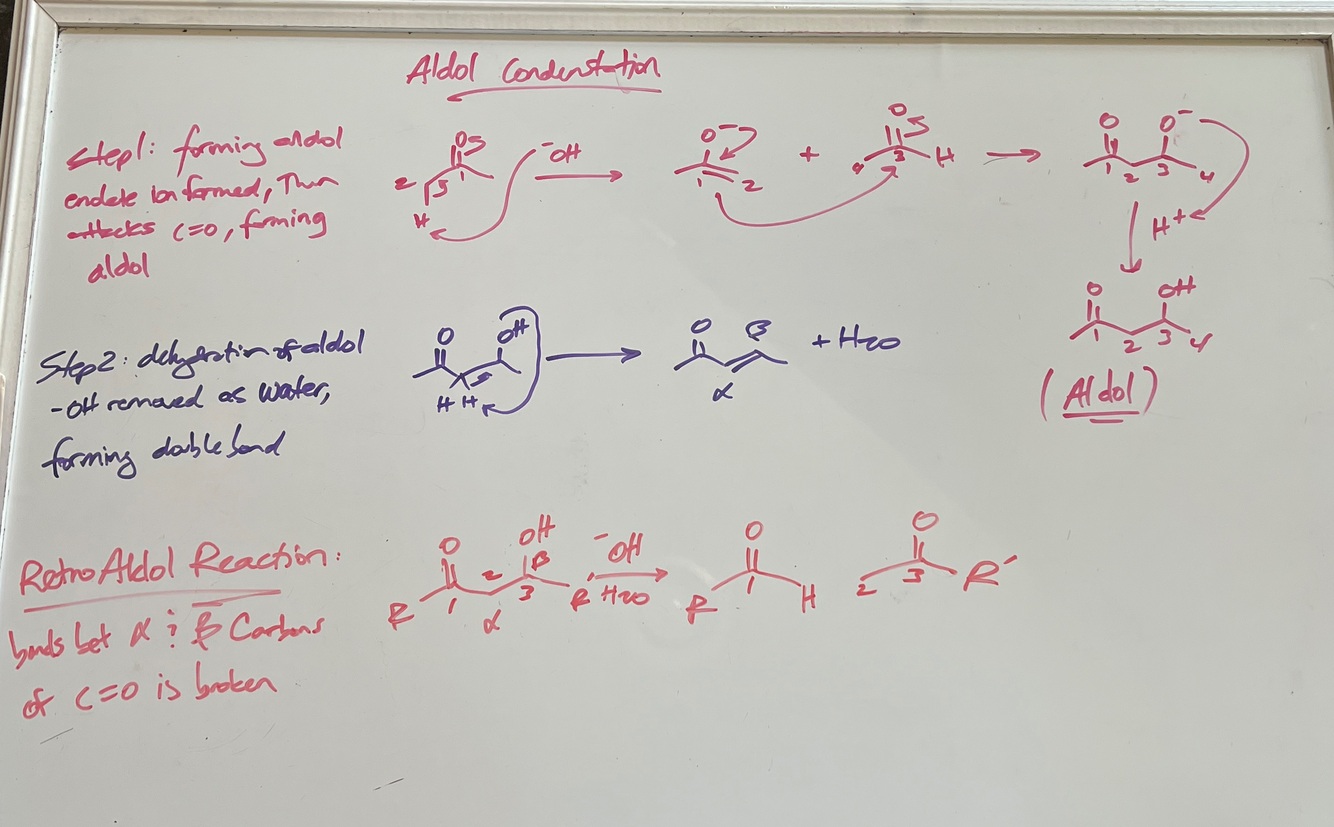
Concept check 7.3
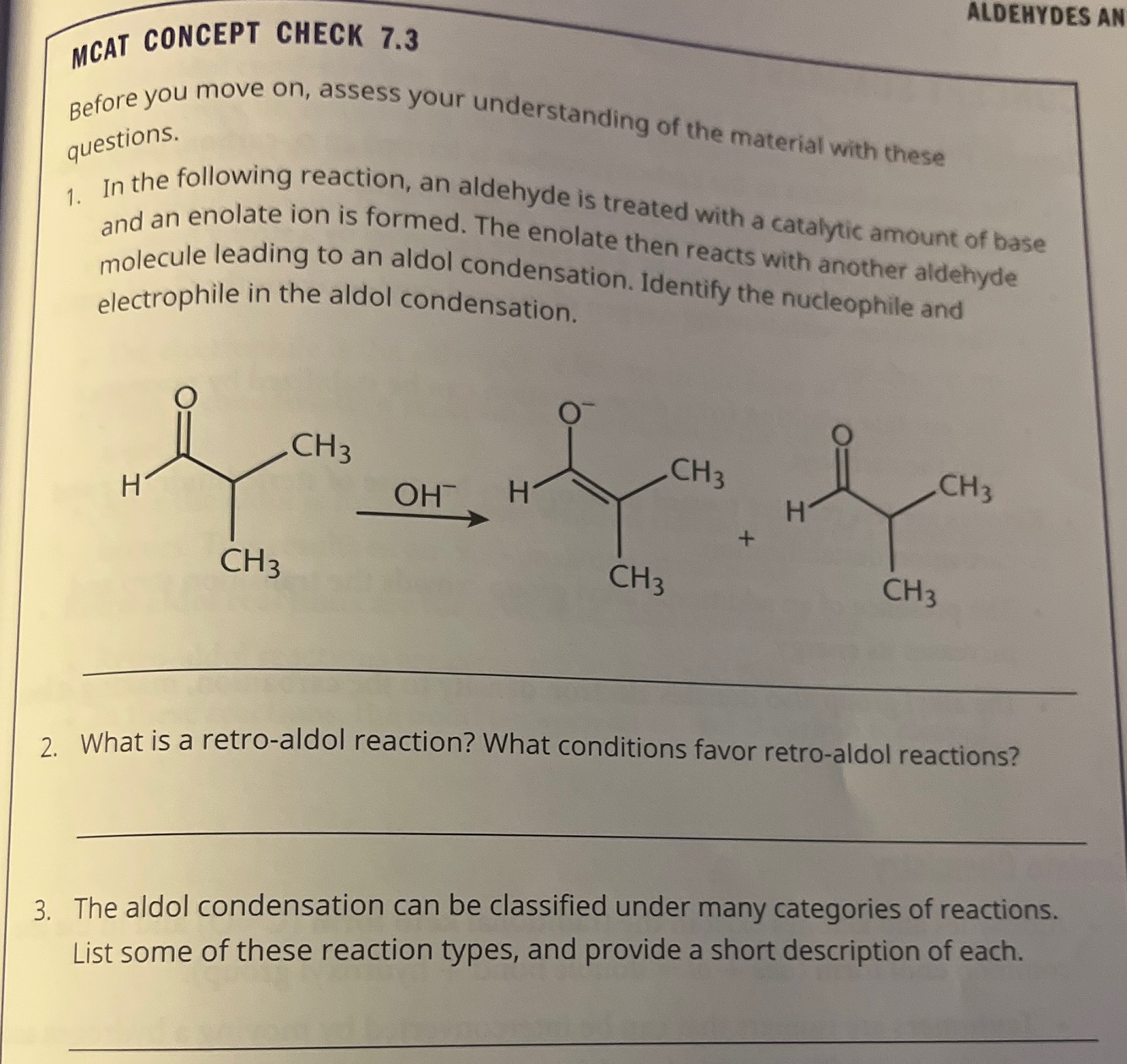
Concept check 7.3
Chapter 7 Mastery 1
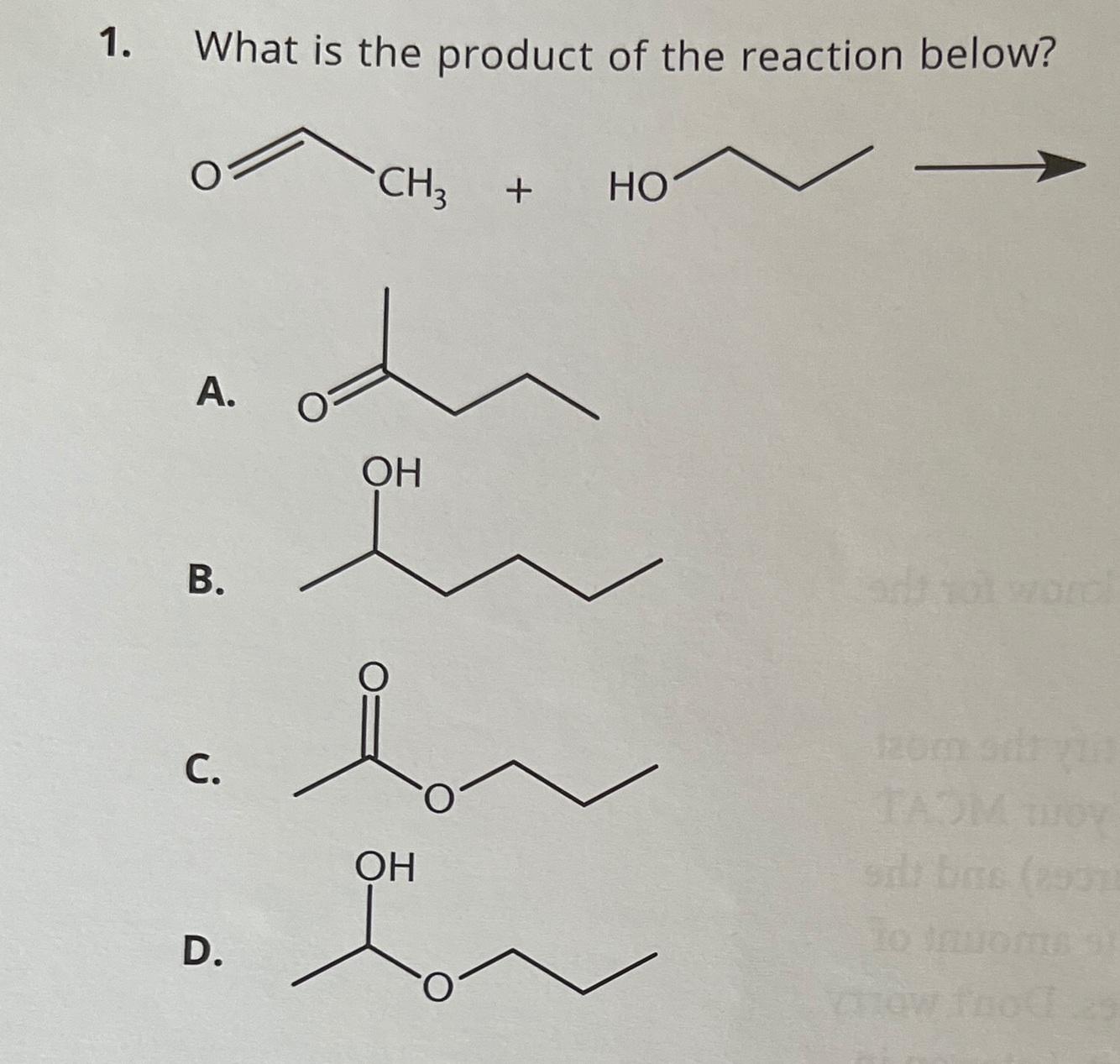
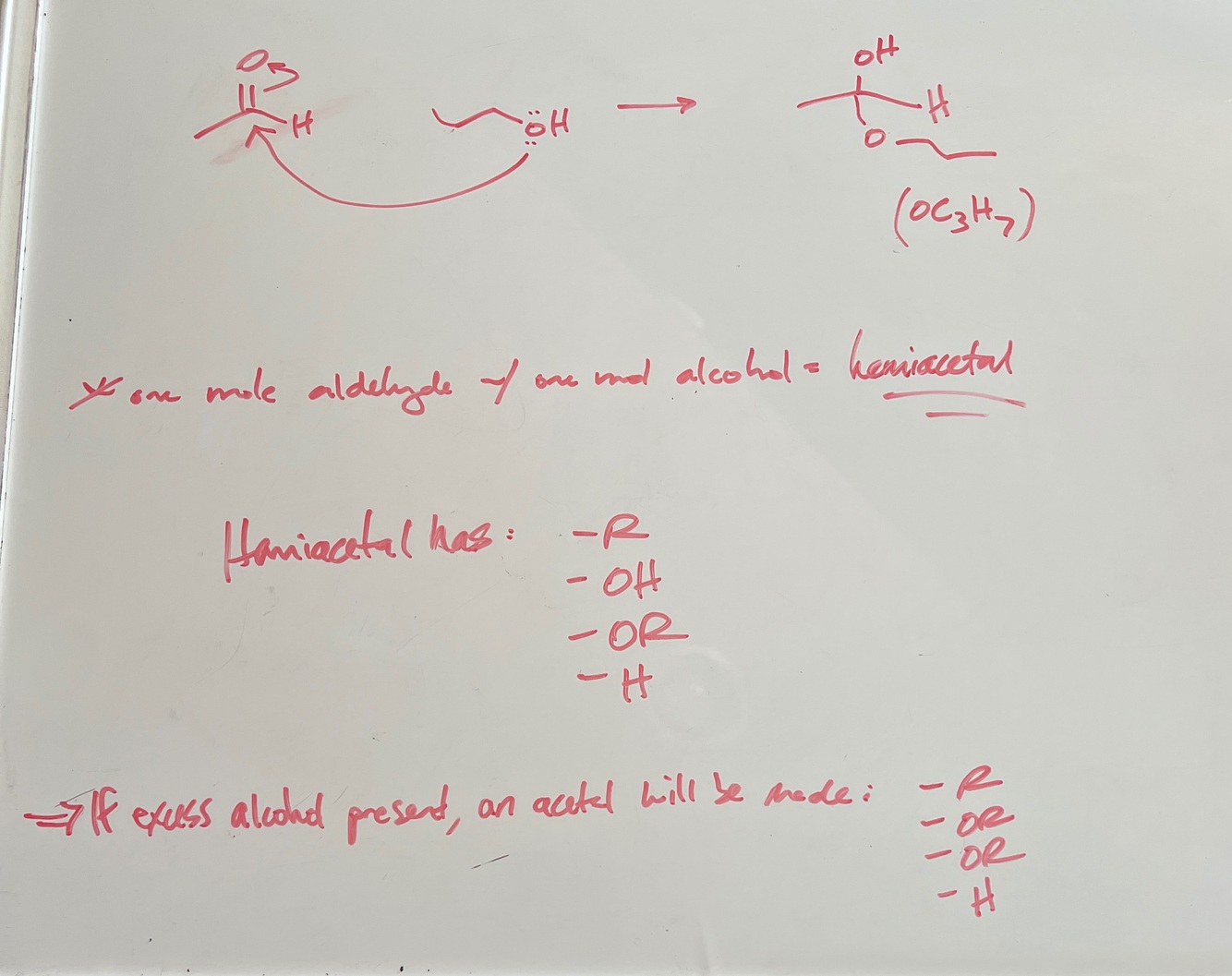
Chapter 7 Mastery 2