Alkene and Alkyne Mechanisms
No description yet. This curated deck is ready for daily study.
Card preview (24)
Name this Alkene mechanism
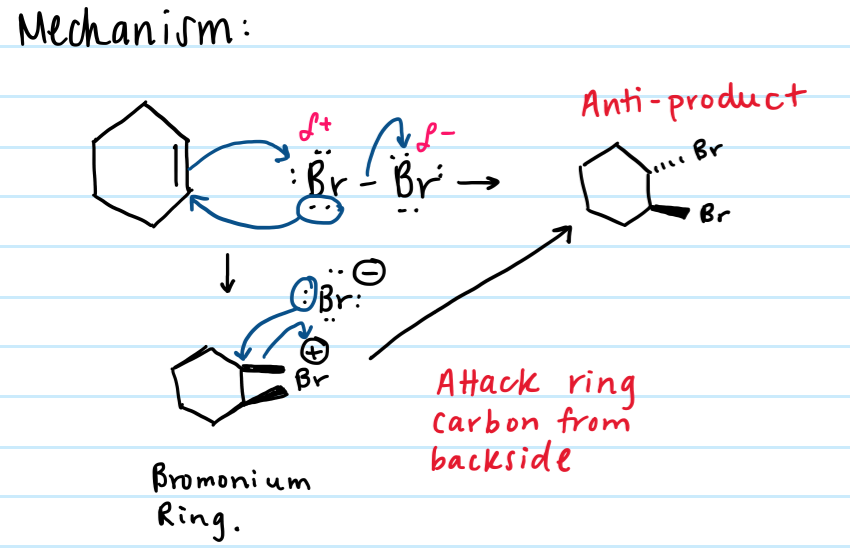
Halogenation (X2 addition)
Name this Alkene overall transformation
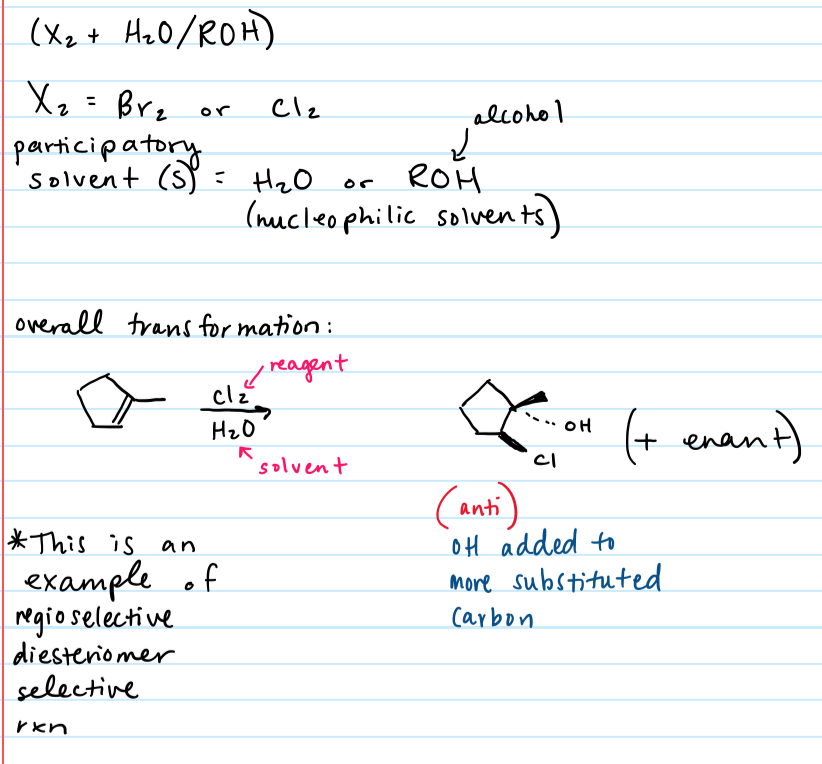
Halohydrin formation (X2+H2O/ROH)
Name this Alkene overall transformation
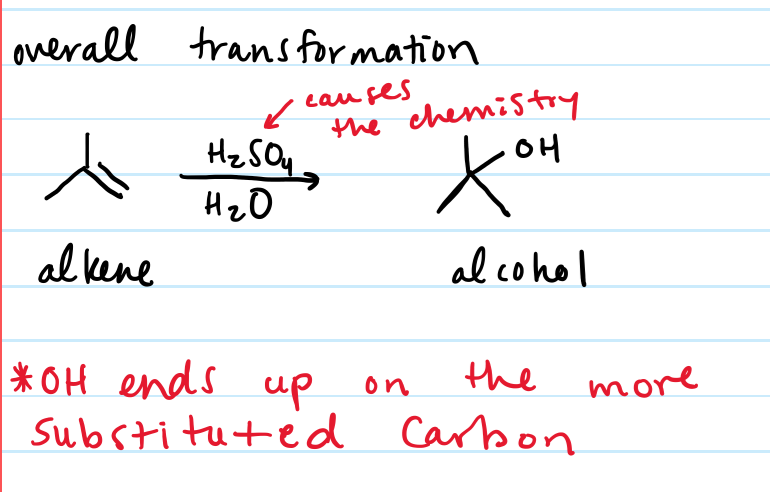
Acid-Catalyzed Addition of Water
Name this Alkene overall transformation
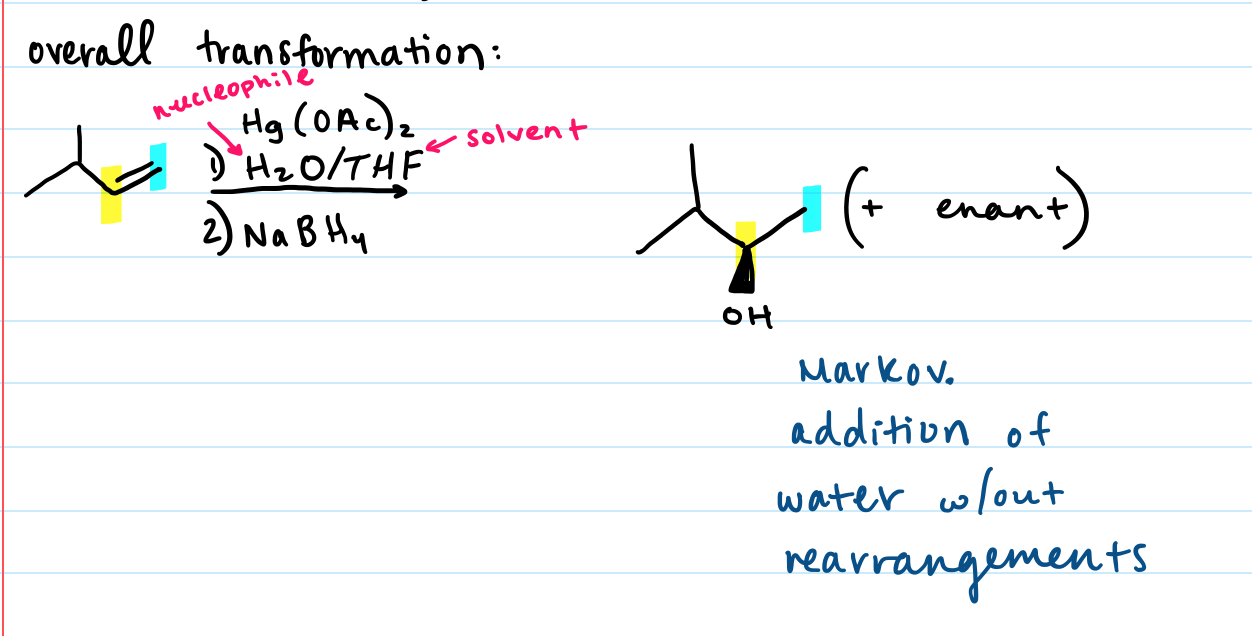
Oxymercuration/Reduction
Name this Alkene overall transformation
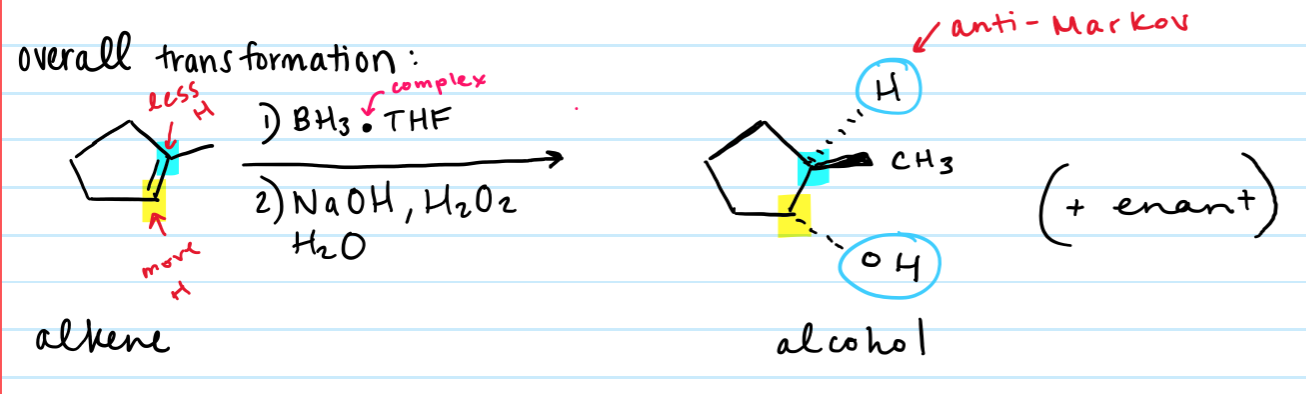
Hydroboration/Oxidation
Name this Alkene overall transformation
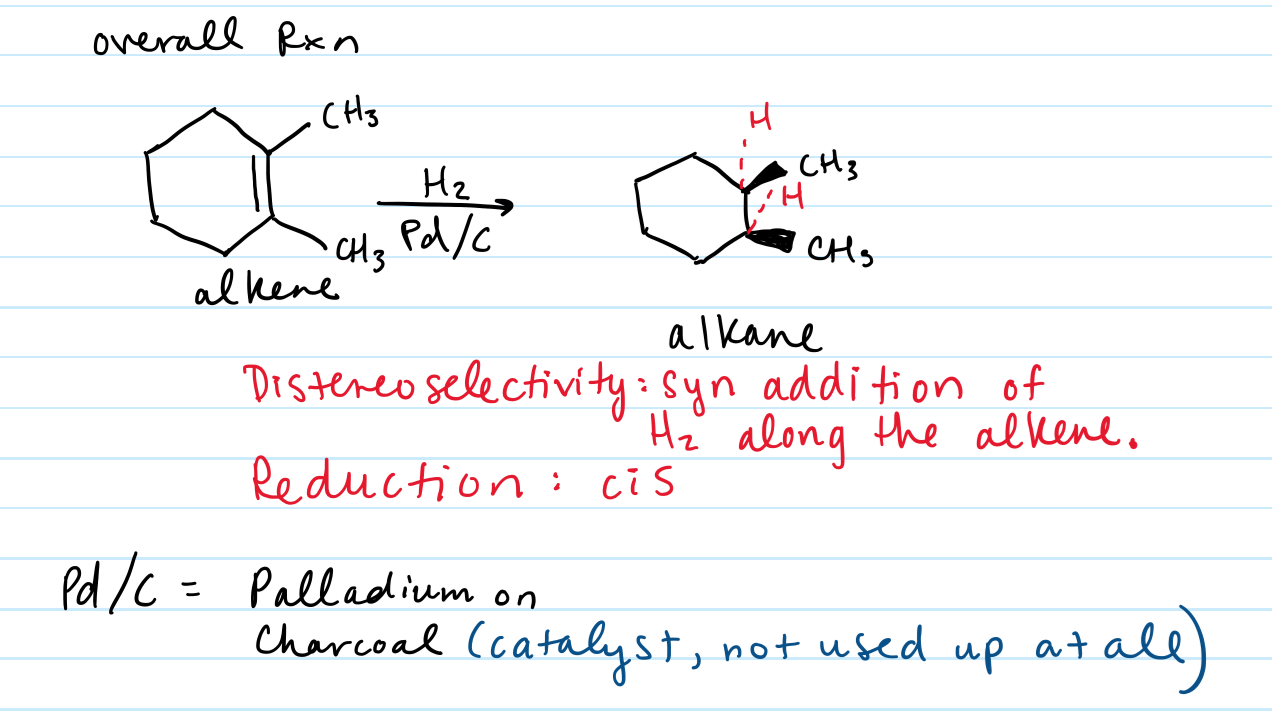
Catalytic Hydrogenation. Stereospecific. Reduction of alkene to alkane
Name this Alkene overall reaction
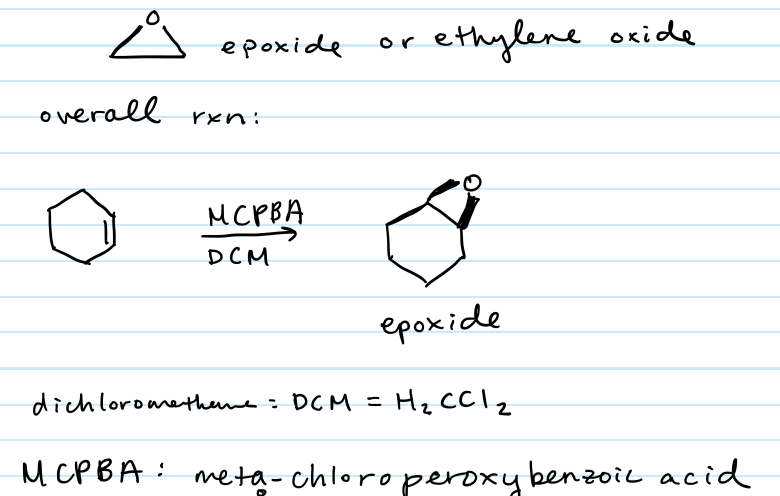
Epoxidation
Name this Alkene overall transformation
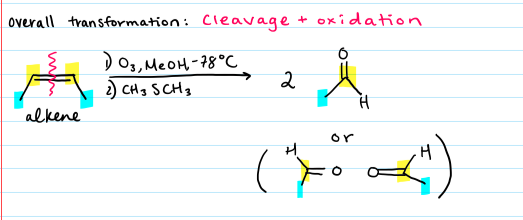
Ozonolysis
Name this Alkene overall transformation
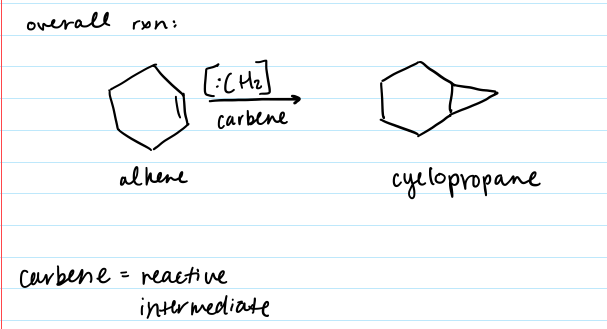
Cycloproponation
Name this Alkene overall transformation
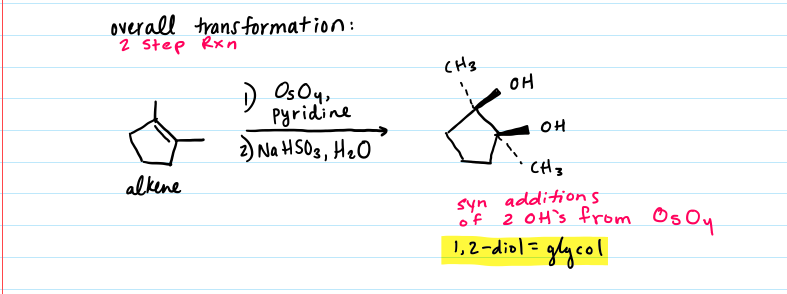
Hydroxylation
Name this Alkene overall transformation
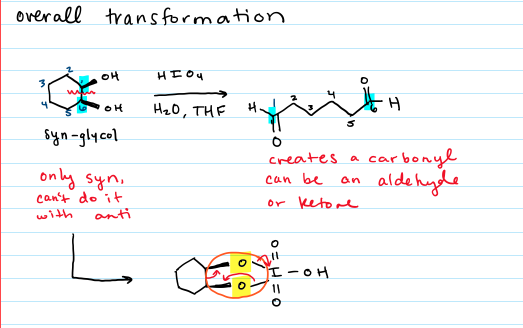
Oxidative Cleavage of syn-Glycols with HIO4
Alkene is a loose sea of electrons that reacts with a strong acid to break the bond from halide
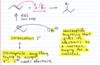
H-X Addition
What is DCM?
Organic solvent dichloromethane (or methylene chloride) that does not participate in the rxn but gets the compounds into a reactive medium
If Cl and Cl or Br and Br atoms join, what happens to the electrons?
The partial (+) and partial (-) charges (dipole interactions) on both of the highly electronegative atoms will drive the electrons to one side and cause a chemical reaction
What makes this bromonium ring reactive, yet “happy”?
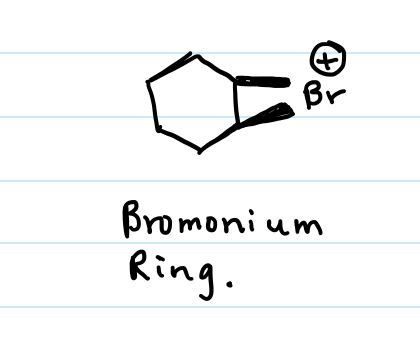
It wants to be broken open The bromonium ring structure is happy because it has a full octet, but it is highly reactive due to the 3-angle ring strain (bond angle about 60 degrees) and all electrons are eclipsed by each other. Also, bromine has a (+) charge. Since bromine is electronegative, so it wants electrons.
Does a bond become a dash or a wedge when you attack the back side of a wedge?
dash
Name this Alkene overall transformation
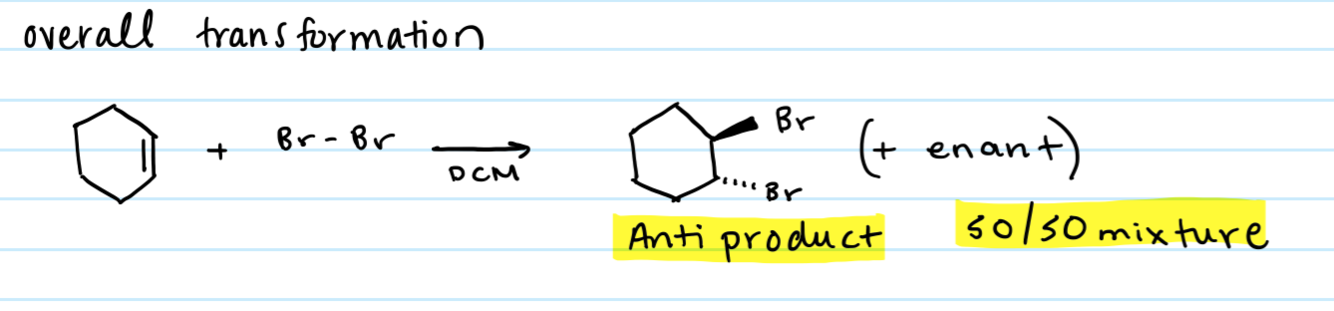
Halogenation (X2 addition)
What is regioselectivity?
rxn where one constitutional isomer is favored over the other
What is stereoselective rxn?
rxn where one stereoisomer is formed in preference (R/S)
Stereospecific rxn
What time of rxn results in one stereoisomer forming based on the mechanism alone (always san/anti or inversion of stereochemistry
Name this Alkene mechanism
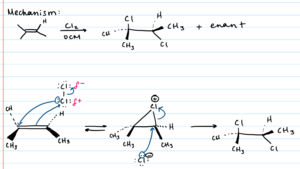
Halogenation (X2 addition)
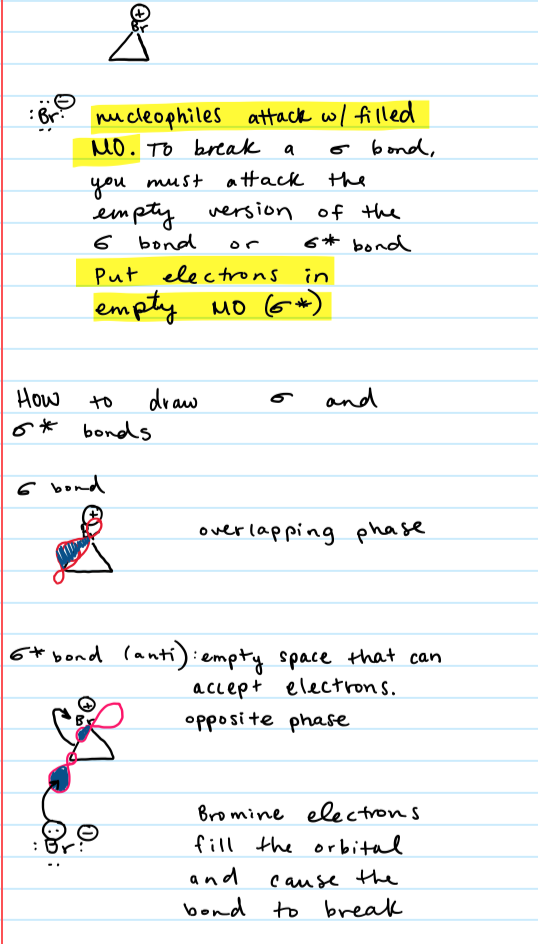
Halogenation (X2 addition) mechanisms produce a mixture of enantiomers. Why?
The molecule has 2 sigma* bonds (anti) which are empty space that can accept electrons. Nucleophiles such as Br2 or Cl2 attack with filled MO. To break the sigma bond, you must attack the empty version of the sigma bond which is the sigma* bond. Then, put electrons in empty MO (sigma*).
Why don’t we use F2 or I2 in Halogenation (X2 addition)?
Both work, but F2 is explosive and I2 produces unstable products that decompose readily
Name this Alkene mechanism
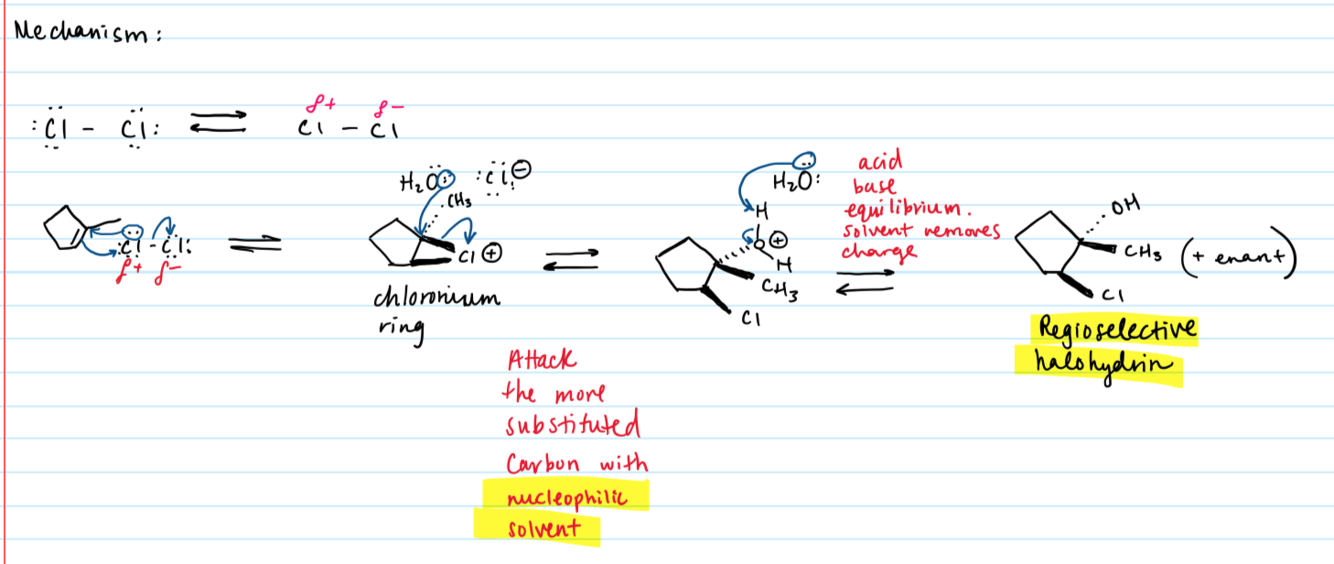
Halohydrin formation (X2+H2O/ROH)