TOPIC 13 - Energetics II
No description yet. This curated deck is ready for daily study.
Card preview (24)
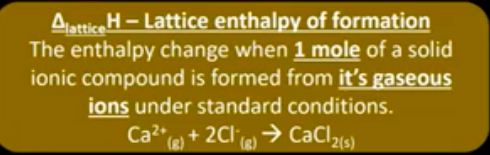
What is lattice enthalpy of formation?
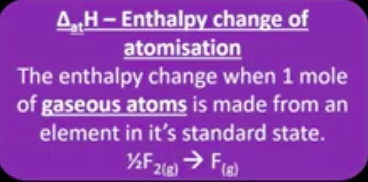
What is enthalpy chaange of atomisation?
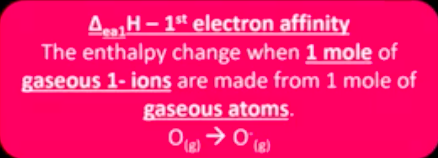
What is 1st electron affinity?
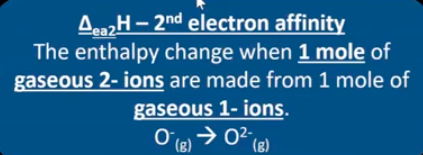
What is 2nd electron affinity?
Why are Born-Haber cycles useful?
To calculate enthalpies that can’t be measured experimentally.
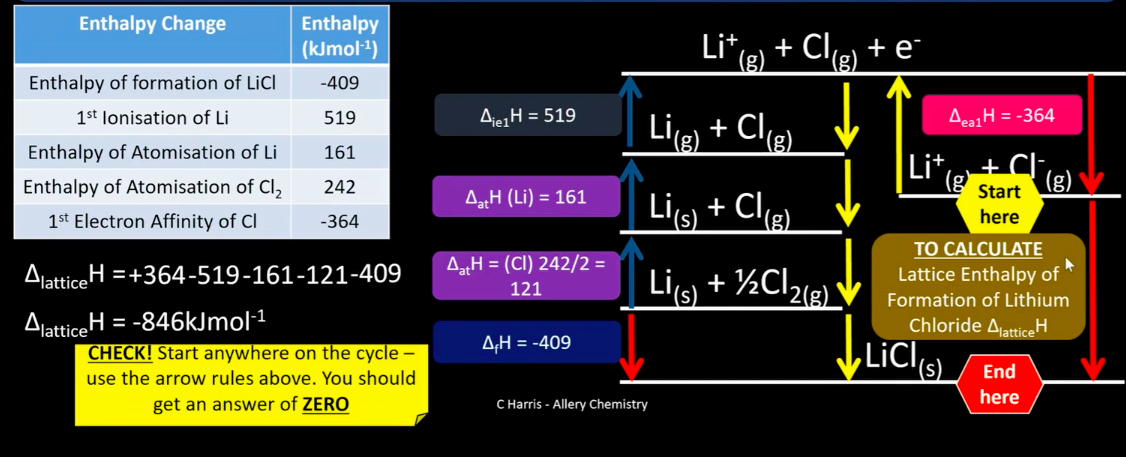
What is A?
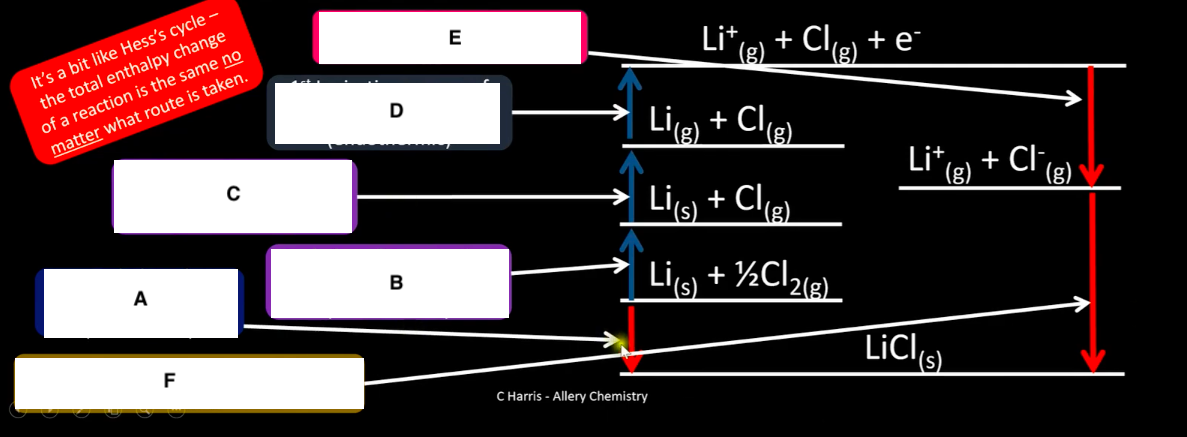
Enthalpy of formation
What is B?
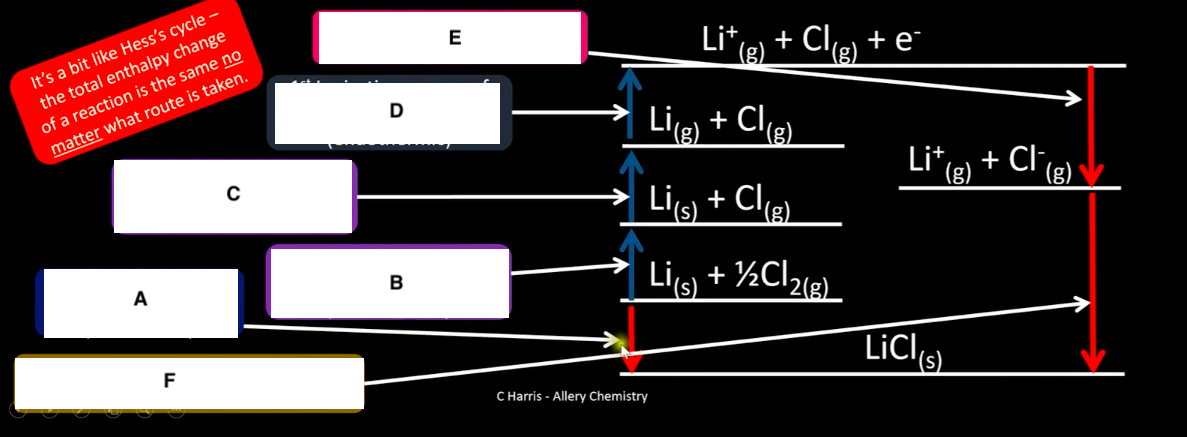
Enthalpy of atomisation of chlorine
What is C?
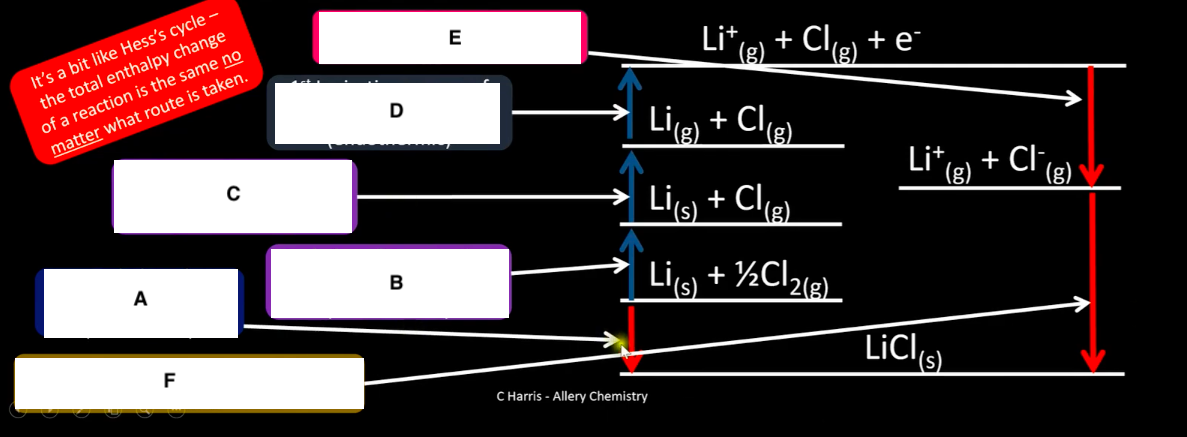
Enthalpy of atomisation of lithium
What is D?
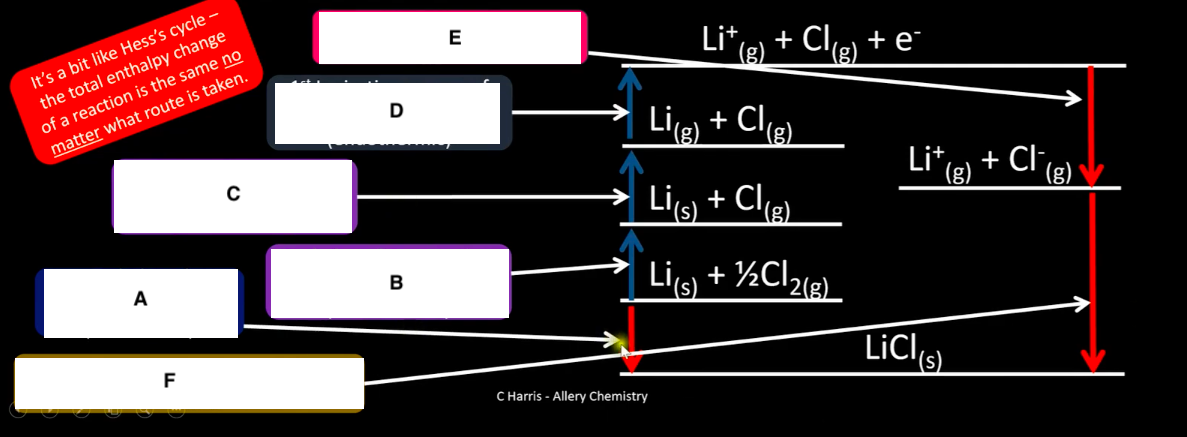
1st ionisation energy of lithium
What is E?
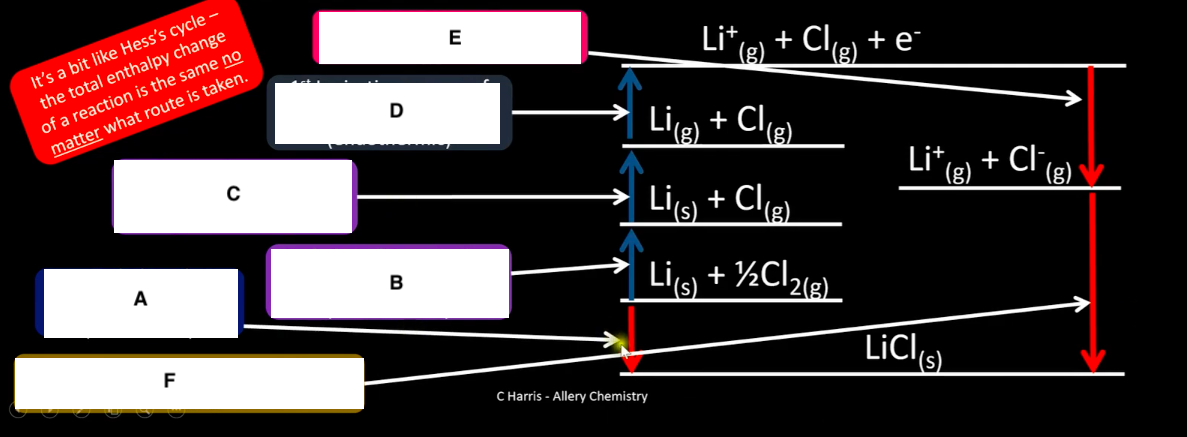
1st electron affinity of chlorine
What is F?
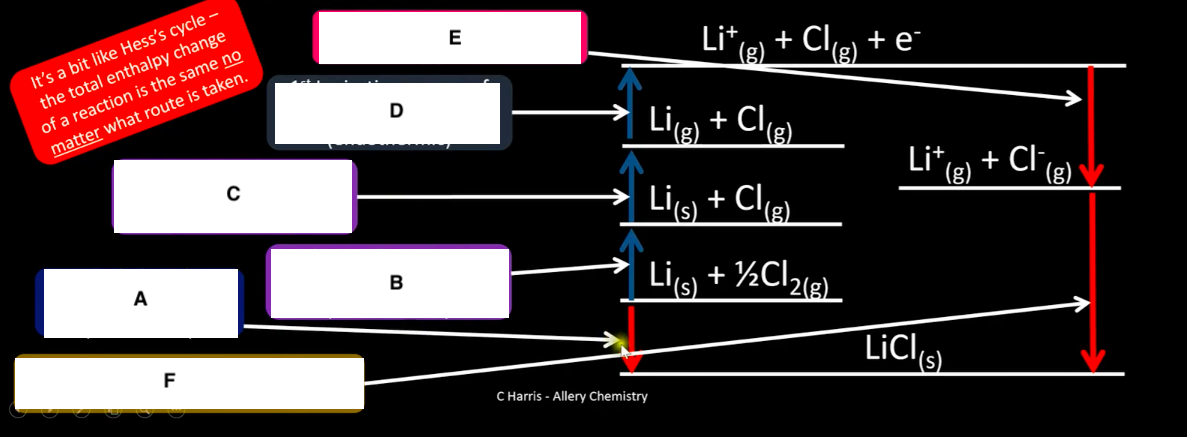
Lattice enthalpy of formation of LiCl
Calculate lattice enthlapy of LiCl using the Born-Haber cycle
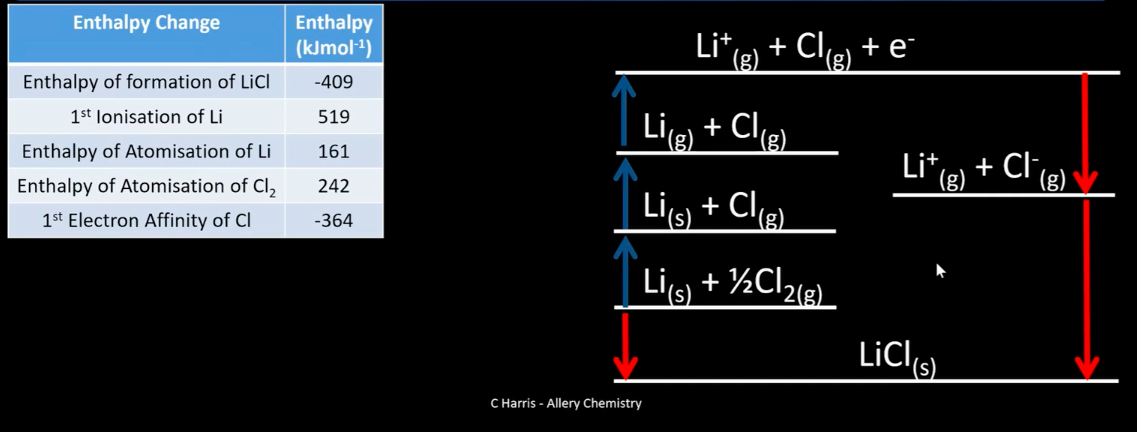
What is a perfectly ionic model?
Ions are evenly spherical in the latticeand the charge is evenly distributed (point charge)
Why are all the experimental values higher than the theoretical ?
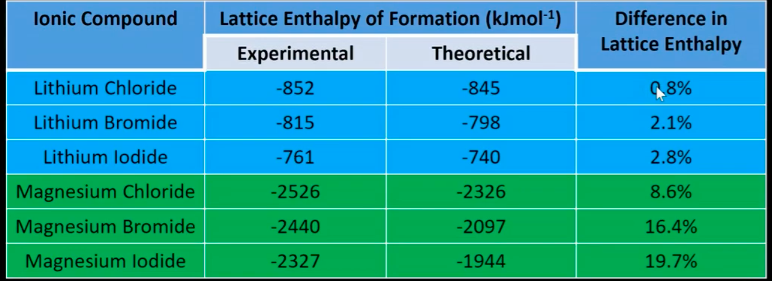
None of them is purely ionic. There is some covalent character. The electron cloud in the anion is distorted so electrons are closer to the +ve charge, so more energy is released.
Are smaller cations more or less polarising? Why?
More polarising. In smaller cations, the +ve charge is closer to the electrons in the anion and so electrostatic forces of attraction are greater and the electron cloud is distorted more.
Are cations with bigger charge more or less polarising?
More polarising. Bigger charge = bigger electrostatic forces of attraction = electron cloud in anion is distorted more.
Are bigger anions more or less polarisable? Why?
More polarisable. Electron cloud is further away from the nucleus of the anion and so electrons are more attracted to the nucleus of the cation, so electron cloud is more distorted.
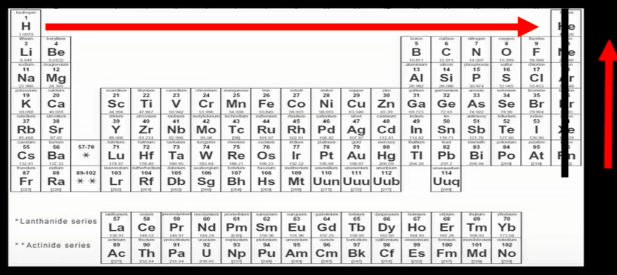
What is the general rule for electronegativity in the periodic table?
Further up and right you go, electronegativity increases (excluding nobel gases).
How does difference in electronegativity affect the nature (ionic/covalent) of the bond?
The bigger the difference between the two atoms, the more ionic the bond is.
What is enthalpy change of solution?

What happens, in terms of bonds, for a substance to dissolve?
Substance bonds break - endothermic. Bonds fromed between solvent and substance - exothermic.
For a substance to dissolve, what must the strength of the newly formed bonds be?
Same strength or greater than those broken previously.
What enthalpy of solution does a soluble substance have?
-ve enthalpy of solution (exothermic).
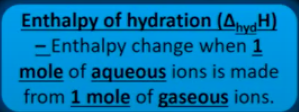
What is enthalpy of hydration?