Chapter 15: Cognition and Emotion
No description yet. This curated deck is ready for daily study.
Card preview (24)
Appraisal theories
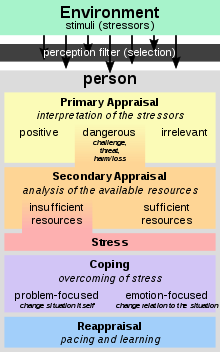
Book definition: “ – “ Various theories in psychology which commonly state that emotions are extracted from our evaluations of an event in regards to its changes to our environment. E.g. a first date; if perceived as positive, one might appraise the event as one leading to positive changes in the environment, like being in a new relationship, resulting in positive emotions such as happiness or excitement. If perceived negative, one might appraise the event as leading to negative changes, like being lonely, resulting in emotions such as dejection, sadness or fear. An important aspect of appraisal theory is that it accounts for individual variances in emotional reactions to the same event – e.g. one person may perceive a date as positive while the other perceives it as negative. Limitations: appraisal theories often exaggerate the importance of top-down processing over bottom-up processing. They also focus on current situations and do not account for responses related to past or expected future events. Finally, theories assume that appraisals cause emotional experiences, while in practice, the two often blur into each other, with no sharp distinction between cognition and emotion.
Valence
Book definition: “The positive or negative character of emotional experience. (p. -)”
Amygdala
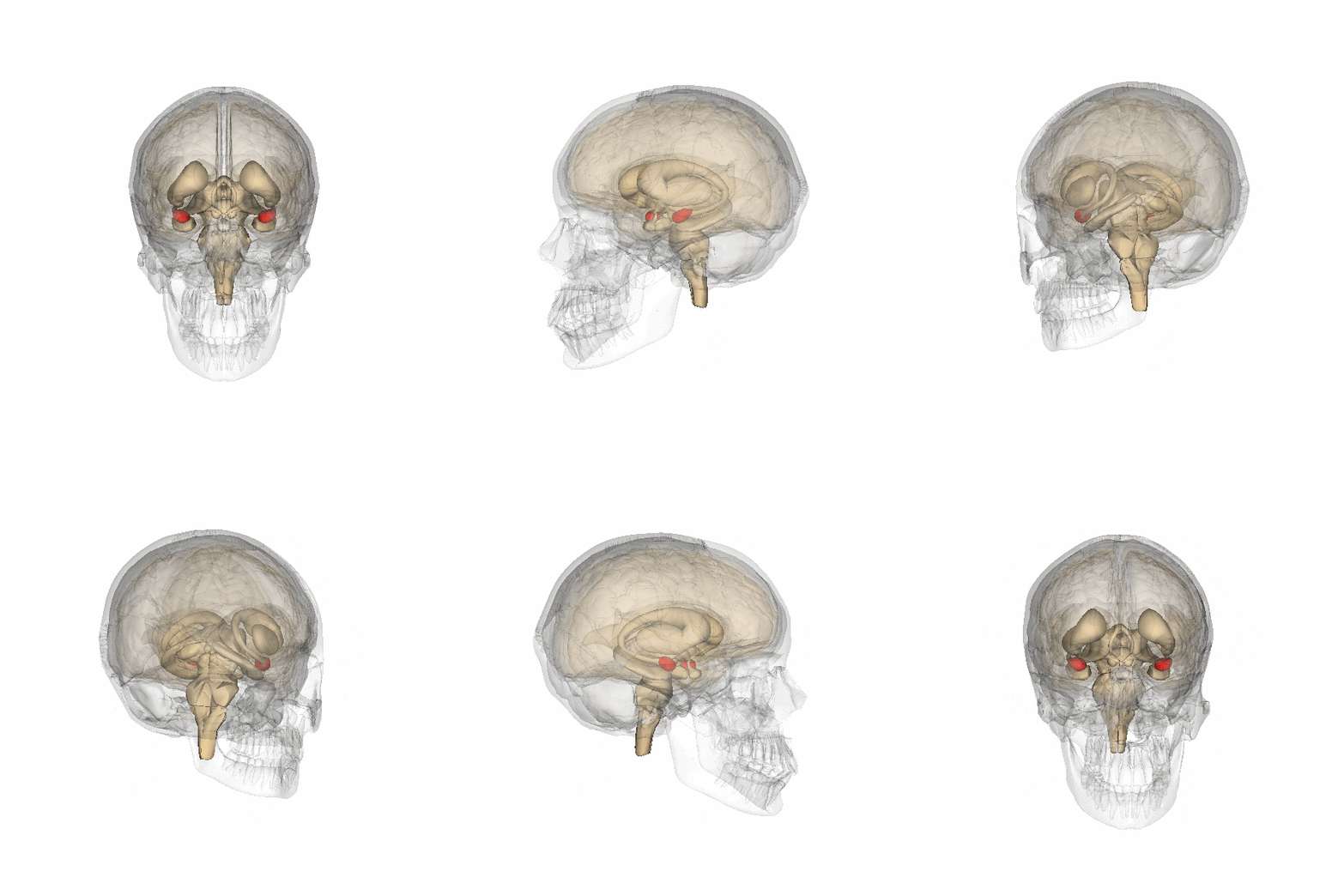
Book definition: “A part of the brain strongly associated with several emotions including fear; it is located towards the front of the temporal lobe. (p. -)”
Affective blindsight
Book definition: “The ability of brain-damaged patients to discriminate among different emotional stimuli in spite of the absence of conscious perception. (p. -)”
Emotion generation
Book definition: “The immediate and spontaneous emotional response to a given situation. (p. -)”
Emotion regulation
Book definition: “The use of deliberate and effortful processes to change the spontaneous emotional state (usually a negative one) produced by the emotion-generation process. (p. -)”
Distraction
Book definition: “A strategy used in emotion regulation in which the individual disengages attention from emotional processing and focuses on neural information. (p. -)”
Reappraisal
Book definition: “A strategy used in emotion regulation in which the individual elaborates emotional information from an event prior to changing its meaning. (p. -)”
Mood-state-dependent memory
Book definition: “Memory performance is better when the individual’s mood state is the same at learning and retrieval than when it differs. (p. -)”
Urbach-Wiethe disease
Book definition: “A disease in which the amygdalaand adjacent areas are destroyed. (p. -)”
Interoception
Book definition: “Sensitivity to bodily stimuli at the conscious or non-conscious level. (p. -)”
Optimism bias
Book definition: “The tendency to exaggerate our chances of experiencing positive events and to minimize our chances of experiencing negative events relative to other people. (p. -)”
Misery-is-not-miserly effect
Book definition: “The tendency for sad individuals to be willing to pay more for some commodity than other people. (p. -)”
Deontological judgments
Book definition: “Judgments based on moral rules and/or obligations when resolving moral dilemmas. (p. -)”
Utilitarian judgments
Book definition: “Judgments based on practical and pragmatic considerations when resolving moral dilemmas. (p. -)”
Trait anxiety
Book definition: “A personality dimension based on individual differences in susceptibility to anxiety. (p. -)”
Comorbidity
Book definition: “The presence of two or more mental disorders in a given patient at the same time. (p. -)”
Attentional bias
Book definition: “Selective allocation of attention to threat-related stimuli when presented simultaneously with neutral stimuli. (p. -)”
Interpretive bias
Book definition: “The tendency when presented with ambiguous stimuli or situations to interpret them in a threatening way. (p. -)”
Explicit memory bias
Book definition: “The retrieval of relatively more negative information than positive or neutral information on tests of explicit memory. (p. -)”
Implicit memory bias
Book definition: “Relatively better memory performance for negative than for neutral or positive information on tests of implicit memory. (p. -)”
Memory bias
Book definition: “The retrieval of relatively more negative or unpleasant information than positive or neutral information on a memory test. (p. -)”
Cognitive bias modification
Book definition: “Training typically designed to reduce attentional bias or interpretive bias. (p. -)”
Homograph
Book definition: “Word having a single spelling but two or more different meanings (e.g. bank, patient). (p. -)”