Chapter 21: Alpha Carbons
No description yet. This curated deck is ready for daily study.
Card preview (24)
Nucleophilic position of an enol
The alpha position of enols/enolates is nucleophilic Enolates are negative, so more nucleophilic than enols
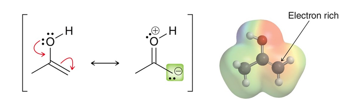
Drawing enolates
• Identify all α protons • Remove the proton at the α position and draw the resulting anion • Draw the resonance structure showing the negative charge on the oxygen atom
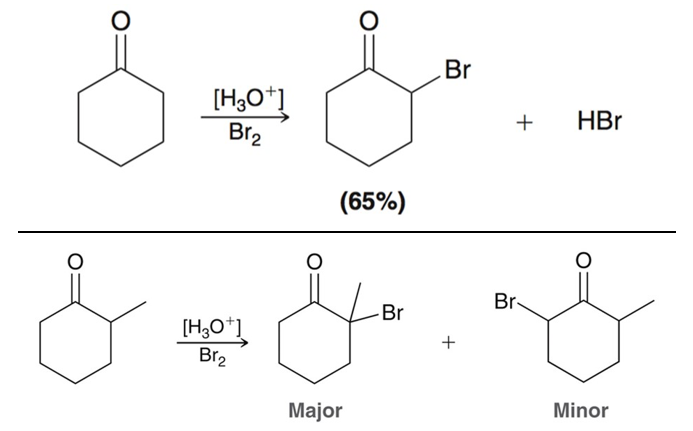
Alpha halogenation of enols and enolates Acid catalyzed
Reagtents [H3O+] & X2 Cl2, Br2, and I2 (not fluorine) Mechanism Results in halogen addition at the α position of and aldehyde or a ketone If the ketone/aldehyde is asymmetrical, halogen adds to the more substituted alpha carbon
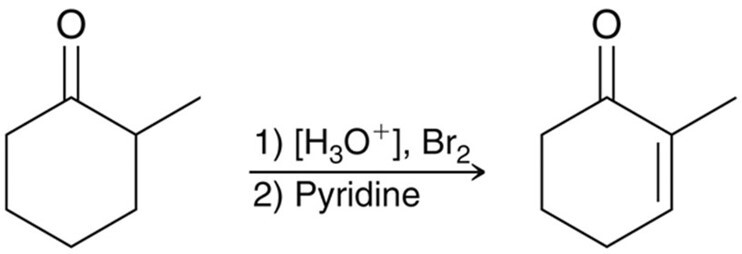
Formation of an α,β-unsaturated ketone
Reagents • [H3O+] & Br2 • Pyridine or t-ButO
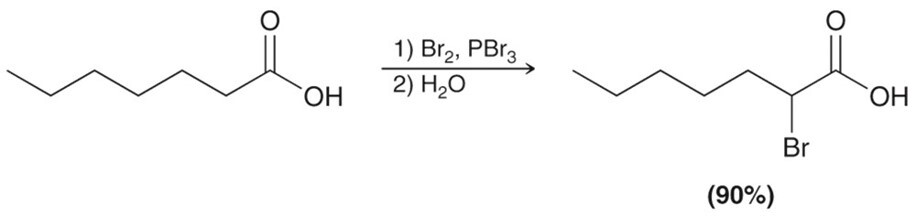
Hell-Volhard-Zelinsky reaction
Reagents • Br2 & PBr3 (phosphorus tribromide) • H2O Mechanism Performs α-halogenation of a carboxylic acid
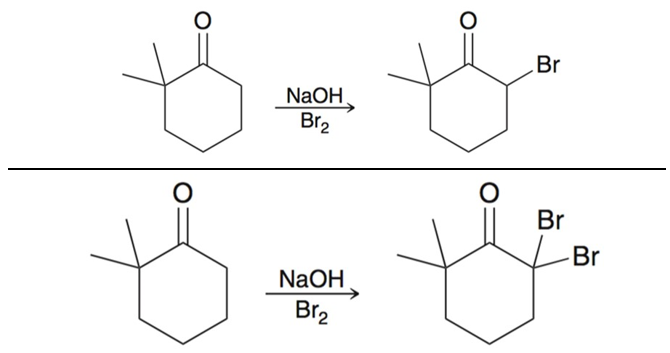
Alpha halogenation of enols and enolates Base catalyzed
Reagents NaOH & Br2 Mechanism Product formed is reactive, so poly-halogenation readily occurs
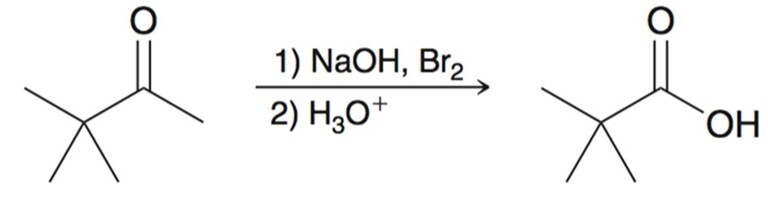
Haloform reaction
Reagents • NaOH & Br2 • H3O+ Mechanism Converts methyl ketones into carboxylic acids
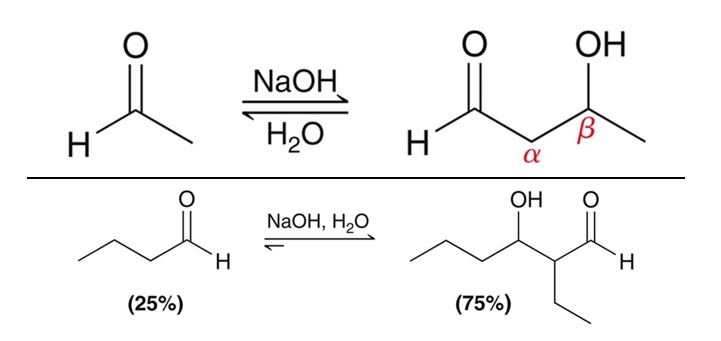
Aldol addition reaction Same reactants
Reagents NaOH & H2O Mechanism An aldehyde treated with a strong base is converted to an enolate which exists in equilibrium and attack another aldehyde Enolate attacks at the α position Product features both aldehyde and alcohol groups with the −OH group will be on the beta carbon
Aldol condensation reaction Same reactants
Reagents [H3O+ or OH−] & heat Mechanism When aldol product is heated water leaves and a double bond forms
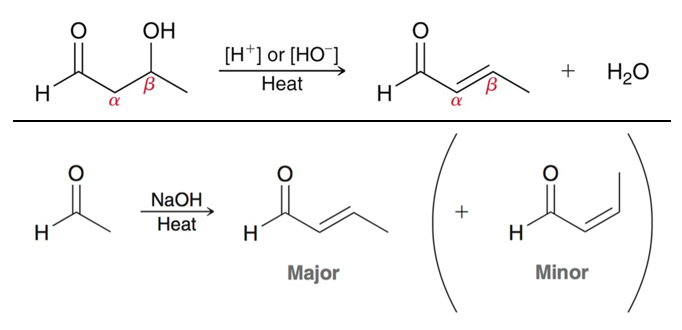
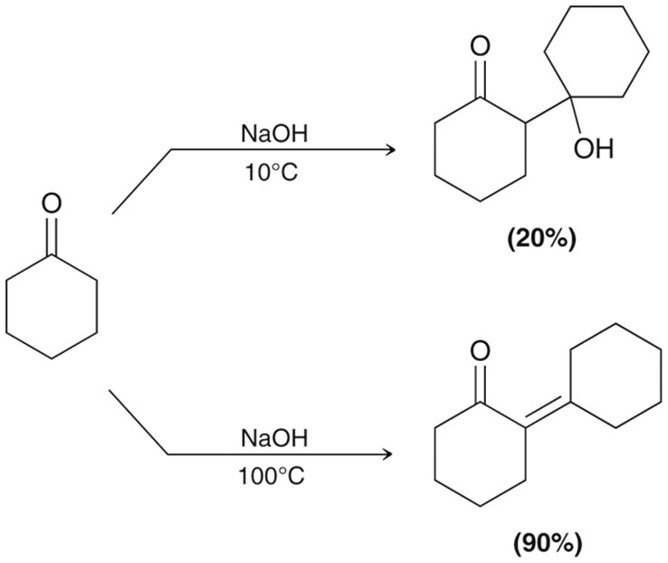
Aldol condensation vs. addition yields
The condensation yields typically better than addition yields
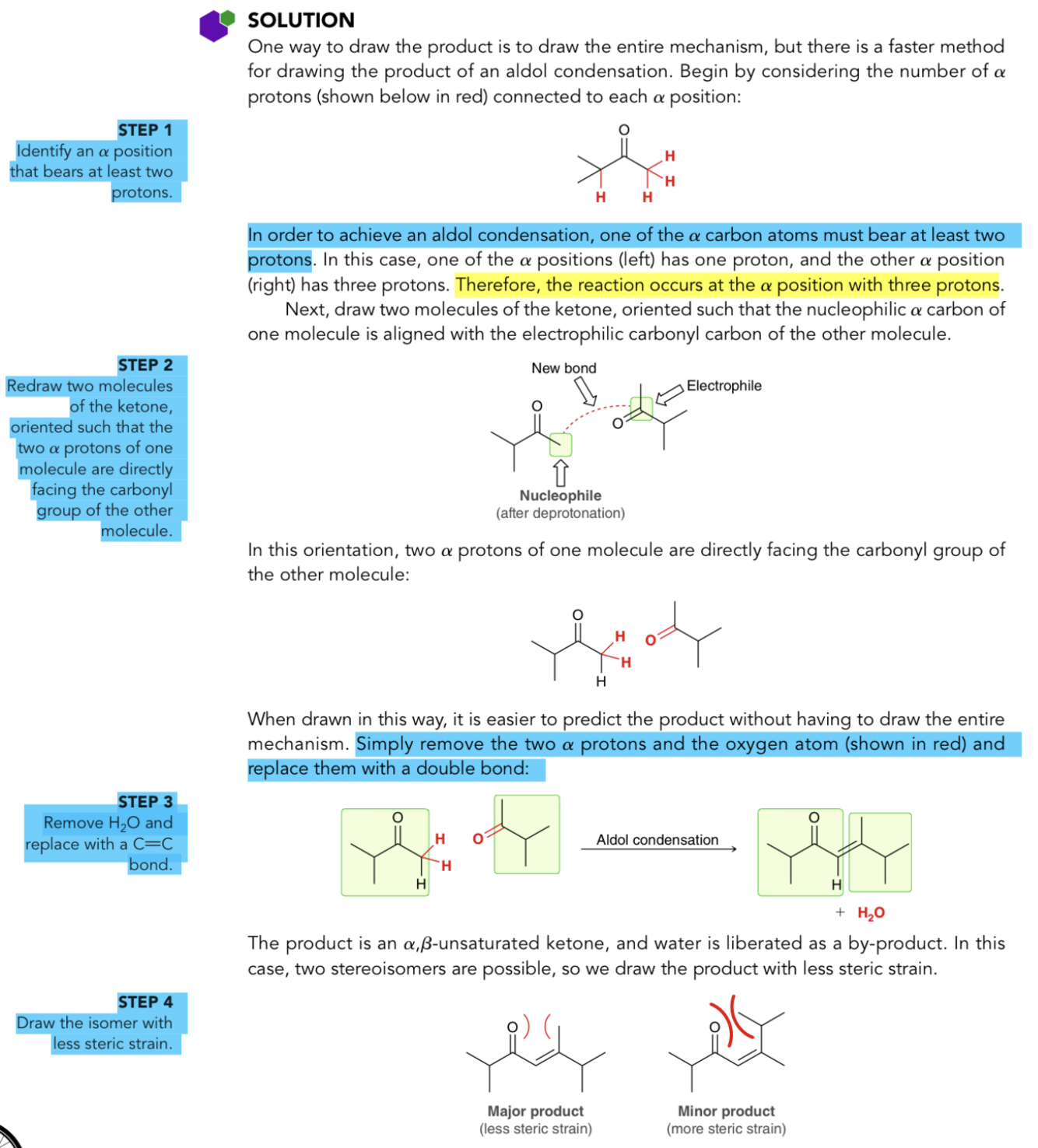
Drawing the product of an aldol condensation
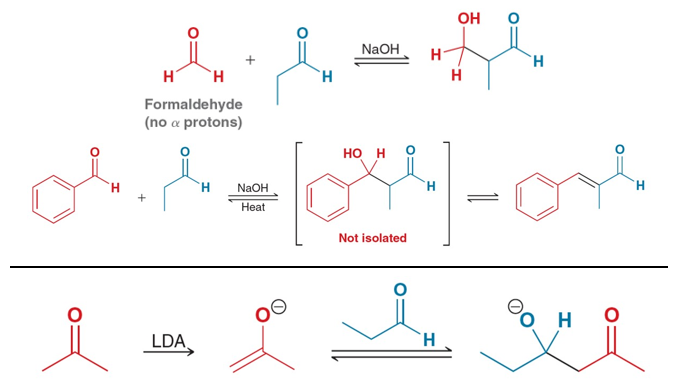
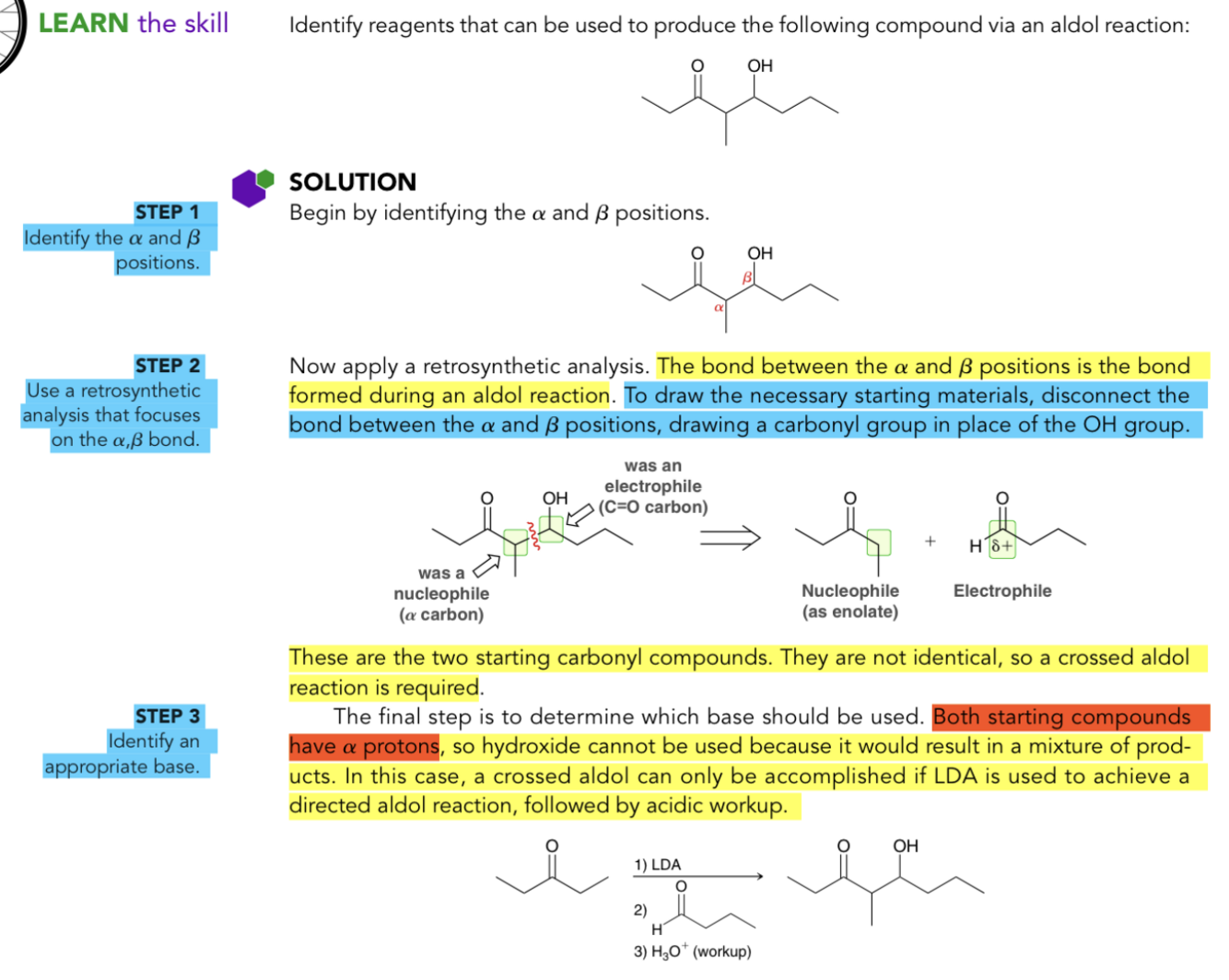
Crossed aldol reactions
Reagents • NaOH or • LDA Mechanism Two ways to limit outcomes: • One reactant is unhindered without alpha protons • Use LDA as a base to completely convert one ractant to an enolate
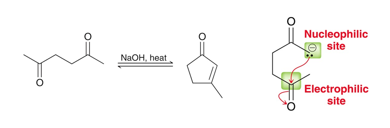
Intramolecular aldol reactions
Reagents NaOH & heat Mechanism Intramolecular aldol reactions form cyclic compounds ONLY 5 and 6 membered rings will form as others are too unstable
Identifying reagents for a crossed aldol reaction
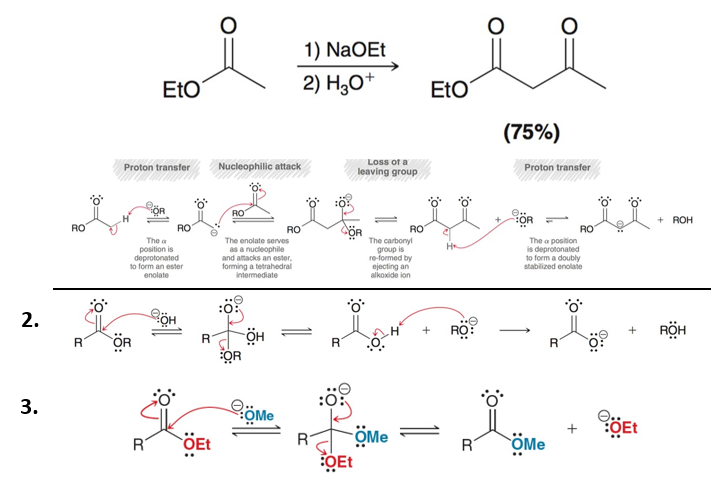
Claisen condensations Same reactants
Reagents • RO− • H3O+ Mechanism Condensation reaction involving an ester • Starting ester needs 2 alpha protons to work • NO hydroxide can be used because hydrolysis will result • Alkoxide must match –OR of ester to avoid transesterification
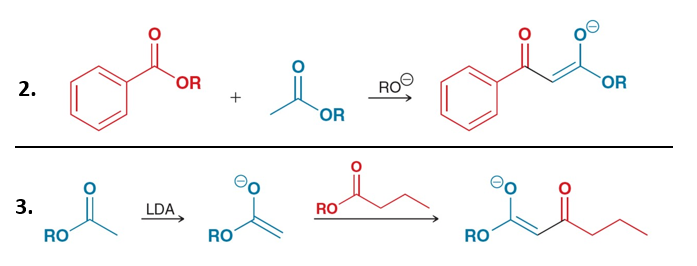
Crossed Claisen condensations
Reagents • Strong alkoxy base or • LDA Mechanism Addition of two different esters Must meet one of two conditions: • One ester must have no alpha protons • Directed Claisen is possible with LDA as base
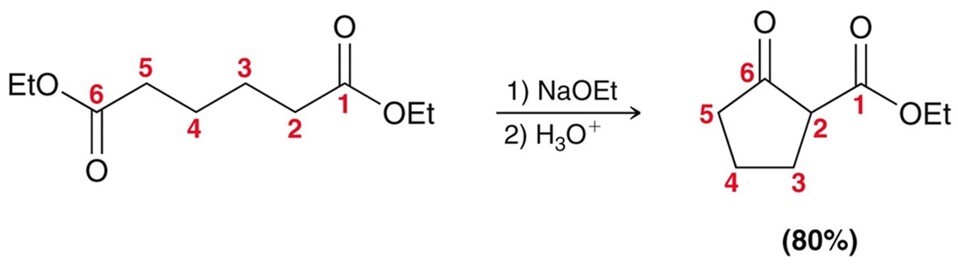
Dieckmann cyclization
Reagents • RO− • H3O+ Mechanism Intramolecular Claisen condensation Only favorable for 5 or 6 membered rings
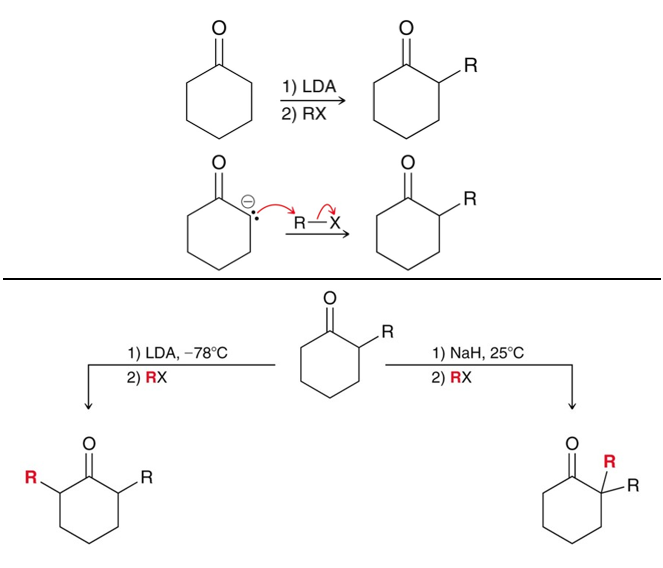
α alkylation of an aldehyde or ketone
Reagents Kinetic product • LDA, −78°C • RX Thermodynamic product • NaH, 25°C • RX Mechanism Two-step mechansim produces an enolate that attacks the alkyl group in an SN2 reaction Regioselectivity is an issue with asymmetrical ketones and choice of base determines product
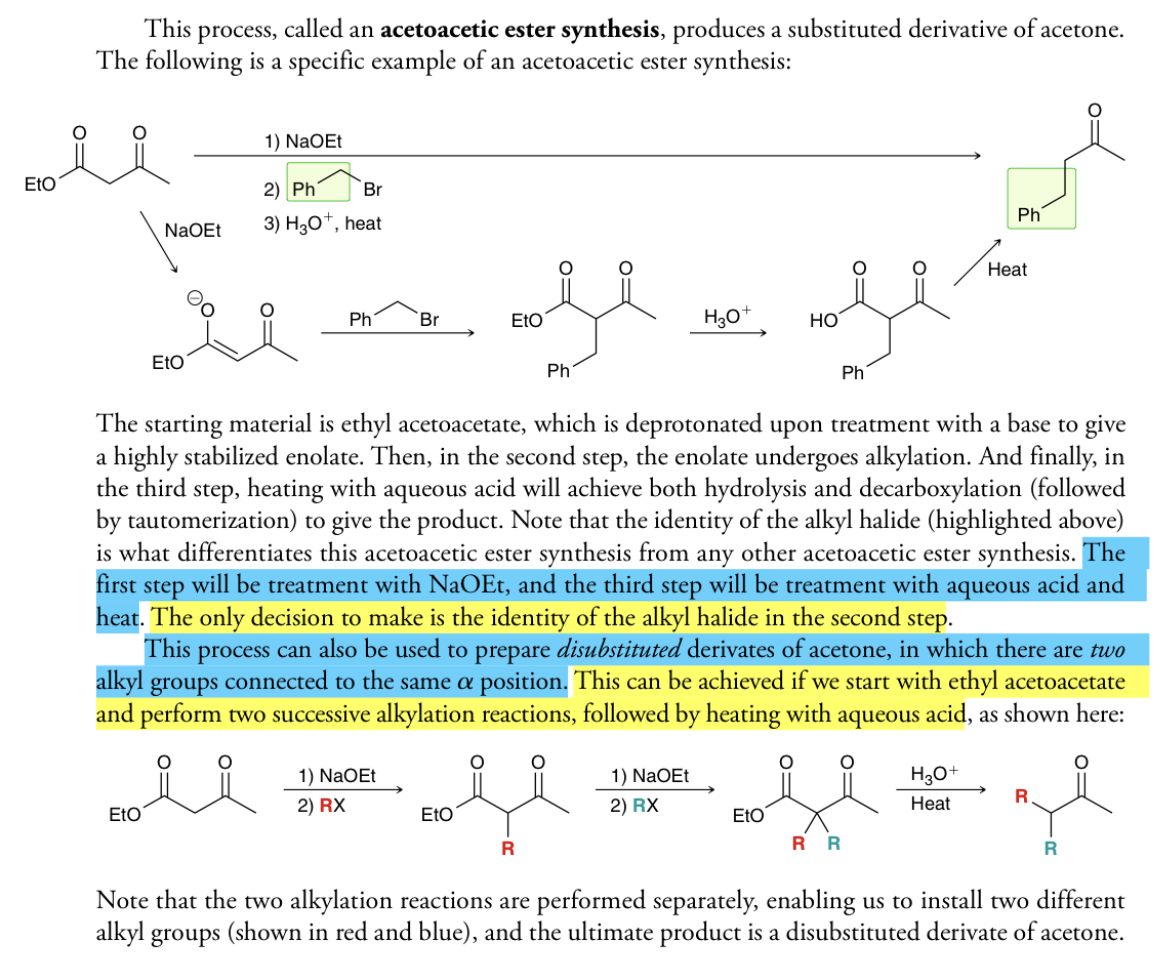
Acetoacetic ester synthesis
Reagents • Ethyl acetoacetate • NaOEt • RX • H3O+, heat Mechanism Installs an acetone goup onto the R group as a terminal methyl ketone Works best with primary alkyl halides Disubstituted products can also be obtained via two successive akylation reactions
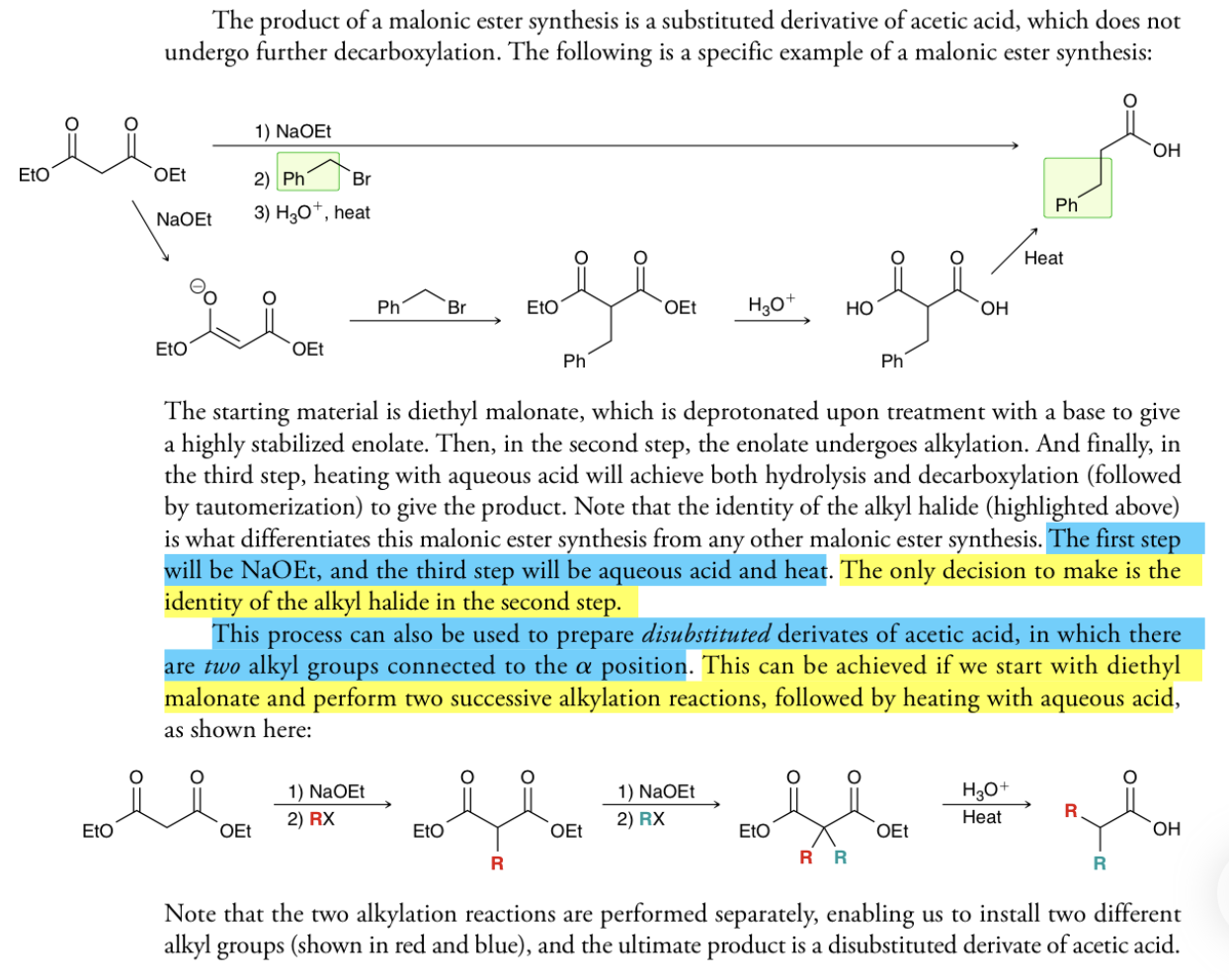
Malonic ester synthesis
Reagents • Diethyl malonate • NaOEt • RX • H3O+, heat Mechanism Installs a carboxylic acid goup onto the R group with an additional carbon atom between the R group and the carbonyl Works best with primary alkyl halides Disubstituted products can also be obtained via two successive akylation reactions
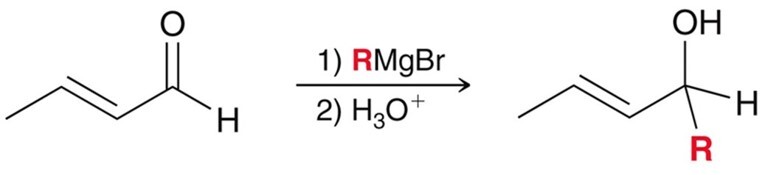
α,β-unsaturated aldehyde or ketone conjugate addition Grignard reagents
Reagents • RMgBr • H3O+ Mechanism Grignard reagents typically attack the carbonyl carbon resulting in a 1,2 addition
α,β-unsaturated aldehyde or ketone conjugate addition Gillman reagents
Reagents • R2CuLi (dialkyl lithium cuparate) • H3O+ Mechanism Gillman reagents typically attack the β carbon resulting in a 1,4 addition

Conjugate addition reactions Reagent choice
Stronger nucleophile gives 1,2 addition Grignard reagent Weaker / less reactive gives 1,4 addition Gilman reagent Stabilized enolates (Michale reaction) give 1,4 addition exclusively
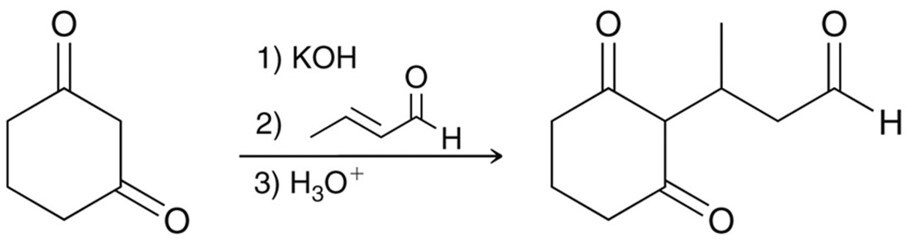
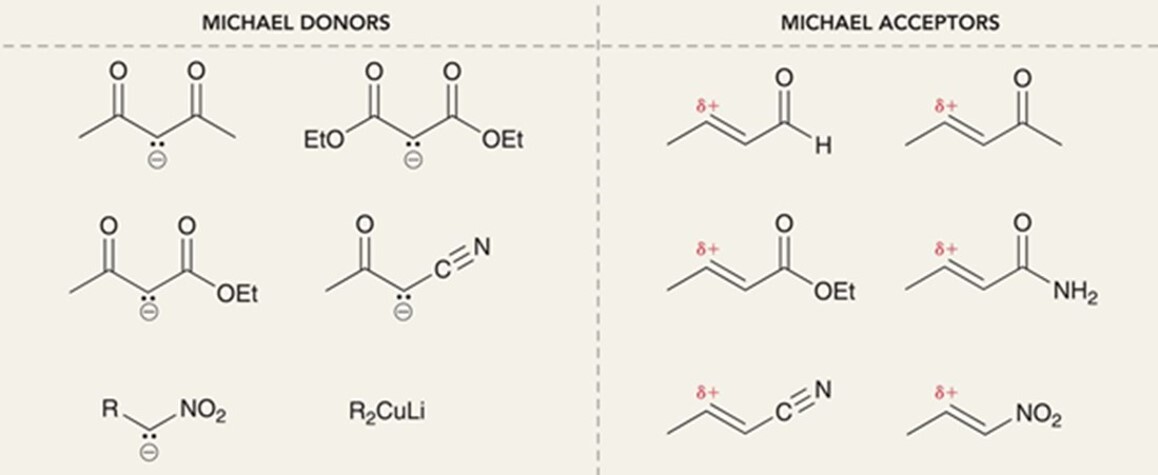
Michael reaction
Conjugate 1,4 addition that takes place between a Michael donor and a Michael acceptor • Michael donor- nucleophile that does conjugate addition • Michael acceptor- the α, β-unsaturated carbonyl